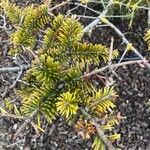
Abies fraseri
Fraser fir · Fraser's Fir · Balsam Fir · Eastern Fir · Fraser Balsam Fir
Description
Source: leafsnapThe Fraser fir (Abies fraseri) is a species of fir native to the Appalachian Mountains of the Southeastern United States. Abies fraseri is closely related to Abies balsamea (balsam fir), of which it has occasionally been treated as a subspecies (as A. balsamea subsp. fraseri (Pursh) E.Murray) or a variety (as A. balsamea var. fraseri (Pursh) Spach).
Care Guide
💧 Water
Fraser's fir, a tree native to the southeastern United States, thrives in cool, moist climates with well-drained soils. It requires watering every one to two weeks. Typically grown outdoors, this tree benefits from mulching, which helps retain moisture during dry spells or cold winters.
How should I water my Fraser's fir tree?
Watering your Fraser's fir is a simple task. For mature trees, use a garden hose to slowly soak the soil. This is the best option as larger trees require more water. However, if you have smaller trees, a watering can or other smaller tool may suffice. Avoid watering overhead as it can cause disease, especially in young trees.
What should I do if I give too much or too little water to my Fraser's fir?
Overwatering can be due to poor soil, which can prevent water from draining properly and cause your Fraser's fir to decline. To address this, you can either improve the soil's drainage by amending it or move the fir to a better growing location. If your fir is in a pot, you may also need to repot it with looser soil and a container that allows for better drainage. Overwatering can lead to disease, so it's important to treat any issues promptly. On the other hand, if your fir is underwatered, you can simply increase your watering frequency to help it recover. To determine if your fir is overwatered, look at its foliage, especially the new growth. Discolored or easily breakable new growth can indicate too much moisture. If you notice standing water or slow drainage in the growing area, the soil may be too moist. Underwatered firs will have sparse and brown leaves. Consider recent rainfall or high temperatures as factors when evaluating your plant's condition.
How often do I need to water my Fraser's fir?
A mature Fraser's fir is very low-maintenance when it comes to watering. It can usually survive on rainfall alone and becomes drought tolerant. During the hottest months, watering once a week is sufficient. In other seasons, watering may not be necessary at all. However, if you have just planted a Fraser's fir, you should water it regularly to help the roots establish. Just remember that this species does not like standing water, so it's better to under-water than over-water.
How much water does my Fraser's fir tree need?
During the height of summer, watering your Fraser's fir becomes necessary. Normally, giving it about one inch of water per week is sufficient. However, the required amount can vary depending on the rainfall. If it has rained one inch or more in a week, there is no need to water your Fraser's fir. On the other hand, newly planted Fraser's fir requires more water during the establishment period. As a general guideline, watering it once every one to two weeks for the first few growing seasons should suffice.
How do I water my Fraser's fir tree all year round?
The Fraser's fir tree needs the most water in the summer when it's hottest. You should water it about once a week if there's no rain. During other times of the year, it can often survive without any water. In spring and fall, you may need to water it if it's very hot, but that's rare. Unlike other plants, the Fraser's fir doesn't go dormant in winter, so it keeps growing even in the cold months. However, it doesn't need much water in winter because the cool temperatures don't dry out the soil quickly.
☀️ Light Full sun
Fraser fir flourishes with ample sunlight but also tolerates moderate shade reasonably well, though that can affect its overall growth. Coming from habitats with moderate to strong light, both too little and too much sun can stunt growth or lead to needle discoloration.
What are the sunlight requirements for Fraser's fir?
Fraser's fir requires generous exposure to sunlight to thrive, performing best in full sun conditions, which involve above 6 hours of sunlight daily. It can still grow in partial sun, receiving about 3-6 hours of sunlight, but this might impact its growth. Originating from environments with moderate to intense light exposure, inadequate or excessive sunlight can lead to stunted growth and needle discoloration. To ensure your Fraser's fir is happy, monitor the movement of sunlight in your garden and choose locations that offer a balance of light and shade.
How can artificial lighting be used for Fraser's fir indoors?
Indoor Fraser's firs require adequate lighting for optimal growth, especially when natural sunlight is insufficient. Artificial lights provide a solution, promoting healthier growth. LED lights are recommended because they can be customized to emit specific wavelengths needed by the plants. Full sun plants need 30-50W/sq ft, partial sun plants 20-30W/sq ft, and full shade plants 10-20W/sq ft of artificial light. The light source should be placed 12-36 inches above the plant, mimicking natural sunlight, and plants typically need 8-12 hours of light per day.
What are the common symptoms of inadequate light exposure in Fraser's fir?
Inadequate light exposure can cause several symptoms in Fraser's fir, including smaller new leaves, leggy or sparse growth, faster leaf drop, slower or no new growth, lighter-colored new leaves, chlorosis, sunscald, leaf curling, wilting, and leaf scorching. These symptoms indicate the plant's struggle with insufficient sunlight, with some signs, such as chlorosis and sunscald, directly resulting from poor light conditions. Managing these conditions is crucial for the health of the plant.
What are the best solutions for addressing light-related issues in Fraser's fir?
To address light-related issues in Fraser's fir, ensure optimal growth by gradually increasing exposure to sunlight, aiming for at least 6 hours of direct sunlight daily. For indoor plants, use south-facing windows or consider artificial lighting, like desk lamps or professional grow lights, keeping them on for at least 8 hours daily. For outdoor plants, move them to sunnier spots gradually to avoid sunburn. Reducing obstructions or transplanting the plant to sunnier locations can also enhance sunlight exposure. It's important to note that parts of the plant damaged by insufficient light may not recover, although new growth should be healthy with improved light conditions.
🌡️ Temperature 5–25°C
Fraser's fir is native to regions with moderate climates, favoring temperatures of 41 to 77°F (5 to 25℃). When grown outside its native range, Fraser's fir will need careful adjustments, with measures to mitigate heat in summer and protect against frost in winter.
What is the native climate preference for Fraser's fir?
Fraser's fir, with its botanical name Abies fraseri, is native to regions that experience moderate climates. It thrives in temperatures ranging between 41 to 77°F (5 to 25°C). When grown in non-native climates, Fraser's fir demands careful adjustments including heat management during summer and frost protection in winter, even though it is profoundly cold-tolerant. Before the onset of the first freeze in autumn, it's advisable to water the plant abundantly, ensuring the soil is moist entering a frozen state. This strategy is crucial for preventing drought and water scarcity throughout the winter and early spring periods.
How can Fraser's fir be affected by low temperatures?
Fraser's fir is highly resistant to cold conditions, capable of withstanding winter temperatures above -30°C without requiring extra frost protection measures. However, if temperatures fall below this critical threshold, while no immediate changes may be noticed during winter, come spring, the fir's branches might turn brittle and dry, possibly failing to sprout new leaves. To address this, it is recommended to prune any dead branches in spring that haven't produced new foliage, facilitating healthier growth.
What should be done if Fraser's fir experiences high temperatures?
Fraser's fir struggles with high temperatures, especially when the mercury climbs above 25°C. Under such circumstances, the tree may shed its leaves significantly, and in extreme cases, it could wither and die. To mitigate these adversities, it's essential to trim the sun-damaged and dried parts of the plant. Relocating the fir to a shaded spot, or employing a shade cloth to shield it from the midday and afternoon sun, can prove beneficial. Additionally, watering the plant during the cooler times of the day, like morning and evening, helps maintain soil moisture, aiding the fir's survival and health.
💨 Humidity dry (<40%)
This plant prefers dry conditions, so don't mist it. However, watering it less often can also thrive in higher humidity.
🪴 Soil 5-6
🌱 Fertilizer
Fraser fir has particular nutrient needs and does not require abundant fertilization. Spring is the best time to fertilize for optimal growth. Providing nutrients enhances its health, strengthens its resistance to pests and diseases, and helps sustain a long lifespan.
Why do I have to give nutrients to my Fraser's fir tree?
To ensure healthy growth, it is important to fertilize Fraser's fir in the spring. This plant has a long lifespan and requires support. By adding nutrients to the soil, we can enhance the plant's overall health. This, in turn, increases its resistance to common pests and diseases that may hinder growth or reduce its lifespan.
When should I fertilize my Fraser's fir tree?
Fraser's fir is unique compared to garden annuals and perennials because it doesn't need excessive nutrients. The growing medium may not always provide enough nutrients for healthy growth. When it comes to fertilizing Fraser's fir, the ideal time is in the spring, before new growth starts to appear.
When is it not a good idea to put fertilizer on my Fraser's fir?
While certain plants benefit from regular fertilization on a monthly or weekly basis, Fraser's fir is an exception that does not need excessive nutrients. Applying too much fertilizer to Fraser's fir can actually lead to its decline. It is advisable to only apply fertilizer in the spring season, while refraining from doing so during the summer, fall, and winter. It is also important to avoid adding any additional organic matter to the soil during these seasons.
What kind of plant food does my Fraser's fir tree need?
The age of your plant is important when choosing fertilizer. While Fraser's fir does not need many nutrients, a balanced plant food can promote healthy root development and growth. Just avoid fertilizers with high nitrogen levels.
How do I make my Fraser's fir grow better?
To effectively fertilize Fraser's fir, it is crucial to not only consider the timing but also the application method. In the spring, apply the fertilizer at the plant's base, being careful not to get any on the trunk. If you're using granulated fertilizer, lightly cover the pellets with soil to facilitate absorption into the soil.
🪴 Pot & Repot Every 2 years
✂️ Pruning
Fraser's fir is an attractive tree known for its evergreen foliage and conical shape. To maintain its health, prune the tree during its dormant period, from early to late winter. Focus on removing any dead or damaged branches, which helps reduce stress. Regular pruning can also enhance the tree's growth and resistance to pests. For detailed care instructions, consult reputable sources specific to Fraser's fir.
🌿 Propagating
🐛 Diseases & pets
☠️ Toxicity
Characteristics
- Plant Type
- Tree
- Life Cycle
- Perennial
- Genus
- Abies
- Family
- Pinaceae
- Hardiness Zone
- 4
- Mature Height
- 10.06 m to 24.99 m
- Mature Spread
- 3.05 m to 7.92 m
- Leaf Color
- Green
- Leaf Type
- Evergreen
- Flower Size
- 1.02 cm to 2.03 cm
- Bloom Time
- Mid spring, Late spring
- Planting Time
- Spring, Autumn
- Harvest Time
- Late summer, Early fall, Mid fall
- Native Area
- Southeastern United States