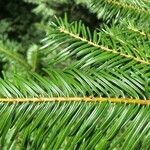
Abies grandis
Giant Fir · Grand fir · Lowland fir · Lowland white fir · Silver fir
Description
Source: leafsnapAbies grandis, commonly known as the grand fir, is a large evergreen tree native to the western United States and Canada. This tree can reach heights of up to 200 feet and features a conical shape with a straight trunk. The needles of the grand fir are flat, roughly 1 inch long, and have two distinctive white stripes on their underside. The cones are sizable, up to 12 inches in length, and possess unique bracts that protrude from between each scale. The grand fir is highly valued as a timber tree due to its straight trunk and high-quality wood. Additionally, its attractive foliage and pleasant scent make it a popular choice for Christmas trees. Beyond its economic uses, the grand fir also provides vital habitat for various wildlife species, including birds such as owls and woodpeckers. Preferring moist soils in cool climates, the grand fir can tolerate some drought once established. While it grows best in full sun, it can also handle partial shade. In summary, Abies grandis is an impressive evergreen with significant economic value and ecological importance in its native range.
🌳 The grand Fir is not just a dignified presence in forests but also yields high-quality timber because of its straight grain and lightness. This wood is widely prized for building interior structures and for furniture. Around the holiday season, its boughs are in demand for making garlands and holiday decorations, bringing a bit of forest charm into homes. Additionally, aromatic compounds from grand Fir are extracted for use in natural therapies and in perfumery.
🎭 Duration
Care Guide
💧 Water Every 7 days
Native to moist, temperate regions, the grand fir thrives with consistent moisture. It prefers watering every 1-2 weeks to prevent waterlogging. Well-suited for cooler climates and high humidity, the grand fir grows best outdoors, where it needs steady soil moisture to maintain its evergreen foliage throughout the year.
How should I water my Grand Fir tree?
Watering your Grand Fir is a simple task. To water, turn on your garden hose and slowly soak the soil. For mature trees, the garden hose is ideal due to their higher water needs. However, smaller trees can be watered with a watering can or smaller tool. Avoid overhead watering to prevent disease, especially while the tree is young.
What should I do if I give my Grand Fir tree too much water or not enough water?
Overwatering can occur when the soil does not drain effectively, causing the Grand Fir to decline. To address this, improve soil drainage or transplant the tree to a better location. If Grand Fir is in a pot, it may need to be repotted with looser soil for better drainage. Overwatering can lead to diseases, which should be treated promptly. To remedy underwatering, water the tree more frequently. To determine if the tree is overwatered, check the foliage, especially new growth, for discoloration or fragility. Standing water or slow drainage is another indication of excessive moisture. Underwatered trees may have sparse, brown leaves. Consider recent rainfall or high temperatures when assessing symptoms.
How regularly should I water my Grand Fir tree?
A mature Grand Fir is drought tolerant and usually doesn't need much water. It can survive on rainfall alone. During the hottest months, you may need to water it once a week, but during other seasons, watering may not be necessary. However, if you have recently planted a Grand Fir, you should water it regularly to help establish its roots. Just remember that Grand Firs don't like standing water, so it's better to under-water than over-water them.
How much water does my Grand Fir tree need?
During the height of summer, it is important to water your Grand Fir, usually with about one inch of water per week. However, this amount can vary if it has rained that week. If there has been an inch or more of rain, you won't need to water your Grand Fir. Additionally, if you have newly planted Grand Fir, it will require more water during the establishment period. This typically means watering once every one to two weeks for the first few growing seasons.
How should I water my Grand Fir tree throughout the year?
The Grand Fir tree requires the most water in the summer when it's hot outside. During this time, water the plant once a week if it doesn't rain. However, the tree can survive without water during other seasons. In spring and fall, you may need to provide some water if it's unusually hot, but this is rare. Unlike most plants, the Grand Fir doesn't completely stop growing in the winter, but it still requires very little water during this time since the soil doesn't dry out quickly due to the cool temperatures.
☀️ Light Full sun
Grand Fir does best in full sunlight but can adjust to spots with less light. Native to dense forests, the plant has adapted to a variety of light levels yet prefers ample sun. Insufficient light can stunt its growth, and too much light may cause foliage to burn.
What are the sunlight requirements for Grand Fir?
The Grand Fir requires full sun, which means it needs more than 6 hours of sunlight daily, but it can also tolerate partial sun, about 3-6 hours of sunlight. It's vital to observe the movement of sunlight through your garden to find spots that provide the right balance of light and shade, ensuring your plants thrive.
How does the Grand Fir respond to different lighting conditions?
The Grand Fir thrives best under maximum daylight but has adapted to tolerate less light, thanks to its origins in dense forests. It prefers abundant light but can grow in various conditions. Insufficient light may hinder its growth, while too much light can lead to foliage burns. Artificial lighting can be a viable solution for indoor plants, especially when natural sunlight is scarce.
How should artificial lighting be used for indoor plants?
For indoor plants lacking natural sunlight, especially during winter or in darker spaces, artificial lights are crucial. LED lights are recommended due to their customization for specific plant needs. Full sun plants require 30-50W/sq ft, partial sun plants 20-30W/sq ft, and full shade plants 10-20W/sq ft of artificial light. The light source should be placed 12-36 inches above the plant for 8-12 hours per day to mimic natural sunlight exposure effectively.
What are some common symptoms of light deficiency in Grand Fir?
Symptoms of light deficiency in Grand Fir include smaller new leaves, leggy or sparse growth, early dropping of older leaves, halted growth, pale new leaves, and chlorosis. Excessive sunlight can result in sunscald, leaf curling, wilting, and leaf scorching, indicating the importance of balanced light exposure.
What solutions can be implemented for Grand Fir suffering from light issues?
To address light deficiency in Grand Fir, indoor plants should be gradually moved to sunnier spots until they receive at least 6 hours of direct sunlight, using south-facing windows to maximize exposure. Artificial lights can support large or immovable plants. For outdoor plants, a gradual transition to sunnier areas helps avoid sunburn. Reducing obstructions, such as pruning trees that block sunlight, and transplanting smaller plants during their dormant period to brighter locations with good drainage can also enhance light availability.
🌡️ Temperature 5–25°C
Native to the cool, moist areas of the Pacific Northwest, the grand Fir grows best in temperatures between 41 and 77 ℉ (5 to 25 ℃). To thrive, it needs frequent rainfall and temperatures that remain cool throughout the growing season.
What is the native habitat of the Grand Fir?
The Grand Fir, known botanically as Abies grandis, is native to the cool, moist regions of the Pacific Northwest. It thrives in temperatures that range between 41 to 77°F (5 to 25°C), benefiting from the frequent rainfall and cool temperatures throughout its growing season. These conditions are essential for its optimal growth and health.
How does the Grand Fir handle cold temperatures?
The Grand Fir is highly cold-tolerant and can withstand winter conditions without the need for additional frost protection measures. Before the onset of the first freeze in autumn, it is beneficial to water the plant heavily to ensure the soil remains moist and enters a frozen state prepared. This practice helps prevent drought and water scarcity for the plant during the cold winter and early spring months.
What should be done if the Grand Fir is exposed to temperatures below -25°C?
While the Grand Fir is exceptionally cold-tolerant, winter temperatures below -25°C can pose a risk. Under these conditions, there may not be visible changes during the winter, but by spring, branches could become brittle, dry, and fail to produce new shoots. The recommended solution is to prune away any dead branches that have not produced new leaves come spring, to encourage healthy new growth.
How does the Grand Fir respond to high temperatures?
The Grand Fir is not tolerant of high temperatures. Exposure to temperatures above 25°C could result in significant leaf drop, and in more severe cases, the entire plant may wither and die. To mitigate damage from high temperatures, it is advised to trim away sunburned and dried-up parts, move the plant to a shaded location, especially from the midday and afternoon sun, or use a shade cloth. Additionally, watering the plant in the morning and evening can help keep the soil moist and support the plant's needs during hotter periods.
💨 Humidity dry (<40%)
This plant prefers dry conditions, so don't mist it. However, watering it less often can also thrive in higher humidity.
🪴 Soil 5-6
🌱 Fertilizer
Grand Fir has specific nutrient needs and does not require heavy fertilization. Spring is the best time to apply fertilizer for optimal growth. Providing nutrients improves its health, strengthens its resistance to pests and diseases, and helps maintain a long lifespan.
Why should I put fertilizer on my Grand Fir tree?
To foster healthy growth in the Grand Fir, it is beneficial to fertilize it in the spring. Keep in mind that this plant has a long lifespan and requires support. By enriching the soil with nutrients, the plant's overall health can be enhanced, equipping it with greater resilience against common pests and diseases. This, in turn, helps prevent growth retardation and premature shortening of its lifespan.
When should I put fertilizer on my Grand Fir?
The growing medium doesn’t always provide sufficient nutrients for healthy growth. However, Grand Fir differs from garden annuals and perennials as it doesn't need a lot of additional nutrients. It is recommended to fertilize Grand Fir in the spring, prior to new growth emerging.
When should I not put fertilizer on my Grand Fir?
While some plants benefit from regular fertilization on a monthly or weekly basis, the Grand Fir is an exception. This specific type of plant does not require excessive amounts of nutrients, and applying too much fertilizer can actually harm it, leading to a decline in its health. To properly care for the Grand Fir, it is best to only fertilize it during the spring season, and avoid doing so in the summer, fall, and winter. Additionally, refrain from adding any fertilizer or organic matter to the soil during these times of the year.
What kind of plant food does my Grand Fir tree need?
When choosing fertilizer, consider your plant's age. The Grand Fir doesn't need much extra nutrients, so look for a well-balanced plant food that promotes healthy roots and growth. Avoid fertilizers with high nitrogen content.
How can I apply fertilizer to my Grand Fir tree?
The timing and method of fertilizing Grand Fir are crucial. It is best to apply the fertilizer once during spring, near the plant's base, while being careful not to get any on the trunk. If using granulated fertilizer, make sure to cover the pellets with a thin layer of soil to aid absorption into the soil.
🪴 Pot & Repot
✂️ Pruning
For optimal health and vigor, it is best to prune Grand Fir trees from early to late winter. This timing helps minimize sap loss and reduces the risk of disease. Be sure to remove any dead or overcrowded branches to improve air circulation and promote healthy growth. Regular pruning not only maintains the tree's shape but also prevents potential hazards, in line with expert recommendations.
🌿 Propagating
🐛 Diseases & pets
☠️ Toxicity
Characteristics
- Plant Type
- Tree
- Life Cycle
- Perennial
- Genus
- Abies
- Family
- Pinaceae
- Hardiness Zone
- 5-6
- Mature Height
- 30.48 m to 76.2 m
- Mature Spread
- 7.92 m
- Leaf Color
- Green
- Leaf Type
- Evergreen
- Flower Color
- Yellow, Green
- Flower Size
- 3.30 cm
- Bloom Time
- Early summer, Mid summer
- Planting Time
- Spring, Autumn
- Harvest Time
- Mid summer, Late summer, Early fall
- Native Area
- Northwestern United States