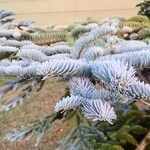
Abies procera
Red fir · Christmastree · Noble fir · White fir
Description
Source: leafsnapAbies procera, the noble fir, also called red fir and Christmas tree, is a species of fir native to the Cascade Range and Pacific Coast Ranges of the northwestern Pacific Coast of the United States. It occurs at altitudes of 300–1,500 meters (980–4,920 ft).
Care Guide
💧 Water
The noble fir, which originates from mountainous areas, thrives best with moderate moisture and can handle brief periods of dryness. It should be watered every 1-2 weeks, ensuring the soil remains hydrated but not waterlogged. As an evergreen, the noble fir requires careful watering during the growing season to sustain its foliage throughout the year.
How should I water my Noble fir?
Watering your Noble fir is a simple task. To water the tree, just use a garden hose to slowly soak the soil. This is the best method for mature trees as they need a lot of water. However, for smaller trees, a watering can or other small tool can be used. It's important to avoid overhead watering as it can cause disease, especially for young trees.
What do I do if I give my Noble fir too much or too little water?
Overwatering Noble fir can occur when the soil does not drain properly. If this happens, the plant may decline, and you will need to improve drainage or move it to a better location. If your Noble fir is in a pot, you might have to repot it with looser soil and better drainage. Overwatering can lead to diseases, so treat them promptly. Underwatering is easily remedied by watering more frequently. To determine if your Noble fir is overwatered, check the foliage, particularly the new growth. Discolored or easily broken new growth may indicate excessive moisture. Standing water or slow drainage is also a sign of overly moist soil. Underwatered Noble fir will have sparse, brown leaves. Evaluate if there has been excessive rain or high temperatures to help determine the cause of these symptoms.
How frequently should I give water to my Noble fir tree?
A mature Noble fir can survive on rainfall alone and doesn't require much water. During the hottest months, you may need to water it once a week, but for the rest of the year, watering may not be necessary. However, if you have a newly planted tree, regular watering is important to establish root growth. Remember that Noble firs don't like standing water, so it's better to water less than risk overwatering.
How often should I water my Noble fir tree?
During the height of summer, you generally need to water your Noble fir about one inch per week. However, this amount may vary if it has rained. For example, if it has rained one inch or more that week, you don't need to water your Noble fir. It's important to note that newly planted Noble firs require more water during their establishment period. Typically, you should water them about once every one to two weeks for the first few growing seasons.
How do I water my Noble fir tree all year round?
During the summer months, when the weather is the hottest, the Noble fir tree requires the most water. During this time, you should water the plant about once per week if there is no rainfall. However, during other times of the year, this plant can often survive without any water at all. In the spring and fall, you may need to provide some water if the weather is extremely hot, but this is rare. Unlike many other plants, the Noble fir does not go into full dormancy in the winter. This means that it will continue to grow even during the coldest months. However, the water needs during winter will still be relatively low since the cool temperatures do not cause the soil to dry out quickly.
☀️ Light Full sun
Noble fir comes from open habitats, such as sunny meadows and forest edges, that supply plenty of light. It does well in Full Sun but can also tolerate Partial Sun, adapting to different sunlight conditions.
What are the sunlight requirements for plants?
Plants have varying sunlight requirements to thrive. Full sun plants require above 6 hours of direct sunlight, whereas partial sun plants need about 3-6 hours of sunlight a day. It's crucial to observe the moving patterns of sunlight in your garden to ensure you're placing your plants in spots that offer an ideal balance of light and shade, catering to their specific needs, and promoting their overall well-being.
How do noble firs adapt to different sunlight conditions?
Noble firs, originating from open and partially shaded environments like sunny meadows and forest edges, are versatile in their sunlight needs. They thrive best in full sun but can also adapt well to partial sun conditions. This adaptability allows them to grow in various light conditions effectively. Additionally, when natural sunlight is not sufficient, especially during winter or in less sunny spots, artificial lighting can support their growth. Indoor noble firs can benefit from LED lights, adjusting the light's intensity and duration to mimic natural sunlight and meet the plant's needs for photosynthesis and growth.
What are common symptoms of inadequate sunlight in noble firs?
Noble firs show several symptoms when they don't receive enough sunlight. Such symptoms include smaller new leaves, leggy or sparse growth due to elongated spaces between leaves or stems, faster leaf drop as a conservation strategy, slower or halted growth, and lighter-colored new leaves or chlorosis indicating nutrient deficiencies. Additionally, overexposure symptoms like sunscald, leaf curling, wilting, and leaf scorching can appear, demonstrating the delicate balance needed for optimal sunlight exposure.
What solutions can address sunlight-related issues in noble firs?
To address insufficient sunlight for noble firs, gradually move the plants to sunnier locations to ensure they get at least 6 hours of direct sunlight daily. Utilizing south-facing windows or artificial light can help indoor plants. For outdoor plants, it's crucial to adapt them to sunnier spots carefully to prevent sunburn. Pruning or relocating plants to reduce obstructions and maximize light exposure are effective strategies. Note that damaged parts may not recover, but new growth will be healthy with improved light conditions.
🌡️ Temperature 0–32.2°C
Noble fir shows strong adaptability to a range of climate conditions, from very hot summers to cold winters. Still, it has an optimal temperature range for growth. When temperatures become too high, the plant is vulnerable to heat and humidity stress, which can lead to its death. In areas where temperatures near the lower limit of its cold tolerance, it is important to use insulation to protect the plant.
💨 Humidity high (>60%)
This plant needs special care because it loves high humidity levels of 60-80% or more. The best way to achieve this is by placing a humidifier near the plant. Daily misting is also essential! Make sure the room has good ventilation.
🪴 Soil 5-7
🌱 Fertilizer
Noble fir has specific nutrient needs and does not require heavy fertilization. Spring is the best time to apply fertilizer for optimal growth. Providing nutrients improves its health, strengthens its resistance to pests and diseases, and supports its long lifespan.
Why should I put fertilizer on my Noble fir tree?
To ensure healthy growth of Noble fir trees, it is recommended to fertilize them in the spring. It is important to provide support for these long-living plants. Adding nutrients to the soil can also enhance the tree's health and enable it to better resist pests and diseases, which may otherwise hinder growth and reduce its lifespan.
What is the ideal time to fertilize my Noble fir tree?
The growing medium may not always provide sufficient nutrients for healthy growth, but Noble fir is unique compared to regular garden plants. It doesn't need a lot of extra nutrients. If you want to fertilize, the recommended time for Noble fir is in the spring, before new growth emerges.
When is the best time to not use fertilizer on my Noble fir?
While some plants benefit from monthly or weekly fertilization, the Noble fir does not need excessive nutrients. Over-fertilization can actually harm it, leading to decline. To properly care for the Noble fir, only apply fertilizer during the spring season and avoid using any during the summer, fall, and winter months. Additionally, refrain from adding any organic matter to the soil during these seasons.
What kind of fertilizer does my Noble fir tree need?
The age of your plant determines the type of fertilizer it needs. For Noble fir, it doesn't require excessive nutrients. It's best to use a balanced plant food that supports root development and growth, but avoid fertilizers with high nitrogen levels.
How should I provide fertilizer for my Noble fir?
To properly fertilize Noble fir, it's crucial to consider both the timing and application method. In the spring, apply the fertilizer at the base of the plant while being careful not to get any on the trunk. If using granulated fertilizer, cover the pellets with a thin layer of soil to aid absorption into the soil.
🪴 Pot & Repot Every 12 months
✂️ Pruning
The noble fir, known for its pyramid shape and bluish-green needles, can greatly benefit from pruning during the winter. To care for your tree, start by removing any dead branches. Next, thin out crowded areas to improve air circulation. Finally, shape the tree to achieve a natural form. Make clean cuts just above the branch nodes to promote healing, which will enhance the tree's structural integrity and encourage healthy growth.
🌿 Propagating
🐛 Diseases & pets
☠️ Toxicity
Actually, fir trees are somewhat hazardous, especially to a variety of animals. When consumed, fir oils can cause vomiting and diarrhea. The needles can even pierce internal organs and are difficult to digest. Like the majority of foraged conifer needles, fir needles are edible and make excellent medicine.
Characteristics
- Plant Type
- Tree
- Life Cycle
- Perennial
- Genus
- Abies
- Family
- Pinaceae
- Hardiness Zone
- 3-8
- Mature Height
- 30.48 m
- Mature Spread
- 7.92 m
- Leaf Color
- Green, Blue
- Leaf Type
- Evergreen
- Bloom Time
- Mid spring, Late spring
- Planting Time
- Spring, Autumn
- Harvest Time
- Late summer, Early fall, Mid fall
- Native Area
- North America