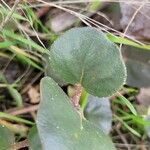
Abronia latifolia
Yellow sand-verbena · Coastal sand verbena · Yellow blossom
Description
Source: leafsnapThe perennial flower Abronia latifolia or Abronia arenaria is a species of sand-verbena known commonly as the coastal, or yellow sand-verbena. It is native to the west coast of North America, from southern California to the Canada–United States border. The plant bears attractive neatly rounded heads of small, bright golden flowers. The individual flowers have no petals; rather, they are composed of yellow bracts forming a trumpet-shaped calyx about the stamens. It bears a small, winged fruit. The plant grows in succulent mats on sand or other coastal substrate. The roots are stout, fusiform and often several feet long. These roots are edible, traditionally eaten by the Chinook Indians. This plant is seen exhibiting psammophory, a method by which plants save themselves from herbivores by attracting sand to their body making them difficult to be eaten. It needs salt water, not fresh water, and will not tolerate extreme drought.
🎭 Say a prayer for me.
Care Guide
💧 Water
Coastal sand verbena flourishes in coastal dunes where it needs well-drained soils and can tolerate salt spray. It should be watered weekly to maintain proper moisture levels, as this balances its drought resistance with the need for moderate humidity. Consistent soil moisture is essential during its growing season to ensure it remains healthy despite varying temperatures.
How should I water my Coastal sand verbena for the best results?
To best care for the Coastal sand verbena plant, you should use filtered water at room temperature. Tap water can be harmful due to particles it may contain. Because this plant is native to warm environments, it is sensitive to cold water. It is also important to avoid overhead watering, as it can cause issues with the foliage. Instead, water the plant by applying filtered room temperature water directly to the soil until it is fully soaked. This benefits the roots and helps them absorb nutrients and spread through the soil.
What should I do if I give too much or too little water to my Coastal sand verbena?
Overwatering is a more common issue than underwatering for Coastal sand verbena plants. When it receives too much water, the stems and leaves may wilt and turn yellow. Overwatering for a long time can also cause root rot, mold, and mildew, which can be fatal for the plant. Underwatering is less likely, as this plant can tolerate drought fairly well. However, if underwatering does occur, the leaves may become brittle and brown. It's important to notice signs of overwatering early on, as some diseases like root rot may not be reversible if left too long. If you see early signs, reduce your watering immediately and check the soil drainage. Replace poorly draining soil with a loose, well-draining potting mix. If you notice signs of underwatering, simply water more regularly until the signs go away.
How frequently do I need to water my Coastal sand verbena?
To determine if your Coastal sand verbena plant needs water, you can use a simple method. If your plant is in a pot, stick your finger into the soil. If the top two to three inches of soil feel dry, it's time to water it. The same method applies if you grow your plant outdoors in the ground. When the first few inches of soil have dried out, it's time to water. Typically, during spring and early fall, watering once a week is sufficient. However, in extremely hot weather, you may need to water twice or more per week. Keep in mind that mature, well-established Coastal sand verbenas can withstand drought quite well.
How much water does my Coastal sand verbena require?
To water your Coastal sand verbena effectively, don't hold back on the amount of water you use. Make sure the top two to three inches of soil are dry before watering, and then give the plant a good, thorough watering. You'll want to add enough water to completely soak the soil, allowing any excess water to drain out through the pot's drainage holes. If you don't see excess water draining, you may not be giving the plant enough water. However, be careful not to let water accumulate in the soil, as this can harm the plant. On the other hand, if water doesn't drain properly from the pot, it could indicate that the soil has poor drainage, which is bad for the plant's health. If the plant is outside, one inch of rain per week should be enough.
How do I water my Coastal sand verbena at different stages of growth?
The water needs of the Coastal sand verbena can vary depending on its growth stages. When it is in the early years of its life or has been recently transplanted, you should provide more water than usual. During these stages, the plant focuses on developing and spreading its roots, which require extra moisture for optimal growth. As the plant matures over a few seasons, it will require less water. Additionally, during the bloom period, the Coastal sand verbena may need more water due to its flower development.
☀️ Light Full sun
Coastal sand verbena prospers with strong, uninterrupted sunlight, much like in its native open beach and dune habitats. Its growth and health can suffer from inadequate light. Excessive light, however, does not harm it, reflecting its adaptation to places with little shade.
What are the sunlight requirements for Coastal sand verbena?
Coastal sand verbena requires full sun conditions to thrive, which means it needs more than 6 hours of sunlight daily. Given its origins in open beach and dune landscapes, it is well-adapted to intense, continuous solar exposure. Sufficient sunlight is crucial for its growth and health, and having too much light is not considered harmful to it. It's important to monitor how sunlight moves through your garden throughout the day to ensure your plants receive a balanced amount of light and shade, replicating their natural habitats as closely as possible.
How does artificial lighting benefit indoor Coastal sand verbena plants?
Artificial lighting can be vital for the growth of Coastal sand verbena when natural sunlight is insufficient, such as in winter or less sunny spaces. Choosing the right type of artificial light, like LED lights, allows customization to meet the plant's specific light wavelength needs. For optimal growth, full sun plants require 30-50W/sq ft of artificial light, partial sun plants need 20-30W/sq ft, and full shade plants need 10-20W/sq ft. The light source should be placed 12-36 inches above the plant to mimic natural sunlight, and most plants need 8-12 hours of light per day. This ensures faster, healthier growth by compensating for the lack of natural sunlight.
What are the symptoms of inadequate light for Coastal sand verbena?
Inadequate lighting can cause several problems for Coastal sand verbena, including smaller new leaves, leggy or sparse growth, faster leaf drop, slower or no new growth, lighter-colored new leaves, chlorosis (leaves turning yellow due to chlorophyll breakdown), sunscald (damage from intense sunlight), leaf curling (to minimize water loss), wilting (losing turgor pressure), and leaf scorching (brown, dry patches on leaves). These symptoms highlight the plant's struggle to adapt to poor light conditions and can significantly affect its health and appearance.
What solutions can help Coastal sand verbena adapt to indoor and outdoor lighting conditions?
To adapt Coastal sand verbena to varying light conditions, gradual acclimatization is key. For indoor plants needing more sunlight, progressively move them to sunnier spots each week until they receive at least 6 hours of daylight, using south-facing windows for maximum exposure. Artificial lights can supplement natural light, especially for larger plants that are difficult to move. Outdoors, transitioning plants to brighter areas gradually helps prevent sunburn. Removing obstructions that block sunlight, such as by pruning trees, and transplanting smaller plants during their dormant period to sunnier locations with good drainage can also enhance light access. It's worth noting that while parts of the plant that suffered from insufficient light may not fully recover, new growth should be healthy with improved light conditions.
🌡️ Temperature 15–35°C
Coastal sand verbena naturally grows in areas with moderate temperatures, specifically where the temperature ranges from 59 to 95 °F (15 to 35 ℃). To help it adjust to seasonal changes, it is advisable to maintain this temperature range throughout the seasons.
What is the optimal temperature range for Coastal Sand Verbena?
Coastal sand verbena, also known by its botanical name Abronia latifolia, thrives in moderate temperatures, specifically in a region where the temperature falls within the range of 59 to 95 °F (15 to 35 °C). To accommodate seasonal changes, it is beneficial to maintain this temperature range throughout the various seasons. The plant possesses strong cold resistance, indicating that special frost protection measures are generally not necessary during winter. However, if winter temperatures are expected to drop below -15°C, it is important to provide cold protection by covering the plant with soil or straw and watering it abundantly before the first freeze in autumn to ensure the soil remains moist and enters a frozen state. This approach helps prevent drought and water scarcity for the plant during winter and early spring.
How does Coastal Sand Verbena react to low temperatures?
Coastal Sand Verbena is cold-tolerant and performs best when the temperature remains above 15°C. During winter, it is recommended to keep the temperature above -10°C. If the temperature falls below -15°C, the plant may not show immediate signs of distress during winter, but there might be a decrease in sprouting or even a complete lack of sprouting in the spring. In such cases, removing any parts of the plant that have failed to sprout is the advised course of action in the spring.
How does Coastal Sand Verbena react to high temperatures?
Coastal Sand Verbena has an upper temperature tolerance limit and should ideally be kept below 35°C during the summer months. If the temperature rises above 41°C, the plant's leaves may become lighter in color, curl, become susceptible to sunburn, and, in severe cases, the entire plant may wilt and dry out. To mitigate these issues, it's recommended to trim away the sunburned and dried parts of the plant. Moving the plant to a shaded location during the midday and afternoon or using a shade cloth to protect it from direct sunlight can also help. Additionally, watering the plant in the morning and evening to keep the soil moist is advisable under high temperature conditions.
💨 Humidity
🪴 Soil 6-7
🌱 Fertilizer
The best time to fertilize a Coastal sand verbena is in early spring, as it emerges from dormancy and begins active growth. Fertilizing supplies essential nutrients for healthy growth. Although Coastal sand verbena has relatively low fertilizer requirements, applying fertilizer annually can improve its survival and encourage better, longer-lasting flowers.
🪴 Pot & Repot
✂️ Pruning
Coastal sand verbena is known for its vibrant yellow flower clusters and its trailing growth habit. To keep the plant healthy and looking its best, it's important to prune it from early to late spring. Focus on removing any dead or damaged stems during this time. Pruning in this way encourages healthier growth, prevents the plant from becoming leggy, and enhances its aesthetic appeal. This also results in a stronger plant structure that is more resilient to environmental stressors.
🌿 Propagating
🐛 Diseases & pets
☠️ Toxicity
Characteristics
- Plant Type
- Herb
- Life Cycle
- Perennial
- Genus
- Abronia
- Family
- Nyctaginaceae
- Hardiness Zone
- 7-10
- Mature Height
- 3 cm to 10 cm
- Mature Spread
- 49 cm
- Leaf Color
- Green, Gray
- Leaf Type
- Deciduous
- Flower Color
- Yellow
- Flower Size
- 0.76 cm to 1.27 cm
- Bloom Time
- Late spring, Early summer, Mid summer
- Planting Time
- Spring, Summer
- Harvest Time
- Mid summer, Late summer, Early fall