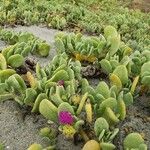
Abronia maritima
Red sand verbena
Description
Source: leafsnapAbronia maritima is a species of sand verbena known by the common name red sand verbena. This is a beach-adapted perennial plant native to the coastlines of southern California, including the Channel Islands, and northern Baja California. It grows along stable sand dunes near, but not in, the ocean surf. This halophyte requires saline water which it receives mostly in the form of sea spray, and cannot tolerate fresh water or prolonged dry conditions. Its succulent tissues are adapted to isolate and store salt. This sand verbena forms a green mat along the ground, its stems sometimes buried under loose sand. It flowers year-round in bright red to pink or purplish clusters of flowers. The mats are thick and provide shelter for a variety of small beach-dwelling animals. This is a rare plant. Its habitat is located in heavily traveled beach areas, where it is disturbed by human activity.
Care Guide
💧 Water
Red sand verbena, native to coastal dunes, thrives in sandy, well-draining soils with infrequent rainfall. This plant prefers dry conditions and is tolerant of drought. To care for red sand verbena, water it weekly to mimic its natural moisture levels. Ensure it receives full sun exposure, which boosts its growth, and manage its water needs carefully during the growing season.
How should I water my Red sand verbena?
When watering the Red sand verbena, it's important to use filtered water at room temperature. Tap water may contain harmful particles that can be detrimental to the plant's health. Since the Red sand verbena is native to warm environments, it's best to use water that is at room temperature or slightly warmer to avoid shocking the plant. Additionally, it's recommended to avoid overhead watering as it can cause issues with the foliage. Instead, gently apply filtered water directly to the soil until it is completely soaked. This helps the plant by moisturizing the roots and allowing them to spread through the soil and collect essential nutrients.
What should I do if I give too much or too little water to my Red sand verbena?
Overwatering and underwatering can harm your Red sand verbena. Overwatering is more common and can cause wilting, yellowing, and diseases like root rot, mold, and mildew. Underwatering is less likely, but it can make the leaves brittle and brown. It's important to recognize the signs of overwatering early and reduce watering immediately. Check the soil drainage and replace it if needed. If your plant is not getting enough water, simply increase your watering frequency until the signs improve.
How often do I need to water my Red sand verbena?
If your Red sand verbena is in a pot, the easiest way to know if it needs water is to check the soil with your finger. If the top few inches of soil are dry, it's time to water it. The same method can be used if you have Red sand verbena growing in the ground. Typically, you'll need to water it once a week in spring and early fall, but in extremely hot weather, you may need to water it twice a week or more. However, mature Red sand verbena plants can actually tolerate drought well.
How much water does my Red sand verbena plant require?
To properly water your Red sand verbena, you should give it a generous amount of water without hesitation. When the top two to three inches of soil are dry, it's time to water thoroughly. Make sure to soak the soil completely, allowing excess water to flow out of the drainage holes at the bottom of the pot. If you don't observe any excess water draining, you may have not provided enough water. However, be cautious not to let water accumulate in the soil, as this can harm the plant. On the other hand, if water doesn't drain properly from the pot, it signifies that the soil is not well-draining, which is not good for the plant's health. If the Red sand verbena is outdoors, receiving around 1 inch of rain per week is sufficient.
How do I water my Red sand verbena as it grows?
The water requirements of the Red sand verbena can vary depending on its growth stages. In the first few years of life or when the plant is freshly transplanted, it will need more water than usual due to the energy it puts into developing new roots for future growth. These new roots require additional moisture to thrive. As the plant matures, it will require less water. Another stage that may require increased watering is during the bloom period, as flower development requires a significant amount of moisture.
☀️ Light Full sun
Red sand verbena performs best in locations that receive the maximum sunlight all day, showing a preference for fully exposed sites. This sun exposure is essential for its healthy growth and development. Insufficient light can reduce the plant’s vigor, whereas excessive light does not create the same problem.
How much sunlight does Red sand verbena need to grow?
Red sand verbena requires six to eight hours of direct sunlight daily. If grown outdoors, choose a location with full sunlight throughout the day. Indoors, place it near a south-facing window or another sunny spot. However, avoid exposing the plant to direct sunlight during high temperatures or hot summer afternoons above 35°C(95℉). Intense sunlight can scorch or wilt the leaves, so use sheer curtains or blinds to filter the light or move the plant to a shadier area.
What happens if Red sand verbena doesn't get enough sunlight?
Insufficient sunlight can pose challenges for your Red sand verbena. It may struggle to grow and become weak and leggy. Look out for yellow leaves, which indicate a lack of sunlight and a reduced ability to produce chlorophyll. In extreme scenarios, the plant may ultimately perish.
What happens if Red sand verbena gets too much sunlight?
Red sand verbena requires full sunlight, but excessive direct sunlight should be avoided. Prolonged exposure to intense sunlight can cause sunburn, leading to brown or scorched leaves. To prevent this, closely monitor the plant and relocate it to a shadier area if needed.
🌡️ Temperature 20–37.8°C
Red sand verbena is native to temperate climates and performs best when temperatures range from 68 to 100 °F (20 to 38 ℃). In cooler seasons it may need extra attention, such as moving the plant to a warmer location or giving it additional insulation.
What temperature is best for Red sand verbena?
To help your tropical plants thrive, it's best to maintain a temperature range of 75℉ to 90℉ (25-32℃). While different species can tolerate temperatures outside this range, sticking within a few degrees of these limits will ensure optimal growth. However, there are extreme temperature limits to be aware of. Anything below 50℉ (10℃) or above 95℉ (35℃) can hinder growth and cause issues with the leaves and stems. Low temperatures are particularly damaging, as even a light frost can lead to the death of your tropical plants. In fact, cellular death can occur rapidly, with some species dying within 12 to 24 hours.
Does Red sand verbena need different temperatures for different stages of growth?
Red sand verbena, a tropical plant, does not rely on temperature changes to transition between growing phases. However, consistency is crucial for its growth. Fluctuations in temperature can negatively impact its development, regardless of the current phase. Therefore, it is preferable to maintain a controlled environment. The optimal temperature range for red sand verbena is between 75℉ and 90℉ (25-32℃), with it being important to avoid dropping below the lower limit. While temperatures exceeding 90℉ (32℃) are not ideal, this tropical plant can tolerate them reasonably well. Conversely, temperatures below 50℉ (10℃), particularly 40℉ (5℃), can directly harm this species that thrives in heat.
Does Red sand verbena require different temperatures for each season?
Red sand verbena does not require different temperatures for different growing seasons. The key to seasonal care is maintaining the environment within the optimal temperature range. To ensure this, it is recommended to keep this plant indoors. By doing so, you have control over the temperature regardless of the outside climate. Additionally, light is crucial for tropical species, including these plants. They prefer partial side-level sun exposure, meaning they should receive dappled or filtered light. When growing these plants indoors, bright but indirect light is the best option. Excessive direct sunlight can harm the leaves of your plant and hinder its growth.
What temperatures should you keep your Red sand verbena in to keep it healthy?
Here are three tips to help you take care of your plants: 1. Keep your plants away from windows during colder months: Cold air can leak into your home through cracks in the windows, and any plants placed near them will be affected. Move tropical plants to an area with bright but indirect light, while avoiding potential drafts. 2. Watch out for dry patches, which may indicate too much sunlight or heat: If you notice white or scorched leaves, your plant may be getting too much heat or sunlight. This can lead to dehydration and hinder growth. Dry spots can spread and eventually cause your plants to die if left unaddressed. 3. Be cautious of frost: Colder temperatures and frost can damage plants by disrupting their water circulation. This can lead to a lack of moisture in the stems and leaves. Look out for signs of hydrosis (a water-soaked appearance) and if the issue persists, the plant may shrivel and turn dark brown or black, eventually leading to death.
How can I keep my Red sand verbena at the correct temperature?
To maintain the appropriate temperature for Red sand verbena, it is important to consider both the climate and humidity. To mimic its natural habitat, it is recommended to keep this species in a room where you can control the temperature. Monitoring humidity levels is also crucial as it directly affects the temperature. You can increase humidity artificially by using a humidifier or misting the leaves with water. If you plan to grow this species outdoors, it may be challenging to maintain the right balance of temperature and humidity. In such cases, it is best to bring the plant indoors if temperatures drop or the air becomes too dry. Having an indoor growing space allows for better climate control, which will help the plant thrive.
💨 Humidity
🪴 Soil 6-7
🌱 Fertilizer
Proper fertilization is essential for Red sand verbena's health and appearance. Fertilize Red sand verbena during summer, applying fertilizer monthly throughout the season. Nutrients provide the fuel for growth and support the plant's parts. Fertilization improves Red sand verbena's flower display, ensuring the best blooms.
🪴 Pot & Repot
✂️ Pruning
Red sand verbena, with its succulent leaves and vibrant flowers, is perfect for coastal regions. To promote growth and enhance blooms, prune the plant from early to late spring. This will also improve air circulation and reduce the risk of pests. Always use sterilized tools during pruning to prevent disease. For the best results, refer to gardening guides tailored to your specific climate conditions.
🌿 Propagating
🐛 Diseases & pets
☠️ Toxicity
Characteristics
- Plant Type
- Herb
- Life Cycle
- Perennial
- Genus
- Abronia
- Family
- Nyctaginaceae
- Hardiness Zone
- 10-11
- Mature Height
- 30 cm to 91 cm
- Mature Spread
- 49 cm
- Leaf Color
- Green, Gray
- Leaf Type
- Evergreen, Deciduous
- Flower Color
- Purple, Lavender
- Flower Size
- 2.54 cm to 5.08 cm
- Bloom Time
- All year round
- Planting Time
- Spring, Summer, Autumn
- Harvest Time
- All year round