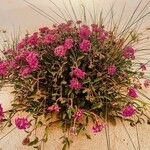
Abronia umbellata
Sand-verbena · Purple sand verbena · Wild verbena · Pink sand verbena · Beach sand-verbena
Description
Source: leafsnapAbronia umbellata (pink sand verbena) is a flowering annual plant which is native to western North America. Other common names include beach sand verbena and purple sand verbena.
🎭 Mountain of pure affection: you are aspiring,
Care Guide
💧 Water
Originating from coastal sand dunes, sand-verbena thrives with moderate moisture and can withstand short periods of drought. To keep it healthy, it should be watered weekly to simulate natural rainfall. Although usually grown outdoors, sand-verbena also adapts well to container gardening, where watering can be easily controlled.
How should I water my Sand-verbena plant?
When watering the Sand-verbena, it is important to use filtered water at room temperature. Tap water can contain harmful particles that could negatively affect the plant's health. The ideal water temperature for this plant is room temperature or slightly warmer since it is native to a warm environment and cold water can shock its system. Avoid overhead watering as it may cause problems with the foliage. Instead, it is recommended to directly water the soil with filtered room temperature water until it is completely soaked. This helps to moisten the roots and promote their growth and nutrient absorption.
What should I do if I give my Sand-verbena too much or too little water?
Overwatering and underwatering are both harmful to your Sand-verbena, but overwatering is more common. When the Sand-verbena gets too much water, its stems and leaves may wilt and turn yellow. Prolonged overwatering can also cause diseases like root rot, mold, and mildew, which can kill the plant. Underwatering is less likely for the Sand-verbena since it can tolerate drought fairly well. However, it can still happen, and the leaves will become brittle and brown. It's important to recognize the signs of overwatering early when taking care of your Sand-verbena because some diseases like root rot cannot be reversed if you wait too long. If you notice early signs of overwatering, reduce your watering schedule immediately and check the soil's quality. If it drains poorly, replace it with a loose, well-draining potting mix. If your Sand-verbena is showing signs of too little water, simply water more regularly until the signs disappear.
How many times should I water my Sand-verbena?
If your Sand-verbena plant is in a pot, you can check if it needs water by sticking your finger into the soil. If the top two to three inches of soil feel dry, then it's time to water it. If you have your Sand-verbena planted outside in the ground, you can use the same method to test the soil. If the top few inches of soil are dry, it needs water. Typically, during spring and early fall, you'll need to water once a week using this method. However, in extremely hot weather, you may need to water it twice a week or more. Nonetheless, mature and well-established Sand-verbena plants can tolerate drought conditions.
How much water does my Sand-verbena plant need?
To properly water your Sand-verbena, don't be afraid to use a generous amount of water. When the top two to three inches of soil are dry, it's time to give it a thorough watering. Make sure to soak the soil completely, allowing excess water to drain out from the bottom of the pot. If you don't see any excess water draining, it means you haven't given enough water. However, be careful not to let the water accumulate in the soil, as this can harm the plant. On the other hand, if water doesn't drain through the pot, it could be a sign of poorly draining soil, which is not good for the plant's health. If the plant is outside, one inch of rain per week should be enough.
How do I water my Sand-verbena when it is growing differently?
The water needs of the Sand-verbena vary depending on its growth stages. When the plant is in its first few years or has just been transplanted, it requires more water than usual. This is because it expends a lot of energy on developing new roots, which need extra moisture for optimal growth. As the Sand-verbena matures, it will require less water. Another stage that may require increased water is during the bloom period, as flower development requires a significant amount of moisture.
☀️ Light Full sun
Sand-verbena performs best with abundant sunlight, preferring sun for most of the day. It can tolerate locations that receive sun only part of the day. Excessive shade may cause poor growth, while overly intense exposure can result in sunburn.
What are the sunlight requirements for Sand-verbena?
Sand-verbena requires ample sun exposure to thrive, ideally receiving the sun's rays throughout the majority of the day. It can tolerate some partial shade but excessive shade or too intense sun exposure could respectively lead to poor growth or potential sunburn. Specifically, it thrives in full sun, which is defined as above 6 hours of sunlight, or partial sun, about 3-6 hours of sunlight. It's crucial to monitor how sunlight moves through your garden to ensure you place your Sand-verbena in spots that provide the perfect balance of light and shade.
How do artificial lights support Sand-verbena's growth indoors?
Indoor Sand-verbena plants may require artificial lighting to compensate for insufficient natural sunlight, especially in winter or less sunny spaces. Artificial lights such as LEDs are beneficial as they can be customized to provide specific light wavelengths needed by plants. For optimal growth under artificial light, full sun plants need 30-50W/sq ft, partial sun plants require 20-30W/sq ft, and full shade plants need 10-20W/sq ft. The light source should be placed 12-36 inches above the plant to mimic natural sunlight, ensuring the plant receives 8-12 hours of light per day.
What are the symptoms of inadequate lighting on Sand-verbena?
Inadequate lighting can lead to several symptoms in Sand-verbena, including the growth of smaller leaves, leggy or sparse growth, faster leaf drop, halted new growth, lighter-colored new leaves, chlorosis, sunscald, leaf curling, wilting, and leaf scorching. These symptoms indicate that the plant is not receiving enough sunlight, leading to poor growth and health. Conversely, some symptoms like chlorosis and sunscald can occur due to excessive sunlight, which negatively affects the plant's ability to photosynthesize.
How can I improve my Sand-verbena's light exposure?
Improving your Sand-verbena's light exposure involves a few strategies, whether indoors or outdoors. Indoors, gradually move plants to a sunnier location each week until they achieve at least 6 hours of direct sunlight daily, utilizing south-facing windows and keeping curtains open. Consider using artificial light for additional support. Outdoors, progressively move plants to sunnier spots to avoid sudden light intensity changes which can cause sunburn. Reducing obstructions like overhanging branches can also increase sun exposure. When necessary, transplanting smaller plants to sunnier locations during their dormant period can be effective.
🌡️ Temperature 20–37.8°C
Sand-verbena comes from regions where temperatures usually range from 68 to 100 °F (20 to 38 ℃). Preventing abrupt temperature changes is vital for maintaining the plant's health.
What are the ideal temperature conditions for growing Sand-verbena?
Sand-verbena thrives in climates where temperatures typically range from 68 to 100 °F (20 to 38 °C). It is extremely heat-loving and does not handle cold temperatures well. To keep Sand-verbena healthy, it's important to maintain a stable temperature and avoid sudden fluctuations. During winter, keeping the temperature above 20°C is crucial for the plant's growth, while temperatures nearing 5°C can be harmful. If grown outdoors, it's recommended to bring Sand-verbena indoors in the autumn, placing it near a bright window but away from heaters to ensure it remains in a suitable temperature range.
What should I do if my Sand-verbena suffers from low temperature exposure?
If your Sand-verbena has been exposed to low temperatures and is showing symptoms such as a lightening of leaf color, which may turn brown or black following frost damage, along with wilting and drooping, it is crucial to take immediate action to salvage the plant. You should trim off the frost-damaged parts and then move the plant indoors to a warm environment to protect it from the cold. Placing the plant near a south-facing window will ensure it gets enough sunlight, but make sure to keep it away from heaters and air conditioning vents to avoid excessive dryness.
How should I care for my Sand-verbena during high temperatures?
During the summer, when temperatures are high, it's important to ensure that Sand-verbena is not exposed to temperatures above 38°C to avoid heat stress and sunburn. If the plant shows signs of stress, such as lighter leaf color or susceptibility to sunburn when temperatures exceed 43°C, you should trim away the damaged parts and move the plant to a shadier location that's protected from the midday and afternoon sun. Additionally, watering the plant in the morning and evening can help maintain soil moisture, providing relief from the heat.
💨 Humidity
🪴 Soil 5-7
🌱 Fertilizer
Proper fertilization is essential for Sand-verbena's health and appearance. Fertilize Sand-verbena in summer, repeating the treatment monthly throughout the season. Nutrients fuel growth and maintain the plant's parts. Fertilization improves Sand-verbena's flower display, helping ensure the best blooms.
🪴 Pot & Repot
✂️ Pruning
Sand-verbena is known for its vibrant flower clusters and sprawling growth habit. To encourage healthy growth, prune it from early to late spring. Start by removing any dead stems and lightly trimming leggy shoots. Always use clean tools to prevent infections and to aid in the plant’s recovery. Also, ensure good air circulation around the plant to reduce the risk of disease.
🌿 Propagating
🐛 Diseases & pets
☠️ Toxicity
Characteristics
- Plant Type
- Herb
- Life Cycle
- Perennial
- Genus
- Abronia
- Family
- Nyctaginaceae
- Hardiness Zone
- 10-11
- Mature Height
- 10 cm
- Mature Spread
- 20 cm to 91 cm
- Leaf Color
- Bronze
- Leaf Type
- Semi-evergreen
- Flower Color
- Pink, Purple
- Flower Size
- 1.02 cm to 1.27 cm
- Bloom Time
- Mid spring, Late spring, Summer, Fall
- Planting Time
- Spring, Summer, Autumn
- Harvest Time
- Summer, Fall, Early winter