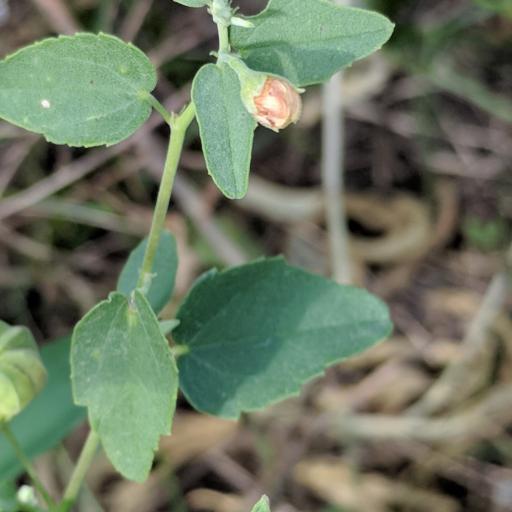
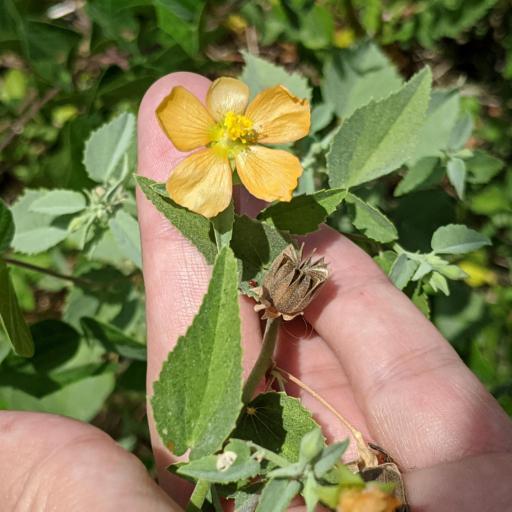
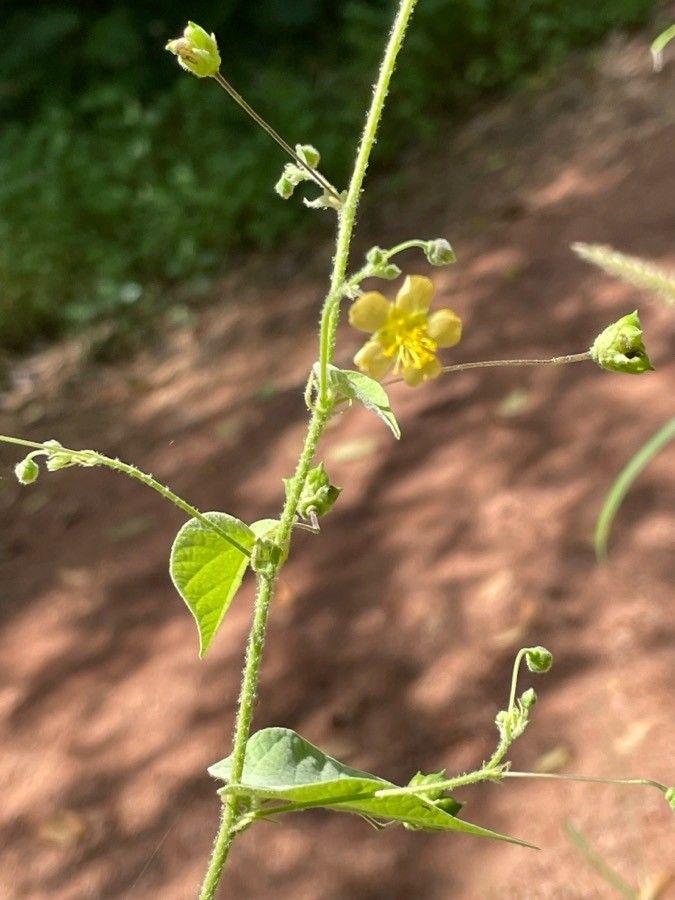
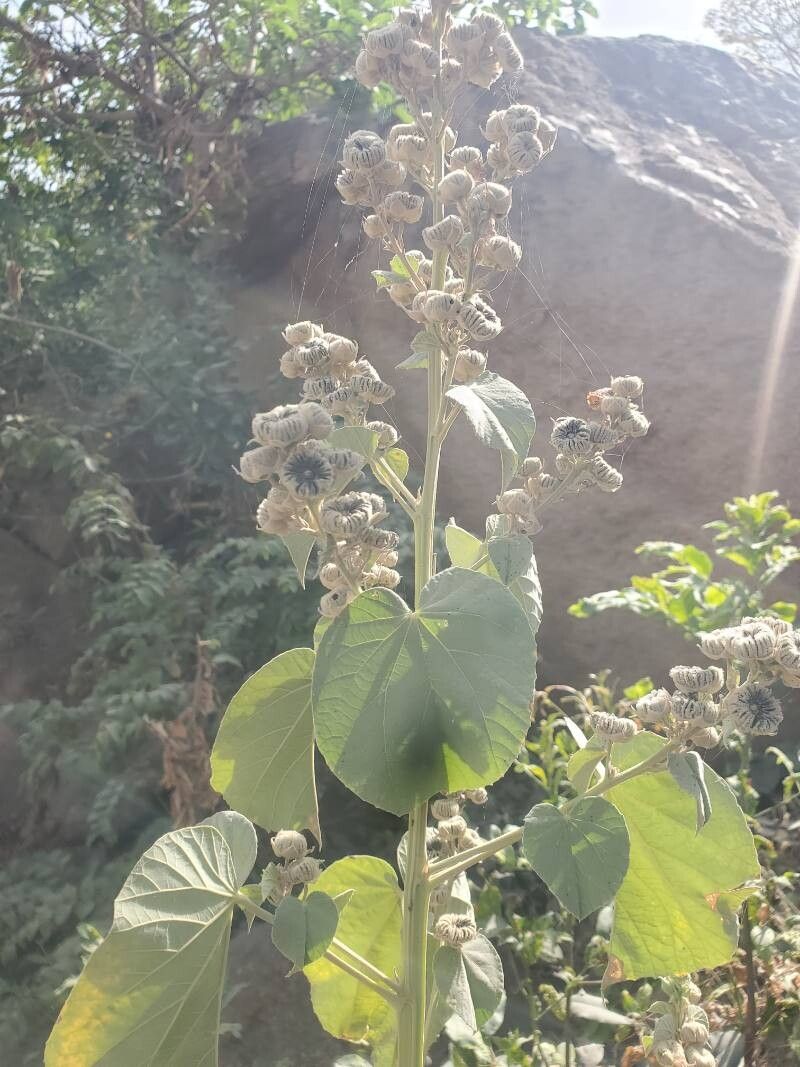
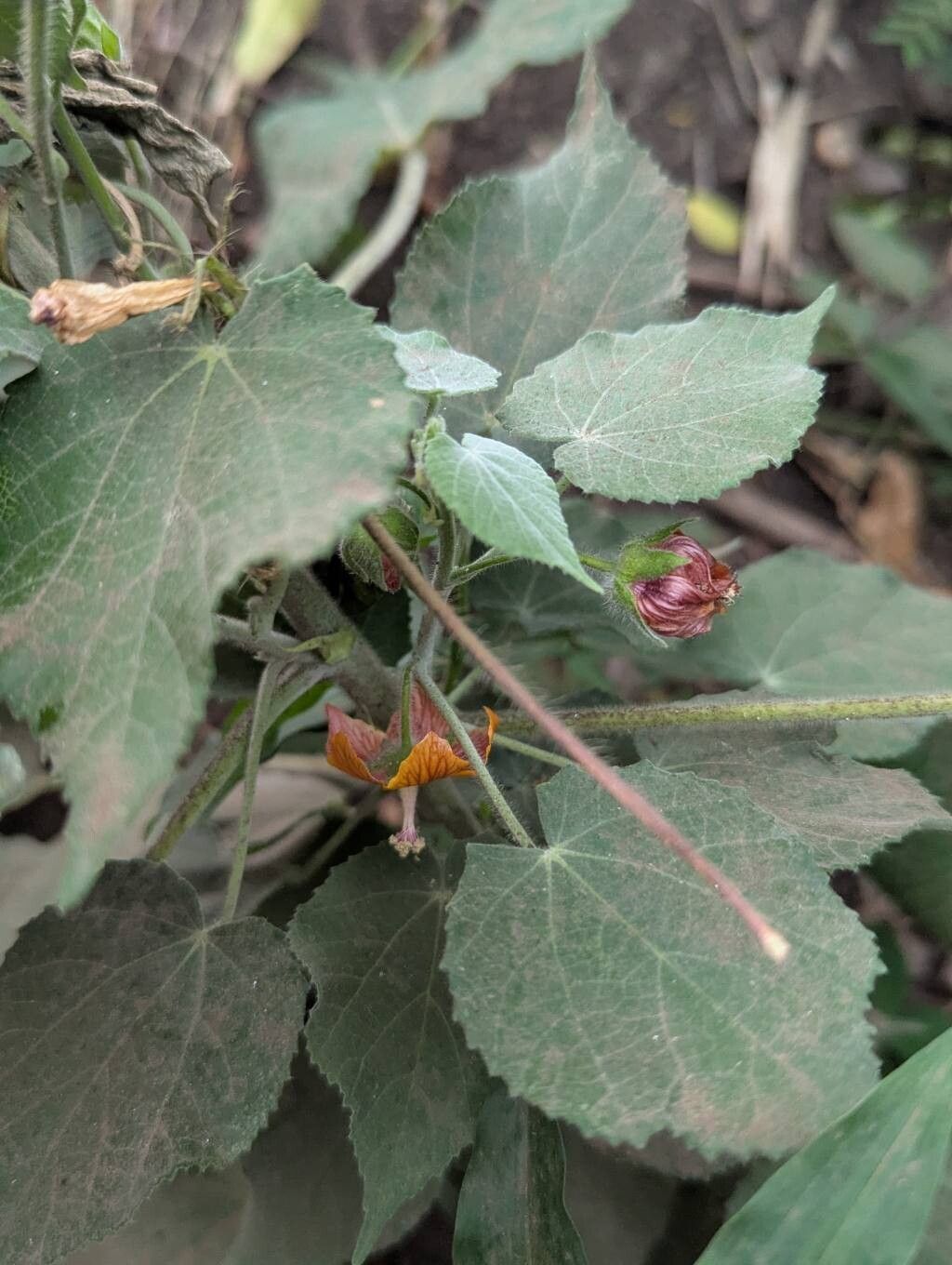
Abutilon fruticosum is a widespread species of flowering plant in the mallow family known by the common names Texas Indian mallow, pelotazo, and sweet Indian mallow. It is native to Africa, southern and southwestern Asia (from Saudi Arabia to India), northern Mexico, and the south-central United States. Abutilon fruticosum is a perennial herb growing up to 1.8 meters (6 feet) tall, but usually not exceeding 90 centimeters (3 feet). The alternately arranged leaves are up to 10 centimeters (4 inches) long. The blades are thick and coated in hairs, appearing gray. The yellow-orange flowers are up to about 2.5 centimeters (1 inch) wide. Flowering occurs in June through October in Texas. Abutilon fruticosum grows in chaparral and woodlands and on prairies. It grows on cliffs, slopes, and limestone outcrops. Abutilon fruticosum is eaten by wild and domesticated ungulates. The seeds provide food for birds such as the bobwhite quail. The flowers attract birds and butterflies. It is host to larvae of a number of butterfly species. Abutilon fruticosum is drought-tolerant and can be used in xeriscaping.
Indian mallow demonstrates strong resistance to disease and is generally not susceptible to illnesses. In terms of care, this plant is fairly low-maintenance. When grown outdoors it needs only minimal watering, and larger plants typically do not require pruning. Smaller plants, however, should be trimmed after they have finished blooming. Indian mallowt is appropriate for anyone with an outdoor area, such as a garden or deck, and does not need extensive care experience.
How to keep Abutilon Fruticosum.
Light
The Indian mallow needs plenty of sunlight to thrive. It comes from sunlit environments, so it tolerates strong light, but it cannot cope with shaded conditions. Too little light will limit its growth, while too much may scorch the leaves.
Temperature
Indian mallow originates from areas with mild climates and does best in temperatures of 59 to 95 °F (15 to 35 ℃). The plant can cope with seasonal variation, but may need protection if temperatures fall below its favored range.
Fertilizer
The timing of fertilization is important for Indian mallow. Apply fertilizer in early spring and then every month through early summer. Fertilizer encourages attractive blooms and supplies energy during both dormant and active growth periods.
Botanical profile.
- Plant Type
- Shrub
- Life Cycle
- Perennial
- Genus
- Abutilon
- Family
- Malvaceae
- Hardiness Zone
- 7-9
- Mature Height
- 0.91 m to 1.83 m
- Mature Spread
- 30 cm to 61 cm
- Leaf Color
- Green
- Leaf Type
- Evergreen, Deciduous
- Flower Color
- Yellow
- Flower Size
- 2.54 cm
- Bloom Time
- Late spring, Summer, Early fall, Mid fall
- Planting Time
- Spring, Summer, Autumn
- Harvest Time
- Mid summer, Late summer, Fall
- Native Area
- Burkina Faso, Djibouti, Somalia, Egypt, India, Angola, United Arab Emirates, Mexico, Namibia, Eritrea, Pakistan, Morocco, Yemen, Kenya, Niger, Tanzania, Zimbabwe, Mali, Oman, Ethiopia, Qatar, Botswana, Saudi Arabia, South Africa, Sudan, Mauritania, Chad, Myanmar, Senegal, Iran, Algeria
Other names.