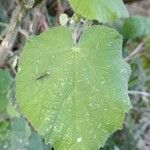
Abutilon grandifolium
Flowering Maple · Hairy Indian mallow · Hairy abutilon · Velvetleaf · Hairy tall abutilon
Description
Source: leafsnapAbutilon grandifolium, the hairy Indian mallow, is a large shrub that is up to 3 m (9.8 ft) high with broad, 3–18 cm (1.2–7.1 in) leaf blades. Flowers are axillary, with a yellow corolla 2–3.5 cm (0.8–1.4 in) across, composed of petals 1–1.5 cm (0.4–0.6 in) long. The fruits are ovoid-globular schizocarps that are 1–1.5 cm (0.4–0.6 in) in diameter and composed of ten shortly beaked mericarps, containing 2-3 seeds each.A. grandifolium can be distinguished from A. theophrasti by long, simple hairs on the stem rather than stellate hairs.
Care Guide
💧 Water
The hairy Indian mallow thrives best in conditions similar to its native habitat, which includes periods of intermittent rainfall and dryness. It requires minimal watering—typically about once every 2 to 3 weeks. While it is more suitable for outdoor cultivation, its water needs decrease during dormancy, allowing for resource conservation throughout seasonal changes.
How should I water my Hairy Indian Mallow plant?
Your Hairy Indian mallow is not very particular about how you water it. You can use any common watering tool such as a watering can, hose, or even a cup to water this plant. It is important to water the soil directly and make sure all areas are evenly moistened to provide sufficient water to the root system. Using filtered water is ideal as tap water can contain harmful particles for plants. Also, it is best to use water at or slightly above room temperature as extremely hot or cold water may shock the Hairy Indian mallow. However, this plant typically responds well to any type of water you give it.
What should I do if I give too much or too little water to my Hairy indian mallow?
Outdoor plants, especially newly planted ones or seedlings, are susceptible to being under-watered. It's important to remember to water them enough for the first few months when they are small or just planted. Once the roots are established, Hairy Indian Mallow can rely on rain most of the time. When planted in pots, overwatering becomes more likely. If you accidentally overwater your Hairy Indian Mallow, you should take immediate action to address the situation. Stop watering the plant right away to minimize the impact of overwatering. Then, remove the plant from its pot and inspect the roots. If there is no root rot, you can return the plant to its container. However, if there are signs of root rot, trim away the affected roots and consider using a fungicide to prevent further damage. Lastly, repot the Hairy Indian Mallow in well-draining soil. On the other hand, underwatering can be easily fixed. If you notice drooping, dry, and falling leaves, increase your watering frequency. The leaves will regain fullness quickly once sufficiently watered. Make sure to correct your watering routine promptly when underwatering occurs.
How frequently should I water my Hairy Indian Mallow?
Most outdoor plants can grow naturally with rain, but if your area doesn't get enough rain, water them every 2 weeks in spring and fall. In summer, you'll need to water more often and in winter, water less frequently. If you have a young or newly planted Hairy Indian Mallow, water it more often to help it establish and grow. For potted plants, there are two main ways to determine watering frequency. First, you can set a predetermined schedule, like once a week or once every other week. However, this may not always work considering the unique conditions of your Hairy Indian Mallow's environment. The other approach is to water based on soil moisture. Wait until the top two to four inches of soil have completely dried out before watering again. This method is especially important during the summer when the plant's water needs are highest.
How much water does my Hairy indian mallow plant need?
When watering your Hairy Indian Mallow, it's important to note that it doesn't always require a lot of water. If only a few inches of soil have dried since the last watering, giving it about five to ten ounces of water will promote healthy growth. You can also determine how much water to give based on the moisture of the soil. Keep an eye on how many inches of soil have dried out between waterings. To ensure your Hairy Indian Mallow gets enough moisture, water it until all the soil layers that have dried out are moistened. If more than half of the soil has dried, it's a good idea to give it more water. In these cases, continue watering until you see excess water draining from the pot's drainage holes. If your plant is planted in an area that receives plenty of rain, it may not need additional watering. When the Hairy Indian Mallow is young or just getting established, make sure it gets 1-2 inches of rain per week. As it grows, it can rely on rainwater, only requiring additional watering during hot weather with no rainfall for 2-3 weeks to prevent stress.
How can I know if I'm giving enough water to my Hairy Indian Mallow plant?
Overwatering is a common problem for the Hairy Indian Mallow, and there are clear signs to watch for. If you overwater your plant, you'll notice yellowing leaves and potentially leaf drop. Overwatering can also cause the plant to shrivel and promote root rot. On the other hand, if you underwater your Hairy Indian Mallow, it will start to wilt and have brown or brittle leaves. Whether you see signs of overwatering or underwatering, it's important to take action and restore your plant's health.
☀️ Light Full sun
the hairy indian mallow needs prolonged sunlight to grow well. it can, however, tolerate conditions where the sun's rays are partially blocked. yet too little light or an excessive amount can harm its health. because it comes from a sun-rich environment, its growth shows this requirement.
What are the sunlight requirements for Hairy Indian Mallow?
Hairy Indian Mallow thrives in full sunlight, requiring more than 6 hours of sunlight daily. It can also grow in partial sun, which is about 3-6 hours of sunlight. It's important to observe how sunlight moves through your garden to find the perfect spot that balances light and shade, ensuring your plants are happy and healthy.
How does artificial lighting support Hairy Indian Mallow growth indoors?
When natural sunlight is insufficient, especially during winter or in areas with less sun, artificial lighting becomes crucial. Indoor plants like the Hairy Indian Mallow benefit significantly from artificial lights that can replicate sun-like conditions. LED lights are recommended because they can be tailored to provide specific wavelengths needed by the plant. Full sun plants require 30-50W/sq ft, partial sun plants need 20-30W/sq ft, while full shade plants should have 10-20W/sq ft of artificial light. The lighting setup should ideally mimic natural daylight hours, typically 8-12 hours per day, positioned 12-36 inches above the plant.
What are the common symptoms of inadequate lighting for Hairy Indian Mallow?
Common symptoms of light deficiency in Hairy Indian Mallow include smaller new leaves, leggy or sparse growth, faster leaf drop, slower or halted growth, and lighter-colored new leaves. Excessive sunlight can cause chlorosis (yellowing of leaves), sunscald (damaged leaves or stems), leaf curling, wilting, and leaf scorching. These symptoms help identify whether the plant is receiving too much or too little light, affecting its health and development.
How can you address lighting issues for Hairy Indian Mallow?
To address lighting issues, indoor Hairy Indian Mallow plants should be gradually moved to a location where they receive at least 6 hours of direct sunlight a day, utilizing south-facing windows for natural light or artificial grow lights for additional support. For outdoor plants, shifting them to sunnier spots gradually is key to avoiding sunburn. Removing obstructions like overhanging branches can also help increase sun exposure. For plants grounded in less optimal lighting conditions, considering transplanting to a sunnier location during their dormant period, usually late winter or early spring, can significantly help.
🌡️ Temperature 20–37.8°C
Hairy Indian mallow comes from tropical areas, where the weather is usually warm and humid. As a result, it is adapted to high heat and moisture. It does not tolerate sudden shifts in temperature and prefers a consistent thermal environment, so it is important to prevent temperature swings indoors. It generally cannot endure cold conditions and needs warmer temperatures to grow. If the surrounding temperature falls too low, the plant may stop growing or even die.
What is the Hairy Indian Mallow?
The Hairy Indian Mallow, known scientifically as Abutilon grandifolium, is a plant species recognized by its distinct name and characteristics. However, specific details about its essentials, such as uses or growth conditions, and symptoms of its significance or effects were not provided.
💨 Humidity
🪴 Soil 6-7
🌱 Fertilizer
The best time to fertilize a Hairy indian mallow is in early spring, when it breaks dormancy. This encourages overall growth and supports flower development. Fertilizing improves the foliage, stems, and branches, while encouraging larger, more vibrant, and longer-lasting flowers. It helps move nutrients from the roots to the flowers and enhances the plant's health and resistance to disease.
🪴 Pot & Repot
✂️ Pruning
Hairy Indian mallow has leaves covered in fine hairs, and it benefits greatly from pruning between early and late winter. Pruning helps remove dead or damaged branches, promoting healthier growth. This practice not only shapes the plant but also enhances air circulation and improves flowering. Always use clean, sharp tools, and monitor the plant's growth every year to maintain optimal structure and vigor.
🌿 Propagating
🐛 Diseases & pets
☠️ Toxicity
Characteristics
- Plant Type
- Shrub
- Life Cycle
- Perennial
- Genus
- Abutilon
- Family
- Malvaceae
- Hardiness Zone
- 9-11
- Mature Height
- 3.05 m
- Mature Spread
- 0.91 m to 2.13 m
- Leaf Color
- Green, Light Green
- Leaf Type
- Evergreen
- Flower Color
- Yellow, Orange
- Flower Size
- 2.03 cm to 3.56 cm
- Bloom Time
- All year round
- Planting Time
- Spring, Summer, Autumn
- Harvest Time
- All year round
- Native Area
- Uruguay, Chile, Paraguay, Argentina, Bolivia, Peru, Brazil