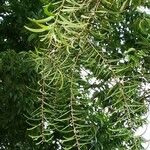
Acacia confusa
Formosan koa · Small Philippine Wattle · Small Philippine acacia · Formosa acacia · False koa
Description
Source: leafsnapAcacia confusa is a perennial tree native to Southeast Asia, especially Taiwan, where it is commonly known as Formosa Koa. This tree, a member of the Fabaceae family, can grow up to 15 meters tall. It is easily recognizable by its dark green leaves and yellow flowers, which bloom during the spring. The bark of Acacia confusa is rich in tannins, which have been used for medicinal purposes for centuries. Traditionally, it has served as an analgesic and anti-inflammatory remedy for ailments such as diarrhea, dysentery, fever, and skin infections. In addition to its medicinal uses, Acacia confusa is prized for its strong and durable wood, making it highly valued in the construction industry. The wood is also commonly used to craft furniture, including tables and chairs. Recently, Acacia confusa has garnered attention among ethnobotanists due to its high concentration of psychoactive compounds, particularly N,N-dimethyltryptamine (DMT). This has led to its use in various recreational and spiritual practices, often brewed into a tea from its bark or leaves. Although Acacia confusa is considered invasive outside Southeast Asia because of its rapid growth, it remains a significant plant with a wide array of traditional and modern applications.
Care Guide
💧 Water Every 7 days
The Small Philippine Acacia thrives in tropical conditions, requiring consistent moisture and evenly moist soil. For optimal growth, water the plant every two weeks to prevent root saturation. It is best suited for outdoor environments, especially in rainy climates that naturally provide irrigation. This ensures the plant's growth while also maintaining moderate drought tolerance.
How should I water my Small Philippine Acacia tree most effectively?
Your Small Philippine Acacia is not fussy about how you water it, so you can use any common watering tool like a watering can, hose, or even a cup. Just make sure to water directly to the soil and evenly moisten all areas so that the entire root system gets the water it needs. It's best to use filtered water to avoid harmful particles from tap water. Also, use water that is at or slightly above room temperature as extremely cold or hot water can be a bit shocking for the plant. However, the Small Philippine Acacia generally does well with any type of water you give it.
What do I do if I give my Small Philippine Acacia tree too much or too little water?
Outdoor plants, especially newly planted ones or seedlings, are prone to not getting enough water. It's important to keep watering them regularly for a few months when they're small or newly planted. Once the roots are established, Small Philippine Acacia plants can rely on rain most of the time. If you have Small Philippine Acacia plants in pots, overwatering is more likely to happen. If you accidentally overwater your plant, there are some steps you can take to fix the situation. First, stop watering your plant immediately to reduce the impact of overwatering. Then, remove the plant from its pot and check the roots. If you find any signs of root rot, trim away the affected roots and consider using a fungicide to prevent further damage. Finally, repot the plant in well-draining soil. On the other hand, if you underwater your Small Philippine Acacia, the leaves will droop, dry out, and fall off. Simply water the plant more frequently to correct the issue. When you notice underwatering, adjust your watering frequency right away.
How often do I need to water my Small Philippine Acacia tree?
If your area doesn't get enough rainfall, you'll need to water your outdoor plants every 2 weeks in the spring and fall, and more often in the summer. In the winter, when plants grow slower and need less water, you can water them less often or not at all. However, if you have a young or newly planted Small Philippine Acacia, you should water it more frequently to help it establish and grow. For potted Small Philippine Acacia plants, there are two ways to determine how often to water them. One way is to follow a set schedule, watering them about once a week or every other week. However, this may not work well because it doesn't consider the specific conditions of your plant's environment. Another approach is to check the soil moisture. Wait until the top two to four inches of soil have completely dried out before watering again. This method is more reliable, especially in summer when the plant's water needs are highest.
How much water does my Small Philippine Acacia tree need?
To water your Small Philippine Acacia effectively, you don't always need to use a large amount of water. If the soil has only dried a few inches since your last watering, giving it around five to ten ounces of water will promote healthy growth. You can determine how much water to give based on the moisture level of the soil. Take note of how many inches of soil have dried out between waterings. To ensure the plant gets enough moisture, water it until all the dry layers of soil have been moistened since the previous watering. If over half of the soil is dry, you may need to give more water than usual. If excess water starts draining from the pot's holes, you know you've added enough water. If your Small Philippine Acacia is planted outdoors in a rainy area, it may not need additional watering. However, when it's young or still establishing, aim for 1-2 inches of rain per week. As it grows, it can rely solely on rainwater, unless there is hot weather and no rainfall for 2-3 weeks. In such cases, give your Small Philippine Acacia a thorough watering to prevent stress.
How can I know if I'm giving enough water to my Small Philippine Acacia tree?
The Small Philippine Acacia commonly faces overwatering issues. Look out for signs such as yellowing leaves, leaf drop, shriveled structure, and potential root rot. On the other hand, an underwatered acacia will wilt, have brown or brittle leaves. Regardless of overwatering or underwatering, intervene promptly to revive the plant's health.
☀️ Light Full sun
Small Philippine Acacia requires generous sunlight, much like in its native environment. A steady supply of strong sunlight encourages its growth. Sunlight supports it throughout every stage of development. However, moderation is important: too much light can be harmful, and too little can stunt its growth.
How much sunlight does Small Philippine Acacia need to grow?
Tropical ornamental plants that thrive in full sun require at least 6 hours of direct sunlight each day. These plants are well-suited to areas with strong and direct sunlight, as they need this light to flourish. In their natural habitats, they tend to grow in open fields or along forest edges, where they can enjoy abundant sunlight all day long.
What will happen if the Small Philippine Acacia doesn't receive sufficient sunlight?
Tropical ornamental plants that need full sun may face issues if they don't receive enough sunlight. They might become leggy and weak, and their leaves could turn yellow or pale. Furthermore, they may stop producing flowers. Ultimately, if these plants continue to lack the required amount of direct sunlight, there is a possibility that they may die.
What will happen to Small Philippine Acacia if it gets too much sunlight?
Tropical ornamental plants that thrive in full sun require ample direct sunlight, but excessive exposure to intense sunlight can harm them. Prolonged periods of direct sunlight can cause sunburned leaves or the development of unsightly brown spots. Additionally, if the soil dries out too rapidly in full sun, these plants may become dehydrated.
How do you keep Small Philippine Acacia safe from too much sunlight?
To protect tropical ornamental plants that thrive in full sun, it's important to find a spot with ample direct sunlight but some shield from the intense midday heat. If you're growing these plants in containers, you can move them to a shadier area during the hottest hours to shield them from excessive sunlight. Another option is to offer shade using a shade cloth or umbrella during the peak heat of the day.
🌡️ Temperature 20–37.8°C
Small Philippine Acacia is native to regions with temperatures ranging from 68 to 100 °F (20 to 38 ℃). For best cultivation, maintain temperatures that mirror this range, making slight adjustments in colder and hotter seasons.
What is the best temperature for Small Philippine Acacia?
To help your tropical plants thrive, it's best to maintain a temperature range of 75℉ to 90℉ (25-32℃). While different species can tolerate temperatures outside this range, sticking within a few degrees of these limits will ensure optimal growth. However, there are extreme temperature limits to be aware of. Anything below 50℉ (10℃) or above 95℉ (35℃) can hinder growth and cause issues with the leaves and stems. Low temperatures are particularly damaging, as even a light frost can lead to the death of your tropical plants. In fact, cellular death can occur rapidly, with some species dying within 12 to 24 hours.
Does the Small Philippine Acacia need different temperatures depending on its growth stage?
Small Philippine Acacia doesn't need temperature changes to go through different growing phases, but it is important to be consistent. Fluctuations in temperature can hinder its growth, regardless of the phase it's in, so it’s best to keep it in a controlled environment. Maintaining an optimal temperature range of 75℉ to 90℉ (25-32℃) is crucial and it is especially important to stay above the lower limit. Although going above 90℉ (32℃) is not ideal, as a tropical plant, it can tolerate it to some extent. However, going below 50℉ (10℃), and particularly 40℉/5℃, will start to directly harm this heat-loving plant species.
Does the Small Philippine Acacia tree require different temperatures during different seasons?
The Small Philippine Acacia plant does not require different temperatures for different seasons. The key to taking care of the plant during different seasons is to maintain an optimal temperature range. Keeping the plant indoors is highly recommended because you have greater control over the temperature, regardless of the outdoor climate. Adequate light is also crucial for tropical plants, including the Small Philippine Acacia. These plants prefer partial sunlight, so it's important to provide them with filtered or dappled light. Bright but indirect light is the best option for indoor growth. Exposing the plant to too much direct sunlight can harm its leaves and inhibit its growth potential.
What temperature should you keep your Small Philippine Acacia in to keep it healthy?
Here are three tips to help you take care of your plants: 1. Keep your plants away from windows during colder months: Cold air can leak into your home through cracks in the windows, and any plants placed near them will be affected. Move tropical plants to an area with bright but indirect light, while avoiding potential drafts. 2. Watch out for dry patches, which may indicate too much sunlight or heat: If you notice white or scorched leaves, your plant may be getting too much heat or sunlight. This can lead to dehydration and hinder growth. Dry spots can spread and eventually cause your plants to die if left unaddressed. 3. Be cautious of frost: Colder temperatures and frost can damage plants by disrupting their water circulation. This can lead to a lack of moisture in the stems and leaves. Look out for signs of hydrosis (a water-soaked appearance) and if the issue persists, the plant may shrivel and turn dark brown or black, eventually leading to death.
How can I make sure my Small Philippine Acacia stays at the right temperature?
To maintain the optimal temperature for Small Philippine Acacia, it is important to pay attention to both the climate and humidity. It is recommended to keep the plant in a room with climate control, as this will mimic its natural habitat. Monitoring humidity levels is also crucial, as it directly affects temperature. If necessary, you can increase humidity by using a humidifier or lightly misting the leaves. Growing this species outdoors may pose challenges in maintaining the right temperature and humidity. In such cases, it is best to find a suitable room indoors and move the plant there. An indoor setting allows for better control of the climate, which will help the plant thrive.
💨 Humidity
🪴 Soil 6-7
🌱 Fertilizer
Fertilizing a Small Philippine Acacia is best done in early spring as it comes out of dormancy. This encourages overall growth and flower development. Fertilization improves foliage, stems, and branches, while encouraging flowers that are larger, more vibrant, and longer-lasting. It helps transport nutrients from the roots to the flowers and enhances the plant’s health and resistance to disease.
Why should I put fertilizer on my Small Philippine Acacia?
Fertilization plays a crucial role in the overall health and well-being of a Small Philippine Acacia. It helps the tree to develop an abundance of healthy foliage and strong stems and branches. Moreover, fertilization is especially valuable to gardeners because it enhances the production of large, vibrant, and long-lasting flowers. The right type of fertilizer facilitates the transfer of nutrients from the roots to the flowers, ensuring their optimal growth. Additionally, proper fertilization maintains the tree's overall health, making it more resistant to diseases.
When should I fertilize my Small Philippine Acacia?
The best time to fertilize a Small Philippine Acacia is in early spring when it is coming out of dormancy and preparing to bloom. Feeding at this time will supply the necessary energy for growth and flowering. However, it is also beneficial to give a smaller feeding in the fall. Some gardeners may choose to fertilize when planting, but it is not always necessary.
When is it not a good idea to add fertilizer to my Small Philippine Acacia plant?
During the winter, Small Philippine Acacias do not need to be fertilized because they are in a dormant phase and do not require much energy from the soil for new growth. Fertilizing during this time increases the risk of overfertilization. The best times to feed a Small Philippine Acacia are during early spring and fall. Therefore, during most of the spring and summer, the plant does not need fertilizer. It is also advisable to refrain from fertilizing if the plant is experiencing excessively hot or dry conditions.
What kind of plant food does my Small Philippine Acacia need?
Using a general-purpose fertilizer with equal amounts of nitrogen, phosphorus, and potassium is generally fine. However, Small Philippine Acacia plants tend to do better with a specific type of fertilizer. For these plants, nitrogen and phosphorus are the most important nutrients, so the fertilizer you choose should have higher concentrations of these compared to potassium. A fertilizer with an N-P-K ratio of 10-10-8 or similar should be effective. Additionally, it can be beneficial to use organic materials like compost for at least one feeding per year. If you opt for fertilizer, granular fertilizer is typically used for Small Philippine Acacia plants.
How can I feed my Small Philippine Acacia?
Fertilizing your Small Philippine Acacia is an easy task that can be done by any gardener, even if they have limited experience. To feed the Acacia, simply sprinkle granular fertilizer on the soil after moistening it with water. If you want to improve the soil further, you can add organic material like compost or manure. To do this, place the material on top of the soil and gently work it into the first few inches using a hand rake, being careful not to disturb the roots.
🪴 Pot & Repot
✂️ Pruning
Pruning small Philippine Acacia trees from early to late winter can enhance their shape and overall health. To boost air circulation and sunlight exposure, remove any dead branches or those that cross over each other. Regular trimming helps maintain dense foliage, prevent legginess, and promote blooming, but be careful to avoid over-pruning. Always use clean, sharp tools to prevent the spread of disease.
🌿 Propagating
🐛 Diseases & pets
☠️ Toxicity
Characteristics
- Plant Type
- Tree
- Life Cycle
- Perennial
- Genus
- Acacia
- Family
- Fabaceae
- Hardiness Zone
- 9-11
- Mature Height
- 14.94 m
- Mature Spread
- 9.14 m
- Leaf Color
- Green
- Leaf Type
- Evergreen
- Flower Color
- Yellow
- Flower Size
- 1.02 cm
- Bloom Time
- Late spring, Early summer, Mid summer
- Planting Time
- Spring, Summer
- Harvest Time
- Mid summer
- Native Area
- Philippines, Fiji, China