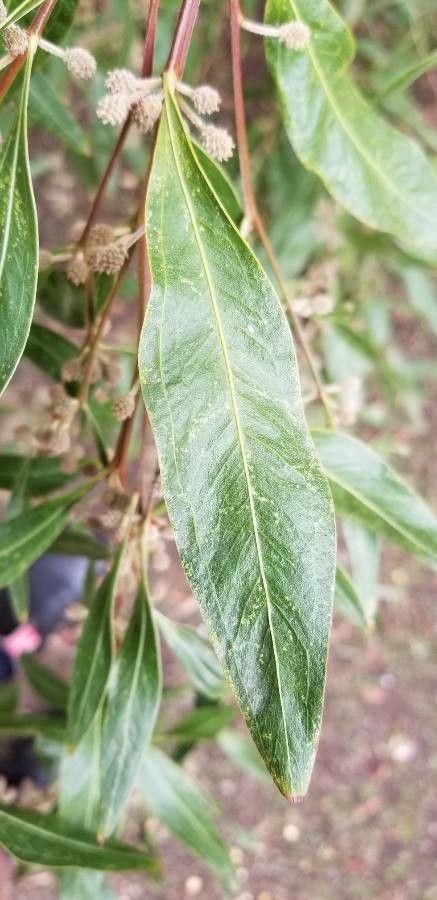
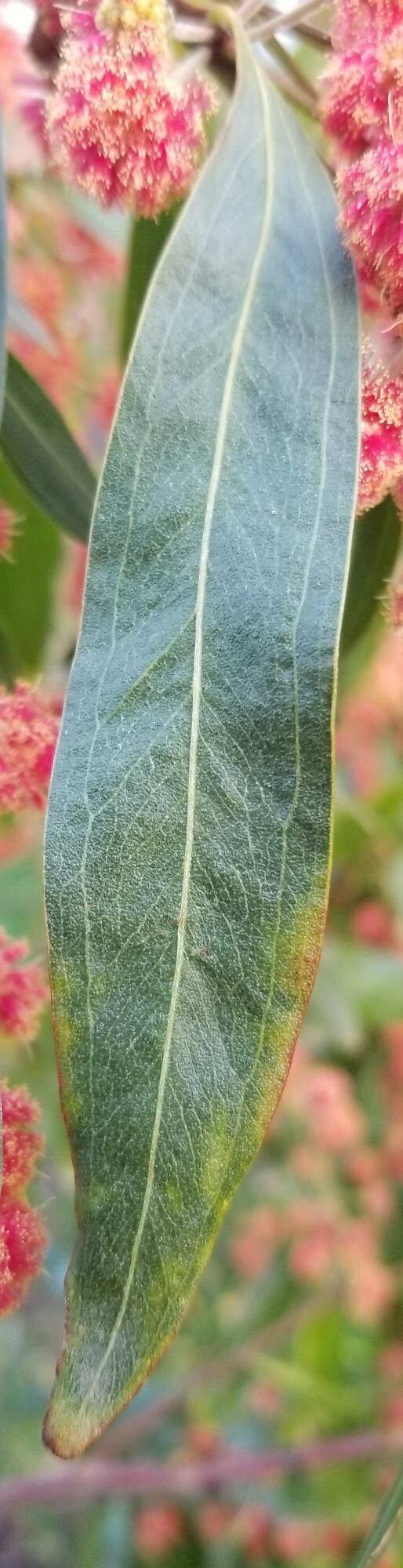
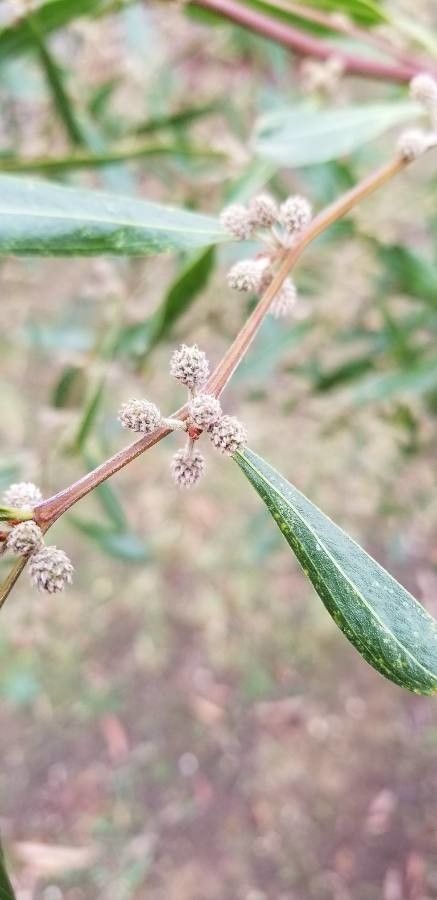
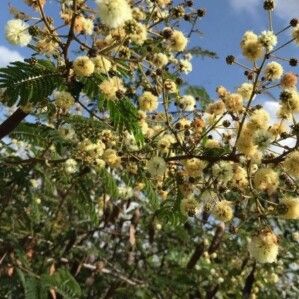
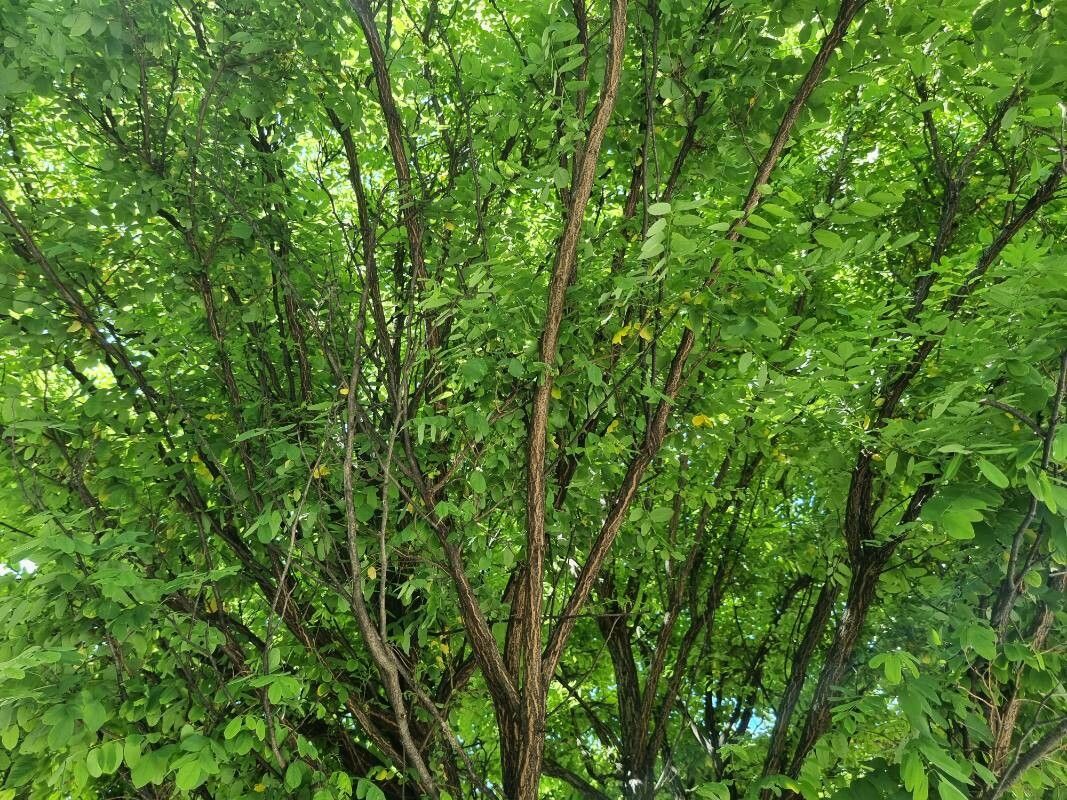
Acacia leprosa, also known as cinnamon wattle, is an acacia native to Australia. It occurs in woodland in New South Wales and Victoria. It occurs as a hardy shrub or small tree. The phyllodes (a modified flat leaf-like structure arising through an expanded petiole replacing the leaf blade) are 3–14 cm long and contain oil glands. The lemon-yellow flowers occur as globular heads in clusters in the leaf axils. The fruit is flat seed pod. A number of varieties are currently recognised within the species including: A. leprosa var. crassipoda Maslin & D.J.Murphy - type: Pyrenees Range, Victoria A. leprosa var. graveolens Maslin & D.J.Murphy - formerly known as Acacia verniciflua (Southern variant), type: Gippsland Lakes A. leprosa Sieber ex DC. var. leprosa A. leprosa var. magna Maslin & D.J.Murphy - type: Cape Otway, Victoria A. leprosa var. uninervia Maslin & D.J.Murphy, formerly known as A. leprosa (large phyllode variant), type: near Healesville, VictoriaFormer varieties include:
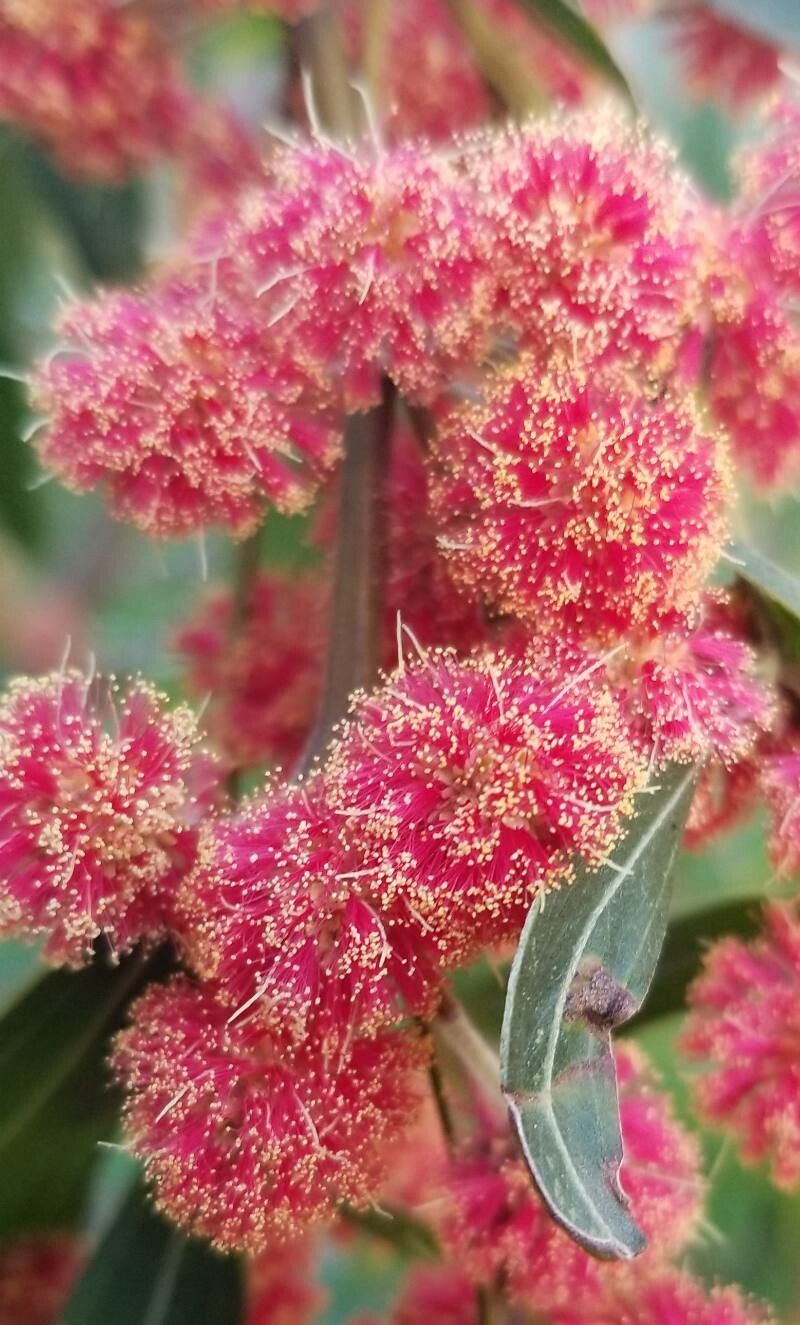
A. leprosa var. binervis F.Muell., currently included in Acacia verniciflua A.leprosa var. tenuifolia Benth. also known as A. leprosa (Seymour variant), currently included in Acacia verniciflua A. leprosa (Dandenong Range variant), A. leprosa var. elongata Guilf. [nom. inval.] or A. leprosa var. Reclinata, currently known as Acacia stictophyllaThe cultivar Acacia leprosa 'Scarlet Blaze' is the only Australian wattle to have red inflorescences (all the rest are yellow or cream-colored, except for Acacia purpureapetala, which has purple flowers). It was discovered northeast of Melbourne, Australia, in 1995, and released commercially in 2001. Acacia leprosa is mentioned in The Australasian Sketcher of Saturday 19 June 1880 in part two of an article on the Mallee Country, as one of the 'beautiful shrubs' found in the region and identified by Mr Guilfoyle, director of the botanic gardens.
Cinnamon wattle is well resistant to disease and is usually not susceptible to illnesses. Regarding care, this plant is fairly low maintenance. When grown outdoors it needs only minimal watering, and larger plants typically do not require pruning. Smaller plants, however, should be pruned after they have finished blooming. Cinnamon wattlet is suitable for anyone with an outdoor area, such as a garden or deck, and does not demand a great deal of gardening experience.
How to keep Acacia Leprosa.
Light
Cinnamon wattle is native to open habitats, such as sunny meadows and forest margins, which offer abundant light. It prefers Full Sun but can also tolerate Partial Sun, adapting well to a range of sunlight conditions.
Temperature
Cinnamon wattle shows strong adaptability to a range of climates, from very hot summers to cold winters. It still has an ideal temperature range for growth. If temperatures become too high, the plant can suffer heat and humidity stress, which may kill it. In areas where temperatures approach the lower limit of its cold tolerance, it is important to provide insulation to protect the plant.
Fertilizer
Fertilize your Cinnamon wattle in early spring to encourage healthy growth. Regular feeding boosts overall health, producing vigorous growth, increased tolerance of harsh conditions, and better resistance to pests and disease. Keep a consistent fertilizing schedule for your Cinnamon wattle to ensure foliage stays vibrant, richly colored, and lush.
Pruning
Cinnamon wattle is known for its distinctive foliage and aromatic qualities. To encourage healthy growth and flowering, prune the plant in early spring once the risk of frost has passed. Remove any dead wood and thin out the branches. Be sure to use clean, sharp tools to minimize stress and reduce the risk of infection.
Botanical profile.
- Plant Type
- Shrub, Tree
- Life Cycle
- Perennial
- Genus
- Acacia
- Family
- Leguminosae
- Hardiness Zone
- 9-11
- Mature Height
- 4.88 m to 7.92 m
- Mature Spread
- 3.05 m to 4.88 m
- Leaf Color
- Dark Green, Olive Drab
- Leaf Type
- Evergreen
- Flower Color
- Gold, Yellow
- Flower Size
- 0.51 cm to 0.76 cm
- Bloom Time
- Spring
- Planting Time
- Spring, Summer
- Harvest Time
- Summer
Other names.
Reader questions.
What are the sunlight requirements for Cinnamon Wattle?
Cinnamon Wattle, or Acacia leprosa, thrives in specific sunlight conditions to maintain its health and happiness. The plant requires 'full sun', which means it needs to be in a location where it receives above 6 hours of sunlight a day. For those with spots that offer less light, 'partial sun' conditions, or about 3-6 hours of sunlight, are also suitable. It's important to observe the way sunlight moves through your garden, enabling you to select locations that provide an ideal balance of light and shade. This ensures that your Cinnamon Wattle plants grow optimally.
What is the name of the plant?
The name of the plant is Cinnamon wattle.
What is the botanical name of Cinnamon wattle?
The botanical name of Cinnamon wattle is Acacia leprosa.