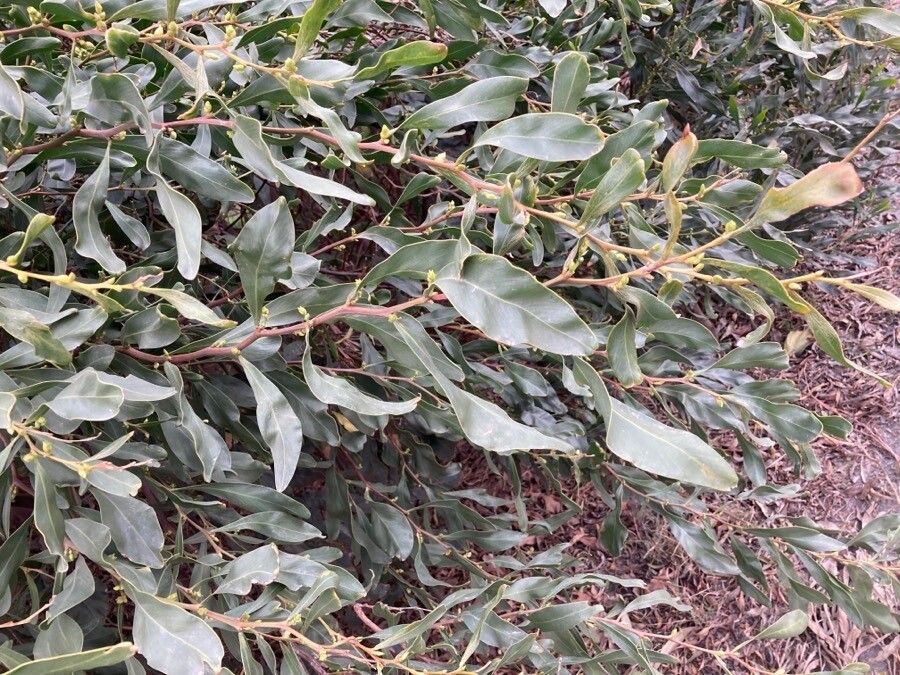
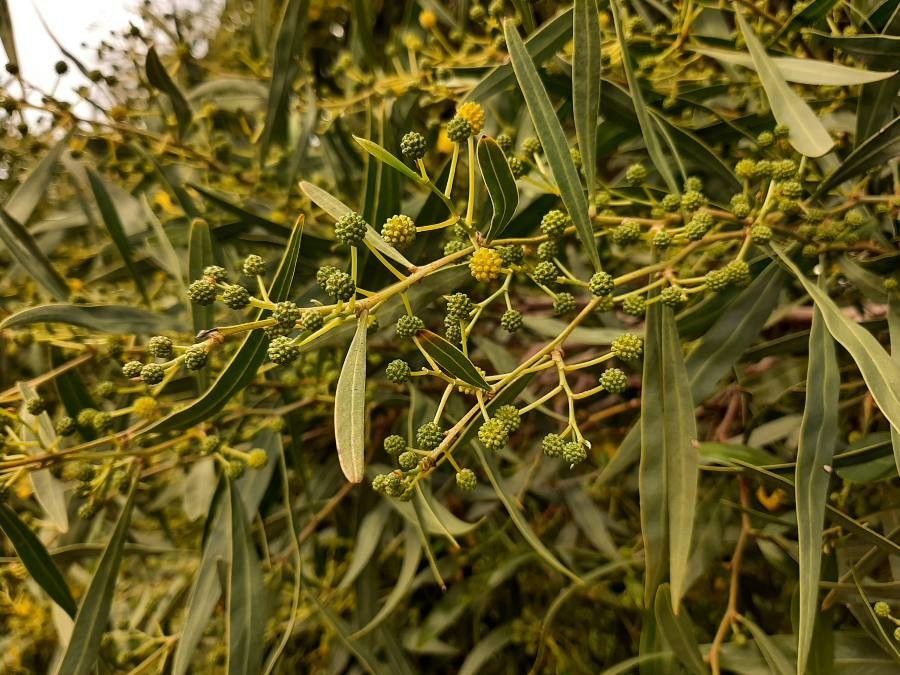
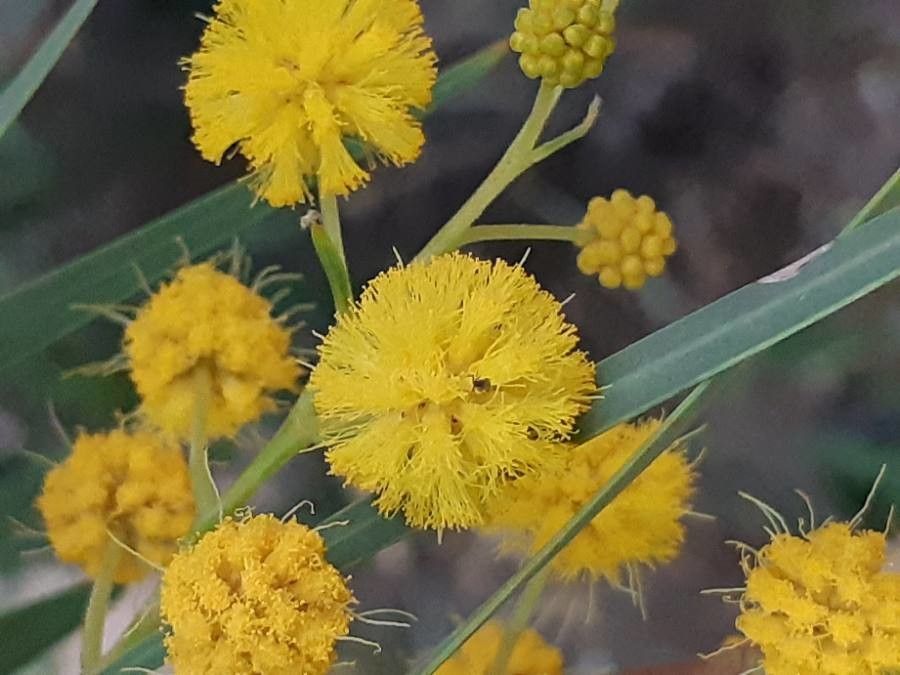
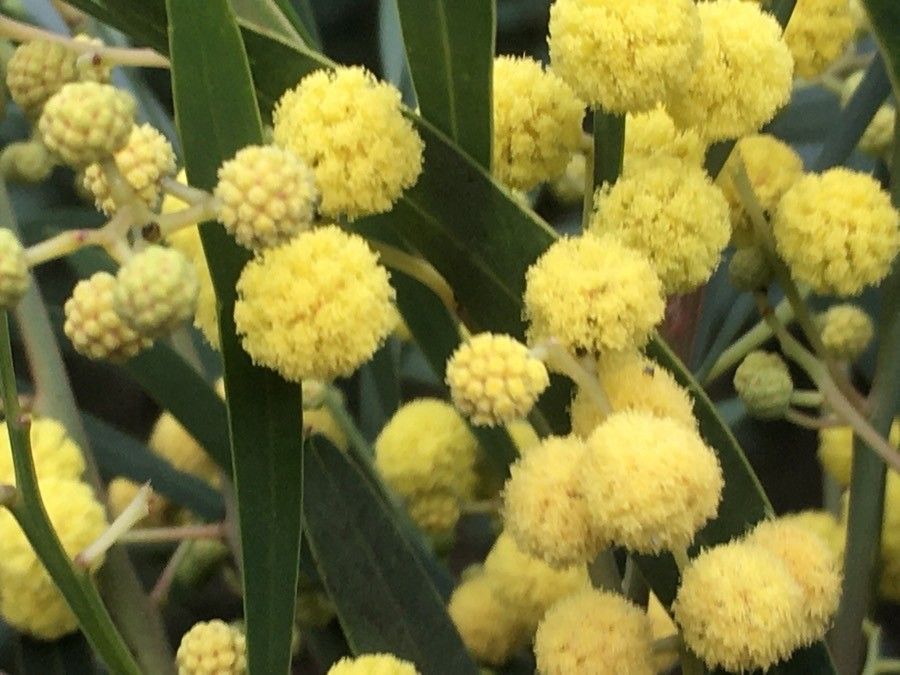
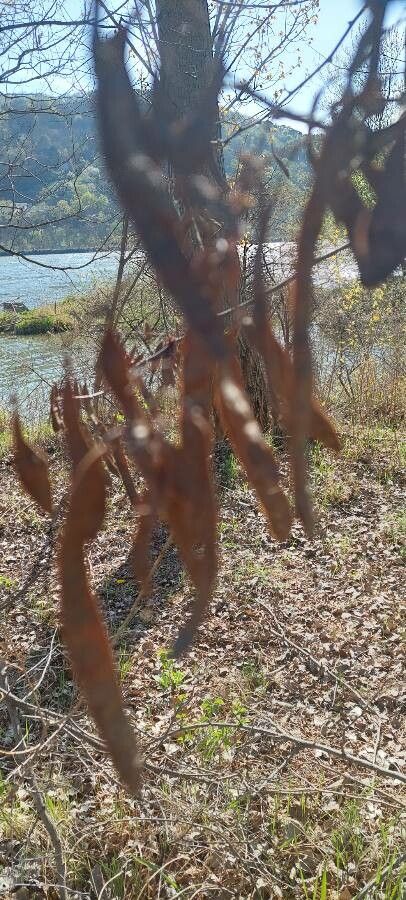
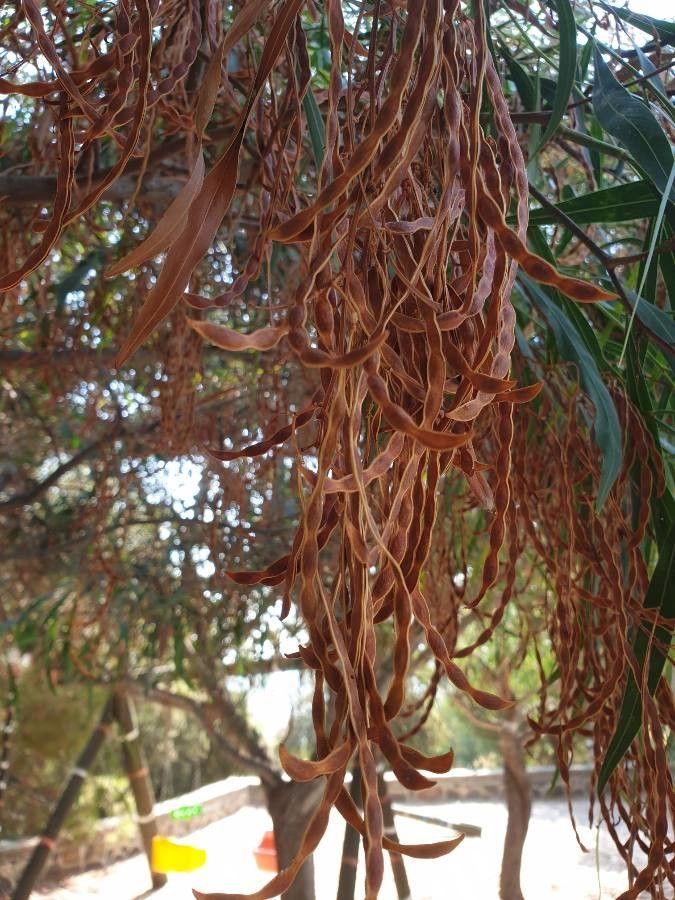
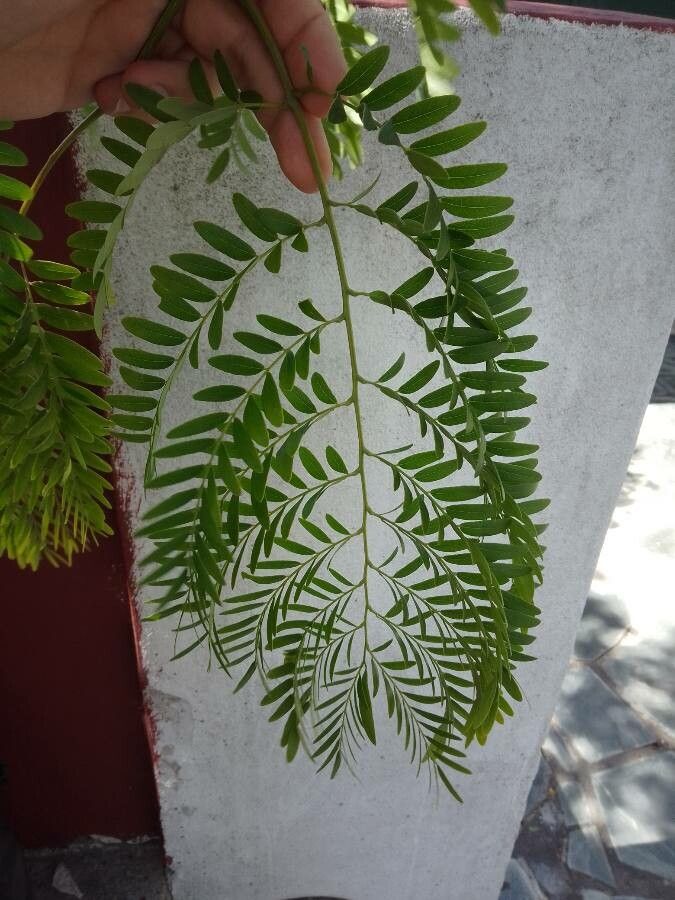
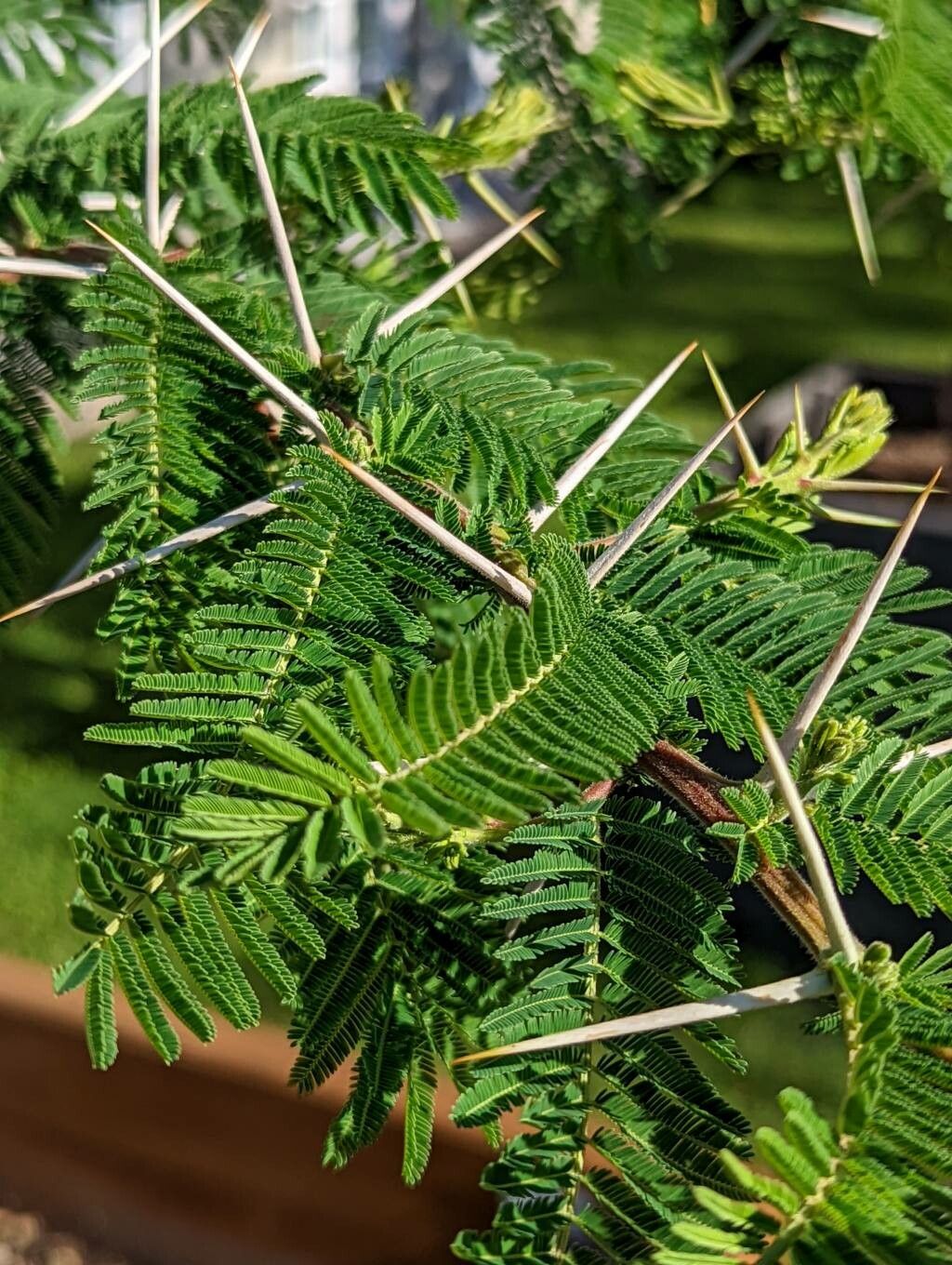
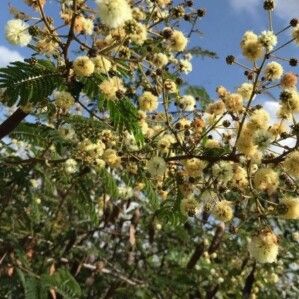
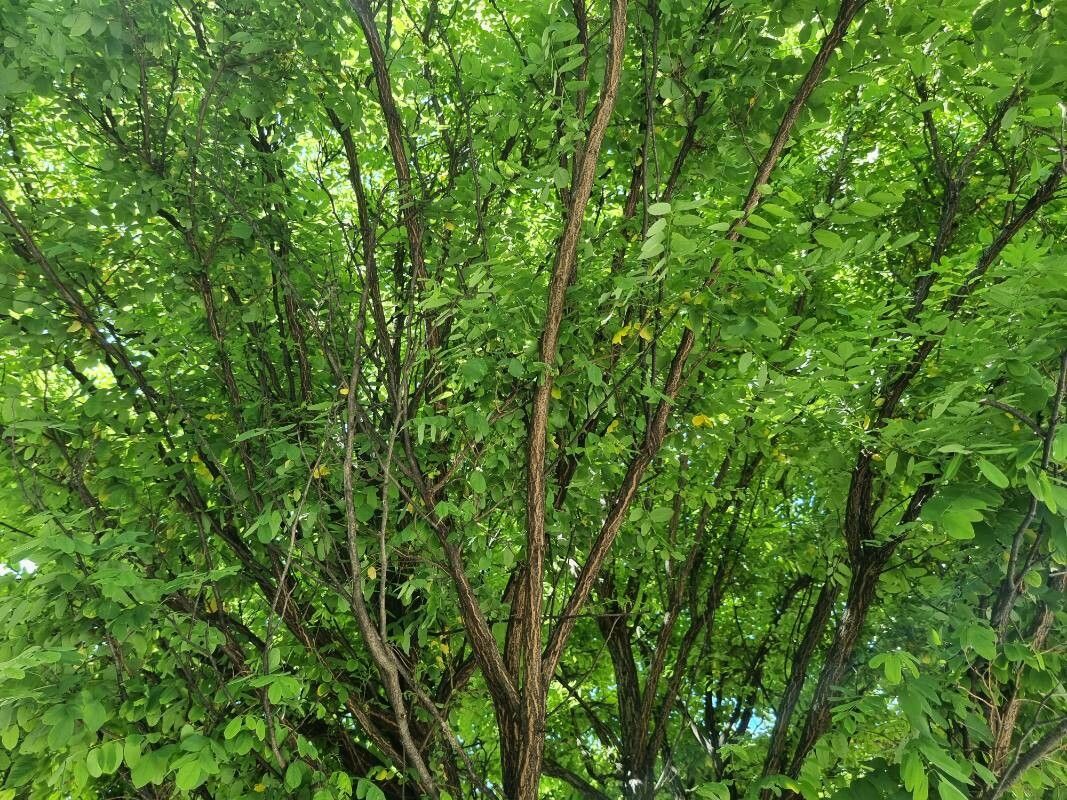
Acacia pycnantha, most commonly known as the golden wattle, is a tree of the family Fabaceae native to southeastern Australia. It grows to a height of 8 m (26 ft) and has phyllodes (flattened leaf stalks) instead of true leaves. Sickle-shaped, these are between 9 and 15 cm (3+1⁄2 and 6 in) long, and 1–3.5 cm (1⁄2–1+1⁄2 in) wide. The profuse fragrant, golden flowers appear in late winter and spring, followed by long seed pods. Plants are cross-pollinated by several species of honeyeater and thornbill, which visit nectaries on the phyllodes and brush against flowers, transferring pollen between them. An understorey plant in eucalyptus forest, it is found from southern New South Wales and the Australian Capital Territory, through Victoria and into southeastern South Australia. Explorer Thomas Mitchell collected the type specimen, from which George Bentham wrote the species description in 1842. No subspecies are recognised. The bark of A. pycnantha produces more tannin than any other wattle species, resulting in its commercial cultivation for production of this compound. It has been widely grown as an ornamental garden plant and for cut flower production, but has become a weed in South Africa, Tanzania, Italy, Portugal, Sardinia, India, Indonesia, New Zealand, as well as Western Australia, Tasmania and New South Wales. Acacia pycnantha was made the official floral emblem of Australia in 1988, and has been featured on the country's postal stamps.
Golden wattle is well resistant to disease and is generally not susceptible to illnesses. Regarding care, this plant is fairly low-maintenance. When grown outdoors it needs minimal watering, and larger specimens typically do not require pruning. Smaller plants, however, should be pruned after they have finished blooming. Golden wattle is appropriate for anyone with an outdoor area, such as a garden or deck, and does not demand much prior care experience.
How to keep Acacia Pycnantha.
Light
Golden wattle needs abundant sunlight for best growth throughout its life stages. Originating from mostly sunlit environments, its health and vitality depend on that exposure. Too little light can result in stunted growth, while too much may scorch the plant.
Water
The golden wattle is well-suited to arid environments, demonstrating significant drought tolerance. It typically requires watering every two weeks. This plant thrives in harsh climates and prefers well-draining soil, which helps reduce its water needs. During the growing season, the golden wattle slightly increases its water intake to support flowering and robust growth.
Temperature
Golden wattle is native to habitats where temperatures generally range from 68 to 100 °F (20 to 38 ℃). It prospers in these temperate conditions. Small seasonal adjustments may be needed to promote optimal growth.
Fertilizer
The best time to fertilize a Golden wattle is in early spring, as it comes out of dormancy. This supports overall growth and flower development. Fertilizing improves foliage, stems, and branches, while encouraging flowers that are larger, more vibrant, and longer-lasting. It helps transfer nutrients from the roots to the flowers and boosts the plant's health and resistance to disease.
Pruning
Golden wattle is known for its vibrant yellow flowers and fragrant leaves. For the best results, prune it from early to late winter. Focus on removing dead branches and thinning the canopy to improve air circulation. Be cautious with pruning, as the bark is sensitive, and avoid cutting too much. Using the right techniques will encourage bushier growth and enhance flowering. Additionally, always sterilize your tools to prevent the spread of diseases.
Botanical profile.
- Plant Type
- Tree, Shrub
- Life Cycle
- Perennial
- Genus
- Acacia
- Family
- Fabaceae
- Hardiness Zone
- 9-11
- Mature Height
- 7.01 m
- Mature Spread
- 4.88 m
- Leaf Color
- Green
- Leaf Type
- Evergreen
- Flower Color
- Gold
- Flower Size
- 2.54 cm to 8.89 cm
- Bloom Time
- Late winter, Early spring, Mid spring
- Planting Time
- Spring, Summer
- Harvest Time
- Late spring, Early summer, Mid summer
Other names.
Reader questions.
What is the most effective way to water my Golden wattle plant?
Your Golden wattle is not picky about how you water it. So, you can use any common watering tool like watering cans, hoses, or cups. But, no matter what tool you choose, make sure to water the soil directly. It's important to moisten all parts of the soil evenly to give the entire root system the water it needs. Using filtered water is recommended because tap water can have harmful particles. Also, using water that is at or slightly above room temperature is best, as cold or hot water can shock the Golden wattle. However, the Golden wattle usually responds well to any type of water you give it.
Why do I have to put plant food on my Golden wattle?
Fertilization greatly impacts the overall health and well-being of a Golden wattle. When provided with the necessary energy and nutrients, this plant develops lush foliage and robust stems and branches. However, it is the flowers of the Golden wattle that are particularly esteemed by gardeners. Fortunately, fertilization plays a crucial role in producing large, vibrant, and long-lasting flowers. This is achieved by ensuring that the right type of fertilizer promotes efficient fuel transfer from the roots to the stems and ultimately to the flowers. Additionally, proper fertilization contributes to the plant's overall health, enhancing its ability to ward off diseases.
What are the sunlight requirements for Golden Wattle?
Golden Wattle thrives when exposed to full sunlight, which means it needs above 6 hours of sunlight daily. It can also manage well in partial sun, receiving about 3-6 hours of sunlight. It's essential to observe the movement of sunlight through your garden to find spots that offer an ideal balance of light and shade, ensuring the plant's well-being. Golden Wattle originates from brightly sunlit environments; thus, its health and vitality significantly depend on receiving sufficient sunlight. Direct exposure to sunlight facilitates its growth through various life stages, while insufficient light can cause stunted growth, and excessive light might harm it.
What is the native environment of Golden Wattle?
Golden Wattle (Acacia pycnantha) is native to environments where temperatures typically range from 68 to 100 °F (20 to 38 °C). It thrives best in temperate conditions. To ensure optimal growth, slight adjustments to its environment may be necessary depending on the seasons. It is a heat-loving species, sensitive to cold temperatures, making it crucial to bring outdoor plants indoors in autumn and maintain temperatures above 20°C during the winter to prevent harm.
What should I do if I give my Golden wattle plant too much or too little water?
Watering is crucial for outdoor plants, especially newly planted ones or seedlings. Keep in mind that you should water enough for a few months while the tree is small or recently planted. After the roots have established, Golden wattle can rely on rain most of the time. When you plant your Golden wattle in pots, overwatering becomes more likely. If you accidentally overwater, take immediate action to rectify the situation. First, stop watering the plant right away to minimize the impact. Then remove the Golden wattle from its pot and inspect the roots. If there are no signs of root rot, you can return the plant to its container. However, if you do find signs of root rot, trim the affected roots and consider applying a fungicide to prevent further damage. Finally, repot the Golden wattle in well-draining soil. In the case of underwatering, simply water the Golden wattle more frequently. This is an easy fix, as the plant's drooping and drying leaves will bounce back quickly after sufficient watering. Adjust your watering frequency promptly when you notice underwatering.
When should I put fertilizer on my Golden wattle plant?
The best time to fertilize a Golden wattle is during early spring, when it is coming out of dormancy and about to bloom. This will provide energy for growth and flower development. However, it is also beneficial to give the plant a smaller feeding during fall. Fertilizing during planting is optional.
How can artificial lighting be used for Golden Wattle?
Indoor Golden Wattle plants require adequate lighting for optimal growth, especially when natural sunlight is not sufficient, like in winter or in less sunny spaces. Artificial lighting is a crucial alternative that can promote healthier and faster growth. LED lights are advisable for their customization to specific wavelengths needed by plants. For full sun plants, 30-50W/sq ft of artificial light is recommended; partial sun plants need 20-30W/sq ft, and full shade plants require 10-20W/sq ft. The artificial light source should be positioned 12-36 inches above the plant to simulate natural sunlight appropriately. Also, it is essential to mimic natural daylight hours, ensuring most plants get about 8-12 hours of light per day.
How does low temperature affect Golden Wattle and what should be done?
Golden Wattle prefers warm temperatures and is not tolerant of low temperatures, thriving best when above 20°C. It must be kept above 0°C during winter to prevent damage. Exposure to temperatures below -5°C can cause the leaves to lighten, and frost damage can turn leaves brown or black, leading to wilting and drooping. If this occurs, it is recommended to trim off the frost-damaged parts and move the plant indoors to a warm environment, ideally near a south-facing window for sunlight, while avoiding placement near heaters or air conditioning vents to prevent excessive air dryness.
How frequently should I water my Golden wattle?
Most outdoor plants can thrive with rainfall, but if your area lacks rain, you should water them every 2 weeks in the spring and fall, and more frequently in the summer. In the winter, when plants need less water, water sparingly or not at all. If your Golden wattle is young or newly planted, you should water it more often to help it establish and grow into a more adaptable and drought-tolerant plant. For potted plants like the Golden wattle, there are two main ways to determine watering frequency. One way is to follow a set schedule, watering once a week or every other week. However, this may not always work because it doesn't consider the specific conditions of your plant's environment. Another approach is to monitor soil moisture. Wait until the top 2 to 4 inches of soil (about 1/3 to 1/2 the depth of the pot) have completely dried out before watering again. This method takes into account the changing water needs of the plant throughout the seasons. In summer, for example, you may need to water more frequently than the predetermined schedule suggests.
When is the best time to not fertilize my Golden wattle?
Golden wattle, like many plants, does not require fertilization in the winter when it is in its dormant phase. During this time, the plant does not need much energy from the soil to grow. Fertilizing in winter can lead to negative effects from overfertilization. The best times to feed a Golden wattle are early spring and fall. Therefore, during most of spring and summer, fertilizer is not necessary. It is also advisable to refrain from feeding if the plant is subjected to extremely hot or dry conditions.
What are some symptoms of insufficient light in Golden Wattle?
Symptoms of insufficient light in Golden Wattle include smaller new leaves, leggy or sparse growth due to longer spaces between leaves or stems, faster leaf drop as a resource conservation effort, slower or ceased growth as the plant enters survival mode, lighter-colored new leaves indicating a lack of chlorophyll and nutrients, and chlorosis leading to the yellowing of leaves due to chlorophyll breakdown. Excessive sunlight exposure can also cause issues like sunscald, leaf curling as a defense mechanism, wilting due to increased water loss, and leaf scorching characterized by dry, crispy leaf edges.
What are the effects of high temperature on Golden Wattle and how can they be mitigated?
During summer, it's important to keep Golden Wattle below 38°C, as temperatures exceeding 43°C can cause leaves to lighten and increase susceptibility to sunburn. To mitigate damage, remove sunburned and dried parts of the plant and relocate it to a shaded area during the midday and the afternoon sun. Additionally, watering the plant in the morning and evening can help keep the soil moist and prevent further stress.