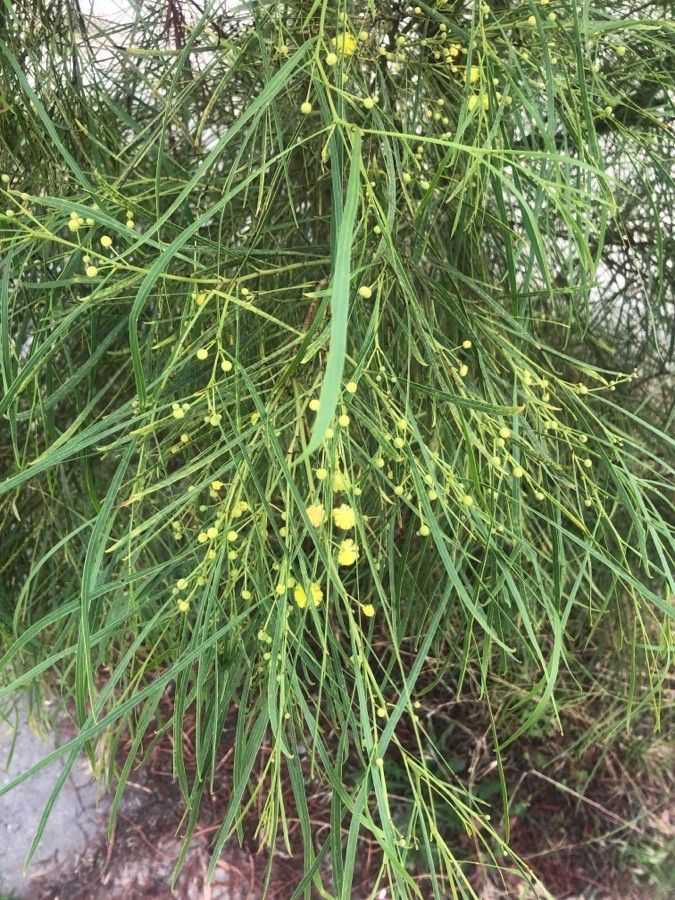
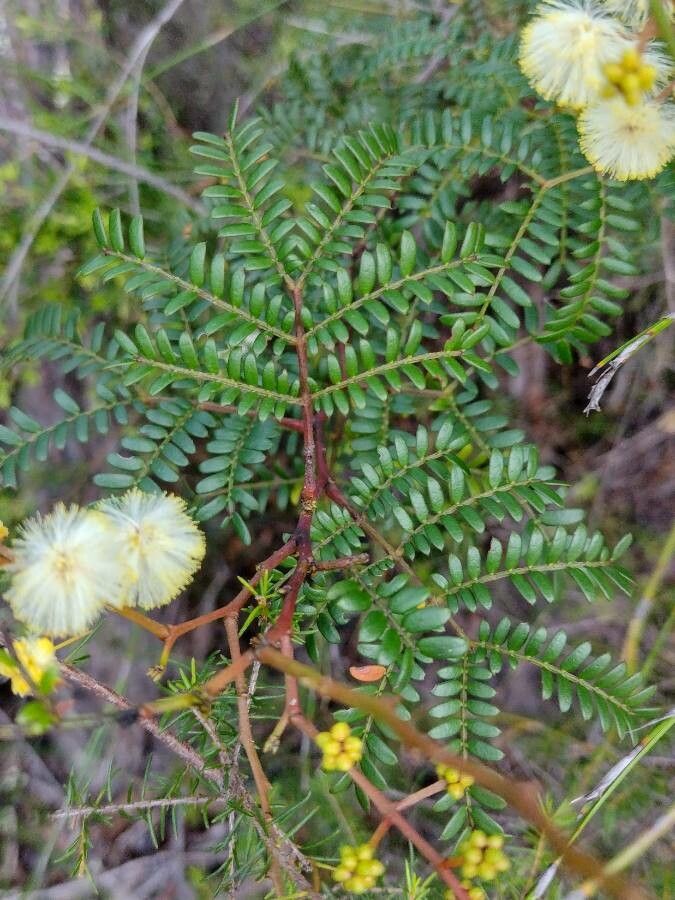
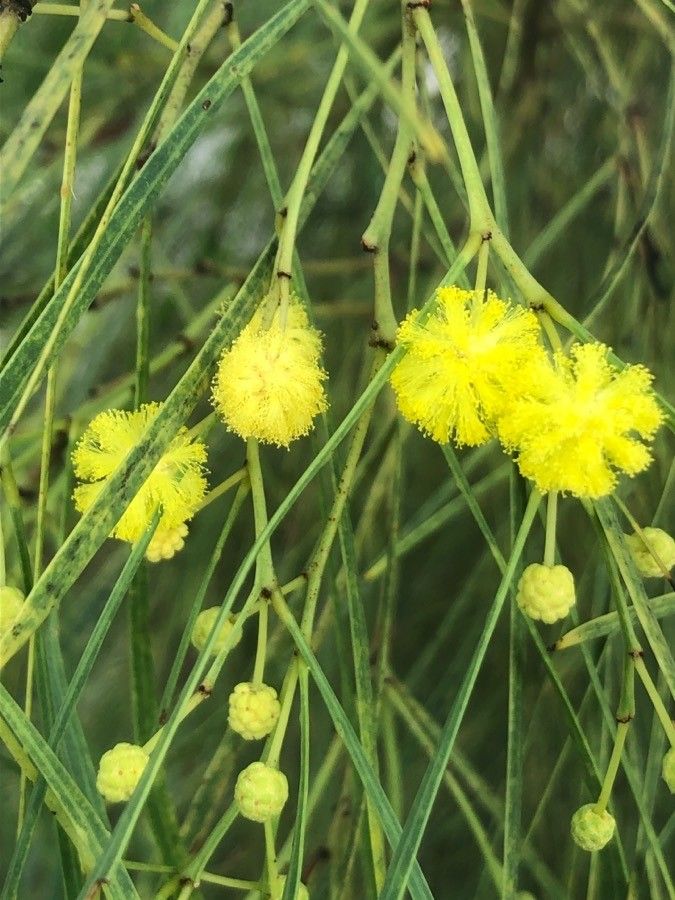
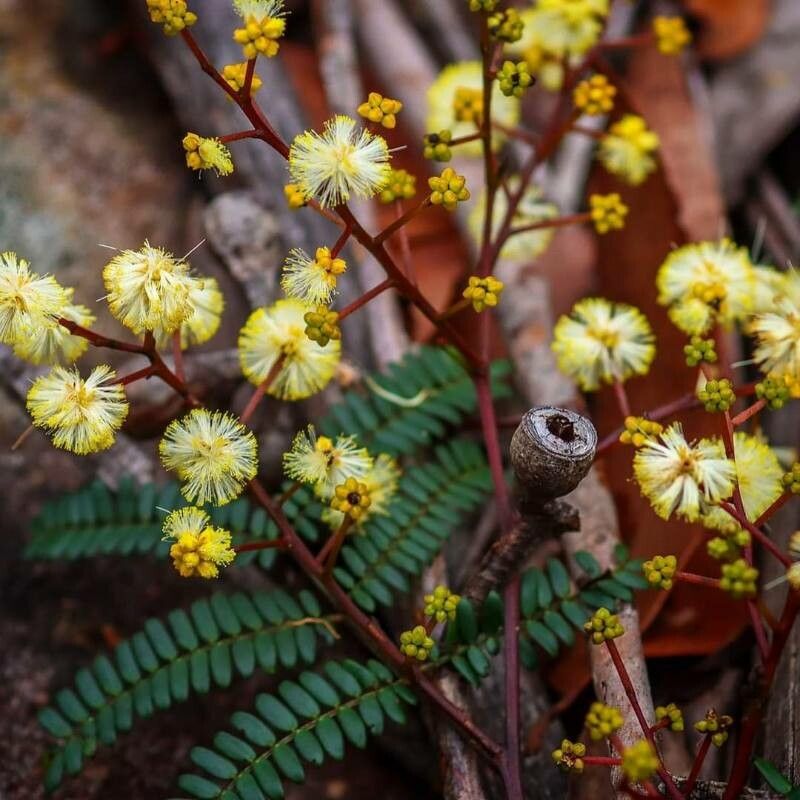
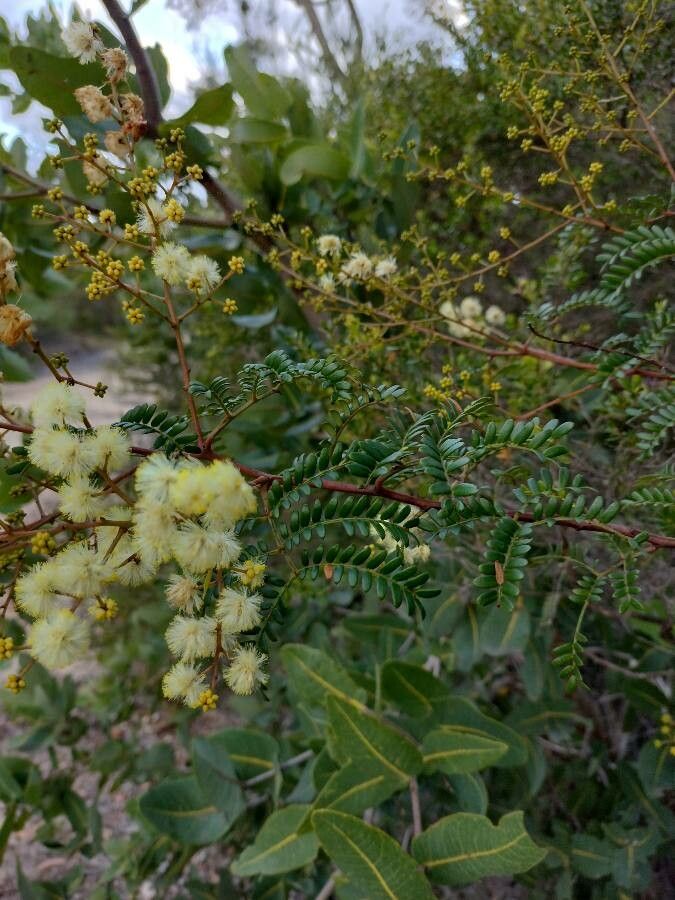
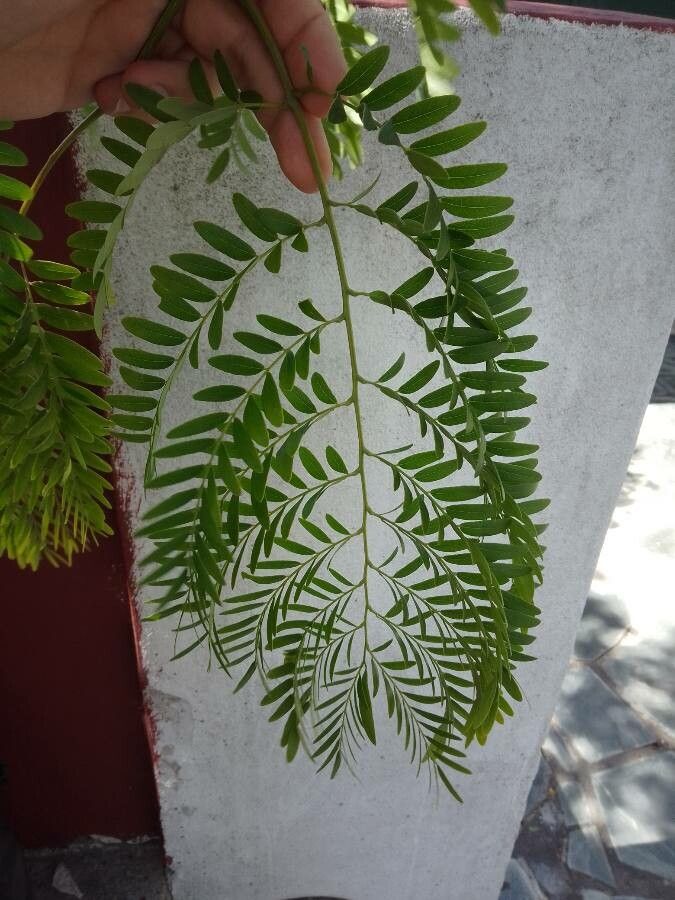
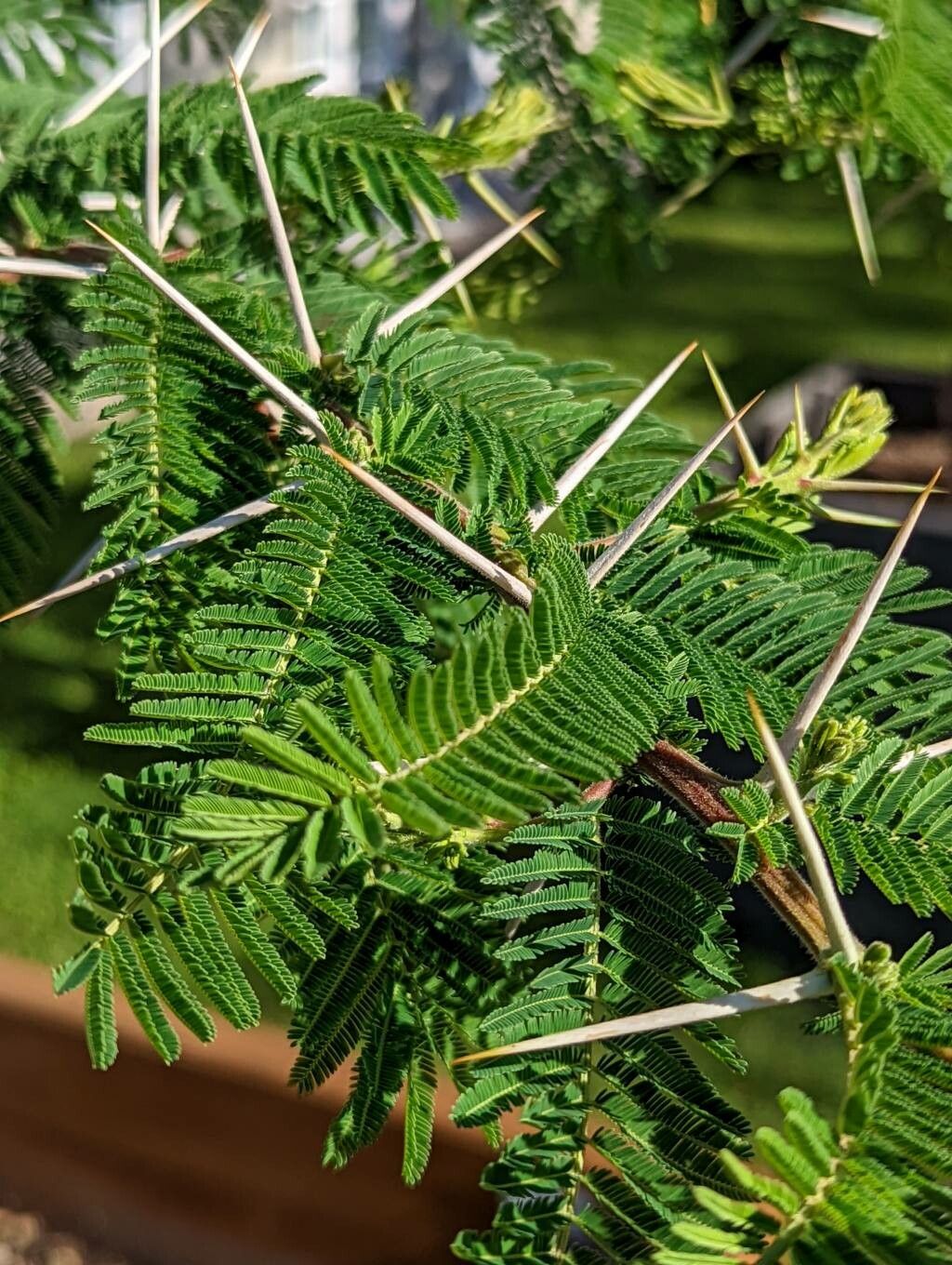
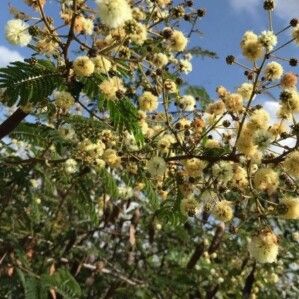
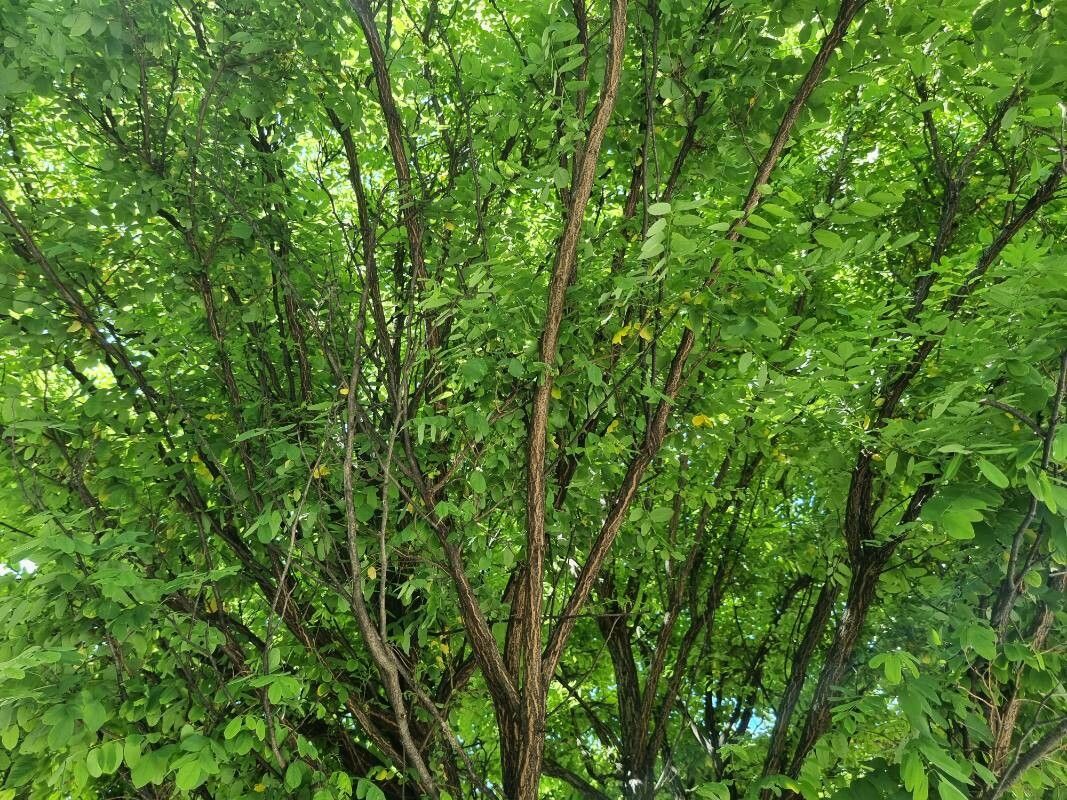
Acacia terminalis (sunshine wattle) is a shrub or small tree to 6 m in height. It is an Australian native whose range extends through New South Wales, Victoria and Tasmania. Four subspecies have been recognised, although there are additional hybrids, especially around Sydney:
A. terminalis subsp. angustifolia A. terminalis subsp. aurea A. terminalis subsp. longiaxialis A. terminalis subsp. terminalis: listed as an Endangered Species under the Commonwealth Environment Protection and Biodiversity Conservation Act 1999. It is rare and confined to the Eastern Suburbs of Sydney, between Cronulla and Manly. It differs from the other forms of the species in being hairier, and having thicker peduncles and wider seed pods.
Cedar wattle displays strong resistance to disease and is typically not prone to illnesses. In terms of care, this plant is fairly low maintenance. When grown outdoors it needs only minimal watering, and larger specimens usually do not require pruning. However, smaller plants should be pruned after they have finished blooming. Cedar wattlet is suitable for anyone with an outdoor area, such as a garden or deck, and does not require a lot of care experience.
How to keep Acacia Terminalis.
Light
Cedar wattle is a species whose health and growth depend greatly on receiving moderate amounts of sunlight. It comes from environments where the sun is not at its strongest, and it does best in those semi-lit conditions. Yet too much sunlight or too little can negatively impact its wellbeing, harming its vitality and growth.
Water
Cedar wattle is well-suited to dry conditions and thrives with minimal water. To care for it, water the plant every 2 to 3 weeks and allow the soil to dry out between waterings. Ideally, cedar wattle should be grown outdoors in well-draining soil to mimic its natural arid environment, which promotes optimal growth.
Temperature
Cedar wattle is a plant native to regions where temperatures usually range from 68 to 95 °F (20 to 35 ℃). It prospers in these warm conditions and may need heated environments in colder seasons for optimal growth.
Fertilizer
Timing is important for fertilizing Cedar wattle. Apply fertilizer in early spring and continue monthly through to early summer. Fertilizer promotes attractive blooms and supplies energy during both dormant periods and active growth.
Pruning
The cedar wattle is known for its elegant foliage and yellow flowers. To maintain its health and enhance its growth, it’s important to prune it during its dormant period, from early to late winter. Focus on removing dead branches and lightly shaping the plant to encourage bushier growth and better flowering. Avoid heavy pruning, as this can stress the plant. By following these guidelines, you can ensure that your cedar wattle remains healthy and grows optimally.
Botanical profile.
- Plant Type
- Tree, Shrub
- Life Cycle
- Perennial
- Genus
- Acacia
- Family
- Fabaceae
- Hardiness Zone
- 9-10
- Mature Height
- 6.1 m
- Mature Spread
- 2.13 m
- Leaf Color
- Dark Green, Olive Drab
- Leaf Type
- Evergreen
- Flower Color
- Yellow, Cream
- Flower Size
- 0.51 cm to 1.27 cm
- Bloom Time
- Late summer, Early fall, Mid fall
- Planting Time
- Spring, Summer
- Harvest Time
- Late fall, Early winter, Mid winter
Other names.
Reader questions.
How should I water my Cedar wattle effectively?
Your Cedar wattle is not picky about how it is watered. You can use any common watering tool, such as watering cans, hoses, or even cups. Just make sure to water the soil directly and evenly, so all parts of the root system get the water they need. Filtered water is preferable to tap water, as tap water may contain harmful particles. Water at or slightly above room temperature is best, as extreme temperatures can shock the Cedar wattle. Nonetheless, the Cedar wattle typically responds well to any type of water.
How many hours of sunlight does Cedar wattle need every day?
When growing cedar wattle indoors, it requires ample indirect or filtered light. Therefore, it should be placed in a sunny spot where it can receive light throughout the day. Keep in mind that the number of daylight hours can vary depending on the season, but a general guideline is a minimum of 6 hours, including up to 3-6 hours of direct sunlight daily. Exposing cedar wattle to indirect sunlight for many hours is safe, but be cautious with direct sunlight.
What temperature is best for Cedar wattle?
Plants are impacted by colder temperatures because their temperature aligns with the air surrounding them. When they are in the sun, they can warm up, but this does not occur in winter. The Cedar wattle typically thrives in temperatures ranging from 70~85℉(21~30℃). They can withstand temperatures as low as 20~30℉(-6~0℃), and maybe even 15℉(-10℃), but only for a short time as it may cause frost damage. Ideally, the maximum temperature for Cedar wattle should be around 70~85℉(21~30℃). Remember to water them regularly and provide some shade to prevent wilting.
What should I do if I give too much or too little water to my Cedar Wattle plant?
For outdoor plants, especially newly planted ones or seedlings, it's important to make sure they are watered enough. This is particularly true during the first few months when the tree is small or just planted. Once the roots are established, Cedar wattle plants can usually rely on rain. When Cedar wattle plants are in pots, overwatering is more likely. If you accidentally overwater your Cedar wattle, you should take immediate steps to fix the problem. First, stop watering the plant to minimize the impact of overwatering. Then, remove the Cedar wattle from its pot and check the roots. If there is no sign of root rot, you can return the plant to its container. However, if there is root rot, trim the affected roots and consider applying a fungicide. Finally, repot the Cedar wattle in well-draining soil. On the other hand, if your Cedar wattle is underwatered, you can easily fix it by watering it more frequently. When a plant is underwatered, its leaves tend to droop, dry out, and fall off. However, they should quickly regain their fullness after sufficient watering. It's important to adjust your watering frequency as soon as you notice signs of underwatering.
What kind of sunlight does the Cedar wattle plant need?
In the wild, cedar wattle receives ample sunlight all day long, although it is indirect and filtered through the dense foliage of tall trees above. However, when growing cedar wattle indoors, it's important to provide the plant with bright indirect light either through a sunny windowsill or using grow lights.
Do I need to change the temperature for Cedar wattle as it grows?
To ensure successful growth of Cedar wattle, it is important to research and maintain the appropriate temperature conditions. Some growers may choose to lower the temperature during the growing season to save on HVAC costs. However, it is crucial to understand that temperature can impact flowering, pest control, and overall plant quality. In winter, some species of Cedar wattle may enter a dormant state, causing growth to cease. As the seasons change and temperatures rise, the base temperature for Cedar wattle also increases, enabling faster growth. Species naturally found in warm habitats have higher temperature preferences compared to those adapted to cooler climates. Exposing Cedar wattle seeds to cool temperatures can lead to reduced uniformity and delays. During the flowering phase, it may be beneficial to lower the temperature, while maintaining optimum conditions for other growth phases. Additionally, cooler night temperatures require less watering, so irrigation adjustments should be made accordingly.
How frequently do I need to water my Cedar wattle?
If your area doesn't receive enough rainfall, you should water your outdoor plants every 2 weeks in the spring and fall, and more frequently in the summer. In the winter, when plants need less water, you can water them less often or not at all. Young or newly planted Cedar wattles require more frequent watering to help them establish and grow. For potted plants, there are two ways to determine watering frequency. One option is to follow a set schedule, such as once every week or every other week. However, this may not always be accurate for your specific Cedar wattle. Another approach is to check the soil moisture. Wait until the top 2 to 4 inches of soil have dried out before watering again. This is usually about one-third to one-half the depth of the pots.
Does Cedar wattle need to stay out of direct sunlight?
Cedar wattle can handle some sun exposure, as long as it is the right kind of sunlight. It's best to limit direct sunlight to no more than 6 hours per day. Direct sun means the plant is directly in the path of the sunlight. Indirect light could be sunlight reflected off other objects or sun that is filtered by something like a sheer curtain. So, it's important to protect Cedar wattle from too much direct sun.
How can I make sure Cedar wattle stays warm during cold seasons?
To help the Cedar wattle plants withstand colder temperatures, it is important to stop fertilizing them so that new growth is avoided. This will allow the existing growth to become strong and resistant. To protect them from the cold, you can construct structures like cages or trellises around the plants. Additionally, another option is to use heat mats which can gently warm the soil, providing a consistently ideal temperature for the Cedar wattle plants.
How much water does my Cedar wattle plant need?
When watering your Cedar wattle, you might be surprised to learn that it doesn't always require a lot of water. If only a few inches of soil have dried since the last watering, giving it about five to ten ounces of water each time can support healthy growth. You can also determine the amount of water based on the moisture in the soil. Keep track of how many inches of soil have dried out between waterings. To ensure your Cedar wattle gets enough moisture, water it enough to dampen all the dry soil layers since the last watering. If over half of the soil has dried out, consider giving more water until excess water drains from the pot's holes. If your Cedar wattle is planted in an area that receives ample rain, it may not need additional watering. When the Cedar wattle is young or newly established, make sure it receives 1-2 inches of rain per week. As it grows and establishes, it can rely on rainwater alone. However, during hot weather with no rain for 2-3 weeks, it's advisable to give your Cedar wattle a full watering to prevent stress.
How can I prevent Cedar wattle from getting damaged by the sun and heat?
Cedar wattle that are not used to growing in direct sunlight can be harmed by sunlight. To protect them, there are a few options. First, choose a spot with indirect light for most of the day. If the location is still too bright, move the plant further into the room, away from the window. Alternatively, you can cover the window with a light curtain or blinds. By using any of these methods, you can shield your Cedar wattle from sun scorching and excessive heat.
How can I keep Cedar wattle safe from getting damaged by high or low temperatures?
In winter, there are different ways to protect the Cedar wattle from frost. You can cover it with various materials like cloths, tarps, burlaps, sheets, or plastic buckets. It's important to secure these covers so they act as insulators and don't get blown away by the wind. However, be careful that the plastic sheets or burlap covers don't touch the fruit or foliage. If they do, the cold temperatures could transfer and cause burns. Once the daytime temperatures start increasing, it's safe to remove the covers.