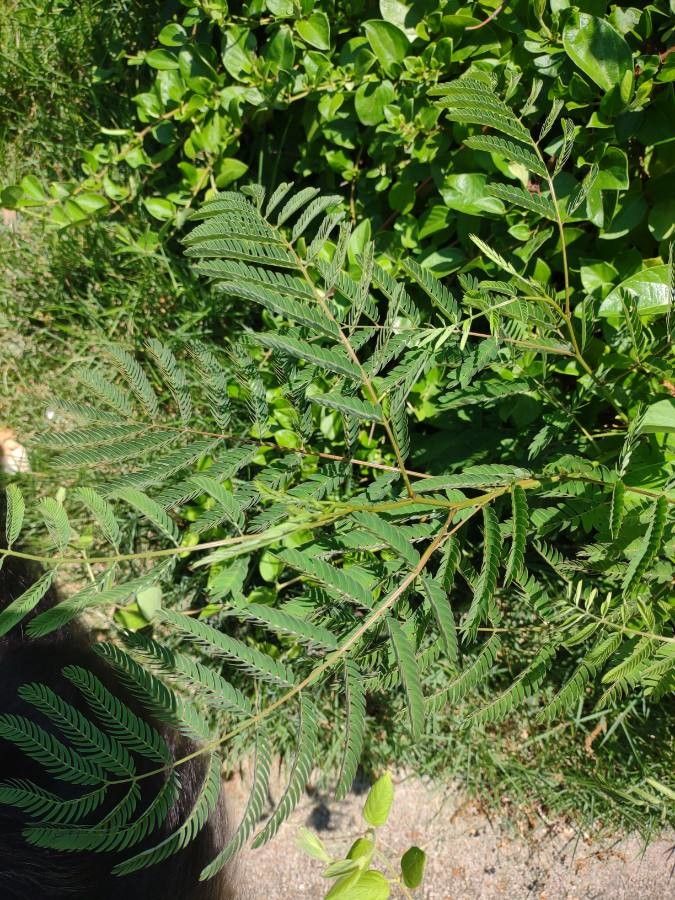
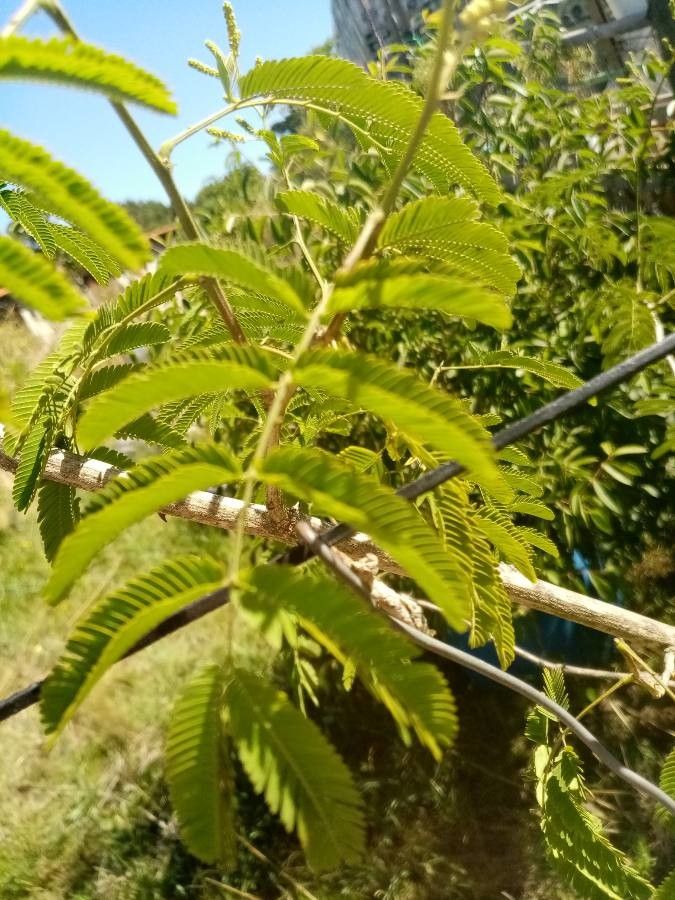
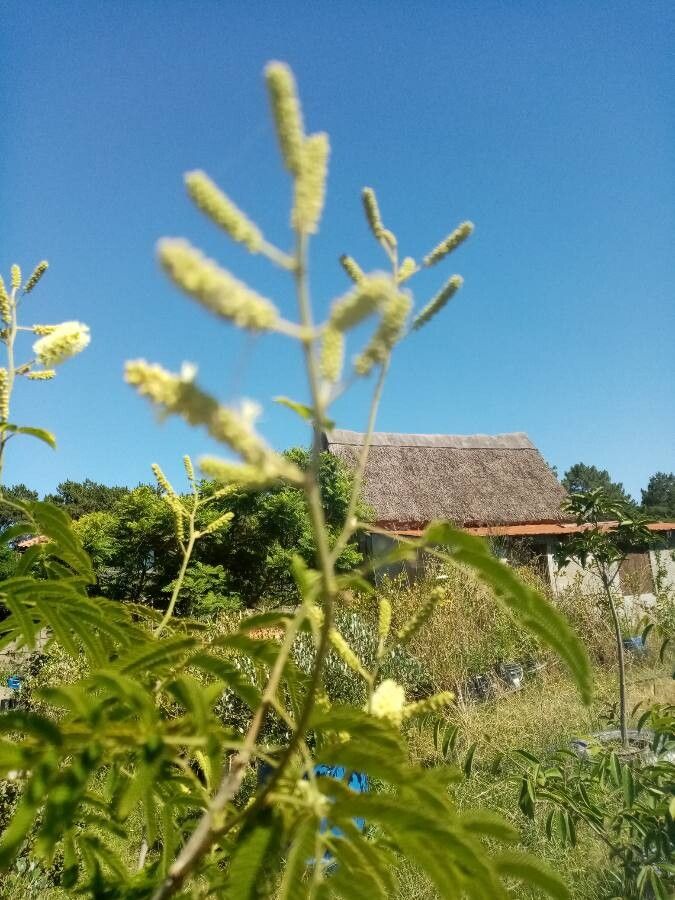
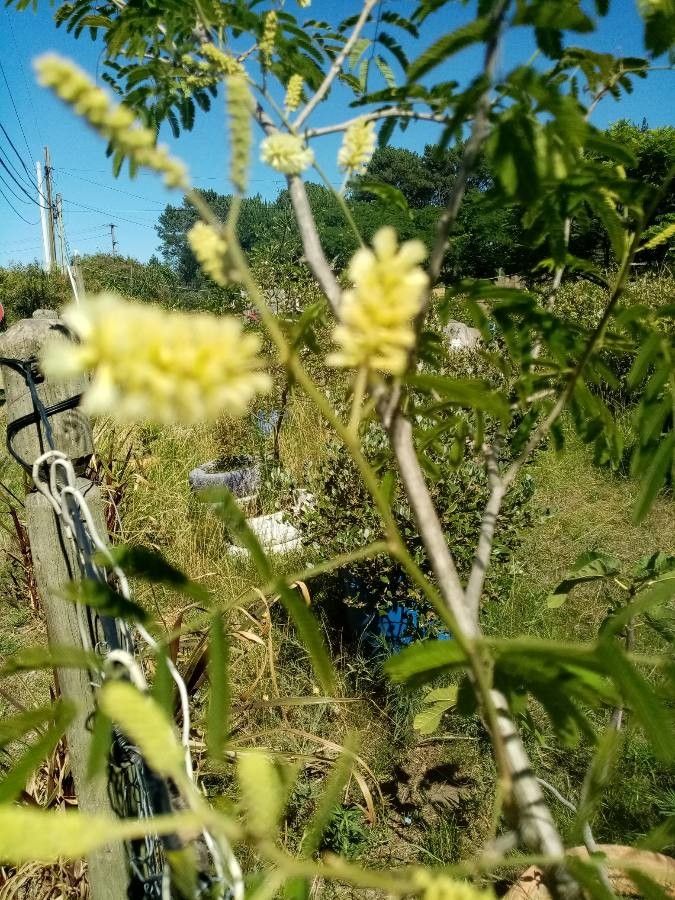
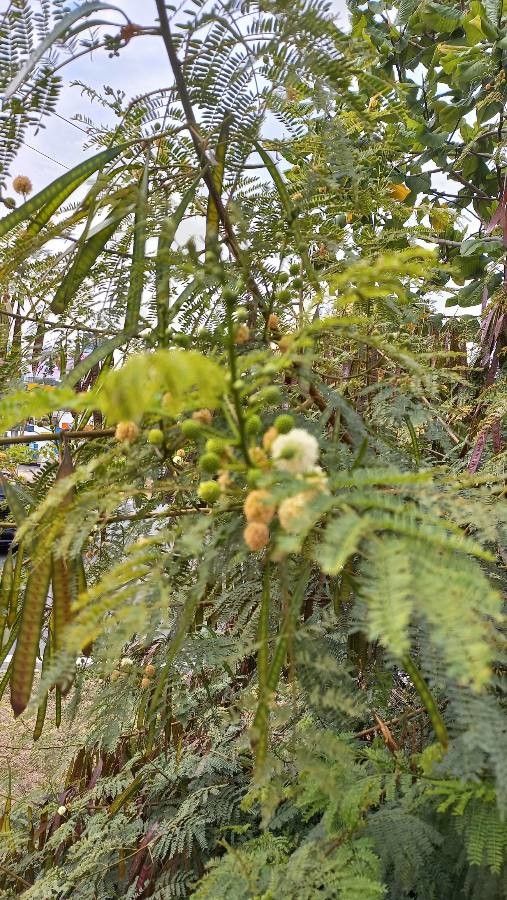
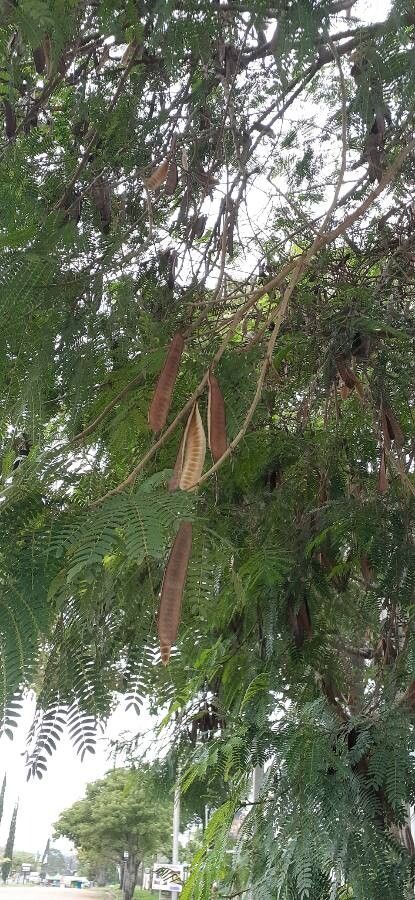
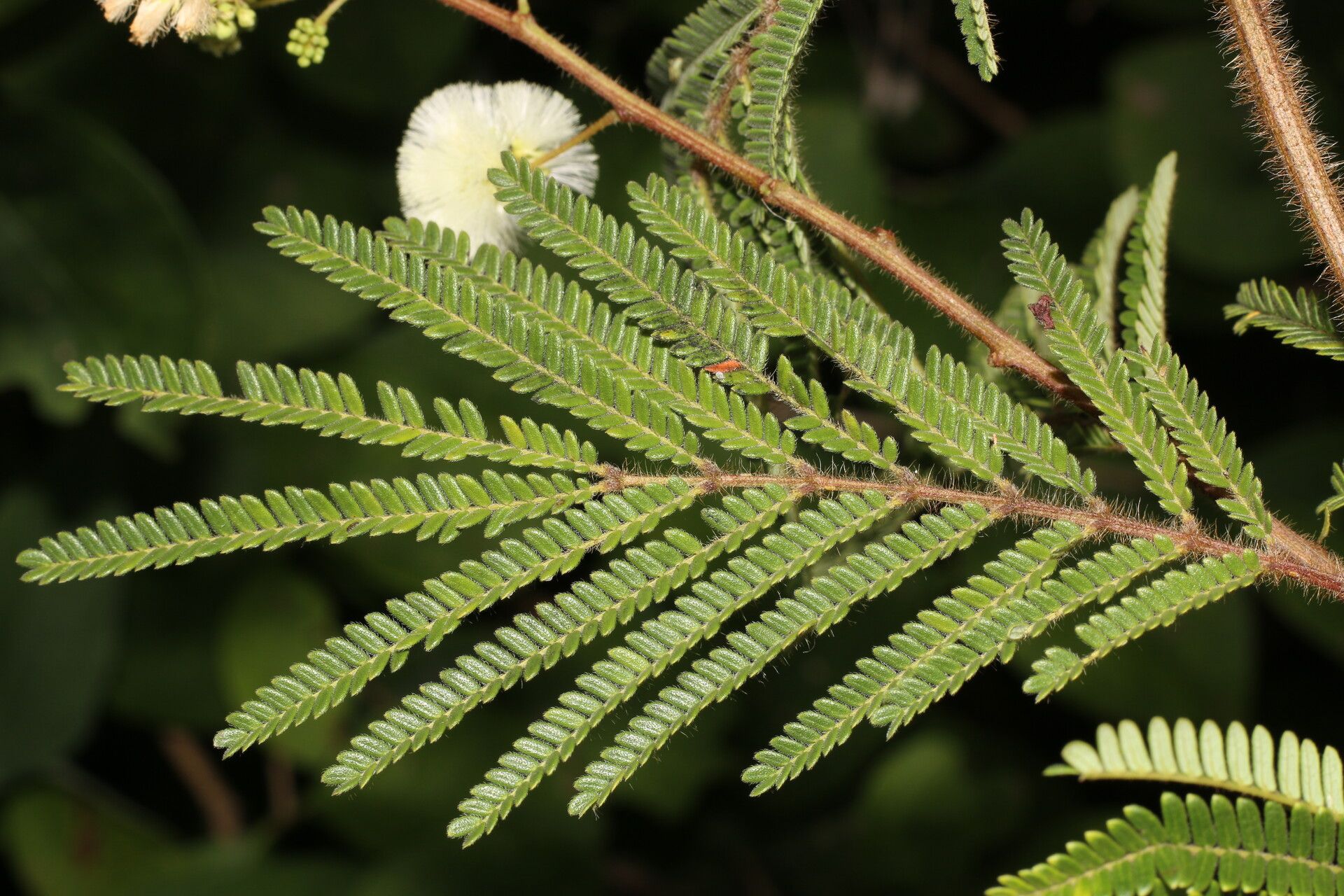
Acaciella angustissima (prairie acacia, white ball acacia, ocpatl, or palo de pulque) is most recognized for its drought tolerance and its ability to be used as a green manure and ground covering. It is a perennial, deciduous, and belongs to the family Fabaceae (beans/legumes) and as it grows it starts as a shrub but eventually matures to a small tree. The tree has a high density of leaves along with small clumps of white flowers and creates 4–7 cm long seed pods. Acaciella angustissima is found in tropical areas around the equator since, its water needs can vary from 750-2,500 mm a year. It has an advantage it can withstand a moderate drought, since its leaves are retained even in long dry periods. Aside from being drought tolerant, Acaciella angustissima also has the benefit of being a green manure, since it has such a high leaf density, but also loses the majority of its leaves each season. So the leaves can be used in composting or can be saved and used as livestock feed. It should only be used as an additive to the feed and not the main source, since it also toxic in high doses
Prairie acacia has strong disease resistance and is generally unlikely to be affected by illnesses. However, it can be vulnerable to pests and diseases found in its surroundings. These infections are usually mild. In terms of care, this plant requires moderate upkeep. It should be pruned regularly to preserve a good appearance and encourage healthy growth. Fertilizing can also help stimulate flowering. Prairie acacia is suitable for anyone with outdoor areas, such as a garden or patio, and does not demand extensive care experience. It may need more attention when grown indoors.
How to keep Acaciella Angustissima.
Light
Prairie acacia is a sun-loving, perennial herbaceous plant native to open habitats, frequently growing in meadows and grasslands. It prefers full sun but can also tolerate partial sun.
Water
Prairie acacia, native to arid regions, is drought-tolerant and typically needs watering only once a week to avoid over-saturation. It flourishes outdoors and experiences growth spurts during rainy seasons, which align with its natural water uptake cycle.
Temperature
Prairie acacia is fairly adaptable to temperature, able to endure higher heat and wide temperature swings. In hot weather, it’s necessary to monitor watering and offer some shade to avoid sunscald. On the other hand, prairie acacia is not very cold-hardy; it can survive mild chill but extreme cold can cause frost injury.
Fertilizer
One fertilizer application in spring is typically adequate for Prairie acacia, though repeated feedings can maximize growth. Fertilize every month to month and a half. Feeding improves leaf appearance and function, maintaining consistent color and a healthy texture. It also encourages root development and nutrient uptake, supporting long-term plant health.
Pruning
Pruning prairie acacia in early spring, before new growth begins, helps it thrive. By trimming weak or crossing branches, you can maintain its shape and ensure good airflow. Performing light pruning annually supports the plant's size and vigor. Additionally, addressing any dead or overly long branches can enhance its blooming and overall health. These practices align with horticultural best standards.
Botanical profile.
- Plant Type
- Herb, Shrub
- Life Cycle
- Perennial
- Genus
- Acaciella
- Family
- Fabaceae
- Hardiness Zone
- 8-11
- Mature Height
- 1.83 m to 3.66 m
- Mature Spread
- 30 cm to 91 cm
- Leaf Color
- Green, Dark Green
- Leaf Type
- Deciduous
- Flower Color
- White
- Flower Size
- 2.54 cm
- Bloom Time
- Summer, Early fall, Mid fall
- Planting Time
- Spring, Summer
- Harvest Time
- Late summer, Fall, Early winter
- Native Area
- Colombia, Belize, Honduras, Mexico, Guatemala, Bolivia, Venezuela, Nicaragua, Costa Rica, Panama
Other names.