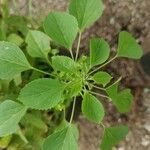
Acalypha indica
Indian acalypha · குப்பைமேனி · Indian-nettle · Copperleaf · Three-seeded-mercury
Description
Source: leafsnapAcalypha indica, commonly known as Indian nettle or Indian copperleaf, is a perennial herbaceous plant in the Euphorbiaceae family. It is native to tropical and subtropical regions of Asia and Africa but has been introduced to other parts of the world as an ornamental plant. The plant can grow up to 1 meter in height and has a bushy appearance with numerous branches. Its leaves are simple, alternate, and either ovate or elliptic in shape, with serrated margins and a length of about 5-12 cm. The flowers are small and greenish-yellow, arranged on spikes that emerge from the axils of the leaves. For centuries, Acalypha indica has been used for its medicinal properties, particularly for its anti-inflammatory effects. Traditionally, it has been used to treat various ailments such as skin diseases—including eczema and psoriasis—and respiratory problems like asthma and bronchitis. The plant prefers well-drained soil with moderate moisture levels but can tolerate drought conditions once established. It can be propagated through seeds or stem cuttings. Overall, Acalypha indica is an attractive ornamental plant that also offers medicinal benefits, making it a popular choice among gardeners who value both aesthetics and functionality in their gardens.
Care Guide
💧 Water Every 7 days
Indian Acalypha flourishes in humid tropical climates and requires consistent moisture to stay healthy. To prevent leaf drop, it should be watered weekly, even during the colder months. As an evergreen, Indian Acalypha retains its leaves throughout the year and needs regular care.
How should I water my Indian acalypha plant?
To water Indian acalypha, you have several options. You can use a garden hose with a spray nozzle, a watering can, or another common watering tool. The good news is that Indian acalypha is not too particular about the type of water it receives. Rainwater, tap water, or filtered water will all suffice. However, it's important to avoid overhead watering as it may harm the leaves, flowers, and even lead to disease. One effective method for watering this plant is using a drip irrigation system. This system is particularly suitable for Indian acalypha because it applies water evenly and directly to the soil. If your Indian acalypha is growing in a container, you can follow a similar watering approach using a cup, watering can, or tap. Simply apply the water directly to the soil.
If I give my Indian acalypha too much or too little water, what should I do?
To remedy underwatering for Indian acalypha, simply water it regularly when you notice it needs moisture. However, overwatering can be a more serious problem. If not addressed early, it can cause diseases, leading to the decline and death of the plant. To prevent this, choose a suitable location with ample sunlight to dry the soil and good drainage to prevent waterlogging. If your potted Indian acalypha is overwatered, consider changing to a new pot. Ensure the new pot has better drainage and fill it with loose soil.
How often do I need to water my Indian acalypha plant?
Indian acalypha requires regular watering throughout the growing season. In spring, it should be watered once a week. As the season progresses and temperatures rise, watering may need to be increased to two to three times per week. However, exceeding this rate can harm the plant. It is important to keep the soil relatively moist, but not overly wet, regardless of the watering frequency. When it comes to Indian acalypha in a pot, watering needs to be more frequent. The soil in a pot tends to heat up and dry out faster than ground soil. Therefore, container-grown Indian acalypha should be watered a few times per week in most cases, compared to once per week for plants in the ground.
How much water does my Indian acalypha plant need?
To determine how much water to give your Indian acalypha, there are a few approaches you can take. One method involves feeling the soil to gauge its moisture level. This suggests that you should water until the top six inches of soil feel moist. Another approach is to use a specific measurement, such as giving your plant around two gallons of water per week. The amount may vary depending on factors like the temperature and how quickly the soil dries out. However, strictly adhering to these guidelines can result in overwatering if your plant requires less water. When growing Indian acalypha in a container, a different method is needed. You should water enough to moisten all the layers of dry soil. To check if this is achieved, simply insert your finger into the soil to feel for moisture. Another indication is when you see a slight trickle of excess water coming out of the drainage holes in the pot.
How do I know if I am giving enough water to my Indian acalypha plant?
Caring for your Indian acalypha can be challenging because they have deep roots that need weekly watering. However, it's crucial to avoid overwatering as these plants are highly prone to root rot, which can cause browning. Underwatering is less of a concern since Indian acalypha can survive without additional water for some time. But be cautious, as prolonged lack of watering can lead to wilting and dry leaves.
☀️ Light Full sun
Indian acalypha flourishes in locations that receive extensive sunlight throughout the day, yet it can also adjust to places with moderate sunlight. Being native to sunlight-abundant environments, indian acalypha reacts beneficially to light, encouraging healthier growth. However, either too much or too little sunlight can have negative implications for the plant's growth.
What are the sun requirements for Indian Acalypha?
Indian Acalypha thrives best in areas that receive full sun exposure for most of the day. This plant does well in the sun, requiring above 6 hours of sunlight for full sun conditions and about 3-6 hours of sunlight for partial sun conditions. Observing how sunlight moves through your garden helps in choosing spots with the perfect balance of light and shade, ensuring the best growth conditions for your plants.
How does sunlight affect Indian Acalypha's growth?
Sunlight plays a critical role in the growth and health of Indian Acalypha. Originating from sun-rich environments, this plant responds positively to ample sunlight by promoting healthier growth. Both excessive and insufficient sun exposure can negatively impact its development. Therefore, ensuring that it receives the right amount of sunlight is key to its well-being.
What to do if natural sunlight is insufficient for Indian Acalypha?
When natural sunlight is insufficient, especially during winter or in less sunny spaces, artificial lighting can be a vital solution. Indoor plants like Indian Acalypha require adequate artificial lighting for optimal growth. LED lights are recommended due to their capacity to provide specific wavelengths needed by the plants. For full sun plants, 30-50W/sq ft is ideal; for partial sun plants, 20-30W/sq ft; and for full shade plants, 10-20W/sq ft. The light source should be placed 12-36 inches above the plant, mimicking natural sunlight conditions for 8-12 hours per day.
What are the symptoms of insufficient light in Indian Acalypha?
Insufficient light can cause various symptoms in Indian Acalypha, including smaller new leaves, leggy or sparse growth, faster leaf dropping, slower or halted new growth, lighter-colored new leaves, chlorosis, sunscald, leaf curling, wilting, and leaf scorching. These symptoms indicate the plant's struggle with inadequate light conditions, affecting its growth and overall health.
How can I address light deficiency issues in Indian Acalypha?
To address light deficiency in Indian Acalypha, gradually move your plant to a sunnier location, ensuring it receives at least 6 hours of direct sunlight daily. For indoor plants, use a south-facing window or artificial lighting, such as a desk or ceiling lamp for at least 8 hours daily, or invest in professional plant grow lights. For outdoor plants, avoid sudden changes in light intensity by gradually increasing sunlight exposure. Clearing obstructions and, if necessary, transplanting to a sunnier location with good drainage can also help improve light accessibility.
🌡️ Temperature 20–37.8°C
The Indian acalypha is native to tropical regions which are generally hot and moist. Consequently, it is well-suited to cope with high temperatures and humidity levels. It does not fare well with abrupt shifts in temperature and prefers a consistent thermal setting, thus significant indoor temperature variances should be avoided. Cold weather is typically not tolerated by this plant, which necessitates warmer temperatures to flourish. If the temperature in its surroundings falls excessively, it may cause the plant to halt growing, or in extreme cases, even perish.
💨 Humidity
🪴 Soil 6-7
🌱 Fertilizer
The health and leaf growth of Indian acalypha can be boosted with regular, mild applications of fertilizer. It is recommended to feed Indian acalypha with fertilizer about once a month throughout the summer. Nitrogen plays a significant role in promoting leaf growth, hence the use of high-nitrogen sources can help Indian acalypha to flourish.
🪴 Pot & Repot
✂️ Pruning
To encourage healthy growth in Indian Acalypha, prune the plant from early to late spring. Remove any dead stems and thin out crowded areas to improve light and air circulation. This practice not only reduces the risk of disease but also enhances the plant's vigor and appearance, aligning with its natural growth cycle.
🌿 Propagating
🐛 Diseases & pets
☠️ Toxicity
Characteristics
- Plant Type
- Herb
- Life Cycle
- Annual
- Genus
- Acalypha
- Family
- Euphorbiaceae
- Hardiness Zone
- 10-11
- Mature Height
- 10 cm
- Mature Spread
- 2.13 m
- Leaf Color
- Green
- Leaf Type
- Semi-evergreen
- Flower Color
- Green
- Flower Size
- 2.54 cm to 6.35 cm
- Bloom Time
- All year round
- Planting Time
- Summer, Autumn
- Harvest Time
- All year round
- Native Area
- Sri Lanka, Somalia, India, Malaysia, Angola, Namibia, Madagascar, Eritrea, Pakistan, Yemen, Kenya, Uganda, Tanzania, Zimbabwe, Indonesia, Cambodia, Mozambique, Oman, Ethiopia, Botswana, Saudi Arabia, Malawi, South Africa, Zambia, Sudan, Philippines, Bangladesh, China, Vietnam, Eswatini, Congo (DRC), Thailand