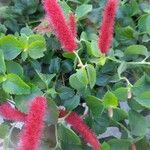
Acalypha pendula
Description
Source: wikipedia (CC BY-SA)Acalypha pendula is a species of subshrub. Native to Cuba, Haiti, and the Dominican Republic. It is a dioecious species.
Care Guide
💧 Water
The Firetail chenille plant flourishes in high humidity and needs consistently moist, well-draining soil to thrive. Water the plant every 1-2 weeks, allowing the top layer of soil to dry out just a bit between waterings. To promote optimal growth, maintain a humid environment by misting the plant regularly or using a pebble tray. This will help replicate its native tropical habitat.
☀️ Light Full sun
The firetail chenille plant performs best with optimal sunlight exposure, which promotes its growth and development. In its native habitat it receives abundant sun, guiding its needs in any new location. It will tolerate moderate sun, but too much or too little light can damage its vibrant, cascading foliage.
🌡️ Temperature 20–37.8°C
The firetail chenille plant comes from tropical areas, where the climate is usually warm and humid. Consequently, it is adapted to high heat and moisture. It does not tolerate abrupt temperature changes and prefers a consistent temperature, so avoiding indoor temperature fluctuations is important. It generally cannot endure cold and needs warmer conditions to grow. If the surrounding temperature falls too low, the plant may stop growing or even die.
💨 Humidity normal (40-60%)
This plant will thrive in moderate humidity, which is probably the level in your home. However, misting it a few times a week can be very beneficial. Make sure the room has good ventilation.
🪴 Soil 6-7
🌱 Fertilizer
The best time to fertilize a Firetail chenille plant is in early spring as it breaks dormancy. This encourages overall growth and the development of flowers. Fertilization improves the foliage, stems, and branches and supports flowers that are larger, more vivid, and longer-lasting. It also helps transport nutrients from the roots to the blooms and enhances the plant’s health and resistance to disease.
🪴 Pot & Repot 2-3 years
When you repot a Firetail chenille plant, choose a pot that is 1-2 inches (2.5–5.1 cm) larger and has ample drainage. Use a well-draining potting mix. Repot in spring or fall, making sure the root ball sits slightly below the rim of the flower pot. Water thoroughly after repotting, then place the plant in a warm spot with indirect sunlight.
✂️ Pruning
The Firetail Chenille plant is known for its cascading red catkin flowers and lush foliage. To ensure it grows optimally, it's best to prune the plant during its dormant period from early to late winter. During pruning, remove any dead branches and thin out overgrown areas. This practice improves airflow and light penetration, which promotes healthier growth and better flowering. Always use clean, sharp tools to prevent damage to the plant.
🌿 Propagating
🐛 Diseases & pets
☠️ Toxicity
Characteristics
- Plant Type
- Shrub
- Life Cycle
- Perennial
- Genus
- Acalypha
- Family
- Euphorbiaceae
- Hardiness Zone
- 9-11
- Mature Height
- 30 cm
- Mature Spread
- 30 cm
- Leaf Color
- Green, Red
- Leaf Type
- Evergreen
- Flower Color
- Red
- Flower Size
- 0.25 cm to 0.51 cm
- Bloom Time
- All year round
- Planting Time
- Spring, Summer, Autumn
- Harvest Time
- All year round
- Native Area
- Cuba