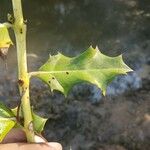
Acanthus ilicifolius
Mangrove-holly · Holly mangrove · Holly-leaf mangrove · Holy Mangrove · Holly-leaved acanthus
Description
Source: leafsnapAcanthus ilicifolius, commonly known as the Holly-leaved Acanthus, is a perennial herbaceous plant that belongs to the Acanthaceae family. It is native to coastal regions of Asia and Australia, thriving in mangrove forests, tidal flats, and salt marshes. The plant is notable for its unique appearance, featuring glossy green leaves with spiny edges resembling holly leaves. Its flowers are white or pale pink, accented with purple markings on the lower lip, and it typically blooms from June to September. For centuries, Acanthus ilicifolius has been used in traditional medicine, renowned for its anti-inflammatory properties. It is believed to be effective in treating various ailments, including fever, diarrhea, dysentery, and skin diseases. In addition to its medicinal uses, the plant plays a crucial role in coastal ecosystems. It provides habitat for a variety of bird and insect species and helps prevent soil erosion by stabilizing the soil along coastlines. However, Acanthus ilicifolius is under threat from habitat loss due to human activities such as deforestation and land reclamation projects. Conservation efforts are underway to protect its natural habitats and to increase its population through cultivation programs outside its native environments.
Care Guide
💧 Water Every 7 days
Holy mangrove flourishes in environments with high humidity and regular flooding, needing constant moisture while also benefiting from well-drained conditions. To maintain its vitality, it requires weekly watering. Although it is typically grown outdoors, holy mangrove is adept at adjusting to changes in water levels. During dry periods, it will shed its leaves, as it is a deciduous plant.
How should I water my Holy mangrove plant?
To properly water the Holy mangrove, it is recommended to use filtered water that is at room temperature or slightly warmer. Tap water should be avoided as it may contain harmful particles. Since the Holy mangrove is used to a warm environment, cold water can be a shock to its system. Instead of overhead watering, it is best to apply filtered room temperature water directly to the soil until it is fully soaked. This helps moisten the roots and allows them to spread through the soil to collect necessary nutrients.
What should I do if I give my Holy mangrove too much or too little water?
Overwatering is a common issue for Holy mangroves and can cause wilting and yellowing of the stems and leaves. It can also lead to diseases like root rot, mold, and mildew, which can be fatal for the plant. Underwatering is rare for Holy mangroves due to their drought tolerance, but it can still happen and result in brittle, brown leaves. It is important to recognize the signs of overwatering and take immediate action to reduce watering and improve soil drainage. If underwatering is detected, simply increase the frequency of watering until the signs improve.
How much do I need to water my Holy mangrove?
If your Holy mangrove plant is in a pot, the best way to check if it needs water is to stick your finger into the soil. If the top two to three inches of soil feel dry, it's time to water it. If you have your Holy mangrove planted outside in the ground, you can use the same method to test the soil. When the top few inches of soil have dried out, it's time to water it. In the spring and early fall, you may need to water this plant about once a week using this method. However, during very hot weather, you may need to increase watering to two or more times a week. It's worth noting that mature, well-established Holy mangroves can tolerate drought well.
How much water does my special mangrove tree need?
When watering your Holy mangrove, don't hesitate to give it a generous amount of water. It's best to water the plant thoroughly when the top layer of soil (about two to three inches) is dry. Make sure to soak the soil completely by adding enough water. You'll know you've added enough water when you see excess water flowing out from the drainage holes at the bottom of the pot. If no excess water drains out, it means you haven't watered the plant enough. However, be careful not to let water accumulate inside the soil as this can be harmful to the plant. On the other hand, if you notice that water is not draining properly through the pot, it could mean that the soil doesn't drain well, which is bad for the plant's health. In that case, you should avoid using such soil. If the plant is located outside, it will only need about 1 inch of rain per week.
How should I water my Holy mangrove as it grows?
The water needs of the Holy mangrove can vary based on its growth stages. When the Holy mangrove is in its early years or has been recently transplanted, it requires more water than usual. During these stages, the plant expends a lot of energy on developing new roots for future growth, and these roots need slightly more moisture to thrive. As the Holy mangrove matures, it will require less water. Another growth stage that may demand additional water is during the blooming period, as flower development relies on a significant amount of moisture. In such cases, providing the Holy mangrove with extra water is necessary.
☀️ Light Full sun
Holy mangrove is a perennial herbaceous plant that prefers sunny sites and is native to open habitats, commonly flourishing in meadows and grasslands. It favors full sun but can also tolerate partial sunlight.
What are the sunlight requirements for Holy Mangrove?
Holy Mangrove (Acanthus ilicifolius) thrives in full sun conditions, requiring more than 6 hours of sunlight daily. It can also tolerate partial sun, benefiting from about 3-6 hours of sunlight. Adequate sun exposure is crucial as it influences the plant's ability to grow healthily and produce flowers. Observing the movement of sunlight through your garden helps in selecting the ideal spots that offer a good mix of light and shade, ensuring the plants' well-being.
What are the essentials of growing Holy Mangrove?
Holy Mangrove is a perennial herbaceous plant that loves the sun and is native to open habitats like meadows and grasslands. It prefers full sunlight but can manage in partial sun. Indoor plants might require artificial lighting to ensure optimal growth, especially in conditions where natural sunlight is insufficient. LED lights are a popular choice for indoor plant lighting, providing the necessary wavelengths of light. The amount of light (30-50W/sq ft for full sun plants, 20-30W/sq ft for partial sun, and 10-20W/sq ft for full shade plants), proper distance (12-36 inches above the plant), and duration (8-12 hours per day) should be considered to mimic natural sunlight as closely as possible.
What symptoms indicate Holy Mangrove is not getting enough light?
When Holy Mangrove does not receive enough light, several symptoms may appear, including smaller leaves, leggy or sparse growth, faster leaf drop, slower or halted growth, lighter-colored or chlorotic leaves, sunscald, leaf curling, wilting, and leaf scorching. These symptoms suggest the plant is struggling with the light conditions, leading to poor health and reduced growth. Conversely, chlorosis and sunscald also indicate when a plant receives too much sunlight.
How can I manage light exposure for indoor and outdoor Holy Mangrove plants?
To manage light exposure for Holy Mangrove: Indoors, gradually shift the plant each week towards sunnier locations until it receives at least 6 hours of sunlight. If moving the plant isn't feasible, use artificial lights, such as desk or ceiling lamps, for a minimum of 8 hours a day or invest in grow lights. Outdoors and in-ground, introduce the plant to sunnier spots gradually to prevent shock, and consider pruning or transplanting if necessary to reduce light obstructions. Always aim for gradual changes to prevent sunburn and ensure new growth is healthy, acknowledging that parts of the plant damaged by insufficient sunlight may not fully recover.
🌡️ Temperature 20–37.8°C
Holy mangrove comes from tropical areas where the climate is generally warm and humid. Consequently, it is well suited to high temperatures and humidity. It does not tolerate sudden temperature shifts and prefers a constant temperature environment, so avoiding temperature fluctuations indoors is important. It typically cannot withstand cold and needs higher temperatures to grow. If the surrounding temperature falls too low, the plant may stop growing or even die.
💨 Humidity
🪴 Soil 5-7
🌱 Fertilizer
Holy mangrove needs the most fertilizer during its active growth period, which takes place mainly in spring, summer, and early fall. Fertilizing is required to supply essential nutrients that the soil may lack, supporting healthy root and stem growth and attractive foliage, a key characteristic of this plant.
🪴 Pot & Repot
✂️ Pruning
The Holy Mangrove has leathery, spiky leaves and benefits from annual pruning, ideally done in early to late spring before new growth begins. To improve the plant's appearance and reduce the risk of disease, remove any dead branches and thin out dense areas for better air circulation. Always use clean tools to prevent infections.
🌿 Propagating
🐛 Diseases & pets
☠️ Toxicity
Characteristics
- Plant Type
- Herb, Shrub
- Life Cycle
- Perennial
- Genus
- Acanthus
- Family
- Acanthaceae
- Hardiness Zone
- 9-11
- Mature Height
- 2.13 m
- Mature Spread
- 49 cm to 91 cm
- Leaf Color
- Green
- Leaf Type
- Evergreen
- Flower Color
- Lavender
- Flower Size
- 2.54 cm
- Bloom Time
- Summer, Early fall, Mid fall
- Planting Time
- Summer
- Harvest Time
- Fall, Early winter, Mid winter
- Native Area
- Sri Lanka, India, Malaysia, Vanuatu, Philippines, Bangladesh, Laos, Brunei, China, Indonesia, Cambodia, Vietnam, Myanmar, Singapore, Thailand