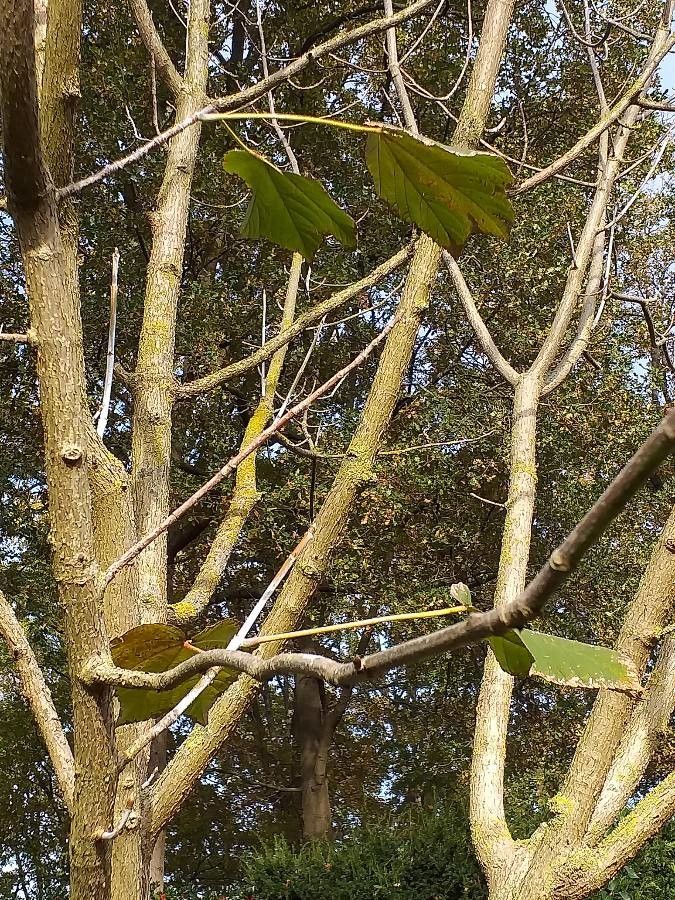
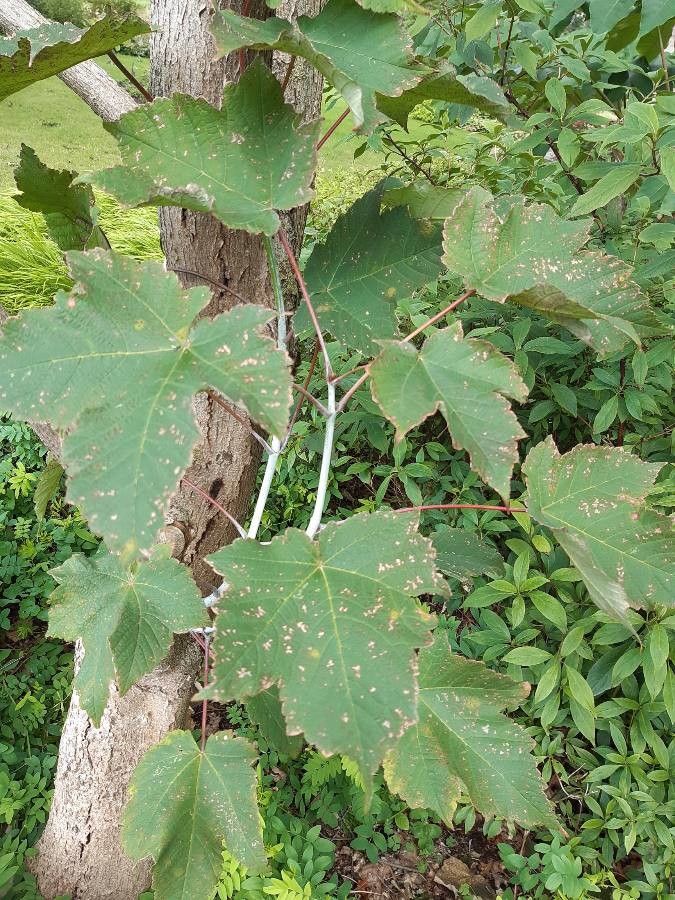
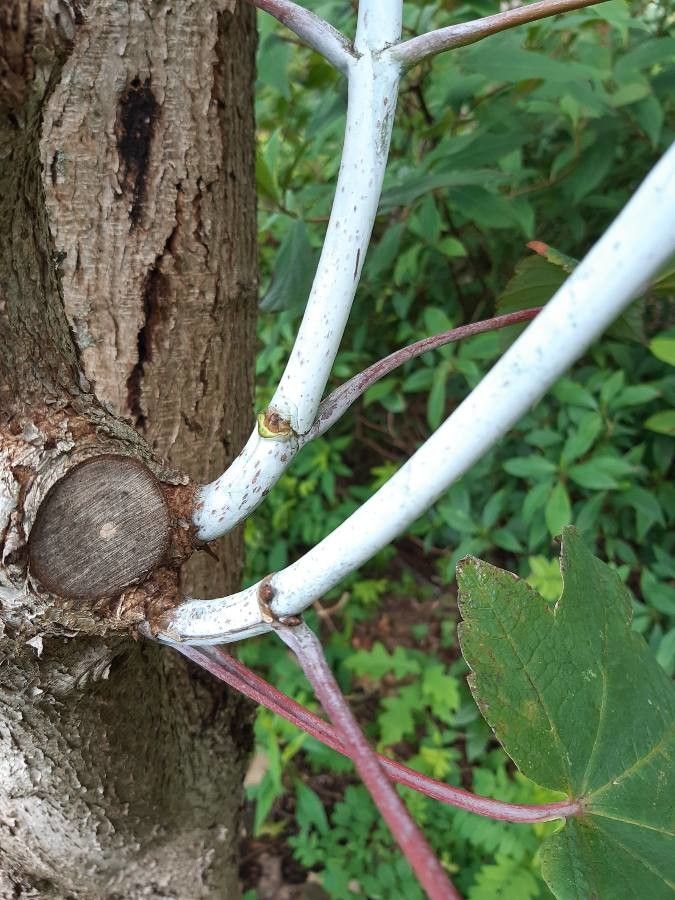
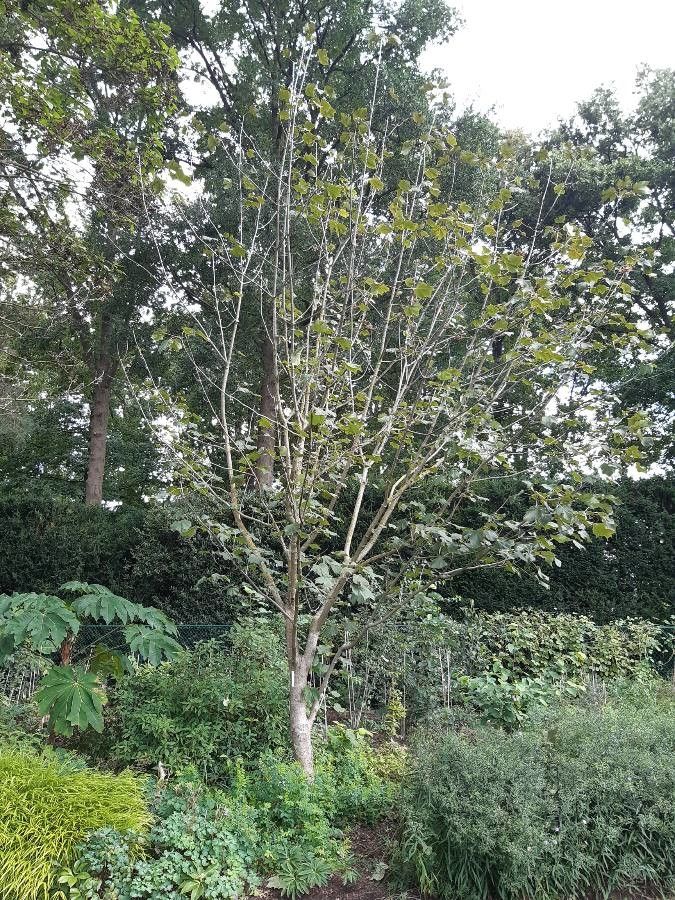
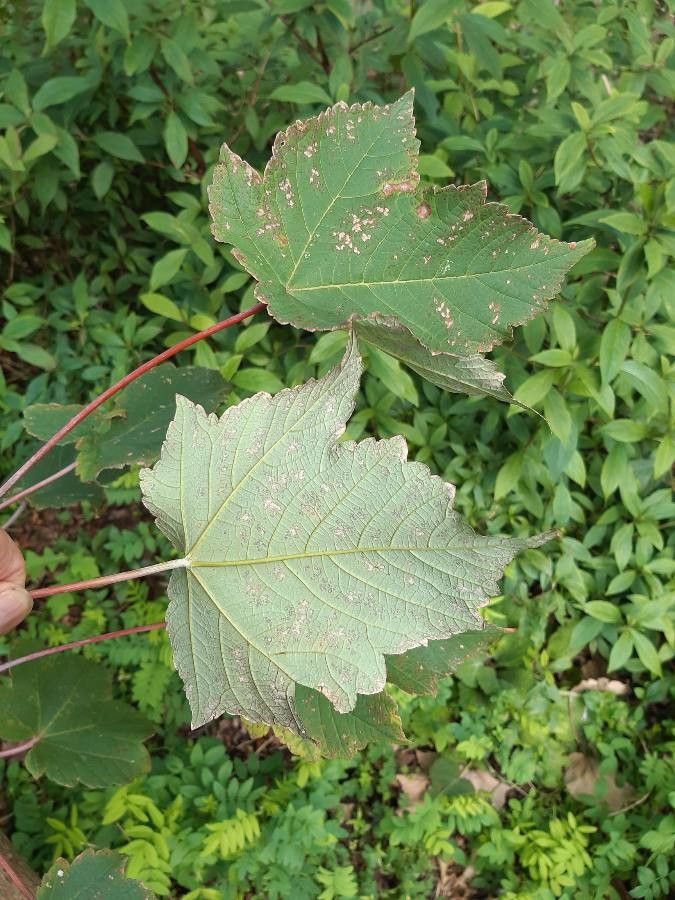
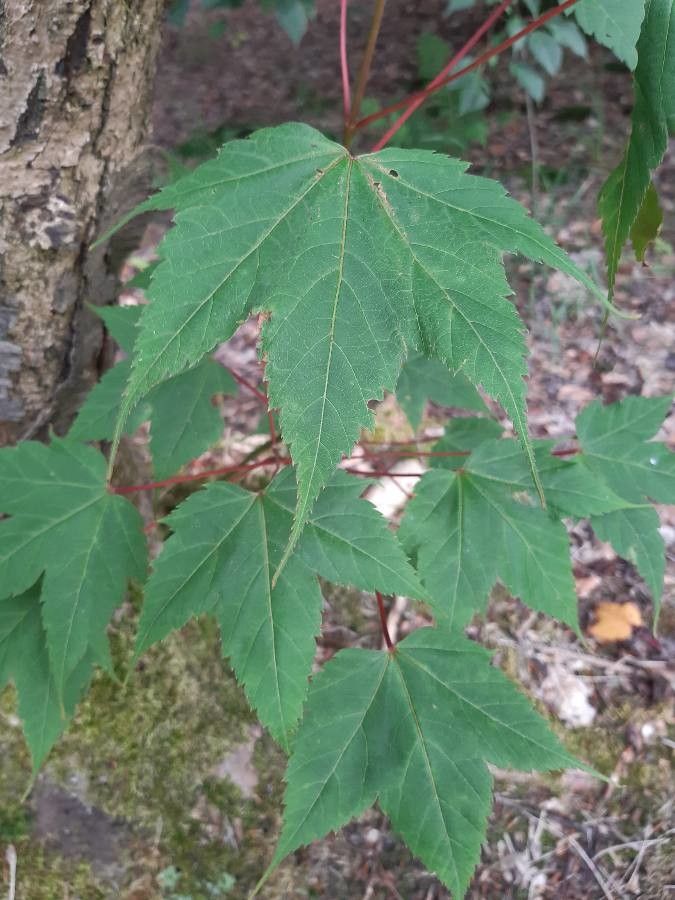
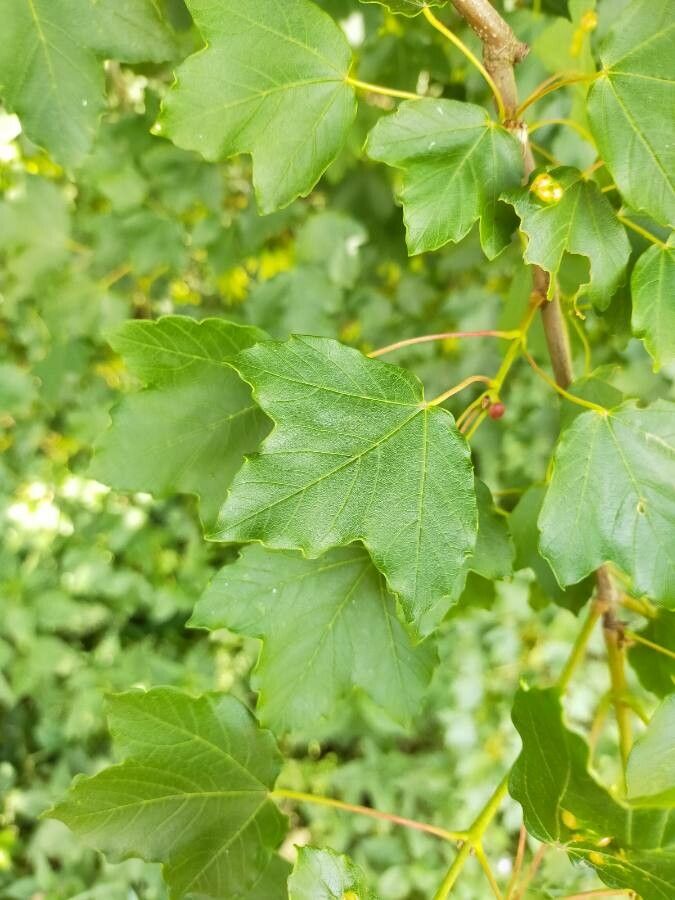
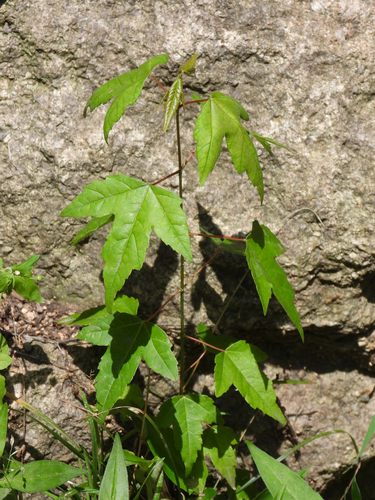
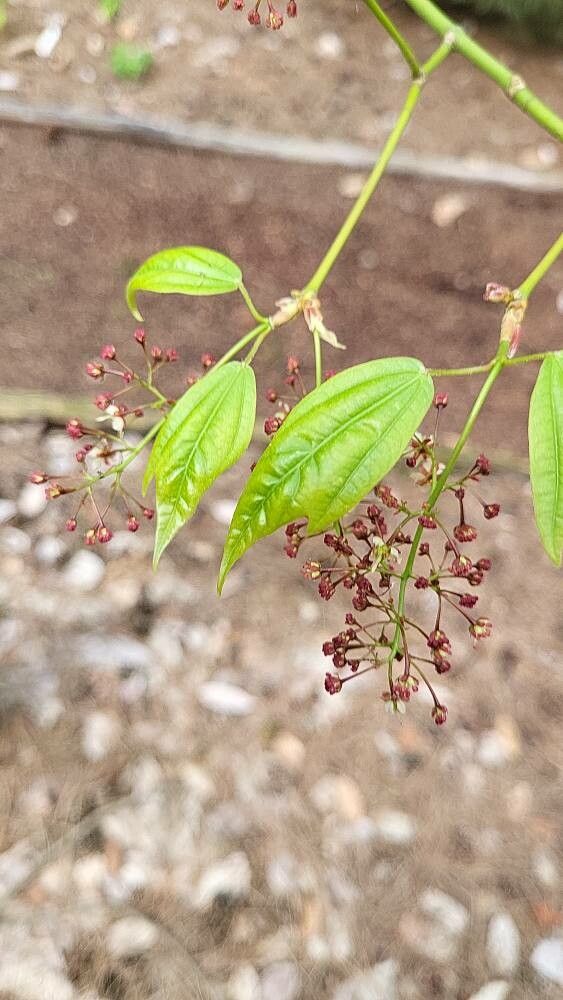
Acer caesium, commonly known as the blue maple or graybark maple, is a deciduous tree species in the Sapindaceae family. Native to China, this tree can reach a height of up to 20 meters. It is characterized by its distinctive grayish-brown bark, which peels off in thin strips to reveal a smooth, shiny surface underneath. The leaves of Acer caesium are palmately lobed, typically with three or five lobes, and they exhibit a bluish-green color. In autumn, the leaves turn yellow before falling. The flowers of this plant are small and not particularly noticeable, appearing in clusters before the leaves emerge. Acer caesium thrives in moist soils with good drainage but can tolerate dry conditions once established. It performs best in full sun or partial shade but can also adapt to full shade. This tree is commonly used as an ornamental plant due to its attractive bark coloration and unique leaf shape. It also provides habitat for various wildlife species, including birds and insects. In traditional Chinese medicine, Acer caesium has been used for its anti-inflammatory properties to treat ailments such as arthritis, fever, coughs, and sore throats. Overall, Acer caesium is a visually appealing ornamental plant that offers ecological benefits and medicinal properties. It is both aesthetically pleasing and practically useful, making it an important species.
Botanical profile.
- Genus
- Acer
- Family
- Sapindaceae
Other names.