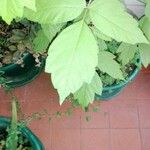
Acer negundo
افرا · افرای سیاه · افرای جعبه ای · Boxelder · Manitoba Maple
Description
Source: leafsnapAcer negundo, commonly known as the boxelder or Manitoba maple, is a deciduous tree native to North America. Fast-growing, it can reach up to 20 meters in height and features a broad crown with spreading branches. Its compound leaves consist of three to seven light green leaflets that turn yellow in the fall. The bark is grayish-brown with shallow furrows. Early in the spring, the boxelder produces small, greenish-yellow flowers that appear before the leaves. These flowers develop into winged samaras, often called "helicopters," which spin as they fall, aiding in seed dispersal. This tree can tolerate a variety of soil types but prefers moist soils near streams or rivers. It is commonly found along riverbanks, floodplains, and other wetland areas. Although the boxelder is not typically considered an ornamental plant due to its weedy nature and tendency to produce suckers (new shoots from its roots), it has practical uses. It is valuable for erosion control on steep slopes and provides ample shade during hot summer days. While Acer negundo may not be the most glamorous plant, it plays an important role in North American ecosystems. It offers food for wildlife such as birds and squirrels and helps stabilize riverbanks with its root system.
🌳 Box elder has a range of practical uses that demonstrate its adaptability. Its sap is tapped to make maple syrup, especially by Western American indigenous tribes, since it is the predominant maple species in that region. The seeds can be brewed into a sweet-tasting tea that offers a distinctive flavor. However, because its wood is brittle, it is not favored for furniture making, illustrating an interesting combination of practical and sensory uses within its native habitat.
🎭 Perseverance, cordiality, genuineness
Care Guide
💧 Water Every 7 days
Box elder thrives in moist, riparian environments, where it requires a steady supply of water. Although it can withstand short periods of dryness, it's best to water it every 1-2 weeks to keep the soil consistently moist—but be careful not to overwater. This tree is usually cultivated outdoors and benefits from mulching, which helps retain moisture and mimics its natural habitat.
When Should I Water My Box Elder?
The right time to water a box elder is crucial for its health and growth. You should check the soil's moisture level by inserting a finger or a moisture meter into the soil; if the top 1 to 2 inches are dry, it's time to water. Look for signs like wilting or crispy leaves, leaf curling, color changes, dry or cracked soil surface, and shriveled stems, which all indicate the need for water. However, be wary of overwatering, as it can cause root rot and disease. Keeping an eye out for these signs will help you maintain a proper watering schedule for your box elder.
How Should I Water My Box Elder?
Watering your box elder effectively involves avoiding direct watering on the plant to prevent root rot and using a drip irrigation system for even water distribution. Employing a soil moisture meter can help you monitor the soil's moisture, ensuring you neither overwater nor underwater your plant. Focus the water towards the base of the plant, where the roots grow, maintaining an evenly moist root zone. To help retain soil moisture and reduce evaporation, consider using mulch around your box elder.
How Much Water Does Box Elder Really Need?
The water needs of a box elder vary with its environment and growth stage. It requires consistently moist soil, reflecting its natural wetland habitat. The amount of water needed depends on factors like pot size, root depth, and the plant's size. Mature plants with deep root systems especially need thorough watering. Signs of adequate watering include lush, green leaves and vigorous growth, while brown leaf edges or wilted leaves can indicate under-watering. Both overwatering and underwatering can cause issues, underlining the importance of balancing water input.
What Kind of Water is Best for Box Elder?
The best water for box elder is distilled water, due to its purity and lack of minerals and contaminants. Rainwater is also beneficial for being chemical-free and having a balanced pH level. Tap water can be used if it's free from chlorine and other harmful chemicals; consider letting tap water sit out for 24 hours to allow chlorine to evaporate. Box elder is sensitive to chlorine and certain minerals, so water quality is important. Moderate water temperature, around room temperature, is ideal for avoiding plant shock.
How Do Box Elder's Watering Needs Change with the Seasons?
Box elder's watering needs vary through the seasons. In spring, its active growth phase means it may need more water, especially during dry spells. Summer heat increases evaporation and soil drying, requiring deep and possibly more frequent watering. As box elder enters dormancy in autumn, reduce watering frequency to help it prepare for winter. In winter, water sparingly, just enough to prevent the roots from drying out completely, and avoid waterlogged soil to prevent root rot.
☀️ Light Full sun
In its native, ever-changing habitats, box elder does best with abundant sunlight for optimal growth. Although it prefers bright conditions, it can tolerate lower light levels, but this may weaken its health and vigor. Too little light can slow its growth, while too much exposure can cause some damage.
What are the sunlight requirements for Box Elder?
Box Elder requires full sun, meaning it thrives in locations receiving above 6 hours of sunlight daily. However, it can also tolerate partial sun conditions, where it gets about 3-6 hours of sunlight. It's important to note that the plant's health and vigor might be compromised in less than optimal light conditions. Insufficient light could lead to slower growth, while excessive exposure might cause harm. Observing how sunlight moves through your garden and choosing spots that provide the right balance of light and shade are crucial for the plant's success.
How can artificial lighting be used for indoor Box Elder plants?
When natural sunlight is insufficient for indoor Box Elder plants, especially in winter or less sunny spaces, artificial lighting serves as a crucial alternative. LED lights are recommended due to their ability to be customized to provide specific wavelengths needed by plants. Full sun plants require 30-50W/sq ft of artificial light, partial sun plants need 20-30W/sq ft, and full shade plants should have 10-20W/sq ft. The artificial light source should be placed 12-36 inches above the plant, mimicking natural sunlight as closely as possible, with most plants needing 8-12 hours of light per day.
What are the signs of light deficiency in Box Elder?
Signs that a Box Elder is suffering from light deficiency include smaller new leaves, leggy or sparse growth, faster leaf drop, slower or no new growth, lighter-colored new leaves, and symptoms of chlorosis. These signs indicate that the plant is not receiving sufficient sunlight, impacting its growth and overall health.
What are the symptoms of excessive sunlight exposure on Box Elder?
Excessive sunlight exposure can lead to a range of symptoms in Box Elder, including chlorosis, sunscald, leaf curling, wilting, and leaf scorching. These symptoms reflect damage to the plant's leaves or stems caused by intense sunlight, affecting its ability to photosynthesize, maintain hydration, and overall health.
How to manage sunlight exposure for healthier Box Elder growth?
For optimal growth, gradually move Box Elder plants into sunnier locations each week until they get at least 6 hours of direct sunlight daily. For indoor plants, use a south-facing window or artificial light if the plant is large or not easily movable. Outdoors, avoid drastic changes in light intensity and consider pruning or transplanting to minimize sunlight obstructions. Remember, parts of the plant affected by insufficient sunlight might not recover, but new growth will be healthy once the light exposure is increased.
🌡️ Temperature 0–35°C
The box elder prefers temperatures between 32 and 95 ℉ (0 and 35 ℃). It is native to temperate regions and tolerates a wide range of temperature extremes, which makes it a hardy tree well suited to urban and suburban areas. In winter the tree can endure freezing temperatures, though it may need protection during severe cold snaps.
What are the essential care instructions for a Box elder tree?
The Box elder tree thrives in a temperature range of 32 to 95°F (0 to 35°C), making it suitable for temperate climates and capable of adapting to various temperature extremes. This hardiness makes it a good choice for both urban and suburban settings. In winter, the tree can handle freezing temperatures without special frost protection, but if temperatures are expected to drop below -40°C, it's important to wrap the trunk and branches with materials like non-woven fabric or cloth. Additionally, watering the plant abundantly before the first freeze in autumn to keep the soil moist can help the tree avoid drought and water scarcity during the colder months.
How does low temperature affect the Box elder, and what are the solutions?
Box elder trees are cold-tolerant and perform best when temperatures remain above 0°C. However, they should not be exposed to temperatures below -35°C. If temperatures fall below -40°C, the branches may become brittle and dry by spring, with no new shoots appearing. The solution to this issue is to prune away any dead branches that have failed to produce new leaves in the spring.
How does high temperature affect the Box elder, and what are the solutions?
During the summer months, it's important to keep Box elder trees below 35°C to avoid heat stress. If temperatures exceed 41°C, the leaves might lighten in color, the tips can become dry and withered, and the tree may become more prone to sunburn. To mitigate these problems, trim away sunburned and dried-up parts of the plant. It may also be beneficial to move the tree to a location that provides shade during the midday and afternoon heat, or use a shade cloth. Ensuring the plant is watered in the morning and evening will help keep the soil moist and further protect the tree from high temperature stress.
💨 Humidity dry (<40%)
This plant prefers dry conditions, so don't mist it. However, watering it less often can also thrive in higher humidity.
🪴 Soil 6-8
🌱 Fertilizer
To encourage healthy growth, fertilize your Box elder in early spring. Regular fertilization improves overall health, producing vigorous growth, greater tolerance of harsh conditions, and enhanced resistance to pests and diseases. Keep to a consistent fertilization schedule for your Box elder to ensure foliage that is vibrant, deeply colored, and lush in appearance.
Why is it important to add fertilizer to my Box elder tree?
No matter the type of Box elder you have, regular fertilization is key for its overall health. Providing the right nutrients promotes stronger growth and enhances its resilience to challenging conditions, as well as improves its ability to combat diseases and pests. The foliage of your Box elder is particularly appealing, so it's important to maintain it. To achieve this, establish and stick to a fertilization schedule tailored to your specific Box elder. This will encourage the development of vibrant, lush leaves with deep, rich colors.
When should I fertilize my Box elder tree?
To keep your Box elder tree healthy and thriving, it's important to fertilize it at the right times. In late winter or early spring, the first round of fertilization is crucial as it provides the necessary nutrients for the tree to start growing vigorously once the weather warms up. If you live in a warm climate, it's beneficial to give your Box elder another round of fertilizer in early fall. This helps to replenish the soil with nutrients for the upcoming growing season and also aids in making the tree more resilient to winter cold. Fertilizing earlier in the fall ensures that new branches have enough time to grow strong and withstand the harsh winter weather.
When should I not put fertilizer on my Box elder tree?
There are a few times during the year when you should avoid fertilizing your Box elder. The first time is in the early and mid-winter when the plant is dormant and doesn't require feeding. It is also not recommended to fertilize during late spring and summer as the weather is hotter and drier, which can have a negative impact on the Box elder if fertilized. To prevent any issues, it's best to follow a fertilization schedule that involves feeding only in early spring and early fall.
What kind of fertilizer does my Box elder tree need?
The nutrient needs of a Box elder tree are primarily focused on nitrogen, but this doesn't mean that phosphorus and potassium are unimportant. On the contrary, a balanced fertilizer containing all three nutrients, like a 10-10-10 blend, can be effective. However, achieving optimal growth often requires a more specific nutrient ratio. Generally, fertilizers with slightly higher nitrogen content, such as a 10-6-4 mixture, tend to work well. You can choose between granular or liquid-based fertilizers when applying them.
How can I make my Box elder tree grow better?
To fertilize your Box elder tree, you have two options: granular fertilizer or liquid fertilizer. If you choose granular fertilizer, simply sprinkle it on the soil at the right time. The slow-release nature of granular fertilizer allows nutrients to be slowly released into the soil over time. It's best to lightly water your Box elder tree before applying the granular fertilizer. On the other hand, liquid fertilizer is less common but can be used as an alternative. To use liquid fertilizer, mix it with water and pour the mixture onto the soil around the base of your Box elder tree. Before fertilizing, it can be beneficial to perform a soil test to check if any pH adjustments are necessary.
🪴 Pot & Repot 2-3 years
When repotting Box elder, pick a pot 1-2 inches (2.5–5.1 cm) larger with good drainage. Use a well-draining potting mix. Repot in spring or fall, making sure the root ball sits slightly below the rim of the flower pot. Water thoroughly after repotting and place the pot in a warm spot with indirect sunlight.
✂️ Pruning
The box elder is a fast-growing tree with compound leaves that thrives in a variety of conditions. To maintain its health, it's best to prune the tree in early spring. Focus on removing dead or crowded branches to improve airflow and light penetration. This practice strengthens the tree, boosts its overall health, and reduces the risk of pests and diseases.
🌿 Propagating
🐛 Diseases & pets
☠️ Toxicity
Characteristics
- Plant Type
- Tree
- Life Cycle
- Perennial
- Genus
- Acer
- Family
- Sapindaceae
- Hardiness Zone
- 2-10
- Mature Height
- 10.06 m to 24.99 m
- Mature Spread
- 7.92 m
- Leaf Color
- Green, Yellow
- Leaf Type
- Deciduous
- Flower Color
- Green, Yellow
- Flower Size
- 10.16 cm to 20.32 cm
- Bloom Time
- Mid spring, Late spring
- Planting Time
- Spring, Summer, Autumn, Winter
- Harvest Time
- Mid summer
- Native Area
- Mexico, Guatemala