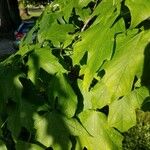
Acer nigrum
Black maple · Black Sugar Maple · Hard Maple · Rock Maple · Sugar Maple
Description
Source: leafsnapAcer nigrum, the black maple, is a species of maple closely related to A. saccharum (sugar maple), and treated by some authors as a subspecies of it, as Acer saccharum subsp. nigrum.Identification can be confusing due to the tendency of the two species to form hybrids. The simplest and most accurate method for distinguishing between the two trees is the generally three-lobed leaves of the black maple versus the generally five-lobed leaves of the sugar maple. The leaves of the black maple also tend to have a drooping appearance. Other differences that are not as pronounced include darker, more deeply grooved bark, slightly smaller seeds, a downy underside, and thicker petioles. Hybrids are intermediate in their characteristics.
🌳 Like its relative the sugar maple, black maple’s sap can be tapped to produce a darker, more robust maple syrup that has a devoted following who appreciate its distinctive flavor. The wood of black maple is also prized by furniture makers for its strength and attractive grain.
🎭 Love, longevity money. Because of its sugar and syrup, it symbolizes success and abundance.
Care Guide
💧 Water Every 1-2 weeks
The black maple flourishes with moderate watering, typically every 1-2 weeks, mirroring its native habitat with a balanced climate. During the dormant winter months, its water needs decrease. As a deciduous tree, the black maple is neither drought-tolerant nor does it require high humidity.
How should I water my Black maple tree?
To ensure excellent root development, place a garden hose at the base of the plant. Avoid spraying the leaves directly, especially if the plant is outdoors in direct sunlight as the leaves may require more watering. You can also use bubblers to moisten the roots of each plant or soaker hoses that cover the entire garden or bed when adding or removing plants to ensure deep rooting. Make sure to drain any excess water and allow the soil to dry before watering again. It is best to water at ground level to prevent diseases. On a sunny day, consider spraying the entire bush with water. Regardless of whether the plant is potted or in the ground, keep in mind that Black maple prefers deep watering rather than light sprinkling.
What do I need to do if I give Black maple too much or too little water?
Overwatering a Black maple can cause its leaves to turn yellow, drop off, and wilt. The plant may also appear dull and unhealthy, with mushy stems. If you notice these signs, it is recommended to adjust your watering schedule. On the other hand, wilting can also indicate under watering. In this case, the leaves may become crispy and dry. When the soil is dry and simply watering is insufficient, give the plant a thorough watering in a timely manner. Sufficient water will help the Black maple recover, but it may still have dry and yellow leaves due to the damaged root system. Once the plant returns to normal, the yellowing of the leaves will stop. When keeping the Black maple indoors, always check the moisture levels in the pot and avoid overwatering. Look out for signs of black spots, and if present, allow the soil to dry out by refraining from watering for a few days. Overwatering can lead to root rot, indicated by discolored and slimy roots. If root rot is present, consider transferring the plant to a different pot and prevent excess moisture in the soil. When planting a Black maple outdoors, make sure to dig a little deeper and check the soil moisture level with your fingers. If it feels too dry, it may indicate underwatering, and adequate watering is necessary to promote plant recovery.
How much should I water my Black maple tree?
The Black maple prefers deep, infrequent watering. For potted Black maples, soak them with a gallon of water each time to account for limited water storage and faster soil drying. In cold regions, water every 3 to 5 days, ideally in the morning when the soil is dry. To determine if watering is needed, check the top 2-3 inches of soil; if dry, water the plant. During hot days, check the soil moisture daily as heat quickly dries out potted soil. For garden Black maples in hot climates, water once a week when the top 2-3 inches of soil become too dry. Avoid overwatering to prevent root rot. If there is substantial rainfall, additional watering may not be necessary. When Black maples are outdoors, add mulch 3 to 4 inches deep to conserve water. Sandy soil requires more frequent watering, while clay soil can go 2-3 days without watering to avoid root rot. Mark the watering dates on a calendar, and watch for drooping leaves as indicators that watering may be needed soon.
How much water should I give my Black maple?
The Black maple usually requires one gallon of water on a regular basis. For potted plants, water them deeply until you see water dripping from the bottom of the pot. Wait for the soil to dry before watering them again. You can use a water calculator or moisture meter to track how much water you've given your plant in a week. During the flowering period, provide plenty of water but allow the moisture to evaporate afterwards to avoid root rot. If you have planted the Black maple outdoors and it receives adequate rainfall, you may not need to water it additionally. However, when the Black maple is young or newly planted, ensure it receives 1-2 inches of rain per week. As it grows, it can rely solely on rainfall. Only when the weather is very hot or there is no rainfall for 2-3 weeks, consider giving the Black maple a thorough watering during the cooler part of the day to prevent damage from high heat. Additional watering will be necessary during prolonged dry spells.
Should I change how often I water my Black maple depending on the time of year or the weather?
The Black maple needs to be outdoors and typically relies on rainfall for watering, unless there is persistent dry weather. In the spring and fall, it needs moist soil but not overly wet, and alternating between dry and moist soil conditions is best for its growth. During the summer, hot weather can cause water to evaporate quickly, so additional watering may be necessary if there is a lack of rainfall. In winter, the Black maple needs less water as it becomes dormant and drops its leaves. A well-draining soil mixture can help water evaporate faster. Once the plant begins to leaf out in spring, watering can be reduced and the rain during fall and winter can usually sustain it. Good drainage is important throughout the year, especially during winter when the plant is vulnerable to ponding. If the Black maple is in a pot, it has limited root growth and should be watered more frequently, especially in summer. Deep soaking the roots once or twice a week is recommended, avoiding shallow sprinkling that can encourage fungal growth and not reach the roots. Even during dormancy, the plant should not be allowed to completely dry out in the fall and winter. Overwatering should also be avoided, as sitting in water for too long can be detrimental, especially during winter. Mulching can help reduce stress, conserve water, and promote healthy blooms.
☀️ Light Partial sun
Black maple does well in locations with a moderate amount of sun, and it can also tolerate spots with very intense sunlight. Its health and growth are best when it receives moderate sunlight, allowing it to develop properly without scorching its leaves. Too little light can impede its growth, while too much sun may cause leaf scorch.
How much sunlight does Black Maple need to grow?
Black maple needs a good amount of sunlight to grow well, around 3-6 hours each day. However, it is important to provide some shade during the hottest times to protect it from sun damage. The best sunlight for black maple is in the morning, but it can handle some afternoon sun as long as it is not too hot. To ensure the right amount of sunlight, consider planting black maple in an area that gets partial sun, like under a tree or on the east side of a building.
What happens if Black maple doesn't get enough sunlight?
Black maple can experience negative effects if it is exposed to excessive direct sunlight. This can result in the leaves turning yellow, drying out, or even burning. Additionally, the plant may wilt or remain stunted. To prevent sun damage, it is important to provide some shade for the black maple during the hottest periods of the day. You can accomplish this by using a shade cloth or planting black maple near taller plants that can offer natural shade.
What will happen if Black maple gets too much sunlight?
If the Black maple doesn't receive sufficient sunlight, it can become tall and thin, with not much foliage. The leaves might also change color, turning yellow or light green, which shows that the plant is not producing enough chlorophyll because it lacks sunlight. To fix this issue, you can attempt moving the Black maple to a sunnier location or trim nearby foliage to enable more light to reach the plant.
🌡️ Temperature 0–32.2°C
The black maple favors a temperature range of 32 to 90 ℉ (0 to 32 ℃). Its natural habitat is temperate regions with temperatures that vary throughout the year. In winter, temperatures can fall as low as -30 ℉ (-34 ℃), forcing the plant into dormancy. In summer, temperatures may range from 60 to 90 ℉ (15 to 32 ℃).
What temperature is best for Black maple?
Black maple thrives in cool weather, specifically within a temperature range of 65-75℉ (18-25℃). While it can tolerate temperatures outside of this range, it is best to maintain a few degrees within these limits to ensure optimal growth. Black maple can withstand temperatures as high as 75-85℉ (25-30℃) and as low as 5℉ (-15℃). However, it prefers cooler temperatures, so it is important to avoid prolonged exposure to temperatures above 85℉ (30℃) as it can hinder growth and eventually lead to damage or death.
Does Black maple need separate temperatures for each stage of growth?
To ensure optimal growth of Black maple during each phase, it is recommended to maintain temperatures between 65-75°F (18-25°C). While Black maple can handle colder temperatures better than hot ones, growth will not be significantly affected if the growing area gets as cold as 5°F (-15°C). However, growth may slow down if the temperature drops below this threshold. Therefore, if you plan to continue growing your plants into winter, it is advisable to keep the room temperature above this level.
Here are three ways to keep the temperature of Black maple trees in control.
Here are some tips to help you take care of your Black maple tree: Tip #1: Watch for signs of heat damage. If the Black maple gets too hot, there are warning signs to look out for. The leaves may start turning brown, and branches might start falling off. This happens because the branches are actually dying, as the tree tries to conserve moisture. To prevent heat damage, keep temperatures lower and water your Black maple more frequently when it's exposed to heat. Tip #2: Don't let the Black maple get too cold. Although the Black maple prefers cooler environments, freezing temperatures can cause damage. If the temperature drops quickly below 5℉ (-15℃), the water in the tree can freeze and cause the cell walls to burst and the bark to crack. This can significantly slow down growth and eventually lead to parts of the tree dying. So, be mindful of the temperature and take measures to protect the Black maple from extreme cold. Tip #3: Use shade and ventilation to control temperature. If you notice that your Black maple is overheating, you can use a combination of shade and ventilation to cool it down. If you don't have an air conditioning unit or fans, simply providing shade and improving air circulation can help regulate the temperature. However, remember that Black maples need sunlight for proper growth, so don't keep them in the shade for too long. Once the temperature is back to the optimal range, make sure the tree gets enough sunlight.
Does the Black maple tree require varying temperatures throughout the different seasons?
To ensure optimal growth of Black maple trees, it is important to consider temperature variations between different seasons. If you plan to grow Black maple trees outdoors, pay attention to your outdoor thermometer during the prime growing seasons of spring and early summer. It is crucial to prevent temperatures from exceeding 85℉ (30℃) as this can harm and eventually kill the trees. If you choose to plant the trees indoors to regulate temperature, ensure the space receives ample sunlight. Black maple trees require plenty of sun, ideally full sun or partial shade. However, be cautious as excessive direct sunlight combined with high heat can cause damage to the trees.
How can I keep Black maple at the right temperature?
To maintain the right temperature for Black maple, it's best to grow them in a climate-controlled environment. Choose a room with air conditioning or fans and a way to monitor the temperature. Check the temperature once or twice a day to ensure it is between 65-75℉(18-25℃). If it's not, adjust your climate control settings accordingly. If growing Black maple outdoors, do it in the spring and early summer. It's harder to maintain the optimal temperature range outside, so having them outdoors usually promotes maximum growth.
💨 Humidity
🪴 Soil 6-7
🌱 Fertilizer
Fertilize your Black maple in early spring to encourage healthy growth. Regular feeding improves overall health, leading to vigorous development, better tolerance of harsh conditions, and enhanced resistance to disease and pests. Stick to a consistent fertilization routine for your Black maple to maintain vibrant, deeply colored foliage and a lush appearance.
Why should I put fertilizer on my Black maple?
No matter the type of Black maple you have, regular fertilization can promote overall plant health. Providing the proper nutrients stimulates vigorous growth and enhances your Black maple's ability to withstand challenging growing conditions, resist diseases, and deter pests. Maintaining the foliage of your Black maple is crucial for its attractiveness. To ensure this, it is important to establish and follow a specific fertilization regimen tailored to your Black maple. By doing so, you can expect vibrant leaves with rich color and a lush appearance.
When should I fertilize my Black maple tree?
To ensure healthy growth, it is recommended to fertilize your Black maple for the first time in late winter or early spring. This provides the necessary nutrients for the tree to thrive once the weather warms up. If you live in a warm climate region, it can be beneficial to fertilize again in early fall. This not only adds nutrients for the following growing season, but also helps the tree withstand winter without damage to its foliage. Fertilizing earlier in the year ensures that new branches have enough time to grow and withstand the cold winter.
When is it best not to put fertilizer on my Black maple?
There are specific times when it is best to avoid fertilizing your Black maple. One of these periods is in the early and mid-winter when the tree is dormant and does not require any feeding. Additionally, it is not advisable to fertilize the plant in late spring or throughout the summer. During this time, the weather is generally hotter and drier, which can have a negative impact on the tree if fertilized. To prevent any potential problems, it is recommended to follow a fertilization schedule that includes feeding only in early spring and early fall.
What kind of plant food does my Black maple tree need?
Black maple trees primarily require nitrogen as the most crucial nutrient, although phosphorus and potassium should not be overlooked. It is essential to provide adequate amounts of all three main nutrients for a Black maple's overall health, which is why a balanced fertilizer like a 10-10-10 can be effective. However, a more precise nutrient ratio typically promotes optimal growth for Black maple trees. Fertilizers with slightly higher levels of nitrogen, such as a 10-6-4 ratio, often yield better results. When fertilizing, you have the option to use either granular or liquid-based fertilizers.
How do I make my Black maple tree grow better?
To fertilize your Black maple tree, you have two options: granular fertilizer or liquid fertilizer. With granular fertilizer, simply sprinkle it on the soil at the correct time. The slow-release nature of this type of fertilizer will gradually provide nutrients to the soil. It's a good idea to lightly water the tree before applying the granular fertilizer. In comparison, liquid fertilizer is less commonly used. To use liquid fertilizer, mix it with water and then pour the mixture onto the soil around the base of the tree. Sometimes, conducting a soil test beforehand can help you determine if you need to adjust the pH of the soil before fertilizing.
🪴 Pot & Repot
✂️ Pruning
Black maple benefits greatly from pruning in early spring. This process involves removing dead branches, thinning out crowded areas to improve airflow, and shaping the canopy to maximize sunlight exposure. Such care promotes healthy growth, reduces sap loss, and enhances the tree's vigor, resulting in a more attractive and robust plant.
🌿 Propagating
🐛 Diseases & pets
☠️ Toxicity
Characteristics
- Plant Type
- Tree
- Life Cycle
- Perennial
- Genus
- Acer
- Family
- Aceraceae
- Hardiness Zone
- 3-7
- Mature Height
- 21.03 m to 34.14 m
- Mature Spread
- 14.94 m to 22.56 m
- Leaf Color
- Green, Yellow, Red, Gold, Orange
- Leaf Type
- Deciduous
- Flower Color
- Yellow, Green, White
- Flower Size
- 7.62 cm to 15.24 cm
- Bloom Time
- Mid spring, Late spring
- Planting Time
- Spring, Autumn
- Harvest Time
- Mid summer