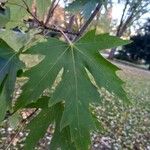
Acer saccharinum
Silver maple · Sugar Maple · Soft maple · White maple · Northern sugar maple
Description
Source: leafsnapAcer saccharinum, commonly known as the silver maple, is a deciduous tree native to North America. This fast-growing tree can reach heights of up to 100 feet, with a spread of up to 50 feet. The name "silver maple" derives from the silvery undersides of its leaves, which shimmer in the wind. The leaves are deeply lobed, with five serrated lobes. They are green on top and silvery-white underneath. The bark is grayish-brown and features deep, vertical furrows. In early spring, before the leaves emerge, the silver maple produces small clusters of yellow-green flowers. These flowers give way to winged seeds called samaras, which spin like helicopters as they fall from the tree. Silver maples prefer moist soils and can tolerate flooding, making them ideal for planting near streams or other bodies of water. They are also commonly used as shade trees in urban areas due to their fast growth rate and tolerance for pollution. However, silver maples can be problematic due to their shallow root systems, which can damage sidewalks or other structures if planted too close by. Overall, Acer saccharinum is an attractive deciduous tree with unique features, making it an excellent choice for landscaping projects or natural areas.
💡 The maple leaf is a cherished symbol of spirit in the hearts of the Canadian people. Those who catch its leaves are believed to receive good luck and blessings. Watching the leaves fall with a loved one is also thought to bring blessings.
🌳 The sap of the silver maple is tapped for its sweet bounty and plays a part in maple syrup production. Although it is not as sugary as the sap from the sugar maple, it still contributes a distinctive flavor to the syrup. Beyond syrup, the sap is turned into sweets like maple sugar, taffy, and cream, demonstrating the creative use of natural resources for confectionery treats directly sourced from the silver maple.
🎭 Perseverance, warm-heartedness, genuineness, plenty, resilience, drawing on the wisdom of dreams
Care Guide
💧 Water Every 7 days
Silver maple trees thrive in moist soils commonly found near waterways. They prefer consistent moisture but are moderately drought-tolerant. To care for a silver maple, water it once every 1-2 weeks, allowing the soil to dry out slightly between waterings. Typically grown outdoors, these trees benefit from mulching, which helps retain moisture and replicates the natural leaf litter of their habitat.
When Should I Water My Silver Maple?
Watering your Silver Maple should be guided by several key indicators including soil moisture, leaf wilting, leaf color, and more. Before watering, check the moisture level of the soil to see if it's dry. Wilted or drooping leaves are clear signs that your Silver Maple needs water. Also, pay attention to the leaf color; if the leaves appear dull or start to yellow, it's time to water. Additionally, early morning or late afternoon is the best time to water, to minimize evaporation and prevent fungal diseases. Remember, over-watering can lead to root diseases, while under-watering can cause the plant to wilt and stunt its growth. Adjust your watering schedule according to seasonal changes, ensuring that the tree receives enough water during hotter, dryer periods and reducing water in colder months.
How Should I Water My Silver Maple?
The ideal method for watering a Silver Maple, Acer saccharinum, involves techniques that ensure the roots receive sufficient moisture without over-saturating the soil surface. Bottom-watering is recommended, where the plant pot sits in a tray of water allowing moisture to absorb from the bottom up, preventing excess moisture on foliage, and minimizing the risk of fungal diseases. When using a watering can, opt for one with a narrow spout to direct water flow to the base of the plant, thereby avoiding over-wetting the foliage and ensuring water reaches the root level effectively.
How Much Water Does Silver Maple Really Need?
The Silver Maple, with its shallow root system, requires deep but infrequent watering. The exact amount of water depends on factors like the pot size and plant size, but a general guideline is 1-2 inches of water per session, ensuring it reaches the full depth of the roots. Signs of adequate hydration include vibrant and healthy leaves, firm stems, and robust foliage. On the contrary, signs of over or under-watering may include yellowing or dropping leaves, leaf curling, and wilting. Ensuring proper drainage is equally important to prevent root rot from over-watering and stress from under-watering.
What Kind of Water is Best for Silver Maple?
Silver Maple tolerates chlorine moderately well but it's best to use water that's been left to sit out to allow chlorine to evaporate. While not particularly sensitive to fluoride, excess amounts can harm, making non-fluoridated water preferable. Rainwater is ideal owing to its purity and alignment with the tree's natural habitat, but distilled water serves as a good alternative. Avoid using hard tap water as it may contain minerals that could harm the plant over time. Ensure the water used does not shock the plant's roots with extreme temperature changes.
How Do Silver Maple's Watering Needs Change with the Seasons?
Silver Maple's watering needs vary with the seasons. In spring, as the tree enters a growth phase, it requires more water to support new leaves and branches. Through the warmer summer months, keep the soil consistently moist to support active growth and mitigate water stress from higher temperatures. In autumn, reduce watering as the tree's growth slows, preparing it for winter. During winter, water less frequently, only on warmer days to avoid root damage from frozen soil. Monitoring soil moisture and adjusting your watering technique and schedule is crucial throughout these seasonal shifts.
☀️ Light Full sun
Silver maple requires an environment with plentiful sunlight for optimal growth, though it can also grow in locations with moderate light. Excessive sunlight can cause leaf scorch, while too little light weakens the tree and lowers its resistance to disease. Its native habitat has abundant light, which supports its need for sunlight.
What are the sunlight requirements for a silver maple?
Silver maple trees require an environment where they can receive more than 6 hours of sunlight daily for optimal growth, which is considered full sun. They can also tolerate partial sun conditions, about 3-6 hours of sunlight per day. However, it's crucial to observe the movement of sunlight in your garden to ensure that your silver maple is planted in a spot that provides a good balance of light and shade, suitable for its growth needs. In its natural habitat, the silver maple is accustomed to abundant light exposure.
How does artificial lighting support plant growth indoors?
Artificial lighting can be essential for indoor plant growth, especially when natural sunlight is insufficient, such as during winter or in less sunny indoor spaces. Indoor plants, including the silver maple, require adequate lighting to thrive. LED lights are among the most popular options for indoor plant lighting, as they can be customized to provide specific wavelengths needed by plants. Full sun plants should receive 30-50W/sq ft of artificial light, partial sun plants need 20-30W/sq ft, and full shade plants require 10-20W/sq ft. The light source should be placed 12-36 inches above the plant, mimicking natural sunlight as closely as possible. Most plants will benefit from 8-12 hours of light per day to promote faster and healthier growth.
What are the key symptoms of light deficiency in silver maple?
When silver maple trees do not receive adequate sunlight, they may exhibit several symptoms indicating light deficiency. These symptoms include the growth of smaller new leaves compared to mature ones, leggy or sparse growth resulting in a thin appearance, premature leaf drop, slowed or halted growth, lighter-colored or pale new leaves, and symptoms such as chlorosis where leaves turn yellow due to a lack of chlorophyll. Other symptoms include sunscald, characterized by damaged leaves or stems due to intense sunlight, leaf curling as a defense mechanism against sunlight, wilting due to excessive water loss, and leaf scorching marked by brown, dry edges on leaves.
How can light exposure be optimized for silver maples?
Optimizing light exposure for silver maples involves several strategies. Indoors, you should gradually move your silver maple to a location where it can receive at least 6 hours of direct sunlight daily, ideally near a south-facing window. Additionally, consider using artificial light sources, such as desk lamps or professional grow lights, to provide adequate light for at least 8 hours daily, especially for large plants or those in less movable positions. Outdoors, gradually acclimatize your plants to sunnier spots to prevent sunburn, moving them each week to locations with greater sunlight exposure. To minimize obstructions to sunlight, observe your environment for barriers like trees and consider pruning or transplanting smaller plants to areas with better sunlight and drainage. Remember, parts of the plant affected by insufficient sunlight may not recover, but new growth will be healthy with improved light conditions.
🌡️ Temperature 5–35°C
Silver maple favors moderate temperatures between 41 and 95 ℉ (5 and 35 ℃) and comes from regions with temperate climates. In winter it can withstand lows down to -22 ℉ (-30 ℃), but exposure to temperatures above 95 ℉ (35 ℃) in summer can cause damage. In fall it displays bright colors as temperatures begin to cool.
What are the ideal temperature conditions for a Silver Maple?
Silver maple (Acer saccharinum) thrives in a moderate temperature range of 41 to 95°F (5 to 35°C), native to temperate climates. It displays tolerance for winter temperatures as low as -22°F (-30°C). However, during the summer, it may suffer damage if temperatures rise above 95°F (35°C). This tree enjoys bright colors in fall as temperature begins to cool, highlighting its adaptation to temperate climates with distinct seasonal changes.
Do Silver Maples need special frost protection measures in winter?
Typically, Silver Maples have strong resistance to cold temperatures and don't require special frost protection measures during winter. However, if temperatures are expected to plummet below -25°C, it's advisable to provide extra protection. This can include wrapping the tree's trunk and branches with insulating materials like non-woven fabric or cloth. To further ensure the tree's well-being during colder months, it's recommended to water it abundantly before the first freeze in autumn, keeping the soil moist and preventing drought and water scarcity during the winter and early spring.
What are the symptoms of temperature stress in Silver Maples, and how can they be treated?
Silver Maples show different symptoms depending on whether they are exposed to excessively low or high temperatures. In cold conditions below -25°C, the tree's branches may become brittle and dry by spring, failing to produce new shoots. Pruning dead branches in spring can mitigate this issue. In contrast, temperatures above 38°C can cause the leaves to lighten in color, tips to dry and wither, and increase susceptibility to sunburn. To address this, sunburned and dried parts should be trimmed, and the tree should be relocated to a shaded area or protected with a shade cloth. Keeping the soil moist with morning and evening watering can also help alleviate stress from high temperatures.
💨 Humidity
🪴 Soil 5-7
🌱 Fertilizer
Apply fertilizer to your Silver maple in early spring to encourage healthy growth. Regular feeding improves overall health, producing vigorous growth, better tolerance of harsh conditions, and increased resistance to pests and diseases. Keep to a consistent fertilization schedule for your Silver maple to maintain vivid, deeply colored foliage and a full, lush appearance.
Why should I put fertilizer on my Silver maple tree?
No matter what type of Silver maple you own, regularly fertilizing it will improve its overall health. Providing the right nutrients will promote stronger growth and make your Silver maple more resilient to harsh conditions while also enhancing its ability to resist diseases and pests. The foliage of your Silver maple is one of its most attractive attributes, so it's important to ensure its well-being. To achieve this, create and follow a fertilization schedule tailored to your Silver maple. Following this schedule will result in vibrant leaves with rich colors and a lush appearance.
When is the best time to add fertilizer to my Silver maple tree?
To take care of your Silver maple, start by fertilizing it in late winter or early spring. This will provide the necessary nutrients for healthy growth when the weather warms up. If you live in a warm climate region, it can be helpful to give your Silver maple another round of fertilizer in early fall. This will supply additional nutrients for the following growing season and improve its ability to withstand the cold winter without getting damaged. Fertilizing earlier in the year allows new branches to grow stronger and prepare for the winter.
When is the best time to not fertilize my Silver maple tree?
There are a few times throughout the year when you shouldn't fertilize your Silver maple. Firstly, during the early and mid-winter months when the tree is dormant and doesn't require any feeding. Secondly, it's also not recommended to fertilize this plant during late spring and summer due to the hot and potentially dry weather conditions. Fertilizing during these times can have a negative impact on your Silver maple. To avoid any problems, it's best to stick to a fertilization schedule that involves feeding only during early spring and early fall.
What kind of fertilizer does my Silver maple tree need?
For a Silver maple tree, nitrogen is generally the most crucial nutrient, but it does not mean that phosphorus and potassium are unimportant. In fact, your Silver maple actually requires a significant amount of all three main nutrients. Using a balanced fertilizer like a 10-10-10 can be effective. However, a more precise nutrient ratio tends to result in the best growth for a Silver maple. Usually, fertilizers with a slightly higher nitrogen content work better, such as a ratio of 10-6-4. When fertilizing, you have the option to use either granular or liquid-based fertilizers.
How can I add fertilizer to my Silver maple tree?
To fertilize your Silver maple tree, you have two options: using granular fertilizer or liquid fertilizer. If you choose granular fertilizer, simply sprinkle it on the soil at the right time. The slow-release feature of this fertilizer will gradually release nutrients into the soil. It's a good idea to lightly water your tree before applying the fertilizer. Alternatively, you can use liquid fertilizer by mixing it with water and pouring it onto the soil around the base of the tree. This method is less common. Before fertilizing, it can be helpful to perform a soil test to check if any pH adjustments are necessary.
🪴 Pot & Repot Every 12 months
✂️ Pruning
To help your silver maple thrive, it's beneficial to prune it in early spring. Focus on removing dead or crossing branches to promote a healthy structure. Always make cuts just outside the branch collar to prevent disease. This approach enhances sunlight and air circulation, reduces pests, and helps maintain an attractive size and appearance. For the best results, follow expert guidelines for optimal care.
🌿 Propagating
🐛 Diseases & pets
☠️ Toxicity
Characteristics
- Plant Type
- Tree
- Life Cycle
- Perennial
- Genus
- Acer
- Family
- Sapindaceae
- Hardiness Zone
- 5-9
- Mature Height
- 14.94 m to 29.87 m
- Mature Spread
- 10.97 m to 14.94 m
- Leaf Color
- Green, Yellow, Red, Gray, Silver
- Leaf Type
- Deciduous
- Flower Color
- Red, Yellow
- Flower Size
- 2.54 cm
- Bloom Time
- Early spring, Mid spring
- Planting Time
- Spring, Summer, Autumn, Winter
- Harvest Time
- Early summer, Mid summer
- Native Area
- Eastern North America