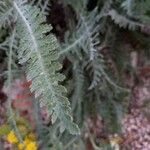
Achillea filipendulina
Fernleaf yarrow · Golden Yarrow · Yellow Yarrow · Fern-Leaved Yarrow · Fern-leaf yarrow
Description
Source: leafsnapAchillea filipendulina, commonly known as fern-leaf yarrow, is a perennial herbaceous plant that belongs to the Asteraceae family. Native to the Caucasus region, it is also found in various parts of Europe and Asia. The plant typically grows to a height of 1 to 2 meters and features fern-like, finely divided gray-green foliage. The flowers of Achillea filipendulina are bright yellow and bloom in flat-topped clusters from mid-summer to early fall. While the plant prefers full sun exposure, it can tolerate partial shade. It thrives in well-drained soil with moderate moisture levels. Achillea filipendulina boasts several medicinal properties, including anti-inflammatory, antiseptic, and analgesic effects. It is often used to treat digestive disorders such as bloating, indigestion, and diarrhea. In addition to its medicinal benefits, Achillea filipendulina is prized for its ornamental value. Its attractive foliage and bright yellow flowers draw pollinators like bees and butterflies, making it a beautiful addition to gardens and landscapes. Overall, Achillea filipendulina is a versatile plant, offering both aesthetic appeal and medicinal benefits, making it an excellent choice for those interested in natural remedies and garden beauty alike.
🌳 Fernleaf yarrow uses its bright yellow flowers not only for visual appeal but also as a source of yellow dye for textiles. Traditional artisans have employed the plant's dyeing qualities, and the dried flower heads are used as a flavoring agent reminiscent of hops when brewing certain styles of beer.
Care Guide
💧 Water Every 7 days
Fernleaf yarrow, native to temperate regions, thrives best with moderate moisture and can tolerate occasional drought. To keep the plant healthy, it should be watered weekly, ensuring the soil is neither waterlogged nor too dry for long periods. This herbaceous perennial does well outdoors, where it can take advantage of natural rainfall and the changing seasons that support its growth cycle.
How should I water my Fernleaf yarrow plant?
To properly water your Fernleaf yarrow, use filtered water at room temperature. Tap water may have harmful particles, so filtered water is preferable. The Fernleaf yarrow is used to warm environments, so avoid using cold water as it can shock the plant. Instead of overhead watering, apply the filtered room temperature water directly to the soil until it is fully soaked. This will benefit the plant by moistening the roots and helping them spread and gather necessary nutrients.
What should I do if I give my Fernleaf yarrow too much water or too little water?
Overwatering is a common issue that can harm your Fernleaf yarrow. If this plant receives too much water, its stems and leaves may wilt and turn yellow. Overwatering for a long time can also lead to diseases like root rot, mold, and mildew, which can be fatal for your plant. On the other hand, underwatering is less likely as the Fernleaf yarrow is fairly tolerant to drought. However, it is still possible, and when it happens, the leaves may become brittle and brown. It's important to be aware of the signs of overwatering and take action promptly. Some diseases caused by overwatering, such as root rot, may not be fixable if left unaddressed. If you notice early signs of overwatering, reduce your watering schedule and check the soil. If the soil drains poorly, replace it with a loose, well-draining potting mix. Conversely, if you see signs of underwatering, simply water your Fernleaf yarrow more regularly until the signs improve.
How often do I need to water my Fernleaf yarrow?
If your Fernleaf yarrow is planted in a pot, the best way to determine if it needs water is by sticking your finger in the soil. If the top two to three inches of the soil are dry, then it's time to water the plant. If your Fernleaf yarrow is planted outdoors in the ground, you can use the same method to test the soil. Once again, if the top few inches of soil are dry, it's time to water. Typically, during the spring and early fall, you'll need to water the plant about once a week using this method. However, in extremely hot weather, you may need to water it twice a week or even more. It's worth noting that mature and well-established Fernleaf yarrow plants have a remarkable ability to withstand drought.
How often should I water my Fernleaf yarrow plant?
When watering your Fernleaf yarrow, don't be afraid to give it plenty of water. Make sure the top two to three inches of soil are dry before watering, and then give it a thorough soaking. Add enough water to completely saturate the soil, allowing excess water to drain out of the pot's drainage holes. If you don't see any excess water draining, you may not have watered enough. However, be careful not to let water accumulate in the soil, as this can harm the plant. On the other hand, if water isn't draining well, it could be a sign of poorly draining soil, which is not good for the plant's health. If the plant is outdoors, about 1 inch of rain per week should be enough.
How should I give water to my Fernleaf yarrow as it grows?
The water needs of Fernleaf yarrow can vary depending on its growth stages. In the first few years of its life or after transplanting it to a new location, more water is required. During these stages, the focus of the plant is on developing new roots to support future growth. To ensure optimal root performance, additional moisture is necessary. However, as the plant matures over a few seasons, it will require less watering. Another growth stage that may require increased water is during the bloom period, as the development of flowers consumes a significant amount of moisture. Therefore, additional watering may be needed for Fernleaf yarrow during this time.
☀️ Light Full sun
The fernleaf yarrow thrives in situations with plentiful sunlight. Very bright conditions do not harm it, but a lack of light can affect its health. Low light levels can negatively influence its growth. Native to areas where sunlight is a regular element of its natural habitat, the plant is adapted to those conditions.
What are the sunlight requirements for Fernleaf yarrow?
Fernleaf yarrow requires a significant amount of sunlight to flourish. It needs full sunlight, defined as more than 6 hours of direct sunlight daily, to thrive. However, it can also grow in partial sun, which is about 3-6 hours of sunlight. It's crucial to observe the movement of sunlight through your garden to ensure plants are placed in areas that offer the right balance of light and shade, essential for their growth. Originating from sunny environments, the fernleaf yarrow has adapted to these conditions, making it quite resilient to high luminosity. Insufficient sunlight can impede its growth, underscoring the importance of adequate light exposure.
How can artificial lighting be used for indoor Fernleaf yarrow plants?
Artificial lighting can play a pivotal role in the growth of indoor Fernleaf yarrow plants, especially when natural sunlight is scarc,e such as during winter or in less sunny locations. Optimal growth under artificial lighting requires choosing the right light type, such as LEDs, which can be adjusted to provide specific light wavelengths needed by the plant. Full sun plants generally need 30-50W/sq ft of light, partial sun plants require 20-30W/sq ft, and full shade plants need 10-20W/sq ft. The artificial light source should be placed 12-36 inches above the plants to mimic natural sunlight effectively. Additionally, ensuring the plants receive 8-12 hours of artificial light per day can promote healthier, faster growth.
What are the symptoms of insufficient or excessive sunlight in Fernleaf yarrow?
Symptoms of insufficient sunlight in Fernleaf yarrow include smaller new leaves compared to existing ones, leggy or sparse growth, accelerated leaf drop, slower or halted new growth, lighter-colored new leaves indicating a lack of chlorophyll and essential nutrients, and chlorosis, where leaves lose their green color and turn yellow. Excessive sunlight, on the other hand, can lead to sunscald, characterized by pale, bleached, or necrotic areas on the plant, leaf curling as a defense mechanism against water loss and damage, wilting due to increased transpiration, and leaf scorching, evidenced by brown, dry, and crispy leaf edges. These symptoms highlight the plant's struggle to adapt to inappropriate light conditions.
How can you address sunlight-related issues for Fernleaf yarrow?
To combat insufficient sunlight, gradually transition your indoor Fernleaf yarrow plants to sunnier spots, aiming for at least 6 hours of direct sunlight a day. Utilize a south-facing window and keep curtains open during daylight hours for maximum sun exposure. If the plant is too large or not easily movable, supplement with artificial lighting for at least 8 hours daily, using desk, ceiling lamps, or professional grow lights. For outdoor plants, adjust their positioning to sunnier locations week by week to acclimatize them without causing sunburn. Removing obstructions like branches from trees can also help increase sunlight exposure. Transplanting smaller plants during dormancy to areas with better sunlight and drainage is advised for ground plants. Note that while affected parts may not recover, new growth should be healthy with improved light settings.
🌡️ Temperature 5–32.2°C
Fernleaf yarrow comes from temperate regions and does best in temperatures between 68 and 95 °F (20 and 35 ℃). Seasonal adjustments may be needed to preserve this optimal temperature range, especially in extreme conditions.
What are the ideal temperature conditions for Fernleaf yarrow?
Fernleaf yarrow, scientifically known as Achillea filipendulina, is best suited to temperate environments. It thrives in a temperature range of 68 to 95 °F (20 to 35 °C). To ensure the plant's health, it may be necessary to make seasonal adjustments, especially in extreme weather conditions, to maintain this optimal temperature range.
Does Fernleaf yarrow require special frost protection during winter?
Fernleaf yarrow possesses strong cold resistance, meaning that special frost protection measures are generally not required during winter. However, if temperatures are expected to plunge below -30°C, it is important to protect the plant from the cold. This can be accomplished by covering the fernleaf yarrow with soil or straw. Additionally, it is advisable to water the plant abundantly before the first freeze of autumn to keep the soil moist and to help prevent drought and water scarcity during the colder months.
How does Fernleaf yarrow react to low temperatures, and what are the remedies?
Fernleaf yarrow is cold-tolerant and fares best in temperatures above 20°C. Throughout winter, the plant should be maintained above 0°C. If temperatures fall below -30°C, while immediate changes may not be visible during the winter, there could be a reduction in sprouting or even a failure to sprout come spring. The solution for any parts that fail to sprout in spring is to remove them.
What should be done if Fernleaf yarrow is exposed to high temperatures?
During the summer, it is crucial to keep Fernleaf yarrow below 35°C. Exposure to temperatures above 38°C can cause the leaves to lighten in color, curl, become susceptible to sunburn, or in severe cases, lead the entire plant to wilt and dry out. To mitigate these issues, trim the sunburned and dried-up parts of the plant. It may also be beneficial to move the plant to a shaded area during the peak sun hours of the day or utilize a shade cloth. Ensuring that the plant is watered in the morning and evening will help keep the soil moist and reduce stress.
💨 Humidity
🪴 Soil 6-7
🌱 Fertilizer
The best time to fertilize a Fernleaf yarrow is in early spring, as it comes out of dormancy and starts active growth. Fertilization supplies essential nutrients for healthy development. Although Fernleaf yarrow has relatively low fertilizer needs, applying fertilizer once a year can improve its survival and promote better, longer-lasting flowers.
Why should I put fertilizer on my Fernleaf yarrow plant?
Fertilization is important to the Fernleaf yarrow for multiple reasons. Primarily, it provides essential nutrients that help the plant grow above and below the ground. However, Fernleaf yarrows have relatively low fertilization needs. While they can survive without fertilization, annual fertilization can greatly benefit the plants. It keeps them alive and encourages the production of better and longer-lasting flowers. Therefore, for those wanting their Fernleaf yarrow to thrive, annual fertilization is recommended.
When should I fertilize my Fernleaf yarrow?
The best time to fertilize a Fernleaf yarrow is in late winter to early spring when it is transitioning from dormancy to active growth. Fertilizing during this time promotes strong and healthy growth, setting the plant up for a successful season. While early spring is generally the most advantageous, fertilizing in the fall is also acceptable. However, it is not recommended to fertilize the plant during summer or winter seasons.
When should I not put fertilizer on my Fernleaf yarrow?
Fertilizing the Fernleaf yarrow should only be done in late winter and early spring. This plant requires minimal fertilization, so one feeding per year is enough. Overfertilizing during spring, summer, and fall can cause problems. However, if you missed fertilizing in spring, it is okay to feed the plant in the fall. It is not necessary to fertilize the Fernleaf yarrow during the winter because it is dormant and does not grow.
What kind of fertilizer does my Fernleaf yarrow plant require?
To ensure the health of your Fernleaf yarrow, it is recommended to use a general-purpose fertilizer with balanced amounts of the main plant nutrients. However, some nutrient blends can be even more beneficial. For example, a higher level of phosphorus is believed to strengthen the roots and improve flower quality. You can choose between granular or liquid fertilizers, as long as they contain sufficient nutrients. Additionally, organic alternatives like compost and manure can also be used to enhance the soil for your Fernleaf yarrow.
How should I give my Fernleaf yarrow plant fertilizer?
To fertilize a Fernleaf yarrow, the most common method is to use granular or pellet fertilizer around the plant. It's important to remember that the best time for fertilization is when the plant transitions from its dormant phase to active growth, typically in early spring. Once the plant starts sending shoots through the soil, you can apply the fertilizer. Alternatively, some people may opt for liquid fertilizer, which should be diluted with water before application. Whichever type of fertilizer you choose, it's recommended to moisten the soil before, during, and after fertilizing.
🪴 Pot & Repot Every 12 months
✂️ Pruning
Fernleaf yarrow features fern-like foliage and clusters of yellow flowers. To encourage growth and reblooming, prune it from early to late spring. Focus on removing dead or weak stems. Trim back the plant to 2-3 inches above the ground to promote denser growth, improve air circulation, and help prevent mildew.
🌿 Propagating
🐛 Diseases & pets
☠️ Toxicity
Achillea filipendulina is toxic to dogs, cats, and horses. Consumption can cause vomiting and diarrhea as well as depression, anorexia, and hypersalivation. In humans, touching Achillea filipendulina can, in rare cases, cause skin rashes as well as increase the skin's photosensitivity.
Characteristics
- Plant Type
- Herb
- Life Cycle
- Perennial, Annual
- Genus
- Achillea
- Family
- Asteraceae
- Hardiness Zone
- 4-8
- Mature Height
- 1.22 m
- Mature Spread
- 61 cm to 91 cm
- Leaf Color
- Green, Yellow, Gold
- Leaf Type
- Deciduous
- Flower Color
- Yellow
- Flower Size
- 12.70 cm
- Bloom Time
- Early summer, Mid summer
- Planting Time
- Spring, Summer
- Harvest Time
- Mid summer
- Native Area
- Uzbekistan, Afghanistan, Iraq, Tajikistan, Turkey, Kyrgyzstan, Kazakhstan, Iran, Armenia, Azerbaijan, Turkmenistan