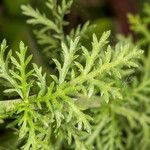
Achillea ligustica
Ligurian yarrow · Southern Yarrow
Description
Source: leafsnapAchillea ligustica, commonly known as Ligurian yarrow, is a perennial herbaceous plant belonging to the Asteraceae family. Native to the Mediterranean region, it thrives in rocky and dry habitats. The plant exhibits a compact growth habit with finely divided, gray-green, fern-like leaves. Its small flowers, which are either white or pinkish, are arranged in flat-topped clusters at the tips of long stems. Ligurian yarrow has been used for centuries for its anti-inflammatory properties. Additionally, it serves as an ornamental plant due to its appealing foliage and flowers. While it prefers full sun exposure, it can also tolerate partial shade. For cultivation, Achillea ligustica requires well-drained soil with moderate moisture levels. It can be propagated through seeds or by dividing clumps in the spring or fall. In summary, Achillea ligustica is a versatile perennial that offers both medicinal benefits and ornamental value, making it an excellent choice for gardeners seeking an attractive addition to their landscape design.
Care Guide
💧 Water Every 7 days
Southern yarrow, which originates from the Mediterranean, flourishes in environments with moderate humidity and well-drained soil. It can withstand brief periods of drought but benefits from weekly watering to mimic its natural conditions. This is particularly important during its active growth phase to ensure optimal foliage and flowering.
How should I water my Southern yarrow?
To properly water the Southern yarrow plant, it is recommended to use filtered water at room temperature. Tap water should be avoided as it may contain harmful particles. Since the Southern yarrow is native to warm environments, it is important to use room temperature or slightly warmer water to prevent shocking the plant. Additionally, overhead watering should be avoided as it can cause issues with the foliage. Instead, the filtered room temperature water should be applied directly to the soil until it is completely soaked. This method benefits the plant by moisturizing the roots and assisting them in spreading and collecting essential nutrients from the soil.
What do I do if I give my Southern yarrow too much or too little water?
Overwatering is a common issue that can harm your Southern yarrow. It causes wilting and yellowing of the stems and leaves, and can even lead to diseases like root rot, mold, and mildew, which can kill the plant. Underwatering is less common, but still possible. When it happens, the leaves become brittle and brown. It's important to notice the signs of overwatering early on, as some of the resulting diseases may be irreversible if not addressed promptly. If you see these signs, reduce your watering schedule and consider replacing the poorly draining soil. If you notice signs of underwatering, simply water more regularly until the plant recovers.
How frequently should I give water to my Southern yarrow?
If your Southern yarrow plant is in a pot, the most precise way to determine if it needs water is by checking the soil. Simply stick your finger into the soil and if the top two to three inches feel dry, it's time to water. For Southern yarrow grown outdoors in the ground, you can use the same method to check the soil. If the top few inches of soil have dried out, it's time to add water. During spring and early fall, you'll typically need to water this plant once a week using this method. However, in extremely hot weather, you may need to increase watering frequency to about twice a week or more. It's worth noting that mature, well-established Southern yarrow plants have a remarkable ability to withstand drought.
How much water does my Southern yarrow plant require?
To properly water your Southern yarrow, don't hold back on the amount of water you provide. Wait until the top two to three inches of soil are dry, then water the plant thoroughly until the soil is completely soaked. Make sure to pour enough water so that it flows through the drainage holes at the bottom of the pot. If you don't see any excess water draining, it means you haven't watered enough, but be careful not to let water collect in the soil as it can harm the plant. On the other hand, if water doesn't drain well from the pot, it could mean the soil is poorly draining, which is not good for the plant's health. If the plant is outdoors, letting it receive about 1 inch of rain per week should be enough.
How do I water my Southern yarrow as it grows?
The water needs of the Southern yarrow vary depending on its growth stages. In the first few years of its life or when you transplant it to a new location, you should provide more water than usual. During these stages, the Southern yarrow focuses on growing new roots to support future growth. These roots require additional moisture for optimal performance. As the plant matures, it will require less water. Another stage that may necessitate more water is during the bloom period when flower development requires a significant amount of moisture.
☀️ Light Full sun
Southern yarrow grows best in places that receive ample light. It requires that ample light at every stage of its development. Coming from habitats with full sunlight, it is hardy and can tolerate locations with no shade. However, too much or too little light can impair its healthy growth.
What are the sunlight requirements for Southern Yarrow?
Southern Yarrow thrives best in full sunlight, requiring more than 6 hours of direct sunlight daily. It can also grow in partial sun, which means about 3-6 hours of sunlight each day. It's important to observe the movement of sunlight in your garden to find spots that offer the right balance of light and shade, ensuring the plants' health and happiness. Originating from environments with abundant light, Southern Yarrow is quite adaptable and can endure settings without shade. However, too much or too little sunlight can impact its growth adversely.
How does artificial lighting help indoor Southern Yarrow plants?
Indoor Southern Yarrow plants require sufficient lighting to thrive, especially when natural sunlight is scarce, such as during winter or in less sunny indoor locations. Artificial lights, like LED lights, are beneficial because they can be tailored to provide specific wavelengths needed for the plant's growth. For full sun plants, 30-50W/sq ft of artificial light is recommended, while partial sun plants need 20-30W/sq ft, and full shade plants require 10-20W/sq ft. The artificial light source should be placed 12-36 inches above the plant to mimic natural sunlight conditions, and it's crucial to ensure that the plants receive 8-12 hours of light per day.
What are the symptoms of inadequate lighting for Southern Yarrow?
When Southern Yarrow is grown in conditions with insufficient lighting, various symptoms can manifest, indicating the plant's struggle. These include smaller new leaves, leggy or sparse growth, accelerated leaf drop, stalled or nonexistent new growth, lighter-colored new leaves, and signs of chlorosis, sunscald, leaf curling, wilting, and leaf scorching. Each of these symptoms points towards either too little or too much light exposure, impacting the plant's ability to photosynthesize and maintain overall health.
What are the solutions for Southern Yarrow struggling with light conditions?
To assist Southern Yarrow in overcoming challenges with light conditions, gradual acclimation to the ideal light exposure is key. For indoor plants, gradually relocate them to sunnier spots until they receive at least 6 hours of direct sunlight daily, using south-facing windows for the best light and supplementing with artificial lighting if necessary. For outdoor plants, adjust their location gradually to prevent shock and sunburn. Minimizing obstructions such as pruning nearby trees can increase sunlight penetration. If needed, transplant smaller plants during their dormant period to a location with better light and drainage. Remember, while damaged parts may not recover, new growth should be healthy with proper light adjustments.
🌡️ Temperature 15–35°C
Southern yarrow originates from regions where temperatures typically range from 59 to 95 °F (15 to 35 °C). It favors moderate to warm conditions for optimal growth. Seasonal adjustments may be needed to replicate its native temperate conditions.
What is the ideal climate for Southern yarrow?
Southern yarrow thrives in climates where temperatures typically range from 59 to 95 °F (15 to 35 °C), preferring a moderate to warm environment for optimal growth. Season adjustments might be necessary to simulate its native temperate conditions. Notably, Southern yarrow possesses strong cold resistance, making special frost protection measures generally unnecessary during winter. However, protection is advisable if winter temperatures are anticipated to drop below -15°C, using soil or straw coverings. Additionally, watering the plant abundantly before the first freeze in autumn, to ensure moist soil, can help prevent drought and water scarcity during winter and early spring.
What should be done if Southern yarrow experiences temperatures below -15°C?
Southern yarrow is cold-tolerant and can best thrive when temperatures are kept above 15°C. However, in conditions where temperatures fall below -15°C, there might not be immediate noticeable changes during winter, but a decrease in sprouting or a complete lack of sprouting might be observed in spring. The recommended course of action in spring for areas that have experienced such low temperatures is to remove any parts of the plant that have failed to sprout.
How should Southern yarrow be cared for in high temperature conditions?
During the summer months, it is crucial to ensure that Southern yarrow is kept in conditions below 35°C. Exposure to temperatures above 41°C can cause the leaves to become lighter in color, prone to curling, susceptible to sunburn, and in severe cases, can lead to the entire plant wilting and becoming dry. To mitigate these issues, it's advised to trim away the sunburned and dried-up parts of the plant. Additionally, relocating the plant to a shaded area during the midday and afternoon sun, or providing shade with a cloth, can offer protection. Keeping the soil moist by watering the plant in the morning and evening is also beneficial.
💨 Humidity
🪴 Soil 6-7
🌱 Fertilizer
The best time to fertilize a Southern yarrow is in early spring, as it emerges from dormancy and starts active growth. Fertilization supplies essential nutrients for healthy development. Although Southern yarrow has relatively low fertilizer requirements, applying fertilizer annually can improve its survival and encourage better, longer-lasting flowers.
🪴 Pot & Repot
✂️ Pruning
Southern yarrow is a herbaceous perennial with feathery leaves and white to pale yellow flowers. To keep the plant healthy and looking its best, follow these care tips: In early to late spring, prune away dead stems. Deadhead the spent blooms to encourage prolonged flowering, and thin the plant regularly to improve air circulation. Re-shaping the plant helps maintain a tidy appearance and promotes vigor.
🌿 Propagating
🐛 Diseases & pets
☠️ Toxicity
Characteristics
- Plant Type
- Herb
- Life Cycle
- Perennial
- Genus
- Achillea
- Family
- Asteraceae
- Hardiness Zone
- 7-10
- Mature Height
- 20 cm to 91 cm
- Mature Spread
- 30 cm to 46 cm
- Leaf Color
- Green, Blue
- Leaf Type
- Semi-evergreen
- Flower Color
- White
- Flower Size
- 0.25 cm to 0.51 cm
- Bloom Time
- Late spring, Early summer, Mid summer
- Planting Time
- Spring, Summer
- Harvest Time
- Mid summer, Late summer, Early fall
- Native Area
- Tunisia, Italy, Algeria, Greece, Croatia, Morocco, France