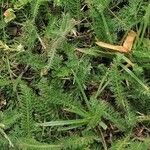
Achillea setacea
Bristly yarrow
Description
Source: leafsnapAchillea setacea, commonly known as bristly yarrow, is a perennial herbaceous plant that belongs to the Asteraceae family. Native to Europe and Asia, this plant thrives in various habitats, including meadows, rocky slopes, and open woodlands. Achillea setacea typically reaches a height and spread of about 30 cm. Its leaves are finely divided into thread-like segments, giving them a feathery appearance. Bristly yarrow produces clusters of small white or pink flowers that bloom from June to August. These flowers are arranged in flat-topped inflorescences at the ends of long stems, attracting various pollinators such as bees and butterflies. This plant has been used for medicinal purposes for centuries due to its anti-inflammatory properties. It has also served as an herbal remedy for digestive issues, fever reduction, wound healing, and menstrual problems. Achillea setacea is an easy-to-grow plant that prefers well-drained soil with full sun exposure but can tolerate partial shade as well. It requires minimal maintenance once established but benefits from occasional deadheading or pruning after the flowering season ends. Overall, Achillea setacea is an attractive ornamental herb with medicinal properties, making it a popular choice among gardeners who value both aesthetics and functionality in their gardens.
Care Guide
💧 Water Every 7 days
Bristly yarrow, a drought-tolerant plant, thrives in well-drained fields and prefers moderate moisture. To maintain its health, it's best to water it weekly. As an herbaceous perennial, bristly yarrow adapts its water requirements according to the growing season, needing less irrigation during rainy periods.
How can I water my Bristly yarrow plant in the best way?
To properly water the Bristly yarrow, it is important to follow these guidelines: - Use filtered water at room temperature to avoid potentially harmful particles found in tap water. - The water temperature should be at room temperature or slightly warmer because the Bristly yarrow is adapted to warm environments and cold water can be detrimental to its health. - Do not water the plant from above as it can lead to issues with the foliage. Instead, apply the filtered room temperature water directly to the soil until it is completely soaked. - Soaking the soil is beneficial as it helps the plant's roots to become moist and spread throughout the soil, enabling them to gather necessary nutrients.
What should I do if I give too much or too little water to my Bristly yarrow?
Overwatering is a common issue that can harm your Bristly yarrow plant. It can cause wilting, yellowing of stems and leaves, and can lead to diseases like root rot, mold, and mildew, which can be fatal. Underwatering is less common, as Bristly yarrow has good drought tolerance, but can still occur and cause brittle, brown leaves. It's important to notice and address overwatering signs promptly. Reduce watering if you see early signs and check the soil's drainage. Replace poorly draining soil with a loose, well-draining potting mix. If your Bristly yarrow shows signs of needing more water, increase watering until the signs improve.
How frequently should I water my Bristly yarrow?
If your Bristly yarrow plant is in a pot, you can check if it needs water by sticking your finger in the soil. If the top two to three inches of soil feel dry, it's time to water it. If your Bristly yarrow is growing outdoors in the ground, you can use the same method to check if it needs water. Again, if the top few inches of soil are dry, it's time to water. Generally, during spring and early fall, you'll need to water this plant about once a week. However, during extremely hot weather, you may need to water it twice a week or more. It's worth noting though that mature and well-established Bristly yarrow plants are quite resilient and can endure droughts.
How much water does my Bristly yarrow plant need?
To ensure proper watering for your Bristly yarrow, be generous with the amount of water you provide. Wait until the first two to three inches of soil are dry, and then give the plant a thorough and deep watering. Make sure to saturate the soil completely, allowing excess water to flow out of the drainage holes at the bottom of the pot. If no excess water is flowing out, it means you are not giving enough water. However, be careful not to let water accumulate in the soil, as this can harm the plant. Additionally, if water is not draining properly from the pot, it may indicate that the soil is not draining well, which is not good for the plant's health. If the plant is outside, approximately 1 inch of rain per week should be enough.
How should I water my Bristly yarrow as it grows?
The water needs of the Bristly yarrow change depending on its growth stages. In the first few years or after transplanting, it requires more water because it is focused on developing new roots for future growth. These roots perform better with slightly more moisture. However, after a few seasons, the Bristly yarrow requires less water. Another stage that demands more water is during the bloom period when flower development relies on a significant amount of moisture.
☀️ Light Full sun
Bristly yarrow performs best when it gets ample sunlight each day. This need for daily sun comes from its natural occurrence in open, unshaded habitats. Insufficient sun can result in poor growth, while excessive sun may cause sunscald. Changes in light levels across different growth stages are not crucial for bristly yarrow.
What are the sunlight requirements for Bristly Yarrow?
Bristly yarrow needs a significant amount of sunlight each day due to its natural habitat in open, unshaded areas. The plant thrives in full sun, which means it requires more than 6 hours of sunlight daily. However, it can also grow in partial sun, which entails about 3-6 hours of sunlight. It's essential to observe how sunlight moves through your garden to find spots that offer the ideal mix of light and shade, ensuring the plants' well-being.
How does the lack of sunlight affect Bristly Yarrow?
When Bristly yarrow is placed in inadequately lit conditions, several symptoms can occur due to light deficiency. These include smaller new leaves, leggy or sparse growth, early leaf drop, halted growth, paler new leaves, chlorosis, sunscald, leaf curling, wilting, and leaf scorching. Such conditions indicate the plant is not receiving enough sunlight, affecting its photosynthesis process, leading to weakened and poor development.
What solutions can improve sunlight exposure for Bristly Yarrow?
To enhance sunlight exposure for Bristly Yarrow, adopt gradual relocation methods. For indoor plants, move them to sunnier spots weekly until they get at least 6 hours of direct sunlight, utilizing south-facing windows and keeping curtains open during daylight. Employ artificial lighting if necessary, ensuring it stays on for at least 8 hours. For outdoor plants, also shift them gradually to sunnier areas to prevent sunburn. If physical obstructions limit sunlight, consider pruning or transplanting smaller plants during their dormant phases to areas with better sunlight and drainage. Remember, while parts of the plant that suffered from light deficiency may not fully recover, new growth following increased light exposure should be healthy.
Can artificial lighting be beneficial for Bristly Yarrow, and how should it be used?
Yes, artificial lighting can significantly benefit Bristly Yarrow, especially when natural sunlight is insufficient, such as during winter or in less sunny indoor spaces. It's important to select the right type of artificial light, such as LED lights, which can be customized to the specific light wavelengths your plants need. For full sun plants, 30-50W/sq ft of artificial light is required, while partial sun plants need 20-30W/sq ft, and full shade plants require 10-20W/sq ft. The light source should be placed 12-36 inches above the plant to mimic natural sunlight, and the duration of exposure should mimic natural daylight hours, usually between 8-12 hours per day, ensuring your plant's healthy and faster growth.
🌡️ Temperature 15–32.2°C
Bristly yarrow comes from areas with temperatures between 59 and 90 °F (15 to 32 ℃). This plant does best in temperate climates. Seasonal adjustments may be necessary, needing cooler conditions in winter and warmer ones in summer.
What is the native climate for Bristly yarrow?
Bristly yarrow is native to regions where temperatures typically range from 59°F to 90°F (15°C to 32°C). The plant thrives best in temperate conditions that require seasonal adjustments, meaning cooler temperatures in the winter and warmer temperatures during the summer. Its strong cold resistance enables it to withstand winter conditions without special frost protection measures in most cases.
How does Bristly yarrow cope with cold temperatures?
Bristly yarrow exhibits strong cold resistance and generally doesn't require special frost protection measures during winter. However, if winter temperatures are expected to drop below -10°C, it's important to provide protection by covering the plant with soil or straw. Additionally, watering the plant abundantly before the first freeze in autumn helps ensure the soil remains moist and prevents drought and water scarcity for the plant during winter and early spring.
What should I do if my Bristly yarrow is exposed to temperatures below -10°C?
If your Bristly yarrow is exposed to temperatures below -10°C, you might not notice any immediate changes during the winter, but there could be a decrease in sprouting or even no sprouting during spring. In such cases, it is recommended to remove any parts of the plant that have failed to sprout in the spring.
How does Bristly yarrow handle high temperatures, and what are the solutions for heat stress?
During summer, it's crucial to keep Bristly yarrow's temperature below 32°C. Exposure to temperatures above 35°C can cause the leaves to lighten in color, curl, become prone to sunburn, and in severe cases, cause the entire plant to wilt and dry. To mitigate heat stress, trim away the sunburned and dried-up parts of the plant. Moving the plant to a shaded location or using a shade cloth to protect it from midday and afternoon sun can also be beneficial. Additionally, watering the plant in the morning and evening will help keep the soil moist and support the plant's health.
What are the botanical characteristics of Bristly yarrow?
Bristly yarrow, botanically known as Achillea setacea, is a plant renowned for its resilience to various temperature conditions. It prefers temperate climates but is equipped to handle both cold winters and hot summers with appropriate care, making it adaptable to a wide range of garden environments.
💨 Humidity
🪴 Soil 6-7
🌱 Fertilizer
The best time to fertilize a Bristly yarrow is in early spring, as it comes out of dormancy and begins active growth. Fertilizing supplies essential nutrients for healthy growth. Although Bristly yarrow has relatively low fertilizer requirements, applying fertilizer annually can improve its survival and encourage better, longer-lasting flowers.
🪴 Pot & Repot
✂️ Pruning
Bristly yarrow benefits from regular pruning between early and late spring, which encourages denser growth and more abundant blooms. To prolong the flowering period and control the plant's size, remove spent flowers. Pruning also improves air circulation, reducing the risk of disease. Make sure to use clean, sharp tools to ensure healthy regrowth.
🌿 Propagating
🐛 Diseases & pets
☠️ Toxicity
Characteristics
- Plant Type
- Herb
- Life Cycle
- Perennial
- Genus
- Achillea
- Family
- Asteraceae
- Hardiness Zone
- 8
- Mature Height
- 30 cm to 61 cm
- Mature Spread
- 10 cm
- Leaf Color
- Dark Green
- Leaf Type
- Semi-evergreen
- Flower Color
- White, Yellow
- Flower Size
- 2.54 cm to 6.35 cm
- Bloom Time
- Summer
- Planting Time
- Spring, Summer
- Harvest Time
- Late summer, Early fall, Mid fall
- Native Area
- Turkey, Austria, United Arab Emirates, Slovakia, Montenegro, Slovenia, Croatia, Russia, Germany, Koppen, South Korea, Romania, Belgium, Moldova, France, Saudi Arabia, Tajikistan, Czech Republic, Bulgaria, Armenia, Poland, Greece, Ukraine, Serbia, China, Italy, Kazakhstan, Spain, Switzerland, Iran, Albania, Azerbaijan, Hungary, Kuwait