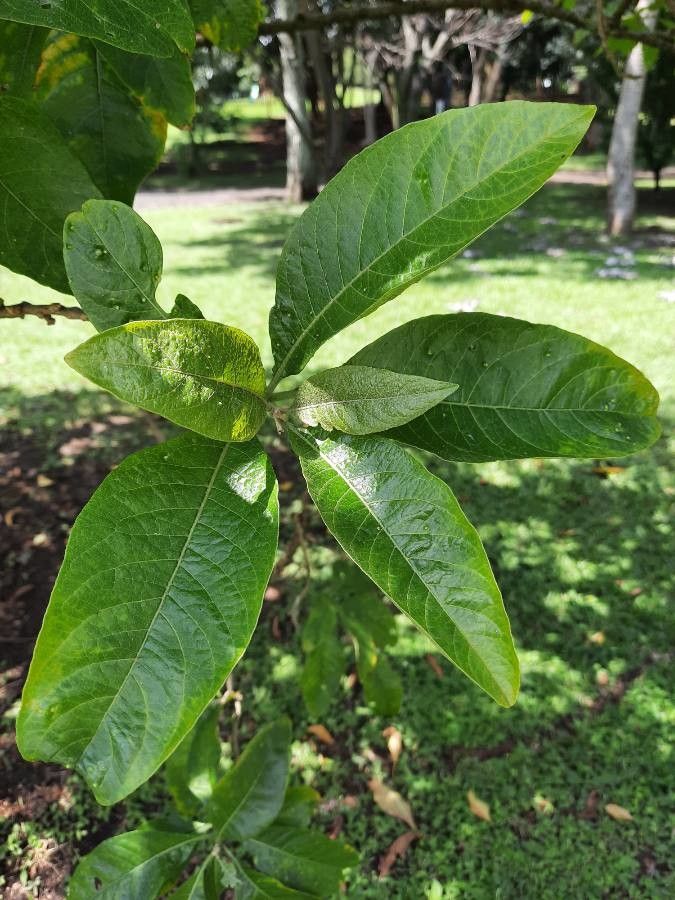
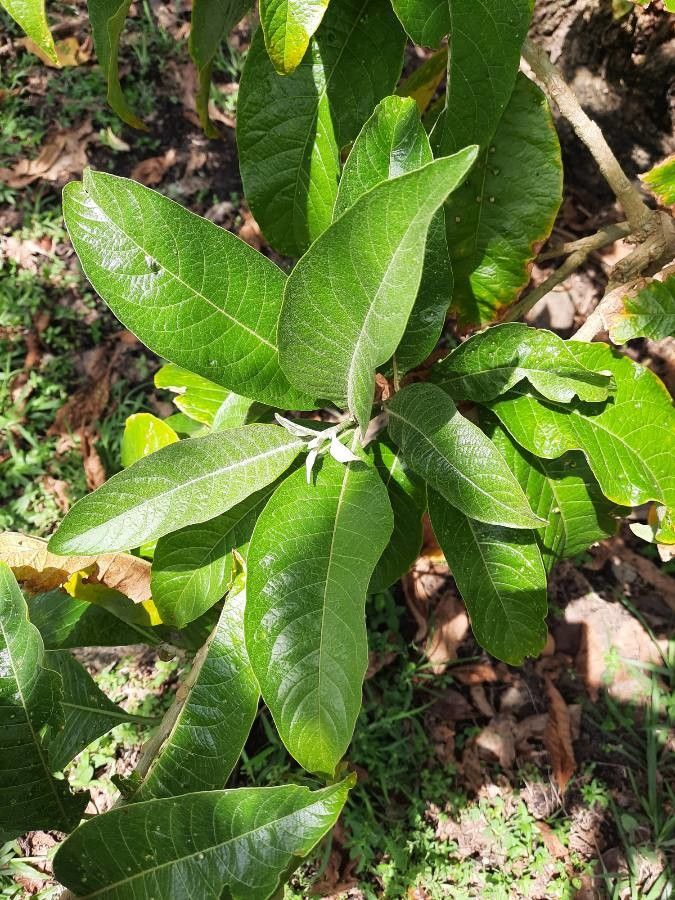
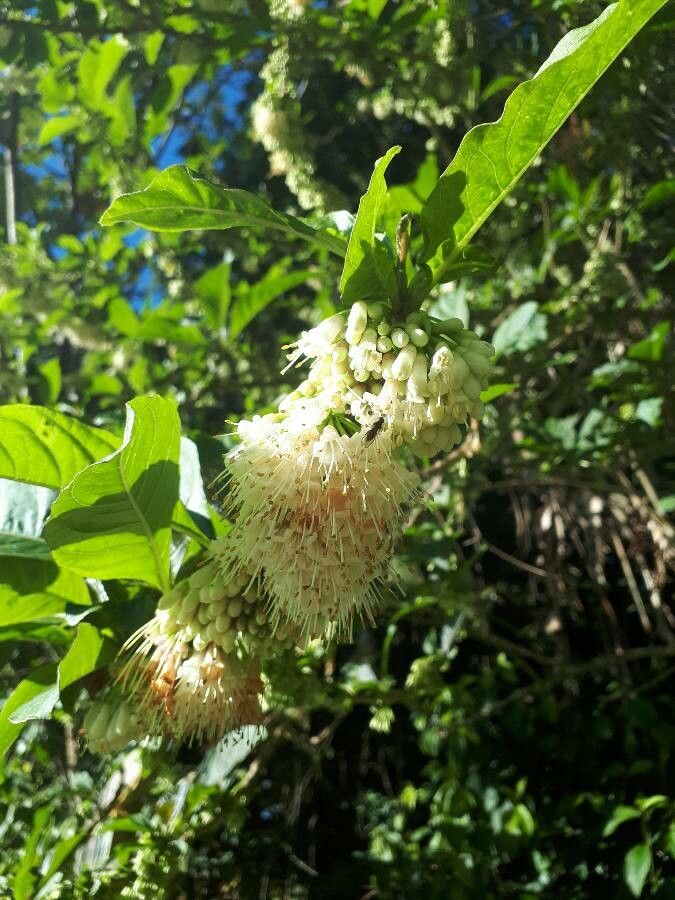
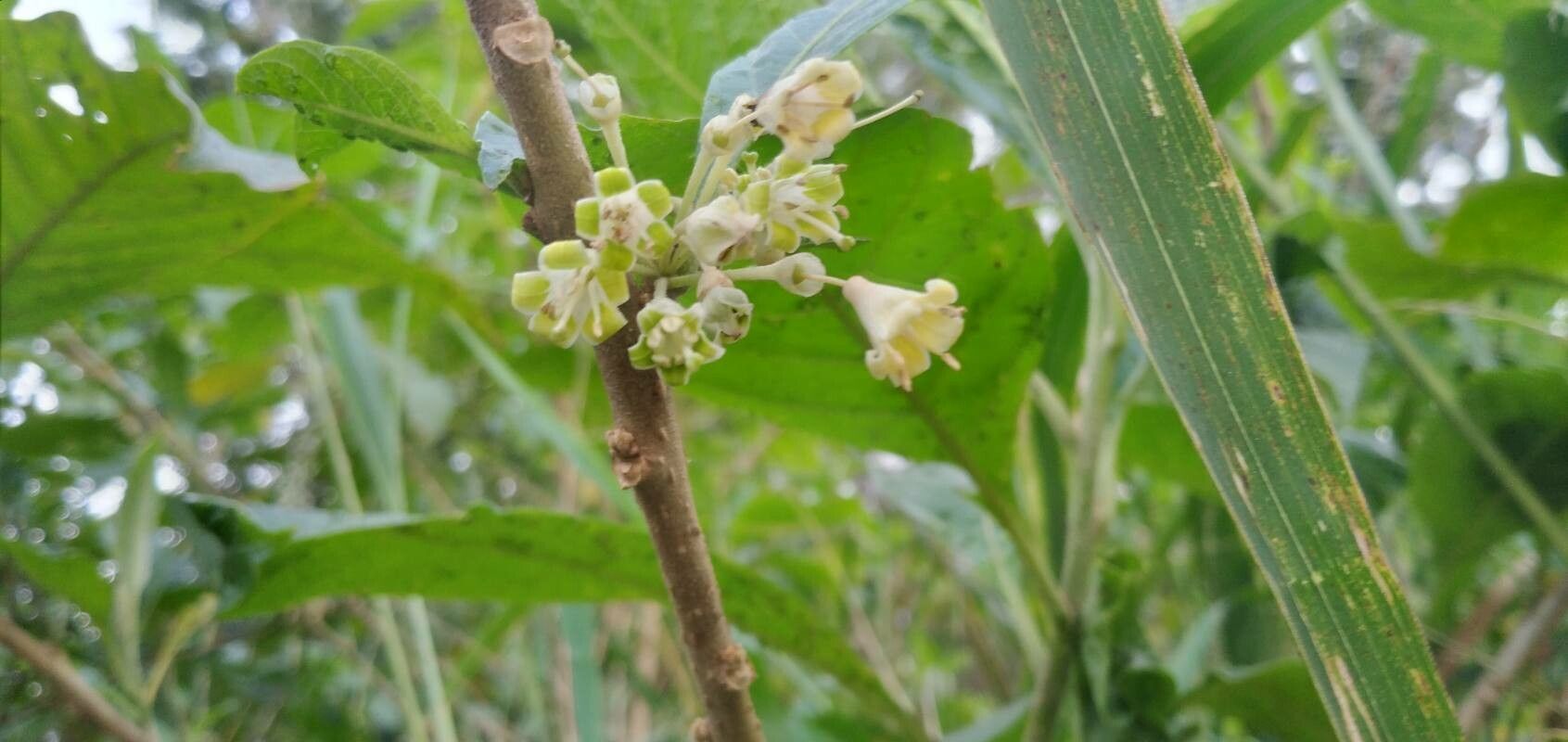
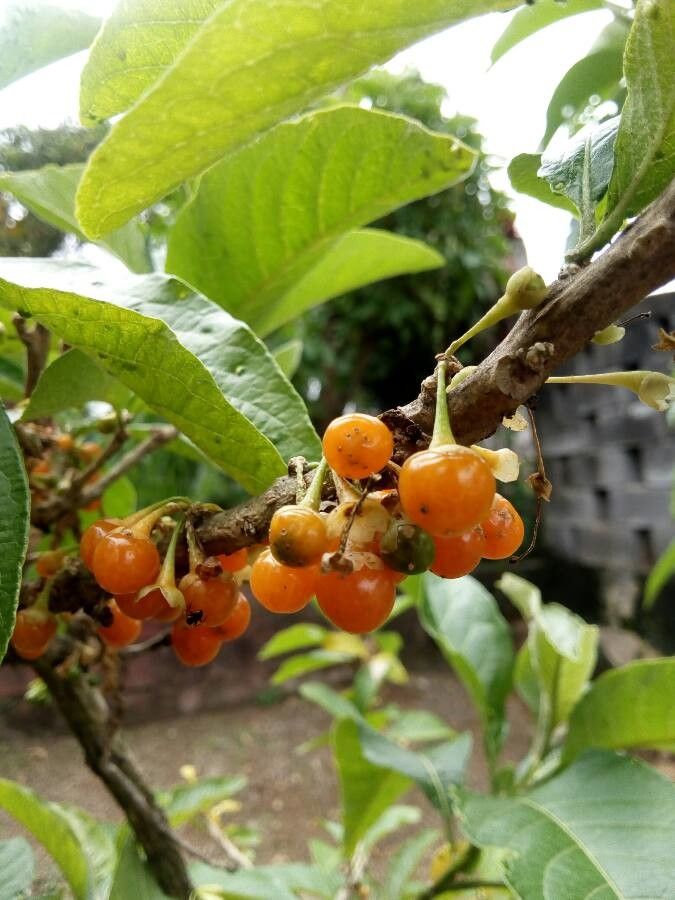
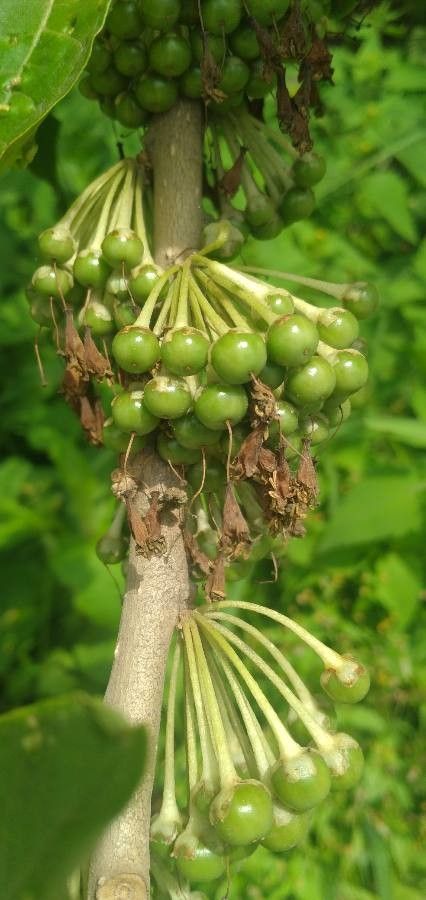
Acnistus arborescens, commonly known as Wild Tobacco or Tobacco Tree, is a small tree or shrub belonging to the Solanaceae family. Native to Central and South America, it can be found in countries such as Brazil, Colombia, Ecuador, Peru, and Venezuela. This plant can grow up to 10 meters tall, with a trunk diameter reaching up to 30 cm. Its dark green leaves are ovate with pointed tips and are arranged alternately on the stem. The flowers of Acnistus arborescens are white or pale yellow with five petals that form a funnel shape. The fruit of Acnistus arborescens is a small berry that changes color from green to yellow when ripe. The fruit contains numerous seeds that are dispersed by birds. For centuries, indigenous people have used Acnistus arborescens for medicinal purposes, thanks to its anti-inflammatory properties effective against arthritis pain and other ailments such as fever. Additionally, the plant contains alkaloids like nicotine, prompting some to use it recreationally for its psychoactive effects, which are similar to but less potent than those of tobacco smoking. Overall, Acnistus arborescens is an intriguing plant due to its medicinal properties. However, caution is advised when using it recreationally due to its psychoactive effects, especially if it is not properly prepared before consumption.
Hollowheart has strong disease resistance and is generally not susceptible to illnesses. In terms of care, this plant is fairly low-maintenance. When planted outdoors, it needs little watering, and larger specimens usually do not require pruning. However, smaller plants should be pruned after they have bloomed. Hollowheartt is appropriate for anyone with an outdoor area, such as a garden or a deck, and does not demand much experience in plant care.
How to keep Acnistus Arborescens.
Light
Hollowheart thrives with plenty of filtered sunlight all day, though it can also tolerate lower levels of light. Its native habitat receives many hours of sunshine. Extended periods of dim lighting may impede its growth, and prolonged exposure to intense rays can likewise damage the plant's overall health.
Water
Hollowheart, a plant from regions with sporadic rainfall, has moderate drought tolerance. It should be watered every 1-2 weeks, allowing the soil to dry slightly between waterings. Its water needs change with the seasons, requiring more frequent watering during its active growth period in the warmer months to maintain healthy foliage.
Temperature
Hollowheart is native to temperate regions and thrives at temperatures from 68 to 100.4 °F (20 to 38 ℃). To promote optimal growth throughout the year, adjust ambient temperatures with the seasons to mimic its natural habitat.
Fertilizer
The best time to fertilize a Hollowheart is in early spring as it breaks dormancy. This encourages overall growth and supports flower development. Fertilization improves foliage, stems, and branches, while encouraging larger, more colorful, and longer-lasting flowers. It helps transport nutrients from the roots to the blooms and enhances the plant's health and resistance to disease.
Pruning
Hollowheart is a small tree or shrub that features dense foliage and delicate blue or white flowers. To ensure optimal health and growth, prune the plant during its dormant period, which is from early to late winter. Focus on removing dead branches and thinning out crowded areas to improve air circulation. Regular pruning helps maintain the plant's shape and size, promoting healthier growth and better flowering.
Pot & Repot
Repot the hollowheart plant every 2 to 3 years during spring to encourage a bushy growth. Choose a large, sturdy pot to provide stability. After repotting, make sure the hollowheart receives bright indirect light and consistent moisture. This care will help the plant thrive, promoting robust health and lush foliage.
Botanical profile.
- Plant Type
- Tree, Shrub
- Life Cycle
- Perennial
- Genus
- Acnistus
- Family
- Solanaceae
- Hardiness Zone
- 9-11
- Mature Height
- 3.05 m to 6.1 m
- Mature Spread
- 2.13 m to 3.96 m
- Leaf Color
- Dark Green, Forest Green
- Leaf Type
- Evergreen, Deciduous
- Flower Color
- White, Purple, Blue, Violet
- Flower Size
- 2.54 cm
- Bloom Time
- All year round
- Planting Time
- Spring
- Harvest Time
- All year round
- Native Area
- Colombia, Cuba, Honduras, Mexico, Venezuela, Peru, Nicaragua, Ecuador, Costa Rica
Other names.
Reader questions.
How should I water my Hollowheart plant?
Your Hollowheart is not particular about how you choose to water it. You can use any common watering tool, such as watering cans, hoses, or even cups. Just make sure to water your Hollowheart directly on the soil. It's important to evenly moisten all areas of the soil to ensure the entire root system receives the necessary water. Using filtered water is recommended, as tap water may contain harmful particles. Additionally, it's best to use water at or slightly above room temperature, as extremely cold or hot water can be a bit shocking for the Hollowheart. However, the Hollowheart typically responds well to any kind of water you give it.
What are the sun requirements for Hollowheart (Acnistus arborescens)?
Hollowheart requires a significant amount of sunlight to flourish, thriving best in conditions where it can bask in full sun for more than 6 hours daily. However, it is also adaptable to partial sun, requiring about 3-6 hours of sunlight. It's essential to observe your garden's sunlight patterns closely to find the ideal spot that offers a balanced light environment for Hollowheart, ensuring its growth and health are optimized.
What is the optimal temperature range for Hollowheart?
Hollowheart thrives in a temperature range of 68 to 100.4 °F (20 to 38 °C). It originates from temperate environments and loves heat. To promote optimal growth throughout the year, it's important to adjust ambient temperatures following seasonal changes. This involves mimicking its natural habitat by maintaining temperatures above 20°C, especially during winter months. Hollowheart is sensitive to cold, and temperatures approaching 0°C can harm the plant. Therefore, in autumn, when outdoor temperatures start to drop, it is advisable to move Hollowheart plants indoors and place them near a bright window but away from direct heat sources.
What should I do if I give my Hollowheart plant too much water or not enough water?
Outdoor plants, particularly newly planted ones or seedlings, are susceptible to not getting enough water. Keep in mind that you should water them sufficiently for the first few months while they are small or just planted. This is because, once the roots are established, the plant can rely on rain most of the time. When Hollowheart plants are in pots, there is a higher likelihood of overwatering. If you accidentally overwater your Hollowheart, take immediate action to resolve the situation. Stop watering the plant right away to minimize the impact of overwatering. Next, remove the Hollowheart from its pot to inspect the roots. If none of the roots show signs of root rot, you can return the plant to its container. However, if there are signs of root rot, trim away the affected roots and consider applying a fungicide to prevent further damage. Finally, repot the Hollowheart in well-draining soil. In the case of underwatering, simply water the Hollowheart plant more frequently. It is usually an easy fix. If the plant is underwatered, its leaves will droop, dry out, and fall off. However, they will quickly regain their fullness after sufficient watering. So, make sure to adjust your watering frequency as soon as you notice underwatering.
How does artificial lighting support Hollowheart's growth indoors?
When natural sunlight is insufficient, especially during winter or in spaces that do not receive enough sunlight, artificial lighting can be a lifesaver for Hollowheart. Indoor plants, including Hollowheart, require adequate lighting for optimal growth. LED lights are often recommended for indoor plant lighting, as they can be adjusted to provide specific wavelengths needed by the plant. For full sun plants, 30-50W per square foot of artificial light is needed; for partial sun plants, 20-30W per square foot, and for full shade plants, 10-20W per square foot. The light source should be placed 12-36 inches above the plant, and the light should be on for 8-12 hours per day to mimic natural daylight conditions.
How do you care for Hollowheart during low temperatures?
Hollowheart prefers warm temperatures and does not tolerate low temperatures well. It should always be kept above 0°C, thriving best when the temperature is above 20°C. If exposed to temperatures below -5°C, the leaves may lighten in color, and, following frost damage, may turn brown or black with wilting and drooping symptoms. To recover a frost-damaged Hollowheart, trim off the frost-damaged parts and immediately move the plant to a warm environment indoors for cold protection. Positioning the plant near a south-facing window will ensure it receives ample sunlight, but be cautious to avoid placing it near heaters or air conditioning vents to prevent the air around the plant from becoming excessively dry.
How frequently should I water my Hollowheart plant?
If your area lacks rainfall, it's important to give your plants adequate watering every 2 weeks during the spring and fall. In the summer, you'll need to water more often, while in the winter, you can water less frequently or even not at all. Young or newly planted Hollowheart plants should be watered more frequently to help them establish and grow. For potted plants, there are two main ways to determine watering frequency. Setting a predetermined schedule, such as once a week or every other week, can work but may not consider the specific conditions of your Hollowheart's growing environment. Another option is to water based on soil moisture. Wait until the top 2 to 4 inches of soil have dried out completely before watering again. Keep in mind that during summer, this plant will have higher water needs than the predetermined schedule may suggest.
What are the symptoms of insufficient lighting in Hollowheart?
Hollowheart shows several symptoms when exposed to insufficient lighting, such as smaller than usual new leaves, leggy or sparse growth, faster leaf drop, slower or no new growth, lighter-colored new leaves, chlorosis, sunscald, leaf curling, wilting, and leaf scorching. These symptoms indicate that the plant is not receiving the ideal light levels required for its growth, leading to poor health and reduced vitality.
What should you do if Hollowheart experiences high temperatures?
During the summer, Hollowheart should be kept below 38°C to avoid heat stress. If temperatures exceed 43°C, the plant may exhibit symptoms such as lighter leaf coloration and increased susceptibility to sunburn. To mitigate damage from high temperatures, trim away any sunburned or dried-up parts of the plant. Then, move Hollowheart to a location that provides partial shade during the intense midday and afternoon sun to prevent further damage. It's also important to water the plant in the morning and evening, maintaining soil moisture without overwatering, to help the plant cope with the heat.
How much water does Hollowheart need?
Watering your Hollowheart plant may not always require a large amount of water. If only a few inches of soil have dried since your last watering, giving it about five to ten ounces of water each time will promote healthy growth. You can also gauge the water volume based on soil moisture by observing how many inches of soil have dried out between waterings. To ensure your Hollowheart receives enough moisture, water the plant enough to moisten all the dry soil layers since the last watering. If over half of the soil has dried out, it may be necessary to provide more water than usual. In such cases, continue watering until you see excess water draining from the pot's drainage holes. If your Hollowheart is placed outdoors where it receives sufficient rain, additional watering may not be required. However, when the plant is young or newly planted, make sure it receives 1-2 inches of rain per week. As the Hollowheart grows and establishes, it can rely solely on rainwater, except during prolonged periods of hot weather with no rainfall for 2-3 weeks. In these circumstances, a full watering should be given to prevent stress for the plant.
How can I address Hollowheart's light needs both indoors and outdoors?
To cater to Hollowheart's light requirements, gradually move the plant to sunnier locations, ensuring at least 6 hours of direct sunlight daily. For indoor plants that are large or immobile, consider using artificial light sources, such as desk or ceiling lamps, for at least 8 hours a day, or invest in professional grow lights. Outdoors, move plants to optimal sunlight spots gradually to prevent sunburn. Reduce obstructions like overhanging branches to allow more sunlight to reach the plant. If necessary, especially for smaller plants, consider transplanting during the plant's dormant period to a location with better sunlight and drainage.
How can I know if I'm giving enough water to my Hollowheart?
Overwatering is a common issue for the Hollowheart, and there are a few signs to be aware of. When a Hollowheart is overwatered, its leaves will turn yellow and may fall off. Additionally, overwatering can lead to shrinkage of the plant's overall structure and even cause root rot. On the contrary, an underwatered Hollowheart will also start to droop and its leaves may become brown and fragile. Whether you notice signs of overwatering or underwatering, it's important to take action and revive your Hollowheart's health.