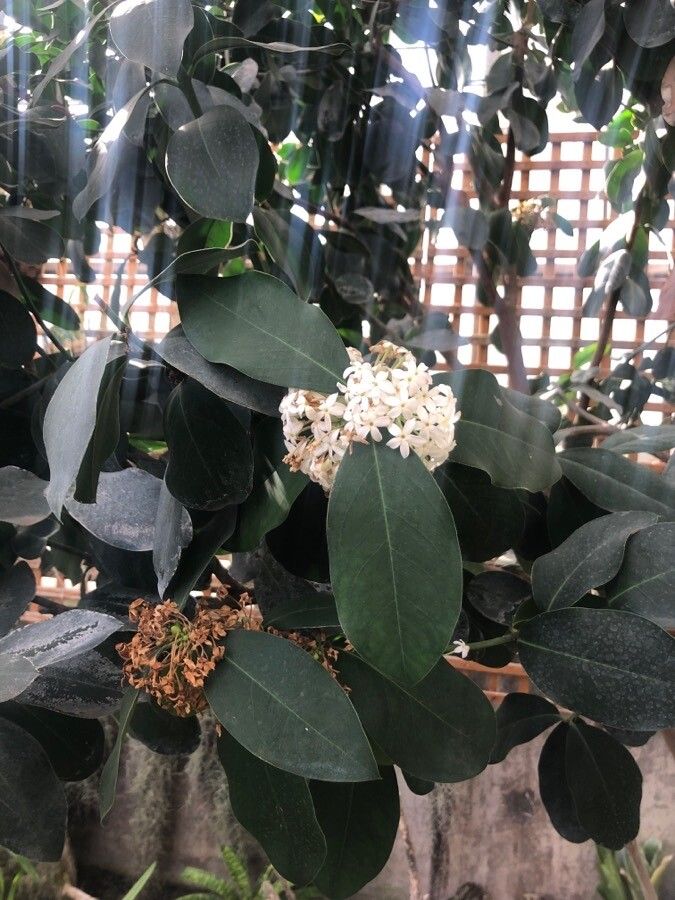
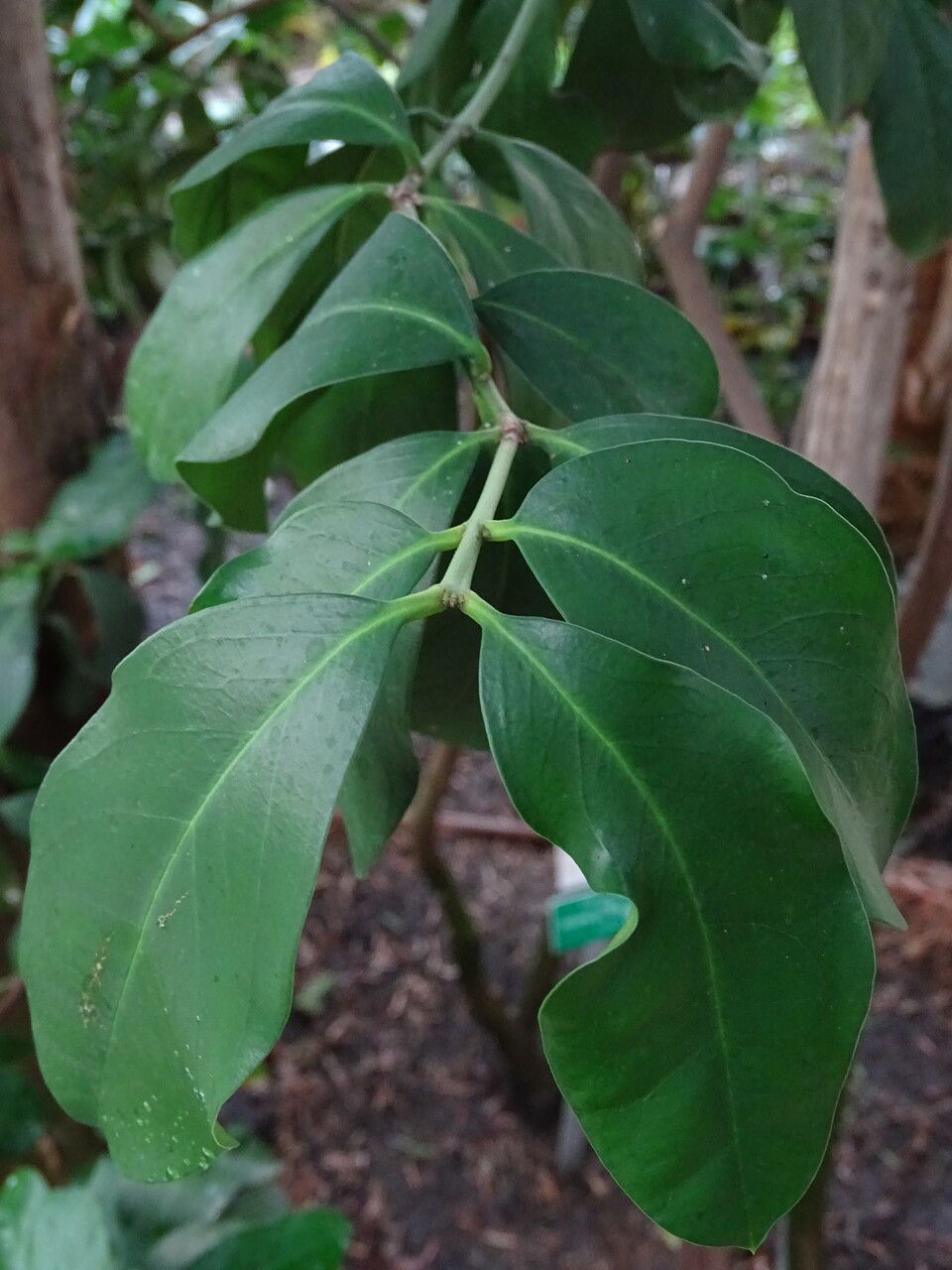
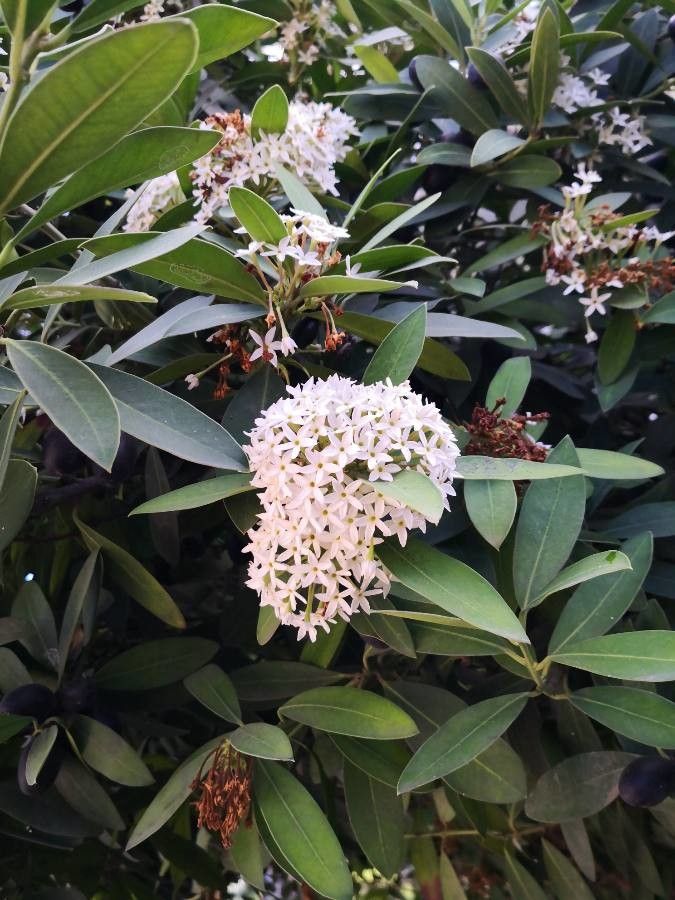
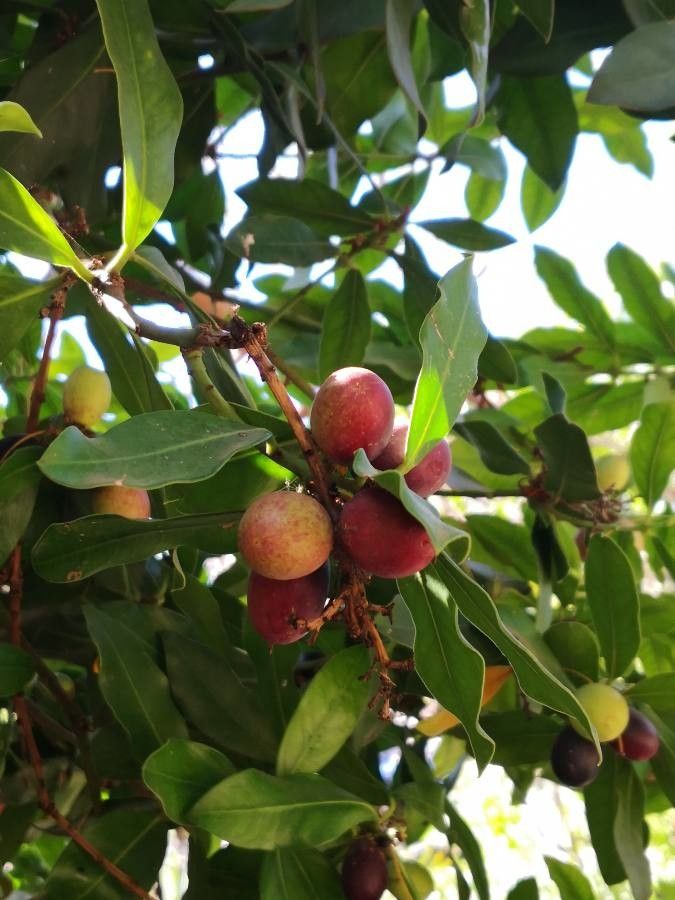
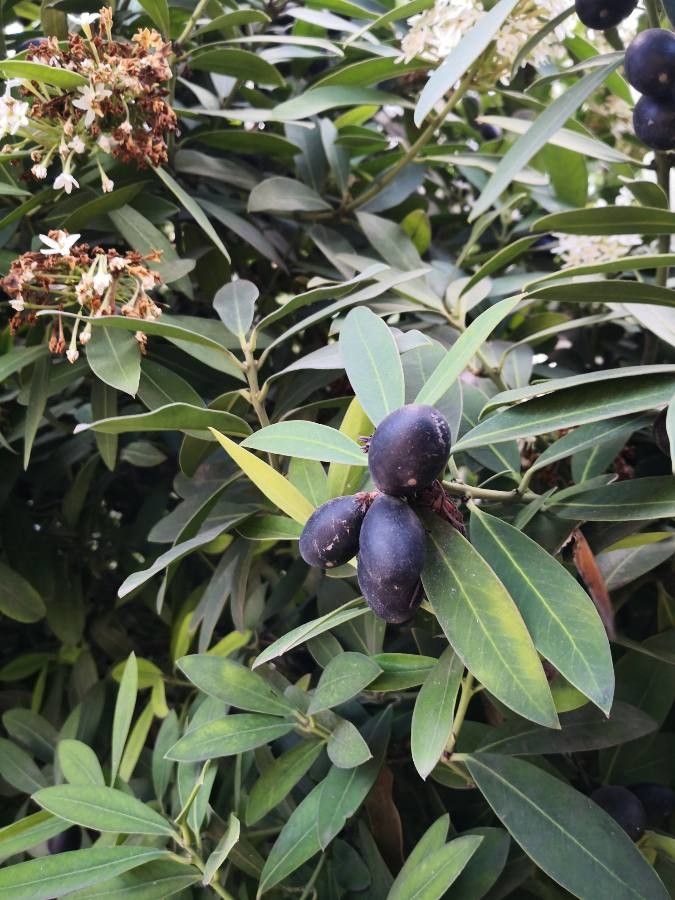
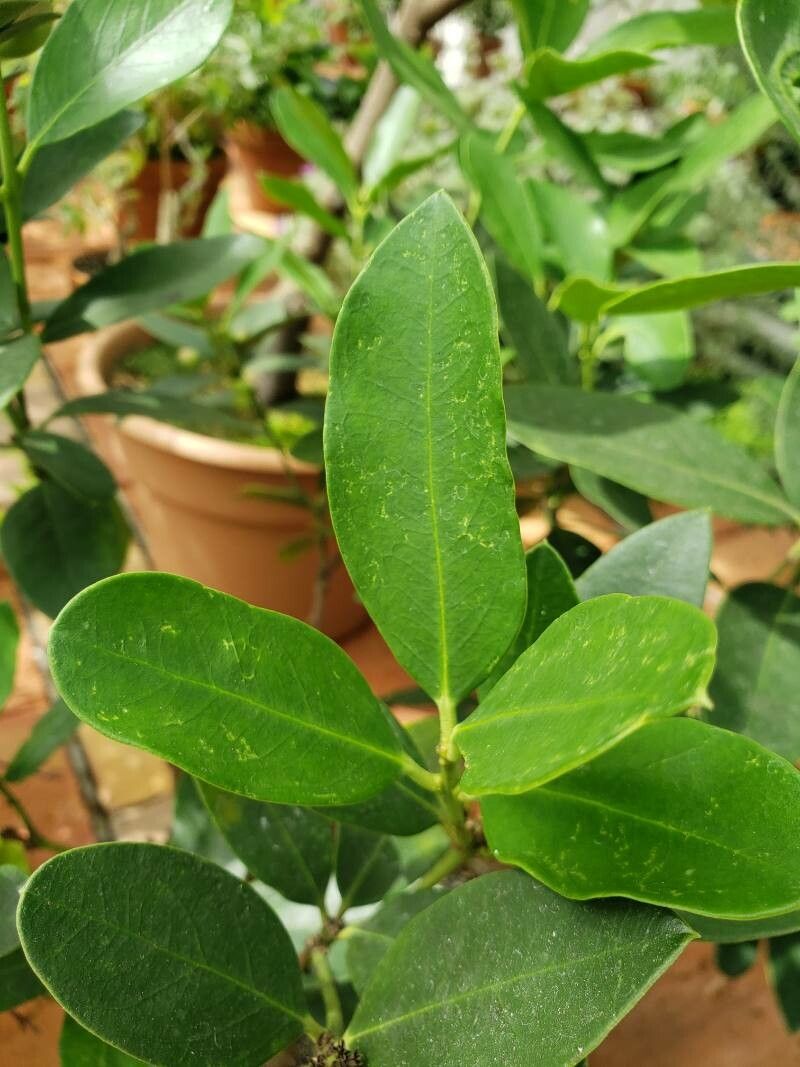
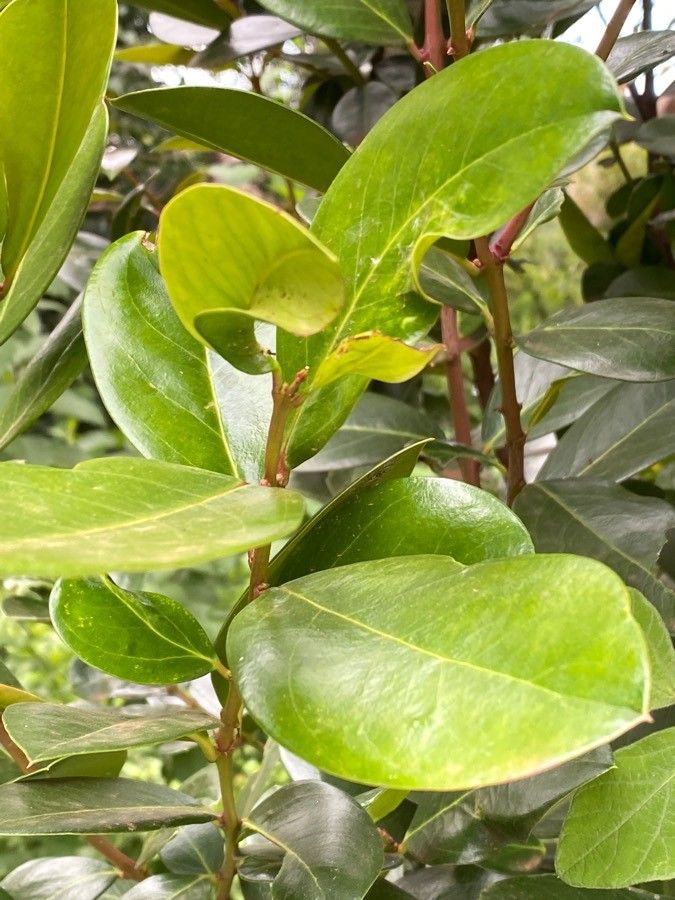
Acokanthera oblongifolia, commonly known as the African poison arrow plant, is a shrub or small tree native to eastern and southern Africa. It belongs to the Apocynaceae family and can grow up to 6 meters tall. The plant features dark green, oblong leaves that can reach up to 15 centimeters in length.
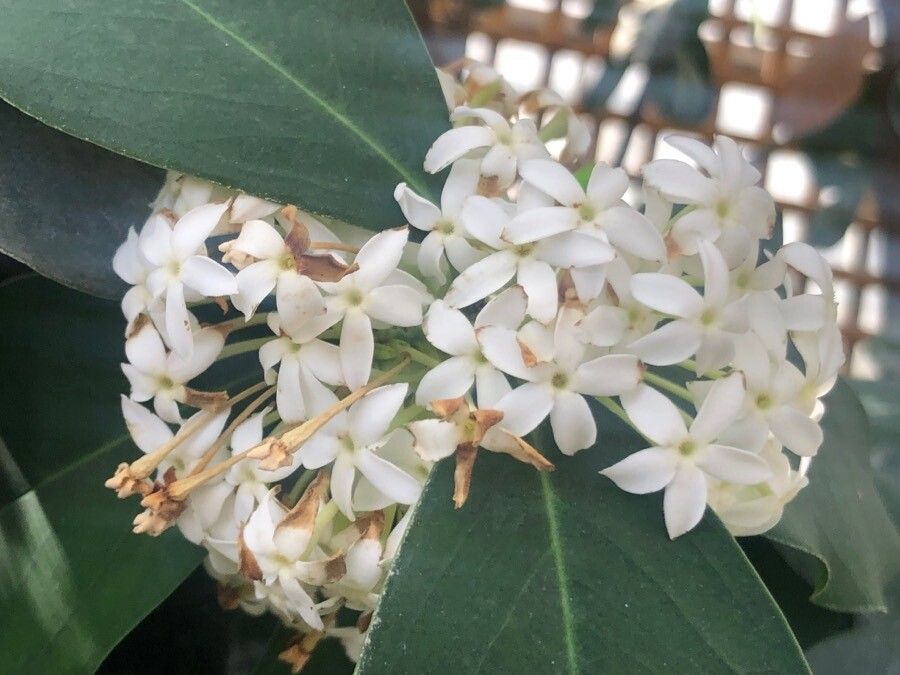
The African poison arrow plant produces small, fragrant flowers that are white or pink. These flowers bloom in clusters from late winter through early spring. The plant also bears a large, berry-like drupe containing one or two seeds.
This plant is highly toxic, containing compounds like cardiac glycosides, which can be fatal if ingested by humans or animals. Indigenous people have historically used these toxic compounds for hunting, coating their arrows with the plant's sap.
Acokanthera oblongifolia prefers well-drained soils and full sun exposure but can tolerate partial shade. Due to its attractive foliage and fragrant flowers, it is commonly used as an ornamental shrub. However, caution should be exercised when handling the plant due to its toxic nature.
In traditional medicine, Acokanthera oblongifolia has been used to treat ailments such as fever, headaches, and snake bites, although there is no scientific evidence to support these claims.
Overall, while this beautiful yet dangerous shrub holds an important place in African culture both historically and medicinally, it should be approached with care.
African wintersweet shows strong resistance to disease and is generally unlikely to suffer from illnesses. Regarding maintenance, this species is fairly easy to care for. When grown outside it needs little watering, and mature plants typically do not require pruning. Young or smaller specimens, however, should be trimmed after they finish flowering. African wintersweet is appropriate for anyone who has an outdoor area, like a garden or a deck, and it does not demand extensive gardening experience.
How to keep Acokanthera Oblongifolia.
Light
African wintersweet does best with plenty of sunlight, though it can tolerate periods of only partial light. Native to areas with abundant sun, it grows best in those conditions, but excessively strong light can hinder its development. Its requirement for sunlight remains fairly consistent throughout its various growth stages.
Water
African wintersweet, native to arid regions, is a drought-tolerant plant that thrives in dry conditions. It should be watered every 1-2 weeks and benefits from well-draining soil. This plant is ideal for xeriscapes, as it flourishes during dry spells but struggles when exposed to excessive moisture.
Temperature
African wintersweet comes from tropical areas where the climate is generally warm and humid. Therefore, it is well suited to high temperatures and moisture. It does not tolerate sudden temperature changes and prefers a consistent thermal environment, so preventing indoor temperature fluctuations is important. It typically cannot endure cold conditions and needs warmer temperatures to develop. If the surrounding temperature falls too low, the plant may stop growing or even die.
Fertilizer
The best time to fertilize an African wintersweet is in early spring, as it comes out of dormancy. This encourages overall growth and flower development. Fertilizing improves the foliage, stems, and branches, and encourages flowers that are large, vibrant, and long-lasting. It helps move nutrients from the roots to the flowers and enhances the plant’s health and resistance to disease.
Pruning
African wintersweet is known for its glossy leaves and fragrant flowers. To promote healthy growth and abundant blooming, it's best to prune the plant after its main flowering phase, which occurs in late spring. This not only improves air circulation but also encourages healthier growth. When pruning, be sure to remove any dead wood and thin out overcrowded branches. Always use clean, sharp tools to prevent infections.
Botanical profile.
- Plant Type
- Shrub
- Life Cycle
- Perennial
- Genus
- Acokanthera
- Family
- Apocynaceae
- Hardiness Zone
- 9-11
- Mature Height
- 6.1 m
- Mature Spread
- 1.83 m to 2.44 m
- Leaf Color
- Dark Green
- Leaf Type
- Evergreen
- Flower Color
- White, Pink
- Flower Size
- 1.02 cm to 2.03 cm
- Bloom Time
- Mid spring, Late spring, Early summer
- Planting Time
- Spring
- Harvest Time
- Mid summer, Late summer, Early fall
- Native Area
- South Africa, Mozambique
Other names.
Reader questions.
How should I water my African wintersweet plant?
When watering your African wintersweet, you don't have to be too particular about the method you use. You can use common tools like watering cans, hoses, or even cups. Just make sure to water directly onto the soil, evenly spreading the moisture to all parts of the root system. It's best to use filtered water to avoid harmful particles from tap water. Also, try to use water at or slightly above room temperature to avoid shocking the plant. However, the African wintersweet usually responds well to any water you give it.
Why do I have to put fertilizer on my African wintersweet?
Fertilizing your African wintersweet is important for several reasons. Firstly, it helps your plant produce beautiful blooms. For the best results, fertilize in early spring to ensure excellent flowers during that season. Additionally, fertilizer provides your African wintersweet with energy that it can store in the ground while it is dormant. By giving your plant extra nutrients during the fall planting or late spring, it can store more energy to use when it begins to actively grow again.
What are the sunlight requirements for African wintersweet?
African wintersweet requires full sun, characterized by more than 6 hours of sunlight daily, but it can also thrive in partial sun, receiving about 3-6 hours of sunlight. This plant originates from habitats with ample sun exposure. Although it does best under abundant sunlight, intense light can impede its growth. Throughout its different growth stages, African wintersweet consistently demands significant sunlight exposure. Observing how sunlight moves through your garden to find spots with the right balance for your plants is crucial.
What should I do if I give too much or too little water to my African wintersweet?
Outdoor plants, especially newly planted ones or seedlings, are at risk of not being watered enough. It's important to water them consistently for a few months when they are small or recently planted. Once the roots are established, African wintersweet plants can mostly rely on rainfall. When African wintersweet plants are in pots, overwatering is more common. If you accidentally overwater your African wintersweet, take immediate action. Stop watering the plant to minimize the impact. Then, remove the plant from the pot and check its roots. If there is no root rot, you can put the plant back in the pot. However, if there is root rot, trim the affected roots and consider using a fungicide. Repot the plant in well-draining soil. For underwatered African wintersweet plants, simply water them more often. If the leaves are drooping, drying out, and falling off, they will quickly recover after sufficient watering. Adjust your watering schedule when you notice underwatering.
What is the best time to add fertilizer to my African wintersweet?
To ensure effective fertilization of African wintersweet, timing is crucial. If fertilizer is applied too early while the plant is still dormant, it will be washed away by rainwater, resulting in waste and pollution. The first application of fertilizer should be in early spring, followed by monthly fertilization until early summer.
Can artificial lighting be used for African wintersweet, and if so, how?
Yes, artificial lighting can be beneficial for African wintersweet, especially when natural sunlight is insufficient. Indoor plants require adequate lighting to support optimal growth. In conditions where natural light is lacking, such as during winter or in less sunny indoor spaces, artificial lights are essential. LED lights are recommended because they can be customized to provide specific wavelengths needed by the plant. The lighting needs depend on the plant's sun exposure category: full sun plants require 30-50W/sq ft, partial sun plants need 20-30W/sq ft, and full shade plants need 10-20W/sq ft. The artificial light source should be placed 12-36 inches above the plant, simulating natural sunlight, and it's necessary to match the natural daylight hours, usually providing 8-12 hours of light per day.
How frequently do I need to water my African wintersweet plant?
Most outdoor plants can rely on rainfall for their water needs. However, if your area doesn't receive enough rain, you should water your plants every 2 weeks in spring and fall, and more often in summer. In winter, when plants need less water, you can water them less frequently or not at all. If you have a young or newly planted African wintersweet, you should water it more often to help it establish and grow into a drought-tolerant plant. For potted African wintersweet plants, there are two ways to determine watering frequency. The first is to follow a set watering schedule, such as once a week or once every other week. However, this approach may not account for the specific conditions of your plant's environment. Watering frequency should also be adjusted based on the season. For example, a set schedule may not be enough in summer when the plant needs more water. Alternatively, you can check the soil moisture before watering. Wait until the top 2-4 inches of soil (about ⅓ to ½ depth of the pot) have dried out completely before giving more water.
When is the best time to not fertilize my African wintersweet plant?
To avoid excessive leaf growth and lack of blooms, be cautious about over-fertilizing African wintersweet with high nitrogen content. Opt for fertilizers that have lower levels of nitrogen compared to other nutrients. Additionally, it is advisable to refrain from fertilizing after early autumn, as this can promote excessive growth right before winter. Similarly, during hot and dry periods, fertilization should be avoided as the dry soil may not effectively deliver the nutrients and could stimulate growth that requires additional water. It is best to apply fertilizer earlier in the season when temperatures are cooler. Lastly, be mindful that African wintersweet can absorb nearby applied fertilizers, so take care not to unintentionally give the tree or shrub an excessive dose.
What are the common symptoms of light deficiency or excessive sunlight in African wintersweet?
Symptoms of light deficiency in African wintersweet include small new leaves, leggy or sparse growth, faster leaf drop, slower or no new growth, and lighter-colored or pale new leaves. Chlorosis, sunscald, leaf curling, wilting, and leaf scorching are symptoms of excessive sunlight exposure. Chlorosis leads to leaves turning yellow due to chlorophyll breakdown, affecting photosynthesis. Sunscald damages plant tissue, presenting as pale or necrotic areas. Leaf curling minimizes water loss and damage under intense sunlight, while wilting indicates a loss of plant hydration. Leaf scorching appears as brown, crispy edges on leaves, reducing the plant's overall health.
How often should I water my African wintersweet plant?
When watering your African wintersweet plant, you may be surprised to learn that it doesn't always need a lot of water. Instead, if only a few inches of soil have dried since the last watering, you can promote healthy growth by giving it about five to ten ounces of water each time. You can also determine the amount of water based on the soil moisture. To ensure your African wintersweet gets enough moisture, water the soil layers that have dried out since the last watering. If more than half of the soil is dry, you may need to give more water than usual. In such cases, continue watering until you see excess water draining from the pot's holes. If your African wintersweet is planted in a rainy outdoor area, it may not need additional watering. When it's young or establishing, make sure it receives 1-2 inches of rain per week. As it grows and establishes, it can rely solely on rainwater unless there is a prolonged period of hot weather with no rainfall for 2-3 weeks, in which case provide a full watering to prevent stress.
What kind of fertilizer does my African wintersweet plant need?
For an African wintersweet plant, the best fertilizer is one with a balanced mix of three main nutrients, with slightly more phosphorus. Alternatively, some gardeners prefer to improve the soil by adding organic materials like compost, worm castings, and manure. Experienced gardeners may add water-soluble fertilizers with phosphorus 1-2 times when flower buds appear, enhancing flower development and promoting larger, longer-lasting blooms. Fertilizers can be found in various forms, but liquid or powdered forms are commonly recommended for African wintersweet. Regardless of the type, it's important to dilute the fertilizer and apply it while watering the plant.
How can I mitigate the symptoms of light deficiency or excessive sunlight for African wintersweet?
To combat light deficiency in African wintersweet, gradually increase sunlight exposure, aiming for at least 6 hours of direct sunlight daily. Use artificial light if necessary, keeping a desk or ceiling lamp on for at least 8 hours daily, or invest in grow lights for adequate light. For outdoor plants, adjust their location gradually to avoid sunburn. Prune any obstructions like trees to enhance sunlight penetration. If the plant is small enough, consider transplanting during its dormant period to a sunnier location with good drainage. It's important to note that parts of the plant already affected by insufficient light may not recover, but new growth will be healthy after adjusting the light exposure.