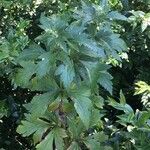
Aconitum carmichaelii
Sichuan aconite · Japanese aconite · Carmichael's Monkshood
Description
Source: leafsnapAconitum carmichaelii is a species of flowering plant of the genus Aconitum, family Ranunculaceae. It is native to East Asia and eastern Russia. It is commonly known as Chinese aconite, Carmichael's monkshood or Chinese wolfsbane. In Mandarin Chinese, it is known as fùzǐ (附子; meaning daughter root, or lateral root) and as wūtóu (烏頭; lit. "black head", referring to tuberous mother root, or root tuber) and in Japanese as torikabuto (鳥兜; meaning crown, which imitate phenix, worn during Kagura dance).
🌳 Aside from its well-known uses, Chinese aconite has a less-recognized potential as a natural biopesticide. The plant’s naturally occurring alkaloids serve as a defense against herbivores and pests, suggesting it could be useful in organic farming to manage pest populations without relying on synthetic chemicals. Research into this application is ongoing, pointing to possibilities for sustainable agriculture.
Care Guide
💧 Water
Originating from damp woodlands, Chinese aconite thrives in moist soil and requires weekly watering for optimal hydration. While it has some drought tolerance, this herbaceous perennial still needs careful watering during its growing season to ensure robust flowering.
How should I water my Chinese aconite plant?
To properly water the Chinese aconite, use filtered water at room temperature. Tap water may have harmful particles, so filtered water is preferred. The plant is used to warm conditions, so it's best to avoid cold water, as it can be a shock to the plant. Additionally, refrain from watering from above, as this can cause issues with the foliage. Instead, thoroughly water the soil with filtered room temperature water until it is completely soaked. This helps moisturize the roots and allows them to spread and gather necessary nutrients.
What should I do if I give too much or too little water to my Chinese aconite?
Both overwatering and underwatering can harm your Chinese aconite's health, but overwatering is more common. When the plant gets too much water, its stems and leaves may droop and turn yellow. Extended overwatering can also cause diseases like root rot, mold, and mildew, which can be fatal. Underwatering is less likely for the Chinese aconite, as it can tolerate drought. However, it can still happen, and you'll notice brittle, brown leaves. It's important to recognize signs of overwatering early on. Some diseases, like root rot, can't be reversed if you wait too long. If you see early signs, reduce watering immediately and consider improving the soil drainage. If you suspect underwatering, simply water more frequently until the plant recovers.
How often should I give water to my Chinese aconite plant?
If your Chinese aconite plant is in a pot, the most accurate way to determine if it needs water is by checking the soil moisture. Simply stick your finger into the soil and if the top two to three inches are dry, it's time to water it. If you have your Chinese aconite planted outdoors in the ground, you can use a similar method to test the soil. Again, if the top few inches of soil are dry, it's time to water. Typically, during the spring and early fall, following this method will require watering once per week. However, in extremely hot weather, you may need to water twice or more per week. It's worth noting that mature Chinese aconite plants have an impressive ability to withstand drought.
How much water does my Chinese aconite plant need?
To properly water your Chinese aconite, don't hesitate to give it a generous amount of water. Make sure the top 2-3 inches of soil are dry before watering. It's best to water thoroughly until the soil is completely soaked. You'll know you've added enough water when excess water starts to flow out of the drainage holes at the bottom of the pot. If you don't see any excess water draining, it means you haven't given enough water, which could be harmful to the plant. However, be careful not to let water accumulate in the soil, as this can also be dangerous. Additionally, if water doesn't drain properly through the pot, it may indicate that the soil doesn't drain well, which is not good for the plant's health. If your plant is outdoors, about 1 inch of rain per week should be enough.
How do I water my Chinese aconite during different stages of growth?
The water needs of the Chinese aconite can change depending on its growth stages. In the first few years of its life or after transplanting, you will need to give more water than usual. During these stages, the plant focuses on growing new roots, which require extra moisture. Once the plant is more established, it will need less water. Additionally, during the bloom period, the Chinese aconite may require more water as it uses moisture for flower development.
☀️ Light Partial sun
Chinese aconite originates from habitats like forest understories and rocky sites where it grows in natural shade. It prefers partial sun but can tolerate both full sun and full shade, illustrating its adaptable, hardy character.
What are the sunlight requirements for Chinese aconite?
Chinese aconite thrives under specific light conditions, ideally in partial sun, which equates to about 3-6 hours of sunlight per day. It can also grow well in full shade, defined as receiving less than 3 hours of sunlight daily. Observing your garden's light patterns is crucial for placing your plants in spots where they receive the right balance of light and shade. The natural habitat of Chinese aconite includes forest understories and rocky areas where it is accustomed to considerable shade, highlighting its versatility and adaptability to varying light conditions.
How can artificial lighting be used for indoor Chinese aconite plants?
Indoor Chinese aconite plants require adequate lighting to grow optimally, especially when natural sunlight is insufficient. Artificial lighting, such as LED lights tailored to provide specific light wavelengths, can significantly support plant growth. The intensity of artificial light necessary varies depending on the plant's sunlight requirements: 30-50W/sq ft for full sun plants, 20-30W/sq ft for partial sun, and 10-20W/sq ft for full shade. The correct positioning of lights, about 12-36 inches above the plants, and ensuring they receive 8-12 hours of light a day, mimicking natural daylight hours, are crucial for healthy indoor growth.
What are common symptoms of insufficient light in Chinese aconite?
When Chinese aconite does not receive adequate light, several symptoms can manifest. These include smaller new leaves compared to older ones, leggy or sparse growth because of stretched spaces between leaves or stems, and earlier shedding of older leaves to conserve resources. Furthermore, plants may exhibit slower or halted growth, lighter-colored new leaves indicating a lack of chlorophyll, and conditions such as chlorosis where leaves turn yellow. Damage from excessive sunlight can also cause sunscald, leaf curling as a protective measure, wilting from water loss, and leaf scorching. Identifying these symptoms early can help in taking corrective measures to ensure plant health.
How to address light-related issues in Chinese aconite?
To optimize growth and address light-related issues for Chinese aconite, gradually acclimatize them to the ideal sunlight conditions. For indoor plants, shifting them periodically to sunnier spots or supplementing with artificial light such as a desk or ceiling lamp for at least 8 hours daily can be beneficial. For outdoor management, moving plants gradually to sunnier locations each week can prevent sunburn. Reducing environmental obstructions like overhanging branches can also improve sunlight exposure. If necessary, transplant smaller plants during their dormant period to locations with better light exposure and drainage. Note that parts of the plant damaged by insufficient sunlight may not recover, but new growth should be healthy with proper light.
🌡️ Temperature 0–32.2°C
Chinese aconite grows best in its natural environment where temperatures range from 32 to 89.6°F (0 to 32°C). To promote healthy growth, reproduce those conditions and provide protection when temperatures become extremely cold or hot.
💨 Humidity
🪴 Soil 6-7
🌱 Fertilizer
The best time to fertilize a Chinese aconite is in early spring, as it comes out of dormancy and begins active growth. Fertilizing supplies the essential nutrients needed for healthy development. Although Chinese aconite has fairly low fertilization requirements, applying fertilizer annually can boost its survival and encourage better, longer-lasting flowers.
🪴 Pot & Repot
✂️ Pruning
To enhance the health and appearance of Chinese aconite, it is beneficial to prune the plant in the spring. Begin by removing any dead or damaged stems and thinning out crowded areas to improve air circulation. This process encourages new growth and extends the blooming period. Additionally, it's crucial to use clean tools to prevent infections. Regular pruning also helps maintain the plant's shape and overall vitality.
🌿 Propagating
🐛 Diseases & pets
☠️ Toxicity
Characteristics
- Plant Type
- Herb
- Life Cycle
- Perennial
- Genus
- Aconitum
- Family
- Ranunculaceae
- Hardiness Zone
- 6-8
- Mature Height
- 61 cm to 91 cm
- Mature Spread
- 46 cm to 76 cm
- Leaf Color
- Green
- Leaf Type
- Deciduous
- Flower Color
- Blue
- Flower Size
- 6.35 cm to 25.40 cm
- Bloom Time
- Mid summer
- Planting Time
- Spring
- Harvest Time
- Late summer, Early fall
- Native Area
- Vietnam, China