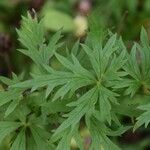
Aconitum variegatum
European monkshood · Manchurian monkshood · Branched monkshood · Variegated monkshood · Variegated Monk's-hood
Description
Source: leafsnapAconitum variegatum is a species of flowering plant belonging to the family Ranunculaceae.Its native range is Central and Southeastern Europe to Central Ukraine.
Care Guide
💧 Water
Native to cooler climates, variegated monk's-hood thrives in evenly moist soil and benefits from weekly watering. It has good water retention and can handle typical rainfall, making it well-suited for outdoor growth. However, care should be taken to prevent over-saturation during wet seasons.
How should I water my Variegated monk's-hood plant?
To best care for the Variegated monk's-hood, use filtered room temperature water. Tap water may have harmful particles, so it's important to choose filtered water. Since this plant thrives in warm environments, avoid using cold water as it can shock the plant. Also, avoid overhead watering to prevent issues with the foliage. Instead, pour the filtered room temperature water directly onto the soil until it is completely soaked. This helps the roots stay moist and spread through the soil to collect the necessary nutrients.
What should I do if I give my Variegated monk's-hood plant too much or too little water?
Taking care of your Variegated monk's-hood plant requires proper watering. Both overwatering and underwatering can harm your plant, but overwatering is more likely to occur. When your plant gets too much water, its stems and leaves may wilt and change color to yellow. Over time, overwatering can also cause diseases like root rot, mold, and mildew, which can be fatal for your plant. While underwatering is less common for this plant because it can tolerate drought, it can still happen. Signs of underwatering include brittle and brown leaves. It's important to recognize the signs of overwatering early on because some of the resulting diseases, like root rot, may be irreversible if not addressed promptly. If you notice early signs of overwatering, reduce your watering schedule immediately. Check the soil your plant is in to ensure it drains well; if not, replace it with a loose, well-draining potting mix. If you see signs of underwatering, simply increase your watering frequency until the signs improve.
How often do I need to water my Variegated monk's-hood?
If your Variegated monk's-hood plant is in a pot, you can determine if it needs water by checking the soil moisture. Simply stick your finger into the soil and if the top two to three inches are dry, it's time to water it. The same method can be applied if you have the plant outdoors in the ground. Once again, when the top few inches of soil have dried out, it's time to give it some water. In the spring and early fall, you'll typically need to water this plant about once a week using this method. However, during very hot weather, you may need to increase watering to two or more times per week. It's worth noting that mature, well-established Variegated monk's-hoods are often quite resilient to drought.
How much water does my Variegated monk's-hood plant need?
To properly water your Variegated monk's-hood, don't hold back on the amount of water you give. Wait until the top two to three inches of soil are dry, then thoroughly water the plant. Make sure to moisten the soil completely, allowing excess water to drain through the pot's drainage holes. If you don't see water draining out, it means you haven't given enough water. However, avoid letting water accumulate in the soil, as this can harm the plant. Additionally, if water doesn't drain properly, it may indicate poorly draining soil, which is harmful to the plant's health. If the plant is outdoors, one inch of rain per week should be enough.
How should I water my Variegated monk's-hood as it grows?
The water needs of the Variegated monk's-hood can vary depending on its growth stages. In the first few years or after transplanting, it requires more water to support the growth of new roots. These roots need additional moisture to thrive and support future growth. However, as the plant matures, it will require less water overall. Another stage that may require more water is during the bloom period, as flower development utilizes a significant amount of moisture. Therefore, you may need to provide extra water to your Variegated monk's-hood during this time.
☀️ Light Partial sun
The variegated monk's-hood prefers moderately lit locations and can tolerate lower light levels. It comes from areas where sunlight and shade are mixed, and it copes well with varying amounts of sun during different stages of growth. Too much sun can reduce its vigor, while too little may slow its development.
What are the sunlight requirements for Variegated monk's-hood?
Variegated monk's-hood requires a moderate amount of sunlight to thrive. It prefers partial sun, meaning about 3-6 hours of sunlight a day, but can also grow in full shade conditions, which is less than 3 hours of sunlight. It's important to observe how sunlight moves through your garden to pick spots that offer a good balance of light and shade, ensuring the plant's well-being.
How does Variegated monk's-hood adapt to different sun exposures?
Originally from areas with both sunlight and shade, Variegated monk's-hood is adaptable to various levels of sun exposure throughout its growth stages. It does best in moderate illumination but can withstand less light. However, too much sun can harm its vitality, whereas insufficient sunlight might slow down its growth. For indoor plants, when natural light is not enough, artificial lighting such as LED lights can be crucial. These allow customization to meet the plant's needs, with full sun plants requiring 30-50W/sq ft, partial sun plants 20-30W/sq ft, and full shade plants 10-20W/sq ft of artificial light.
What are the symptoms of incorrect sunlight exposure for Variegated monk's-hood?
Incorrect sunlight exposure can lead to various symptoms in Variegated monk's-hood. Insufficient light might cause smaller new leaves, leggy growth, early leaf drop, halted growth, paler or irregularly colored new leaves, a condition known as chlorosis (yellowing leaves), and sunscald, which looks like pale or necrotic spots on the plant. Too much sunlight can result in leaf curling, wilting, and leaf scorching, characterized by brown, dry patches on leaves. These symptoms highlight the importance of providing the right amount of light for healthy growth.
How can I ensure my Variegated monk's-hood receives adequate sunlight?
To ensure your Variegated monk's-hood receives adequate sunlight, gradually move the plant to sunnier spots each week to achieve 3-6 hours of direct sunlight daily, allowing slow adaptation to the light. For large or immovable plants, consider using artificial light, keeping a desk or ceiling lamp on for at least 8 hours daily, or using professional grow lights. Outdoors, move plants to optimal sunlight spots gradually to prevent sunburn. If sunlight is blocked, prune any obstructing branches or, for smaller plants, consider transplanting during their dormant period to a sunnier location with good drainage.
🌡️ Temperature 0–32.2°C
Variegated monk's-hood flourishes in temperate climates, preferring temperatures between 32 and 90 °F (0 to 32 ℃). In colder periods, suitable measures should be taken to protect its health.
What are the preferred temperature conditions for Variegated monk's-hood?
Variegated monk's-hood thrives best in moderate climates, with an ideal temperature range between 32 to 90 °F (0 to 32 °C). It has strong cold resistance, meaning special frost protection measures are not usually necessary. However, in extreme cold where temperatures are expected to drop below -35°C, protective measures should be taken. This includes covering the plant with soil or straw and ensuring the soil is moist before the first freeze in autumn to help prevent drought and water scarcity during winter and early spring.
How does low temperature affect Variegated monk's-hood and what are the solutions?
Variegated monk's-hood is cold-tolerant and prefers temperatures above 0°C. If temperatures fall below -35°C, the plant may not show immediate damage during winter, but there could be a noticeable decrease in sprouting or even no sprouting at all come spring. The solution for such instances is to remove any parts of the plant that have failed to sprout in the spring.
How does high temperature affect Variegated monk's-hood and what are the solutions?
During the summer, it's important to keep Variegated monk's-hood's temperature below 32°C. Exceeding 35°C can lead to the leaves becoming lighter, prone to curling, susceptible to sunburn, and in severe cases, the entire plant may wilt and dry up. To counteract this, trim away sunburned and dried-up parts of the plant. Moving the plant to a shaded area during the midday and afternoon sun or using a shade cloth can also help. Additionally, watering the plant in the morning and evening will keep the soil moist, aiding in its overall health.
💨 Humidity
🪴 Soil 6-7
🌱 Fertilizer
The best time to fertilize a Variegated monk's-hood is in early spring, as it comes out of dormancy and begins active growth. Fertilizing supplies essential nutrients that support healthy growth. While Variegated monk's-hood has relatively low fertilization requirements, an annual application can improve its survival and encourage better, longer-lasting flowers.
🪴 Pot & Repot
✂️ Pruning
Variegated monk's-hood features striking blue and white flowers and benefits from pruning between early and late spring. To promote better air circulation and reduce the risk of fungal problems, remove any dead or damaged stems. Consistent deadheading helps extend the blooming period, and gentle pruning revitalizes the plant for robust growth throughout the season.
🌿 Propagating
🐛 Diseases & pets
☠️ Toxicity
Characteristics
- Plant Type
- Herb
- Life Cycle
- Perennial
- Genus
- Aconitum
- Family
- Ranunculaceae
- Hardiness Zone
- 3-8
- Mature Height
- 0.61 m to 1.83 m
- Mature Spread
- 30 cm to 61 cm
- Leaf Color
- Dark Green
- Leaf Type
- Deciduous
- Flower Color
- Lavender
- Flower Size
- 2.03 cm to 3.05 cm
- Bloom Time
- Mid summer, Late summer, Early fall
- Planting Time
- Spring
- Harvest Time
- Early fall, Mid fall