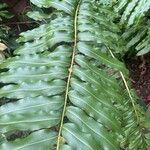
Acrostichum danaeifolium
Inland leatherfern · Giant leather fern · Inland Leather Fern · Leather Fern · Giant fern
Description
Source: wikipedia (CC BY-SA)Acrostichum danaeifolium, called helecho mangle, interior leather fern or giant leather fern, is a massive fern in the family Pteridaceae which is found throughout the Neotropics. The fronds are up to 3 m (9.8 ft) long with pinnate leaflets up to 30 cm (12 in) long. Spores are distributed uniformly on the back side of the fronds. It prefers wet soils.
Care Guide
💧 Water
The inland leather fern flourishes in consistently moist environments and needs to be watered twice a week to stay well-hydrated. This plant thrives in humid conditions, so regular misting indoors can be very beneficial. Being an evergreen, the inland leather fern requires a consistent watering schedule throughout the year to support its lush foliage.
What do I need to do if I give too much or too little water to my Inland leather fern?
The Inland leather fern can be overwatered if it sits in a pool of water or if the planter doesn't have drainage holes. This can lead to root problems and the development of diseases. Signs of overwatering include wilted and yellow leaves, drooping stems, and soft or mushy stems. It's important to check for other issues that may cause similar symptoms. Underwatering is also a concern, as the fern can quickly turn brown and crispy in dry conditions. In extreme cases, the plant may appear completely dried up, but it's still possible to save it if some roots are healthy. By cutting off dead stems, thoroughly watering, and providing proper care, the fern can recover and grow new fronds within several months.
How do I correctly water my Inland leather fern?
To keep your Inland leather fern healthy, it is important to provide consistently moist soil that resembles its natural habitat. This means watering it frequently, possibly every one or two days. Remember, this plant should never be allowed to dry out. When the top layer of soil starts to feel even slightly dry, it is time to water again. Ensure that you thoroughly soak the soil until water drains out from the bottom of the pot. It is crucial to discard any excess water to prevent the pot from sitting in a puddle. By following this method, you can ensure that the soil never becomes too dry.
What do I need to think about when watering my Inland leather fern?
The frequency of watering your Inland leather fern depends on the humidity levels in the air. Higher humidity means you'll need to water less frequently because evaporation is slower. Avoid placing the plant near heating or cooling vents as it will dry out faster. Choose a location that is protected from drafts. These ferns prefer dappled and indirect sunlight and temperatures between 55-80 degrees F (13-27 degrees C). Placing them on a warm and sunny windowsill can cause them to dehydrate quickly. If possible, use rainwater or distilled water, although tap water is generally fine. Tap water may contain minerals and chemicals that can lead to brown leaf tips, especially since Inland leather fern has delicate leaves. Avoid using small pots for this fern as they have less potting medium and can dry out faster. Give the plant more space in the pot than other houseplants. Consider using a self-watering planter for the Inland leather fern. These pots have a wicking system that keeps the soil consistently moist by drawing water from a central reservoir. This eliminates the need to constantly water the fern and provides a steady supply of water for the roots, which is beneficial.
☀️ Light Full shade
The inland leather fern comes from habitats such as forest understories or rocky areas that provide natural shade. It prefers Full Shade but can tolerate Partial Sun.
What are the sunlight requirements for plants?
Plants need varying amounts of sunlight depending on their type. Full shade plants thrive with less than 3 hours of sunlight daily, while partial sun plants require about 3-6 hours of sunlight. It's essential to observe the movement of sunlight through your garden to choose spots that ensure a balance of light and shade, contributing to the well-being of your plants.
What are the preferred sunlight conditions for the Inland leather fern?
The Inland leather fern naturally grows in environments that provide natural shade, such as forest understories or rocky areas. Its ideal sunlight condition is Full Shade, though it can also tolerate Partial Sun. When natural sunlight is insufficient, especially during winter or in less sunny spaces, artificial lighting can be used to support optimal growth, with different wattages recommended based on the plant's sunlight needs.
How should artificial lighting be utilized for indoor plants?
Artificial lighting is crucial for indoor plants when natural sunlight is lacking. To ensure adequate growth, consider the following: Use LED lights for their ability to provide specific wavelengths needed by plants. Full sun plants should have 30-50W/sq ft, partial sun 20-30W/sq ft, and full shade 10-20W/sq ft of artificial light. Place lights 12-36 inches above the plant, mimicking natural sunlight, and ensure they're on for 8-12 hours per day, depending on the plant's needs.
What are the signs of inadequate light for the Inland leather fern?
Signs of inadequate light in Inland leather ferns include smaller new leaves, leggy or sparse growth, faster leaf drop, halted growth, pale new leaves, chlorosis, sunscald, leaf curling, wilting, and leaf scorching. These symptoms suggest the plant is not receiving the right amount of light, which is crucial for its health and growth.
How can light exposure be optimized for plant health?
To optimize light exposure for plant health, consider the following strategies based on the plant's location: Indoor - Move plants to receive ample filtered light or use artificial lighting if moving is not feasible. Outdoor - Gradually adjust the plant to sunnier spots to prevent sunburn. Ground - Reduce sunlight obstructions by trimming trees or moving the plant to brighter locations, ensuring it receives adequate sunlight.
🌡️ Temperature 15–37.8°C
The inland leather fern comes from tropical areas, where the climate is generally warm and humid. Consequently, it is well adapted to high temperatures and moisture. It does not tolerate sudden temperature shifts and prefers a stable thermal environment, so avoiding temperature fluctuations indoors is important. It typically cannot withstand cold and needs warmer conditions to grow. If the surrounding temperature falls too low, the plant may stop growing or even die.
What is the Inland leather fern?
The Inland leather fern, known botanically as Acrostichum danaeifolium, is a species of fern lacking detailed descriptions in the provided information. No specifics regarding its essentials, such as care, habitat, or unique features, nor any symptoms related to common issues or concerns were given.
💨 Humidity
🪴 Soil 5-6
🌱 Fertilizer
🪴 Pot & Repot Every 12 months
✂️ Pruning
The inland leather fern benefits from regular pruning, ideally done in early spring. By removing dead or damaged fronds, you encourage new growth and improve airflow around the plant. Make sure to use clean, sharp tools to prevent infection. This practice not only boosts the plant's vigor but also encourages denser foliage, in harmony with its natural growth cycle.
🌿 Propagating
🐛 Diseases & pets
☠️ Toxicity
Characteristics
- Plant Type
- Fern
- Life Cycle
- Perennial
- Genus
- Acrostichum
- Family
- Pteridaceae
- Hardiness Zone
- 8-11
- Mature Height
- 1.22 m to 2.44 m
- Mature Spread
- 0.91 m to 1.52 m
- Leaf Color
- Dark Green, Olive Drab
- Leaf Type
- Evergreen
- Planting Time
- Spring, Summer, Autumn
- Native Area
- Belize, Honduras, Mexico, Guatemala, Peru, Panama, Jamaica, Colombia, Bahamas, Cuba, Bolivia, Venezuela, Brazil, Guyana, El Salvador, Nicaragua, Ecuador, Costa Rica