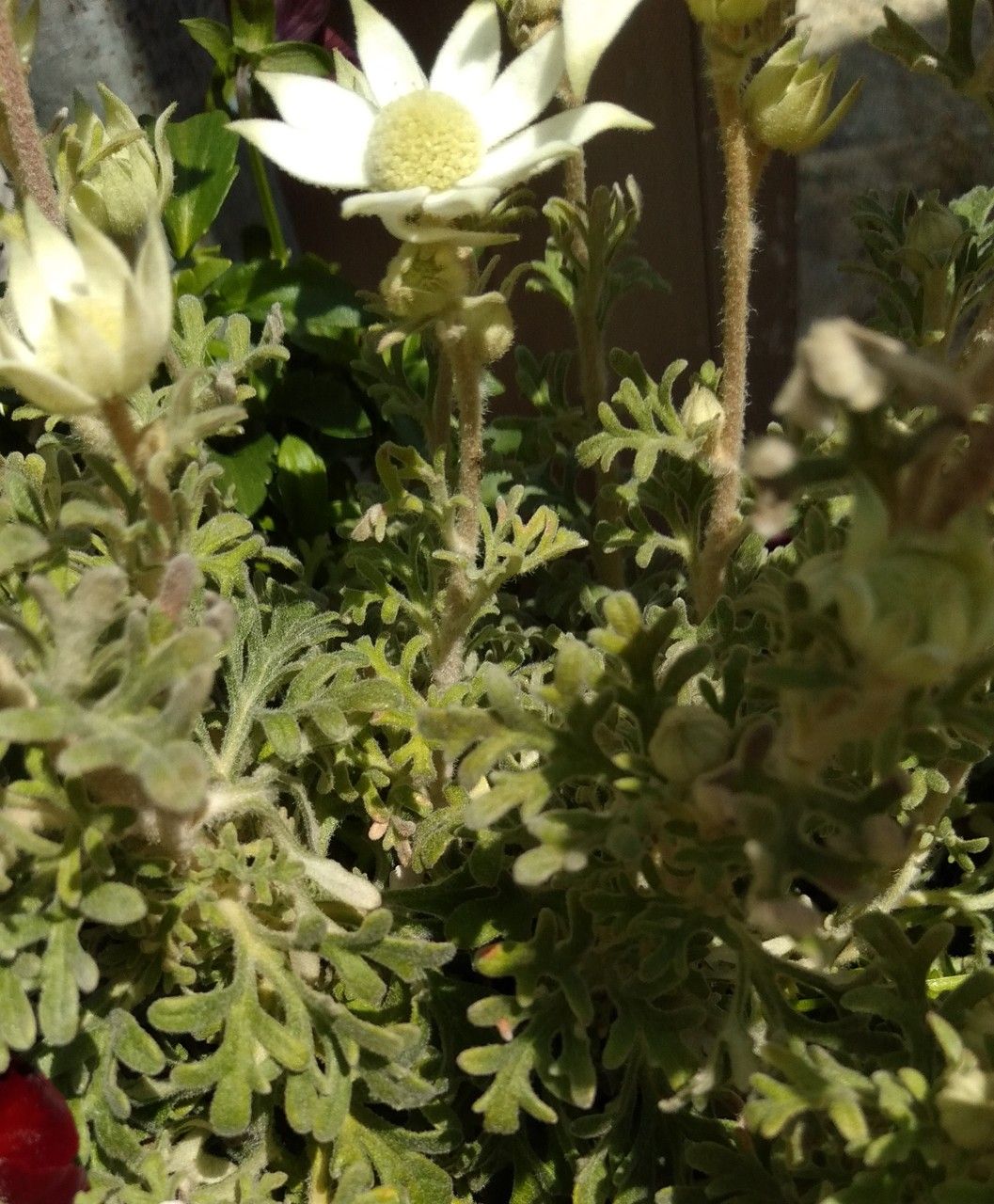
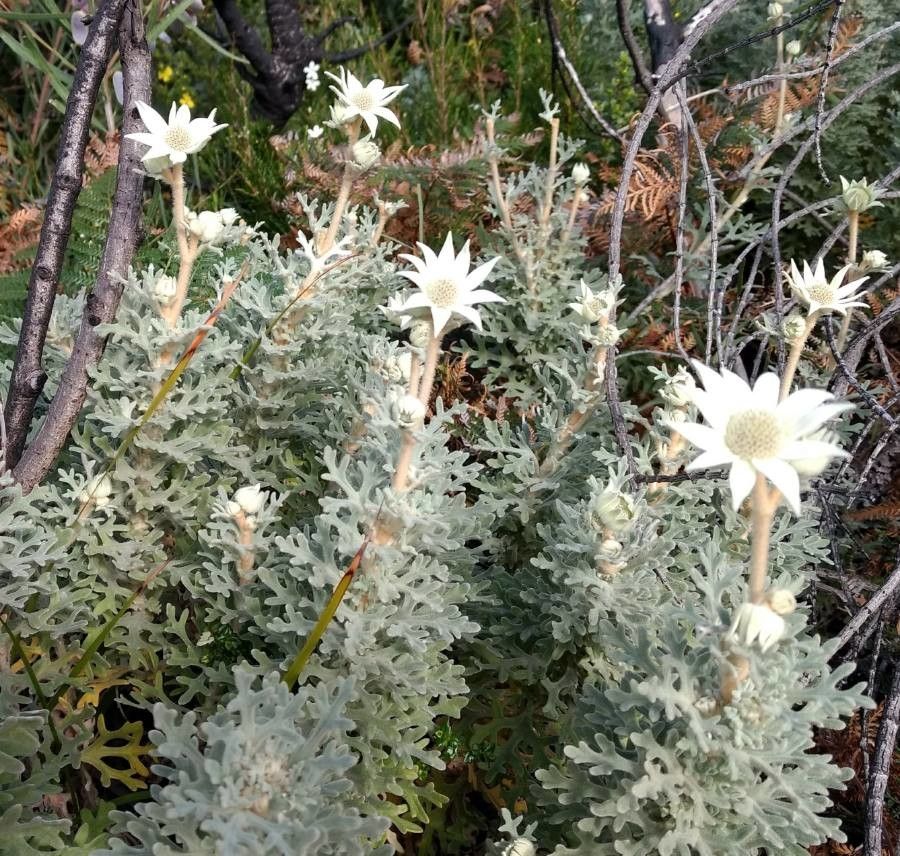
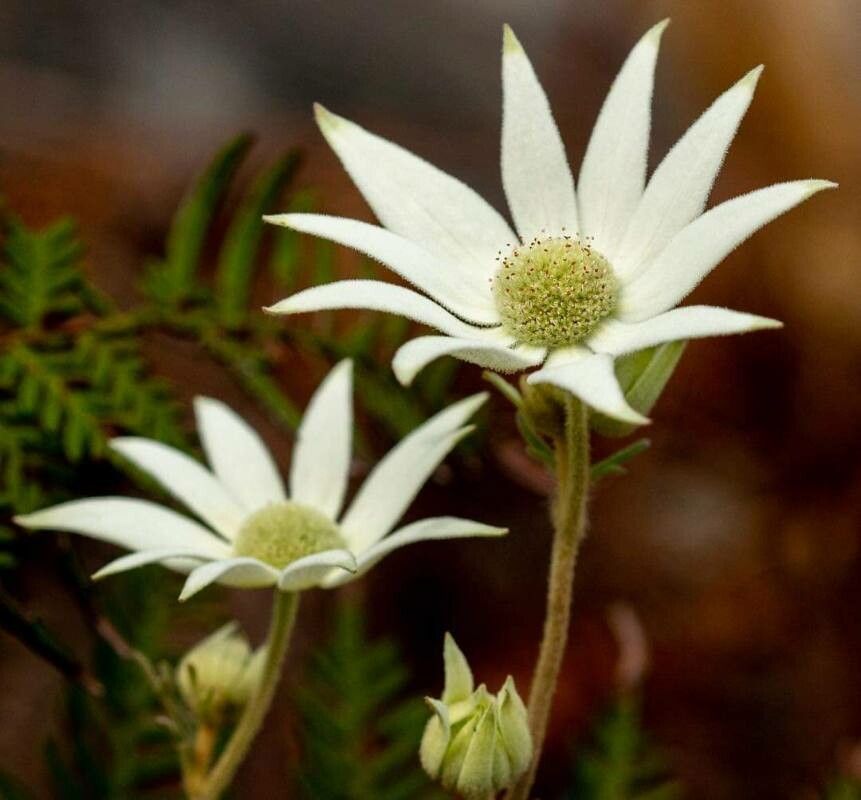
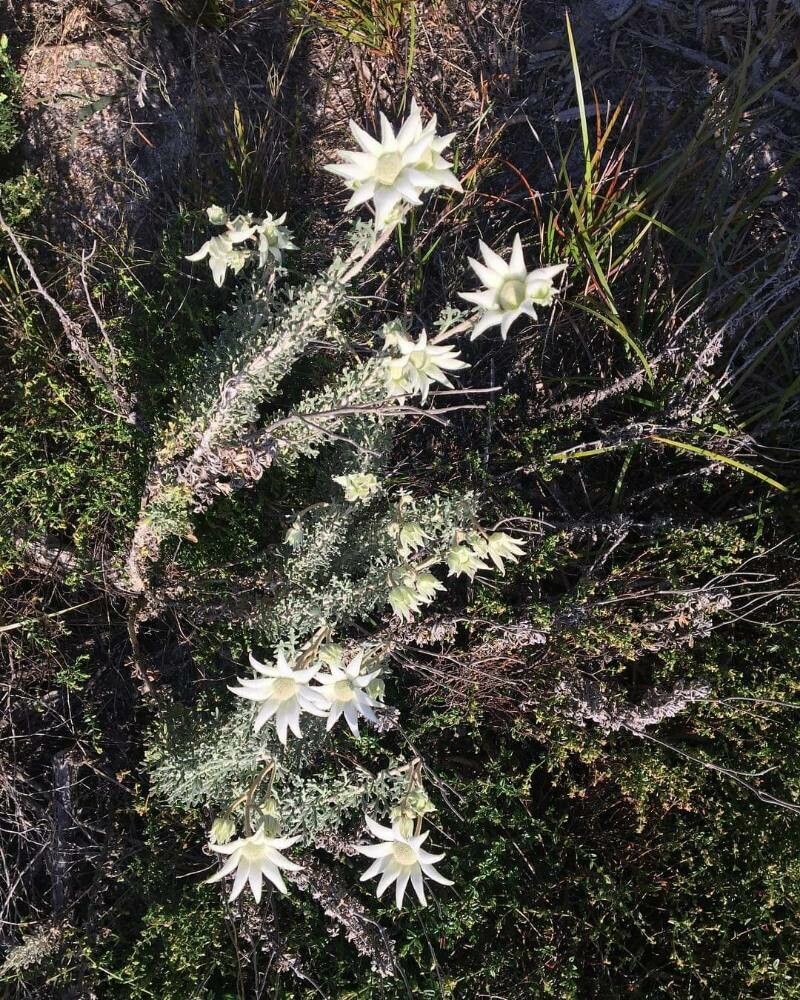
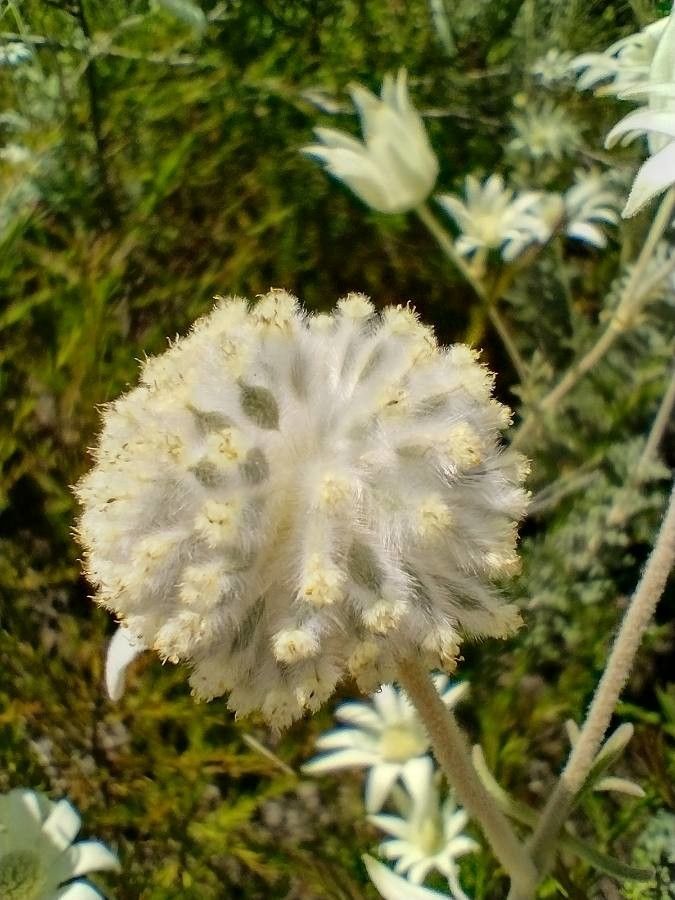
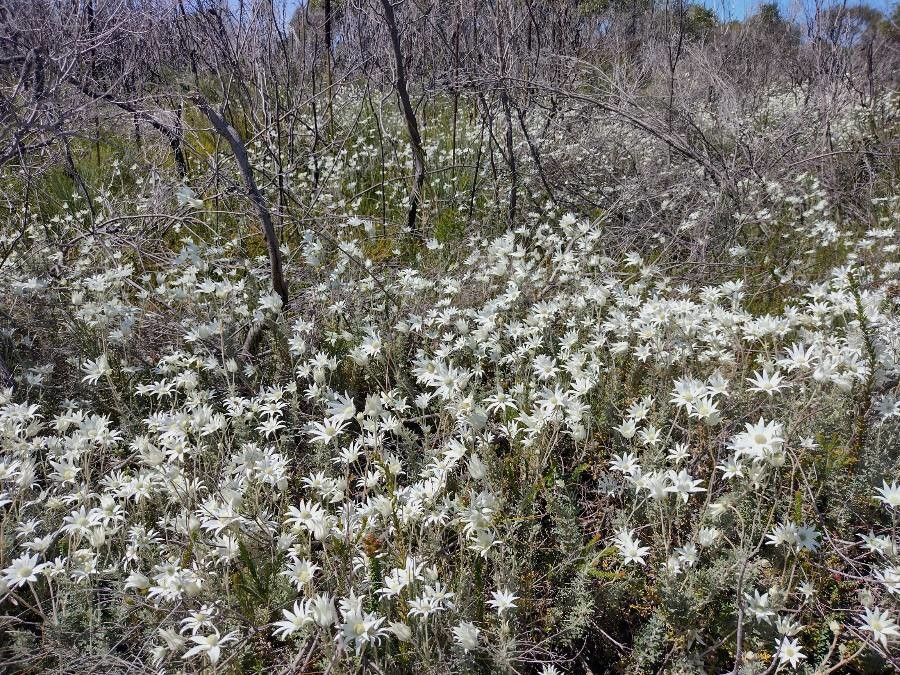
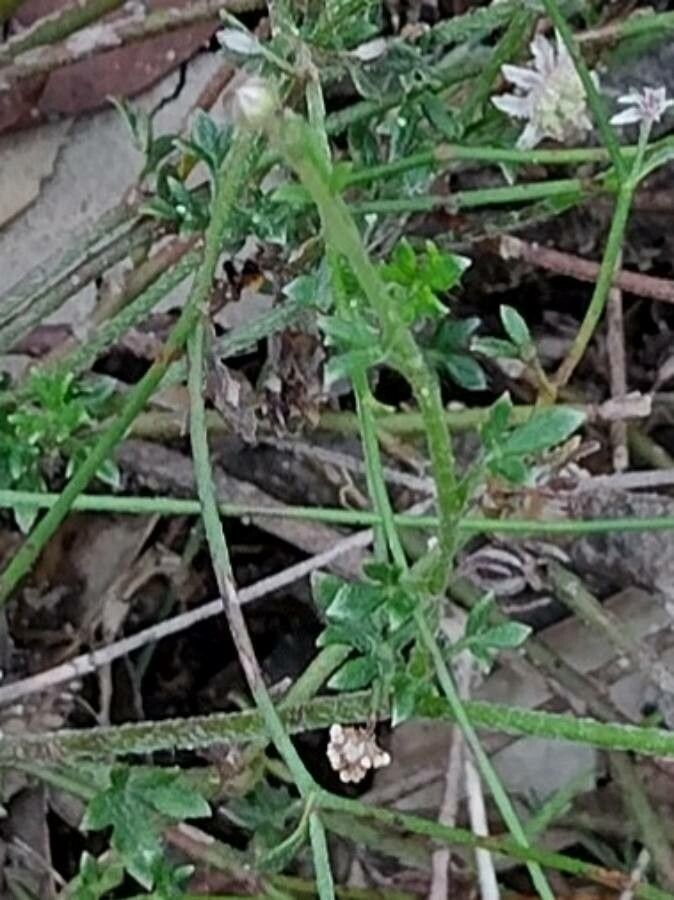
Actinotus helianthi, known as the flannel flower, is a common species of flowering plant native to the bushland around Sydney. It was named and first described by the French botanist Jacques Labillardière in his Novae Hollandiae Plantarum Specimen the first general flora of Australia. According to historian Edward Duyker Labillardière could not have collected the type specimen personally and might have received it from Jean-Baptiste Leschenault de La Tour botanist on the expedition of Nicolas Baudin or another early French visitor to New South Wales.Despite its appearance, it is not a member of the daisy family but rather a species of the Apiaceae (formerly Mackinlayaceae) family, the same family as the carrot. Its generic name, meaning "furnished with rays", is derived from the Greek stem aktin-/ακτιν- "ray" or "spoke of a wheel" or "sunbeam", while its specific epithet is derived from its resemblance to the genus Helianthus. An iconic Sydney plant, its floral display has horticultural appeal which has seen limited use in the home garden and cut flower industry. It grows alongside the related lesser flannel flower (A. minor).
Flannel flower is fairly disease-resistant and generally not prone to illnesses. However, it can be affected by pests and diseases present in its surroundings. These problems are typically not severe. In terms of care, this plant requires a moderate level of maintenance. It needs regular pruning to keep a neat appearance and support healthy growth. Fertilizing can also help encourage flowering. Flannel flower is suitable for anyone with outdoor space, such as a garden or patio, and does not require much experience in plant care. It may demand more attention if grown indoors.
How to keep Actinotus Helianthi.
Light
Flannel flower thrives in areas that receive full sun and benefits from strong sunlight. It can tolerate partially sunny sites, but insufficient light can limit its optimal growth. Its native habitats, which have plenty of sun, demonstrate its need for such strong illumination. However, excessive exposure should be avoided to prevent possible harm.
Water
Flannel flower flourishes in arid regions due to its high drought tolerance and preference for minimal moisture. Ideally, it should be watered every 2-3 weeks, allowing the soil to dry out completely between waterings. Its growth cycle is adapted to match the sporadic rainfall characteristic of its native climate.
Temperature
Flannel flower flourishes in its native growing environment when temperatures are between 68 and 95 °F (20 and 35 ℃). In colder months, raise the temperature to promote healthy growth.
Fertilizer
The timing of fertilizing flannel flower is critical. Apply fertilizer in early spring and continue monthly through to early summer. Fertilizer promotes attractive blooms and supplies energy during both dormant and active growth periods.
Pruning
Flannel flowers have soft leaves and daisy-like blooms. To keep them healthy, pruning should be done in early spring or late winter. Trim back any spent flowers and dead stems to promote new growth, but avoid heavy pruning as it can cause stress to the plant. Use clean, sharp tools to minimize the risk of infection and help maintain a compact, healthy plant.
Botanical profile.
- Plant Type
- Herb
- Life Cycle
- Perennial, Annual
- Genus
- Actinotus
- Family
- Apiaceae
- Hardiness Zone
- 8-10
- Mature Height
- 91 cm
- Mature Spread
- 91 cm
- Leaf Color
- Green, Gray
- Leaf Type
- Evergreen
- Flower Color
- White, Silver
- Flower Size
- 7.62 cm to 10.16 cm
- Bloom Time
- Mid fall, Late fall, Early winter
- Planting Time
- Spring, Summer
- Harvest Time
- Winter
Other names.
Reader questions.
How should I water my Flannel flower plant?
Your Flannel flower is not very particular when it comes to watering. You can use any common watering tool, such as watering cans, hoses, or even cups, to keep the soil moist. Regardless of the tool you choose, it's important to water the soil directly. Make sure to evenly moisten all areas of the soil to ensure every part of the root system gets the water it needs. Using filtered water is a good idea, as tap water may contain harmful particles. It's also preferable to use water that is at or slightly above room temperature, as extremely cold or hot water can be a bit shocking to the Flannel flower. However, the Flannel flower generally responds well to any type of water you give it.
Why should I add fertilizer to my Flannel flower?
Fertilizing a Flannel flower is important for several reasons. Firstly, it helps the flower produce beautiful blooms. Secondly, fertilizing in early spring ensures that the Flannel flower has excellent flowers during that season. Additionally, fertilizer gives the flower energy to store in the ground during dormant growth phases. Providing extra nutrients during fall planting or late spring helps the Flannel flower hold more energy for when active growth resumes.
What are the sunlight requirements for Flannel Flower?
Flannel Flower thrives under full sunlight, requiring more than 6 hours of sunlight daily for optimal growth. It can also adapt to partial sun locations, where it receives about 3-6 hours of sunlight. However, it's important to ensure that these plants are placed in an environment that closely mimics their native habitat, which is abundant in sunlight, to promote their health and growth. Additionally, observe the movement of sunlight through your garden to find the perfect balance of light and shade, as overexposure to sunlight should be avoided to prevent harm.
What are the ideal temperature conditions for the Flannel flower?
The Flannel flower, scientifically known as Actinotus helianthi, thrives best in its native environment where the temperature ranges between 68 to 95°F (20 to 35°C). Though it has some cold tolerance, it generally does not require additional cold protection measures if the temperature stays above 0°C. However, to ensure healthy growth during the colder months, it's necessary to keep the plant in a warmer environment or take temporary measures for cold protection if the temperature is expected to drop below freezing.
What if I give too much or too little water to my Flannel flower?
Outdoor plants, especially newly planted ones or seedlings, are susceptible to lack of watering. It is important to remember that sufficient watering is needed for a few months while the tree is small or recently planted. Once the roots are established, the Flannel flower can rely on rain most of the time. When the Flannel flower is planted in pots, overwatering is a common issue. If you accidentally overwater your Flannel flower, there are steps you can take to fix the situation. First, stop watering the plant immediately to minimize the damage caused by overwatering. Then, remove the Flannel flower from its pot to check the roots. If there is no root rot, you can return the plant to its container. However, if root rot is present, trim away the affected roots and consider applying a fungicide to prevent further damage. Finally, repot the Flannel flower in well-draining soil. In the case of underwatering, simply water the Flannel flower more frequently. Underwatering is easily fixed, as the plant's leaves will droop, dry out, and fall off. After sufficient watering, the leaves will quickly regain their fullness. It is important to adjust your watering frequency as soon as you notice underwatering occurring.
When should I fertilize my Flannel flower?
To ensure effective fertilization of Flannel flowers, timing is crucial. Applying fertilizer while the flowers are still dormant would be ineffective and wasteful, as it will be washed away by rainwater, causing pollution. The first application of fertilizer should be in early spring, followed by monthly applications until early summer.
How does artificial lighting support Flannel Flower growth indoors?
Indoor Flannel Flower plants require adequate lighting for optimal growth, especially when natural sunlight is insufficient. Artificial lights, such as LED lights, serve as an essential solution. These lights can be customized to provide specific wavelengths needed by the plants. For full sun plants, including Flannel Flower, it's recommended to use 30-50W/sq ft of artificial light. The artificial light source should be placed 12-36 inches above the plant and turned on for 8-12 hours per day to mimic natural daylight hours, thereby supporting faster, healthier growth.
How does low temperature affect Flannel flower and what are the solutions?
Flannel flower possesses a moderate tolerance to low temperatures and ideally should be kept above 20°C. When temperatures fall below -10°C, the plant's leaves may begin to droop; they can recover in mild cases, but in severe instances, the leaves will wilt and eventually detach from the plant. To address frost damage, you should trim off the damaged parts and wrap the plant with non-woven fabric or cloth, and set up a wind barrier for protection against cold winds prior to the onset of low temperatures again.
How often do I need to water my Flannel flower?
Most outdoor plants can grow naturally with rainfall, but if your area doesn't get much rain, you'll need to water them every 2 weeks in the spring and fall, and more often in the summer. In the winter, when plants grow slower and need less water, you can water them less frequently or not at all. Young or newly planted Flannel flowers need more frequent watering to help them establish and become drought tolerant. For potted plants, you can either set a regular watering schedule (once a week or every other week), but this may not always be ideal as it doesn't consider the specific conditions of your plant's environment. Another option is to water based on soil moisture. Wait until the top two to four inches of soil in the pots have completely dried out before giving more water.
When should I not put fertilizer on my Flannel flower?
To ensure optimal growth and blooming of Flannel flower, it is important to be mindful of the type and timing of fertilization. Firstly, avoid using fertilizers with high nitrogen content as this may result in an abundance of leaves but few blooms. Instead, opt for fertilizers with a lower nitrogen to other nutrient ratio. Secondly, refrain from fertilizing Flannel flower after early autumn, as excessive growth right before winter can be detrimental. Additionally, avoid fertilizing during hot and dry periods, as dry soil does not effectively deliver nutrients and can lead to increased growth that requires more water than may be available. It is advisable to apply fertilizer during the earlier parts of the season when temperatures are cooler. Lastly, be cautious of inadvertently providing Flannel flower with excess fertilizer by considering nearby plants or lawns that may already have been fertilized.
What are the symptoms of insufficient light in Flannel Flower?
When Flannel Flower is exposed to inadequate lighting, several symptoms may appear, including smaller new leaves, leggy or sparse growth, premature leaf drop, halted growth, and paler new leaves. Additionally, chlorosis or yellowing of leaves can occur, along with sunscald, leaf curling, wilting, and leaf scorching. These symptoms indicate that the plant is not receiving the required amount of sunlight, leading to a reduction in its health and growth capacity.
How does high temperature affect Flannel flower and what are the solutions?
During the summer, it is important to ensure that the Flannel flower's environment does not exceed 35°C. Temperatures above 41°C can cause the leaves to lighten in color, dry, and wither at the tips, curl, and make the plant more prone to sunburn. To mitigate these issues, trim away the sunburned and dried-up parts of the plant. Relocate the plant to a shadier location or use shade cloth to protect it from the harsh midday and afternoon sun. Additionally, keeping the soil moist by watering in the morning and evening can help.