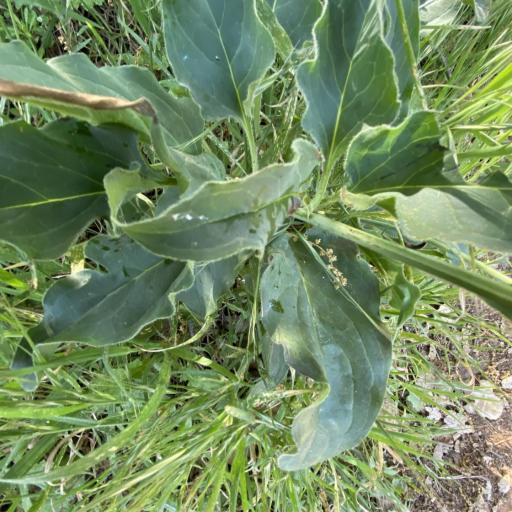
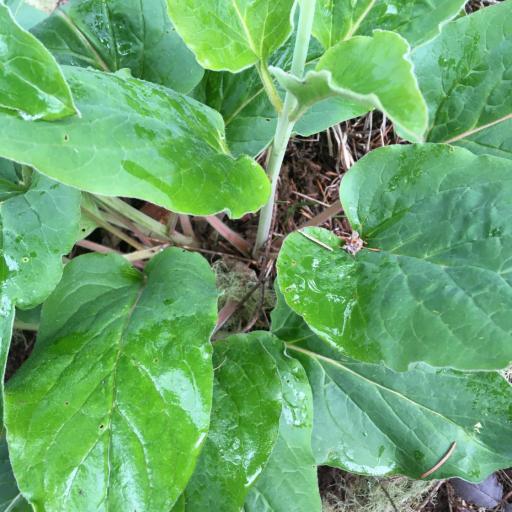
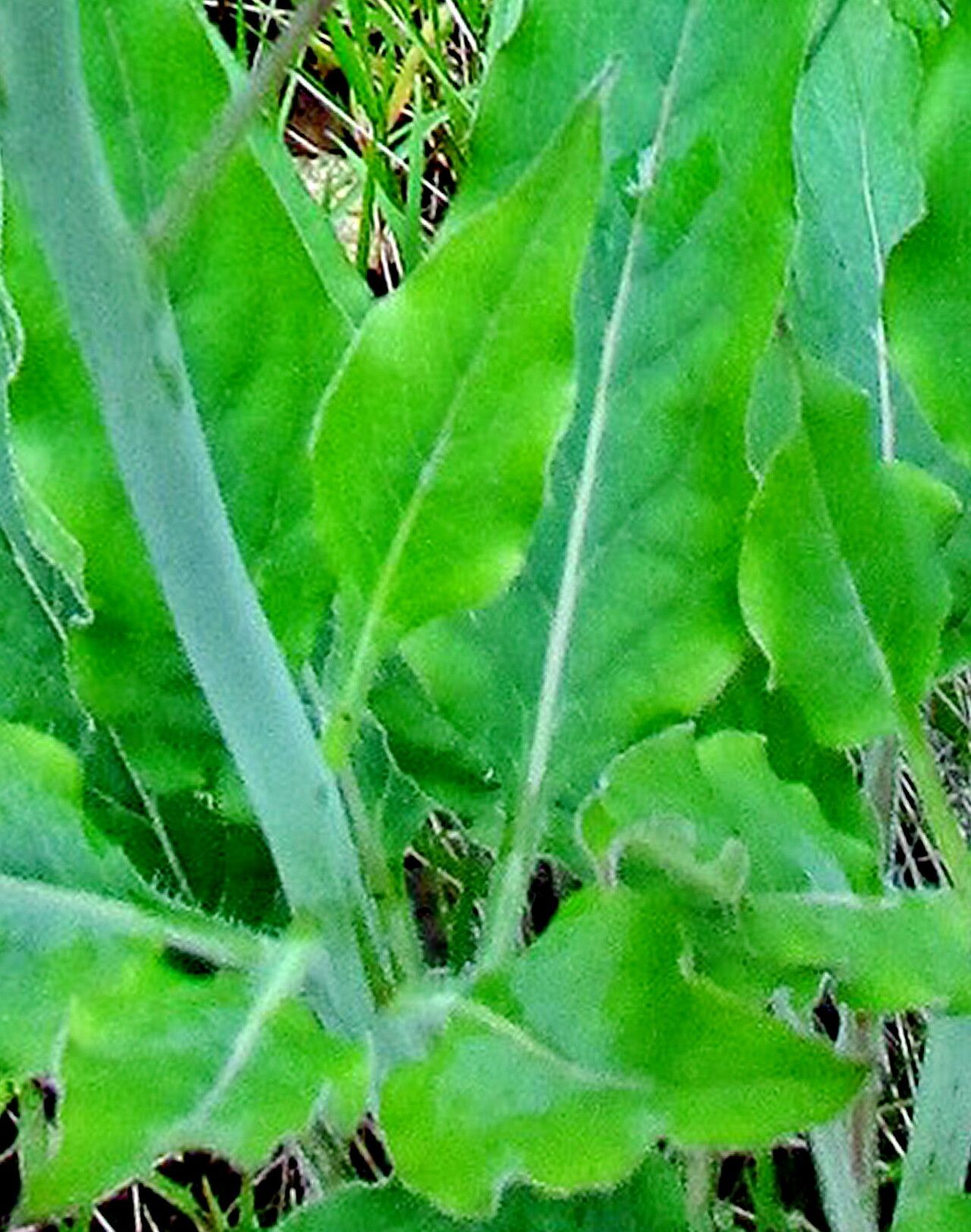
Adelinia grande, previously known as Cynoglossum grande, is a species of flowering plant in the borage family known as Pacific hound's tongue. It is the only species in the genus Adelinia. Pacific hound's tongue is native to western North America from British Columbia to California, where it grows in shady areas in woodland and chaparral. On the forest floor of California oak woodlands typical plant associates are Calochortus luteus, Delphinium variegatum and Calochortus amabilis. It is a perennial herb producing an erect stem 30 to 90 centimeters tall from a taproot. The leaves are mostly located around the base of the plant, each with an oval blade up to 15 centimeters long held on a petiole. The inflorescence is a panicle of flowers on individual pedicels. Each five-lobed flower is bright to deep blue with white appendages at the center. It is 1 to 1.5 centimeters wide. The fruit is an array of four slightly bristly nutlets.
Great Hound's Tongue has good disease resistance and is generally unlikely to suffer from illnesses. However, it can be vulnerable to pests and diseases present in its environment. These problems are typically not serious. Regarding care, this plant requires moderate maintenance. It should be pruned regularly to maintain its appearance and healthy growth. Fertilizing can also help encourage flowering. Great Hound's Tongue is suitable for anyone with an outdoor area, such as a garden or patio, and does not demand extensive care experience. It may need more attention when grown indoors.
How to keep Adelinia Grande.
Light
Great Hound's Tongue is native to habitats like forest understories or rocky sites, where it grows in natural shade. It prefers partial sun but can tolerate full sun or full shade, showing that it is adaptable and hardy.
Water
Great Hound's Tongue thrives in moderate climates and prefers consistent moisture levels. To maintain optimal health, it should be watered weekly, ensuring the soil does not become waterlogged. As an outdoor plant, its growth cycles are influenced by water availability, making efficient irrigation essential during the active growing season.
Temperature
Great Hound's Tongue is native to temperate regions and prefers a temperature range of 41 to 77 °F (5 to 25 ℃). Seasonal adjustments may be necessary to keep this temperature range and ensure healthy growth.
Fertilizer
Typically, a single fertilizer application in spring suffices for Great Hound's Tongue, though multiple feedings can boost growth to its fullest. Feed at intervals of roughly one month to six weeks. Fertilization improves leaf appearance and function, helping preserve consistent color and a healthy texture. It also promotes root development and nutrient uptake, supporting long-term plant health.
Pruning
Prune great Hound's Tongue between early and late spring, before new growth begins. Remove any dead stems and thin out dense areas to improve airflow. Pruning helps shape the plant and encourages bushier growth. Be sure to use clean tools to prevent disease, which enhances the plant's appearance and promotes its health.
Pot & Repot
When repotting Great Hound's Tongue, choose a pot 1–2 inches (2.5–5.1 cm) larger with ample drainage. Use a well-draining potting mix. Repot in spring or fall, making sure the root ball sits slightly lower than the rim of the flower pot. Water thoroughly after repotting and place it in a warm location with indirect sunlight.
Botanical profile.
- Plant Type
- Herb
- Life Cycle
- Perennial
- Genus
- Adelinia
- Family
- Boraginaceae
- Hardiness Zone
- 5
- Mature Height
- 61 cm to 91 cm
- Mature Spread
- 30 cm to 46 cm
- Leaf Color
- Green, Dark Green
- Leaf Type
- Deciduous
- Flower Color
- Blue
- Flower Size
- 1.02 cm to 1.52 cm
- Bloom Time
- Mid spring, Late spring
- Planting Time
- Spring, Summer, Autumn
- Harvest Time
- Early summer, Mid summer
Other names.