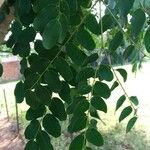
Adenanthera pavonina
Coralwood · Red sandalwood-tree · Sandal beadtree · Sandalwood-tree · Zumbictree
Description
Source: leafsnapAdenanthera pavonina, commonly known as the Red Sandalwood or Coralwood tree, is a tropical species native to Southeast Asia and the Indian subcontinent. This fast-growing deciduous tree can reach heights of up to 30 meters and features a broad crown with spreading branches. Its leaves are pinnate, each with 6-9 pairs of oblong leaflets. One of the most distinctive features of Adenanthera pavonina is its bright red seeds, which are contained in pods that resemble peapods. These seeds have been used for various purposes, including jewelry making, traditional medicine, and even as weights for measuring gold. The wood of Adenanthera pavonina is highly prized for its durability and resistance to termites. It has been widely used in furniture making, construction, and musical instrument crafting. This tree also possesses several medicinal properties. Its topical application can have anti-inflammatory effects on the skin, while oral consumption may offer anti-diabetic benefits. In summary, Adenanthera pavonina is an important plant species with a wide range of uses, from its cultural significance to its medicinal properties.
Care Guide
💧 Water Every 7 days
The red bead tree thrives in tropical environments, where it adapts well to both periods of heavy rainfall and dry spells. While it prefers consistent moisture, it can tolerate some drought. An ideal watering schedule would be every two weeks. As an outdoor plant, its growth is particularly influenced by the rainy season, which encourages lush foliage.
How should I water my Red Bead tree?
Your Red bead tree is not particular about how you water it, so you can use any common watering tool, such as watering cans, hoses, or cups. Regardless of the tool you choose, it's important to apply the water directly to the soil and ensure that all areas of the soil are evenly moistened to provide sufficient water to the entire root system. Using filtered water is recommended to avoid harmful particles found in tap water, and using water at or slightly above room temperature is beneficial as extremely cold or hot water can be shocking to the Red bead tree. However, the tree generally responds well to any type of water.
What do I do if I give my Red Bead tree too much or too little water?
Outdoor plants, especially newly planted ones or plant seedlings, are prone to lack of watering. To ensure proper growth, it is important to continue watering them regularly for a few months after planting. Once the roots are established, the Red bead tree can rely on rain most of the time. However, when the tree is planted in pots, overwatering becomes a common issue. In case you accidentally overwater your Red bead tree, it is crucial to address the situation immediately. Stop watering the plant to minimize the impact of overwatering. Then, take the tree out of its pot to check for root rot. If no roots are affected, you can return the plant to its container. But if root rot is present, cut away the affected roots and consider using a fungicide to prevent further damage. Finally, repot the Red bead tree in well-draining soil. On the other hand, underwatering can be resolved by simply increasing the plant's watering frequency. Look out for drooping, drying, and falling leaves - if noticed, adjust the watering schedule promptly.
How often should I give water to my Red bead tree?
Most outdoor plants can grow normally with rain, but if your area lacks rainfall, you need to water them adequately. During spring and fall, water your plants every 2 weeks. In summer, they will need more frequent watering. In winter, water sparingly as plants grow slower and require less water. Sometimes, during winter, you may not need to water them at all. If your Red bead tree is young or newly planted, water it more often to help it establish and grow into a drought-tolerant plant. For potted plants, there are two main ways to determine watering frequency for your Red bead tree. The first is to follow a predetermined schedule, watering once a week or every other week. However, this may not take into account the specific conditions of your growing environment. Watering frequency can also change with the season. During summer, when water needs are highest, a predetermined schedule may not be enough. An alternative is to base watering frequency on soil moisture. Wait until the top two to four inches of soil have dried out completely before watering again, typically ⅓ to ½ depth of the pots.
How much water does my Red bead tree require?
To water your Red bead tree effectively, you don't always need a lot of water. If only a few inches of soil have dried since your last watering, giving it about five to ten ounces of water should support healthy growth. You can also determine the water volume based on the soil moisture. Just take note of how many inches of soil have dried out between waterings. To ensure your Red bead tree gets enough moisture, water it so that all the dry soil layers from the last watering are moistened. If over half of the soil has dried out, it may be necessary to give more water than usual. In such cases, keep watering until you see excess water draining from the pot's drainage holes. If your Red bead tree is planted in an area with plenty of rain, it may not require additional watering. However, when the tree is young or establishing itself, make sure it receives 1-2 inches of rain per week. As it grows and becomes established, it can survive on rainwater alone. Only during hot weather with no rainfall for 2-3 weeks should you give a full watering to prevent the tree from experiencing stress.
How can I know if I'm giving enough water to my Red bead tree?
Overwatering is a common issue for the Red bead tree, and there are clear signs to watch for. If the tree is overwatered, its leaves will turn yellow and possibly fall off. Moreover, overwatering can make the plant structure shrink and lead to root rot. Conversely, an underwatered Red bead tree will also exhibit wilting and may have brown or brittle leaves. Regardless of whether you spot signs of overwatering or underwatering, it is crucial to take action and revive the health of your Red bead tree.
☀️ Light Full sun
The red bead tree does best when placed in full sun, mirroring the conditions of its native habitat. The plant thrives when provided with plentiful sunlight — a crucial requirement for strong growth. Both too much sun and too little can cause poor growth and a general decline in the red bead tree's health.
What are the sunlight requirements for a Red Bead Tree?
The Red Bead Tree (Adenanthera pavonina) requires full sun exposure of above 6 hours of sunlight daily to thrive. It is essential to watch how sunlight moves through your garden to choose spots that provide a balance of light and shade, ensuring the plant's well-being. The Red Bead Tree prosperously grows in conditions that mimic its native habitat, benefiting significantly from ample solar light. This is a crucial factor for its vigorous development. Overexposure or insufficient sun can lead to poor growth and a decline in overall health.
Can artificial lighting be used for Red Bead Trees grown indoors?
Yes, artificial lighting can be used for Red Bead Trees grown indoors, especially when natural sunlight is insufficient, like in winter or less sunny spaces. Adequate lighting is vital for optimal growth, with LED lights being a popular choice due to their customization to provide specific wavelengths of light needed by the plant. Full sun plants require 30-50W/sq ft, partial sun plants 20-30W/sq ft, and full shade plants 10-20W/sq ft of artificial light. The light source should be placed 12-36 inches above the plant to mimic natural sunlight, and most plants will need 8-12 hours of light per day.
What are the symptoms of insufficient light in Red Bead Trees?
Symptoms of insufficient light in Red Bead Trees include smaller new leaves compared to mature ones, leggy or sparse growth with longer spaces between leaves or stems, faster leaf drop to conserve resources, delayed or halted growth as the plant enters survival mode, paler new leaves indicating a lack of chlorophyll, and chlorosis, where leaves lose their green color. Excessive sunlight can cause sunscald, leaf curling as a defense mechanism, wilting from increased water loss, and leaf scorching with brown, dry patches on leaves due to excessive sunlight exposure.
How can you improve sunlight exposure for Red Bead Trees?
To improve sunlight exposure for Red Bead Trees, gradually move them to a sunnier location each week until they receive at least 6 hours of direct sunlight daily. For indoor plants that are large or not easily movable, artificial light can be used. Keep a desk or ceiling lamp on for at least 8 hours daily or invest in professional plant grow lights. For outdoor plants, avoid sudden changes in light intensity to prevent sunburn. Minimize obstructions like trees by pruning them. For smaller plants, consider transplanting them during their dormant period to a location with better sunlight and drainage. Note that parts of the plant affected by insufficient sunlight may not recover, but new growth will be healthy after increasing light exposure.
🌡️ Temperature 20–37.8°C
The red bead tree flourishes in its native range, needing temperatures from 68 to 100 °F (20 to 38 °C). It is recommended to provide warmer conditions during active growing periods. Temperature adjustments may be necessary to accommodate seasonal shifts.
What are the ideal growing conditions for the Red bead tree?
The Red bead tree, or Adenanthera pavonina, flourishes best in its native habitat with temperatures ranging from 68 to 100°F (20 to 38°C), particularly during the growing seasons. It is crucial to adjust care based on seasonal temperature fluctuations to ensure optimal growth. The Red bead tree is notably heat-loving, and exposure to cold temperatures can be harmful. During autumn, it is advisable to bring outdoor-grown Red bead trees indoors, placing them near a bright window, yet away from direct heat sources to avoid damage. Maintaining indoor temperatures above 20°C in winter supports the plant’s health, while conditions nearing 5°C can be harmful.
How does low temperature affect the Red bead tree and what are the remedies?
The Red bead tree shows a preference for warm conditions, thriving optimally when temperatures are maintained above 20°C and should not drop below 5°C during winter. Exposure to temperatures below 1°C can lead to leaf discoloration, with leaves turning lighter and eventually brown or black as a result of frost damage, accompanied by wilting and drooping. To mitigate these effects, it's advisable to trim off the frost-damaged parts and relocate the plant to a warmer indoor setting. Positioning the plant near a south-facing window ensures it receives ample sunlight, but keep it away from heaters or air conditioning vents to avoid air dryness.
What should be done if the Red bead tree is exposed to high temperatures?
During the summer, it's essential to ensure that the Red bead tree is not subjected to temperatures exceeding 38°C. Exposure to temperatures above 43°C can cause the leaves to lighten in color and increase the risk of sunburn. To address these issues, trim away the sunburned and dried parts of the plant. Relocate the plant to an area where it is protected from the intense midday and afternoon sun. Watering the plant in the morning and evening helps keep the soil adequately moist and supports healthy growth despite the heat.
💨 Humidity
🪴 Soil 6-7
🌱 Fertilizer
The best time to fertilize a Red bead tree is in early spring as it comes out of dormancy. This supports overall growth and flower development. Fertilization improves foliage, stems, and branches, and encourages large, vibrant, long-lasting flowers. It helps transfer nutrients from the roots to the flowers and boosts the plant’s health and resistance to disease.
Why do I have to put fertilizer on my Red bead tree?
Fertilization is crucial for the overall health and well-being of a Red bead tree. When provided with the proper energy and nutrients, the tree will develop healthy foliage and strong stems and branches. One of the most valuable aspects of the Red bead tree are its flowers, which can be enhanced through fertilization. By using the right fertilizer, the tree is able to efficiently transfer fuel from its roots to its flowers, resulting in larger, vibrant, and long-lasting blooms. Proper fertilization also improves the tree's overall health, making it more resilient against diseases.
When should I fertilize my Red bead tree?
The best time to fertilize a Red bead tree is in early spring when it is coming out of its dormant phase and getting ready to blossom. This will give the tree the energy it needs for growth and flower development. However, it is also beneficial to give the tree another round of fertilizer in the fall, although this feeding doesn't need to be as substantial. Some gardeners also choose to fertilize when planting the tree, but it is not always necessary.
When should I not add fertilizer to my Red bead tree?
During the winter, the Red bead tree enters a dormant phase where it doesn't require much energy from the soil for new growth. Therefore, fertilizing it during this time can lead to negative consequences of overfertilization. The main feeding times for the Red bead tree are in early spring and fall, so it doesn't need fertilizer for most of the spring and summer. It's also advisable to hold off on fertilizing if the plant is experiencing extremely hot or dry conditions.
What kind of fertilizer does my Red bead tree need?
Using a general-purpose fertilizer with equal amounts of nitrogen, phosphorus, and potassium is generally acceptable, but Red bead tree plants tend to thrive with a specific type of fertilizer. In this case, nitrogen and phosphorus are the most important nutrients, so the fertilizer should contain higher levels of these nutrients compared to potassium. A fertilizer with an N-P-K ratio of 10-10-8 or similar should be effective. Additionally, applying organic material like compost at least once a year can be beneficial. When choosing a fertilizer, granular fertilizer is commonly used for Red bead trees.
How can I make my Red bead tree grow better?
It's fairly simple to apply fertilizer to your Red bead tree, even if you're not an experienced gardener. To feed your tree with granular fertilizer, just sprinkle it on the soil after you've moistened it with water. Another option is to improve your tree's soil by adding organic material like compost or manure. If you choose to do this, place some of the material on top of the soil and gently work it into the first few inches using a hand rake, being careful not to disturb the roots.
🪴 Pot & Repot
✂️ Pruning
Prune the red bead tree from early to late winter. During this dormant season, focus on removing dead branches, thinning crowded areas, and shaping the canopy. This type of pruning minimizes stress on the tree, promotes healthy regrowth, enhances overall plant health, improves flowering and seed production, and helps maintain its attractive form.
🌿 Propagating
🐛 Diseases & pets
☠️ Toxicity
Characteristics
- Plant Type
- Tree
- Life Cycle
- Perennial
- Genus
- Adenanthera
- Family
- Fabaceae
- Hardiness Zone
- 10-12
- Mature Height
- 4.88 m to 20.12 m
- Mature Spread
- 10.06 m
- Leaf Color
- Green
- Leaf Type
- Evergreen
- Flower Color
- Yellow, White
- Flower Size
- 2.54 cm
- Bloom Time
- Late spring, Summer
- Planting Time
- Spring, Summer, Autumn
- Harvest Time
- Late summer, Fall
- Native Area
- Sri Lanka, Solomon Islands, India, Malaysia, Indonesia, Cambodia, Vietnam, Myanmar, Papua New Guinea, Bangladesh, Laos, Brunei, Thailand, China