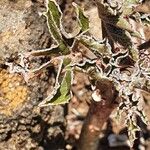
Adenia volkensii
Kiliambiti
Description
Source: leafsnapAdenia volkensii is a succulent plant species belonging to the family Passifloraceae. It is native to East Africa, particularly Kenya and Tanzania. The plant is notable for its distinctive appearance, featuring a thick, swollen stem that can grow up to 2 meters in height and 1 meter in diameter. The stem is covered with small spines that serve as protection against herbivores. The leaves of Adenia volkensii are simple, alternate, and deciduous. They are oval-shaped with serrated edges and can grow up to 15 centimeters long. As an adaptation mechanism, the leaves fall off during the dry season. The flowers of Adenia volkensii are small but attractive, with five petals that range in color from yellowish-green to reddish-brown, depending on their maturity. They bloom in the rainy season, from November through February. Adenia volkensii produces fruits that resemble small pumpkins or gourds, containing numerous seeds inside. These seeds are coated with oil, making them attractive to birds, which help disperse them over long distances. In traditional medicine practices throughout East Africa, Adenia volkensii has been used for various medicinal purposes, such as treating stomach ailments like diarrhea and constipation due to its high fiber content. It also contains alkaloids, such as adenosine, which have shown effectiveness in inhibiting cancer cell growth in laboratory animals. However, more research is needed to draw conclusive evidence about its effectiveness in humans. Overall, Adenia volkensii is an intriguing plant species due to its unique appearance and medicinal properties, making it an important part of African culture both traditionally and scientifically.
Care Guide
💧 Water Every 7 days
☀️ Light Partial sun
Adenia volkensii is native to habitats like forest understories and rocky sites, where it occurs in natural shade. It prefers partial sun but can tolerate both full sun and full shade, demonstrating its versatile and hardy nature.
🌡️ Temperature 20–37.8°C
Adenia volkensii comes from tropical areas where the climate is generally warm and humid. Consequently, it is well adapted to high temperatures and humidity. It does not tolerate sudden temperature changes and prefers a stable temperature, so avoiding temperature fluctuations indoors is important. It usually cannot endure cold and needs warmer temperatures to grow. If the ambient temperature falls too low, the plant may stop growing or even die.
💨 Humidity dry (<40%)
This plant prefers dry conditions, so don't mist it. However, watering it less often can also thrive in higher humidity.
🪴 Soil 6-8
🌱 Fertilizer
🪴 Pot & Repot
✂️ Pruning
🌿 Propagating
🐛 Diseases & pets
☠️ Toxicity
Characteristics
- Plant Type
- Succulent
- Life Cycle
- Perennial
- Genus
- Adenia
- Family
- Passifloraceae
- Hardiness Zone
- 10-12
- Mature Height
- 3.05 m to 4.88 m
- Mature Spread
- 2.13 m to 3.05 m
- Leaf Color
- Light Green, Medium Sea Green
- Leaf Type
- Deciduous
- Flower Size
- 2.03 cm to 3.05 cm
- Bloom Time
- Late spring, Summer
- Planting Time
- Spring, Summer
- Harvest Time
- Late summer, Fall
- Native Area
- Somalia, Kenya, Uganda, Tanzania