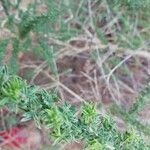
Adenocarpus foliolosus
Canary Island flatpod
Description
Source: leafsnapAdenocarpus foliolosus, known locally as codeso and commonly known as Canary Island flatpod is a shrubby species of flowering plant in the legume family Fabaceae, subfamily Faboideae, that is endemic to Canary Islands where it can be found in Tenerife, La Gomera, El Hierro, Gran Canaria and La Palma. It has yellow flowers, a narrow, oblong legume with sparse glands, compound leaves and short petioles 1–3 millimetres (0.039–0.118 in) long.
Care Guide
💧 Water
The Canary Island flatpod flourishes in dry areas and is highly tolerant of drought. For optimal growth, it needs moderate watering, ideally twice a week. It's important to adjust irrigation according to the seasonal rainfall, especially during dormancy, to prevent overwatering and ensure the plant remains healthy.
☀️ Light Full sun
Canary island flatpod is native to open habitats, such as sunny meadows and forest edges, which supply abundant light. It does best in Full Sun but can also tolerate Partial Sun, adapting well to a range of sunlight conditions.
🌡️ Temperature 20–37.8°C
Canary island flatpod is well adapted to warm conditions, able to withstand higher temperatures and wider temperature swings. In hot weather, attention should be given to watering and providing suitable shade to avoid sunburn. However, Canary island flatpod is relatively sensitive to low temperatures. Although it tolerates some chill, extremely cold conditions can cause frost damage.
💨 Humidity
🪴 Soil 6-8
🌱 Fertilizer
To encourage healthy growth, fertilize your Canary island flatpod in early spring. Regular feeding improves its overall health, producing vigorous growth, greater tolerance of harsh conditions, and better resistance to diseases and pests. Stick to a specific fertilization schedule for your Canary island flatpod to maintain vibrant, deeply colored, and lush foliage.
🪴 Pot & Repot
✂️ Pruning
For optimal growth, prune the Canary Island Flatpod in early spring. Remove any dead or diseased branches, and thin out overcrowded areas to enhance air circulation. This practice not only improves flowering but also helps maintain the plant's size and shape. Always use clean, sharp tools to prevent damage.
🌿 Propagating
🐛 Diseases & pets
☠️ Toxicity
Characteristics
- Plant Type
- Shrub
- Life Cycle
- Perennial
- Genus
- Adenocarpus
- Family
- Fabaceae
- Hardiness Zone
- 9-11
- Mature Height
- 0.91 m to 3.05 m
- Mature Spread
- 0.91 m to 2.13 m
- Leaf Color
- Dark Green
- Leaf Type
- Deciduous
- Flower Color
- Yellow
- Flower Size
- 1.02 cm to 1.52 cm
- Bloom Time
- Mid spring, Late spring, Early summer
- Planting Time
- Spring, Summer, Autumn
- Harvest Time
- Mid summer, Late summer, Early fall