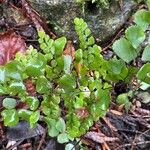
Adiantum capillus-veneris
پر سیاوشان · Maidenhair fern · Venus's hair fern · Venus's maidenhair · Southern maidenhair
Description
Source: leafsnapAdiantum capillus-veneris, also known as the Southern Maidenhair Fern, is a delicate and graceful fern species belonging to the Pteridaceae family. It is native to various regions across the globe, including Europe, Asia, Africa, and North America. This plant is easily recognizable by its thin black stems that support delicate fronds of bright green, fan-shaped leaves with a lacy appearance due to their finely divided segments. The Southern Maidenhair Fern thrives in moist soil with good drainage and prefers partial shade or filtered sunlight. It can grow up to 30 cm in height, although it typically remains smaller when cultivated indoors or as a houseplant. Historically, this fern species has been used for medicinal purposes. Its anti-inflammatory properties can help alleviate respiratory issues such as coughs and bronchitis when brewed into tea or tincture form. In summary, Adiantum capillus-veneris is not only an attractive plant that enhances the beauty of any space, whether indoors or outdoors, but it also offers health benefits. This makes it an excellent choice for both home decoration and landscaping projects.
🎭 Refined, feminine
Care Guide
💧 Water Every 3 days
The Southern maidenhair fern thrives in humid environments and needs consistent moisture, so it should be watered twice a week. Typically grown indoors, this fern flourishes in high humidity, making it ideal for terrariums or well-lit bathrooms.
What should I do if I give my Southern maidenhair fern too much or too little water?
The Southern maidenhair fern can be overwatered if it is left sitting in a pool of water or if the planter does not have drainage holes. This prevents the roots from getting nutrients and moisture and can lead to fungal or bacterial diseases. Signs of overwatering include wilted and yellow leaves, drooping and falling stems, and soft and mushy texture. However, it's important to check for other causes since it's difficult to give this plant too much water. On the other hand, the Southern maidenhair fern can also become underwatered if not monitored closely, especially if not using a self-watering planter. In dry conditions, the fern can quickly turn from lush and green to brown and crispy. In severe cases, it may appear completely dry with no living fronds. However, if some of the roots are still healthy, the plant can be saved. Cut off any dry and dead stems, water thoroughly, and return the plant to its original location. With proper care, the fern can be surprisingly resilient and start growing new fronds. It may take a few months to fully regrow, but it is possible with proper care during that time.
How do I water my Southern maidenhair fern correctly?
To keep your Southern maidenhair fern healthy, it's important to maintain consistently moist soil. This can be achieved by watering it every one or two days. Make sure to never let the plant dry out, so as soon as the top layer of soil starts to feel slightly dry, it's time to water again. When watering, fully saturate the soil until water drains out from the bottom of the pot. Afterward, be sure to discard any excess water to prevent the plant from sitting in a puddle. Following this method will help ensure that the soil never becomes too dry.
What things should I think about when watering my Southern maidenhair fern?
The frequency of watering for your Southern maidenhair fern depends on the humidity levels in the air. Higher humidity means less watering needed as evaporation is slower. To prevent the fern from drying out quickly, avoid placing it near heating or cooling vents. It prefers dappled and indirect sunlight with temperatures between 55-80 degrees F (13-27 degrees C). Direct sunlight or a warm windowsill can lead to dehydration. Rainwater or distilled water is ideal, although tap water typically works fine. Tap water may contain minerals and chemicals that can cause brown leaf tips due to the fern's delicate leaves. Using small pots can cause issues as they dry out quickly due to their limited capacity. It is best to give the fern more space in a larger pot. A self-watering planter is recommended for the fern as it uses a wicking system to keep the soil consistently moist from a central reservoir. This ensures a constant supply of water for the roots, avoiding fluctuations between dry and wet conditions.
☀️ Light Full shade
The southern maidenhair fern grows best with moderate sunlight, such as locations that get sun in the morning or late afternoon. It can also tolerate areas with lower light, for example under tree canopies. Both extremes of light — too little or too much — can potentially impede its growth or health.
What are the sunlight requirements for Southern maidenhair fern?
The Southern maidenhair fern requires moderate sun exposure, thriving in areas that receive morning or late afternoon sun. It can also grow in less radiant light conditions, such as under tree canopies. The fern prefers partial sun, which is about 3-6 hours of sunlight, or full shade, receiving less than 3 hours of sunlight. It's crucial to watch how sunlight moves through your garden to ensure the spots you choose provide a balance of light and shade for the plants, ensuring their growth and health.
How do I use artificial lighting for my Southern maidenhair fern?
When natural sunlight is insufficient for your Southern maidenhair fern, artificial lighting can be an essential alternative. Choose the right type of artificial light, such as LED lights, which can be customized to provide the specific wavelengths of light your plants need. For full sun plants, you'll need 30-50W per square foot of artificial light, partial sun plants require 20-30W per square foot, and full shade plants need 10-20W per square foot. Position the light source 12-36 inches above the plant to mimic natural sunlight and determine the duration to mimic natural daylight hours, usually 8-12 hours per day.
What are some symptoms of incorrect light exposure in Southern maidenhair fern?
Symptoms of incorrect light exposure in Southern maidenhair fern include slower or no new growth, indicating the plant is in survival mode due to poor light conditions. Chlorosis, where leaves lose their green color and turn yellow due to excessive sunlight, affecting the plant's ability to photosynthesize. Sunscald, resulting in damage to leaves or stems from intense sunlight. Leaf curling as a defense mechanism to reduce surface area exposed to sunlight. Wilting from excessive sunlight increasing water loss. And leaf scorching, characterized by brown, dry edges on leaves due to too much sunlight.
What solutions can I apply to manage sunlight exposure for my Southern maidenhair fern?
To manage the sunlight exposure for Southern maidenhair fern, you can optimize plant growth by gradually shifting them to sunnier spots each week until they receive 3-6 hours of direct sunlight daily. If the plant is too large or not easily movable, consider using artificial light, keeping a desk or ceiling lamp on for at least 8 hours daily, or invest in professional plant grow lights. Outdoors, gradually move your plants to sunnier locations each week, avoiding sudden changes. If dealing with ground plants, reduce obstructions by pruning trees or transplant smaller plants during their dormant period to a location with ample sunlight and good drainage. Remember, parts of the plant damaged by insufficient sunlight may not recover, but new growth will be healthy with the correct light exposure.
🌡️ Temperature 15–35°C
The southern maidenhair fern grows naturally across a variety of temperatures but prefers 59 to 95℉ (15 to 35℃). In hot summers, provide partial shade or mist the foliage to prevent it from drying out. In cold winters, move the plant indoors or cover it to protect it from frost.
What temperature conditions are ideal for Southern maidenhair fern?
The Southern maidenhair fern thrives in a variety of temperature conditions, preferring a range of 59 to 95°F (15 to 35°C). To accommodate hot summer conditions, it's advisable to provide partial shade or mist the foliage to prevent dehydration. During cool winters, you should move the plant indoors or cover it to protect from frost damage. The fern has some cold tolerance, generally not requiring additional measures when temperatures are above -5°C. However, if temperatures are expected to drop below -5°C, temporary protective measures such as wrapping the plant with plastic film, fabric, or other materials need to be taken. Once temperatures rise again, these protections should be promptly removed.
How does the Southern maidenhair fern respond to low temperatures?
The Southern maidenhair fern has a moderate tolerance to low temperatures, thriving best when the temperature is above 15°C. During winter, it's crucial to keep it above -5°C. When the temperature falls below -10°C, the leaves may start to droop, indicating mild stress. In such cases, they can recover, but if the condition is severe, the leaves will wilt and eventually fall off. To protect the plant from low temperature damage, frost-damaged parts should be trimmed off. Before encountering low temperatures again, wrap the plant with non-woven fabric or cloth, and construct a wind barrier to shield it from cold winds.
What should I do if my Southern maidenhair fern experiences high temperatures?
During the summer, it's essential to keep the Southern maidenhair fern below 35°C. Exposure to temperatures exceeding 41°C can cause the color of the leaves to lighten, the leaf tips to dry and wither, leaves to curl, and the plant becomes more susceptible to sunburn. In such cases, trim away the sunburned and dried-up parts of the plant. To mitigate further damage, move the plant to a shaded location away from the midday and afternoon sun or use a shade cloth. Additionally, water the plant in the morning and evening to ensure the soil remains moist and to help cool the plant.
💨 Humidity high (>60%)
This plant needs special care because it loves high humidity levels of 60-80% or more. The best way to achieve this is by placing a humidifier near the plant. Daily misting is also essential! Make sure the room has good ventilation.
🪴 Soil 5-7
🌱 Fertilizer
The Southern maidenhair fern benefits from quarterly applications of high-nitrogen fertilizer at half strength. Be sure to apply the fertilizer to moistened soil to prevent root burn. It's important to avoid fertilizing during the winter months when the plant is dormant. By adjusting the fertilization schedule to coincide with the fern's active growth periods in spring and summer, you can improve the density and vibrancy of its foliage, which is a sign of good plant health.
Why should I put plant food on my Southern maidenhair fern?
The reason why you need to fertilize Southern maidenhair fern is straightforward. By providing extra nutrients, you enable your plant to produce healthy new growth. These additional nutrients also bolster the health of existing growth and aid in the plant's defense against diseases and pests.
When should I fertilize my Southern maidenhair fern for the best results?
The feeding schedule for Southern maidenhair fern depends on its location. While it is not very demanding, the plant does need some extra nutrients. Outdoor plants should be fertilized once in the spring, while indoor specimens should be fed monthly starting in the spring and continuing through the summer.
When shouldn't I put fertilizer on my Southern maidenhair fern?
To avoid excessive growth before winter, it is advisable not to fertilize after early autumn. Additionally, refrain from fertilizing the Southern maidenhair fern during hot and dry conditions, as fertilizer may not be as effective in dry soil and it may encourage growth that requires more water. It is recommended to apply fertilizer during cooler temperatures earlier in the season. Lastly, be careful not to inadvertently give the fern a double-dose of fertilizer, as it can absorb fertilizer from nearby plants or lawns.
What kind of fertilizer does my Southern maidenhair fern need?
When choosing a fertilizer for Southern maidenhair fern, it's important to consider both the location of the plant (indoors or outdoors) and the options available. Outdoor plants will benefit from mulch or compost, while indoor plants should ideally be fertilized with a 3-1-2 N-P-K ratio fertilizer. However, a general-purpose fertilizer with a balanced blend of nutrients can also be effective in some situations. Just remember that, regardless of the fertilizer chosen, the ratio number representing the volume of each nutrient should be 3 or lower.
How can I add nutrients to my Southern maidenhair fern?
Fertilizing Southern maidenhair fern is a breeze, but the method will vary depending on the plant's location. If it's an outdoor garden plant, the best practice is to add a layer of mulch or compost to the soil, ensuring that it surrounds the plant's base. On the other hand, indoor plants tend to flourish when a diluted liquid fertilizer is applied before watering. This should be done monthly during the spring and summer seasons.
🪴 Pot & Repot 2-3 years
When repotting Southern maidenhair fern, select a pot 1-2 inches (2.5–5.1 cm) larger with plenty of drainage. Use a well-draining potting mix. Repot in spring or fall, making sure the root ball sits slightly lower than the rim of the flower pot. Water thoroughly after repotting and place in a warm area with indirect sunlight.
✂️ Pruning
The Southern maidenhair fern is an elegant plant that flourishes in shaded and humid conditions. To promote healthy new growth and prevent disease, regularly prune away any dead fronds. Use clean scissors to trim them close to the base. Keep an eye on the fern for any signs of stress and adjust your care routine accordingly.
🌿 Propagating
🐛 Diseases & pets
☠️ Toxicity
Characteristics
- Plant Type
- Fern
- Life Cycle
- Perennial
- Genus
- Adiantum
- Family
- Pteridaceae
- Hardiness Zone
- 8-10
- Mature Height
- 15 cm to 30 cm
- Mature Spread
- 30 cm to 46 cm
- Leaf Color
- Green, Yellow, Gold
- Leaf Type
- Deciduous
- Planting Time
- Spring, Summer, Autumn
- Harvest Time
- Summer
- Native Area
- Sri Lanka, Libya, Belize, India, Turkey, United Arab Emirates, Mexico, Guatemala, Slovakia, Madagascar, Montenegro, Pakistan, Thailand, Nigeria, Slovenia, Croatia, Morocco, Uganda, Tanzania, Mozambique, Ethiopia, Portugal, Saudi Arabia, Malawi, Tunisia, Honduras, Peru, Philippines, Bulgaria, Bangladesh, Laos, Cyprus, Chad, China, Lebanon, Afghanistan, Syria, Kyrgyzstan, Kazakhstan, Italy, Japan, Eswatini, Iran, Azerbaijan, Congo (DRC), Djibouti, Somalia, Egypt, Angola, Lesotho, Malaysia, Namibia, Rwanda, Yemen, Kenya, Niger, Jamaica, Zimbabwe, Uzbekistan, Russia, Mali, Iraq, Cuba, Cambodia, Venezuela, Brazil, Oman, South Korea, Botswana, France, Nepal, Congo, Tajikistan, South Africa, Sudan, Mauritania, Armenia, Zambia, Greece, Bahamas, Spain, Switzerland, Vietnam, Bhutan, Albania, Ireland, United Kingdom, Algeria, Turkmenistan