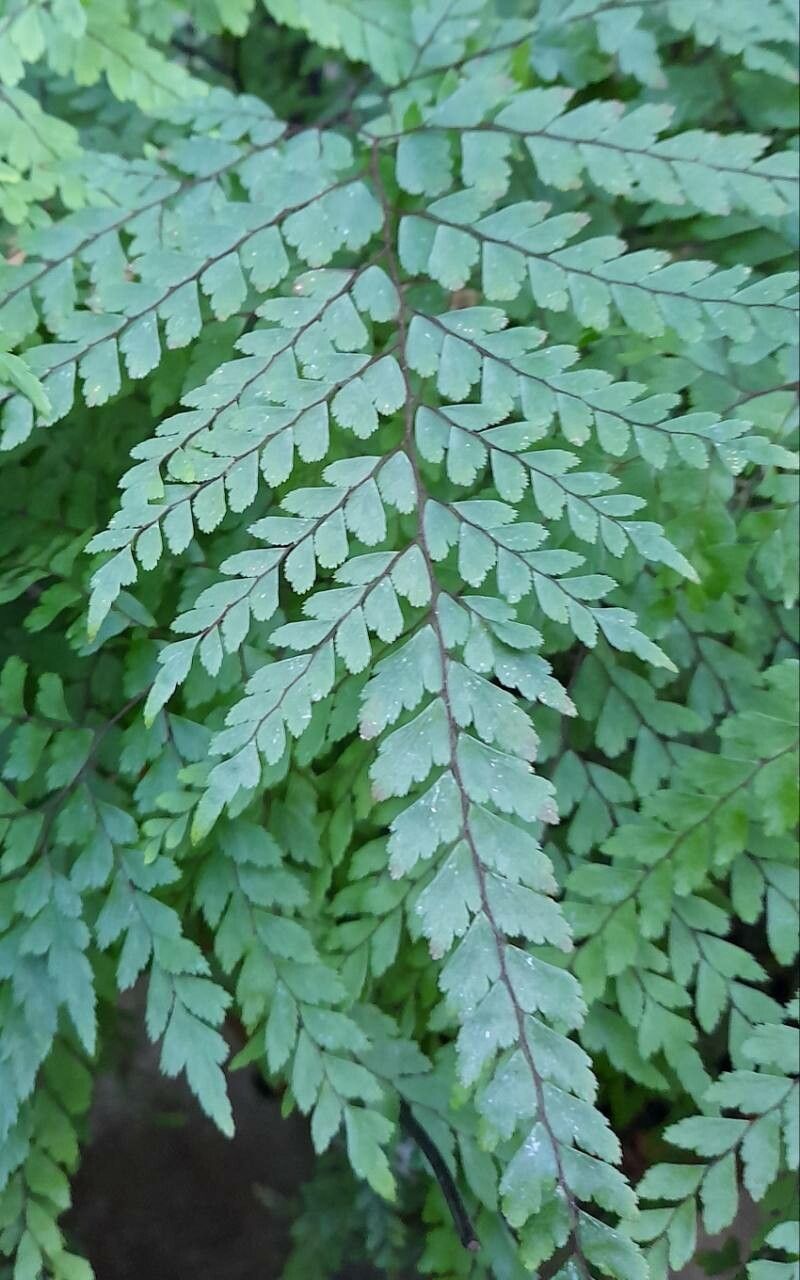
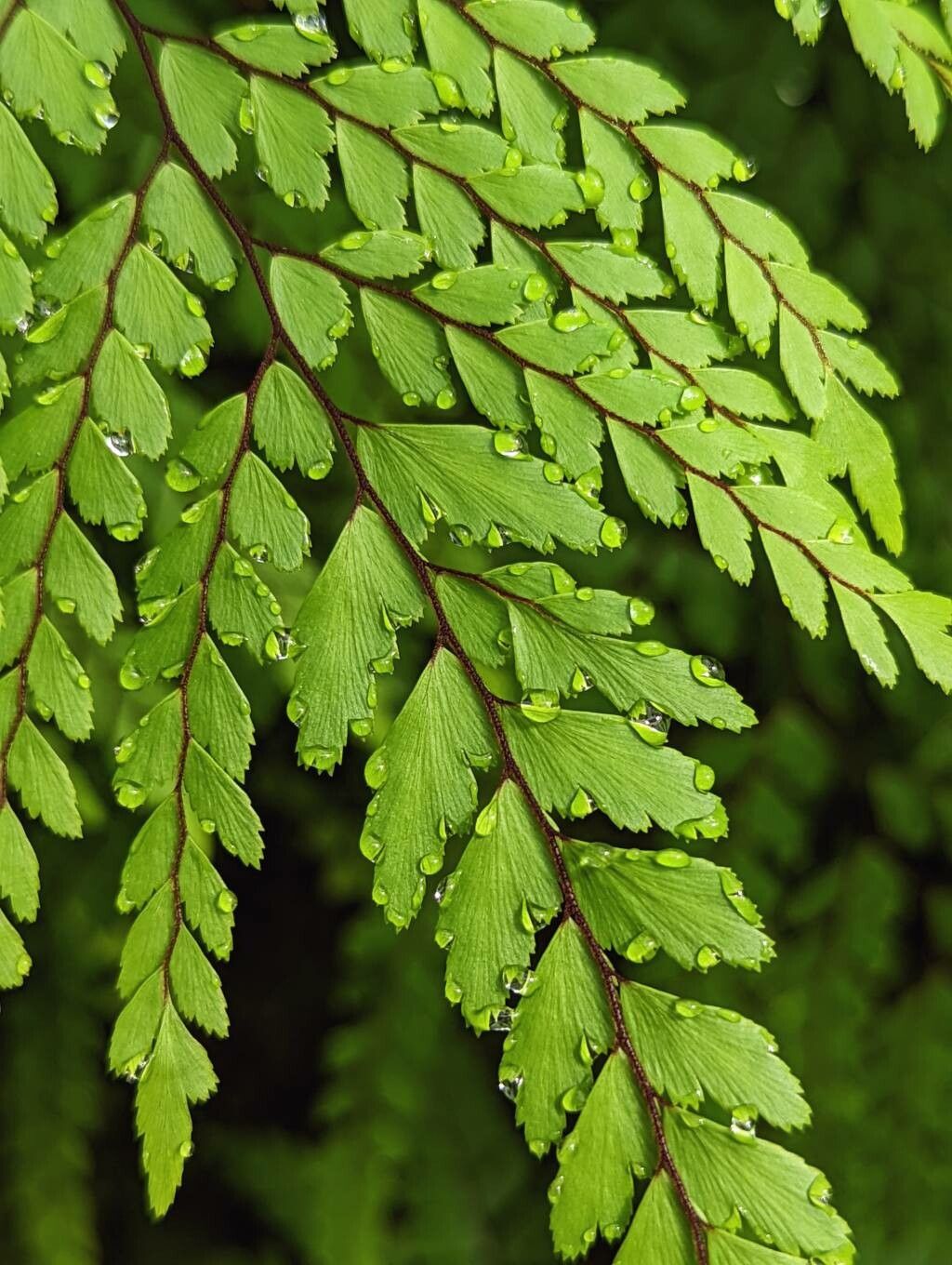
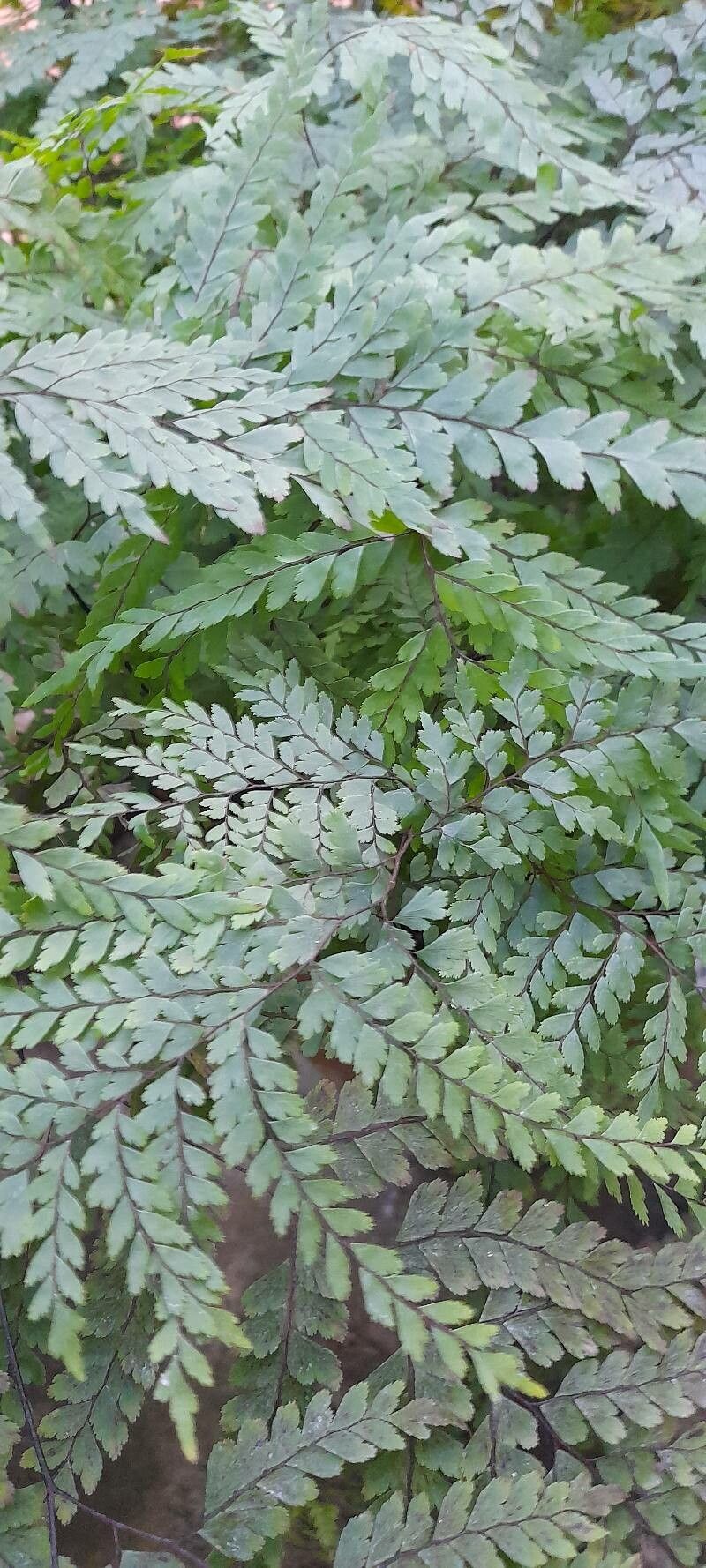
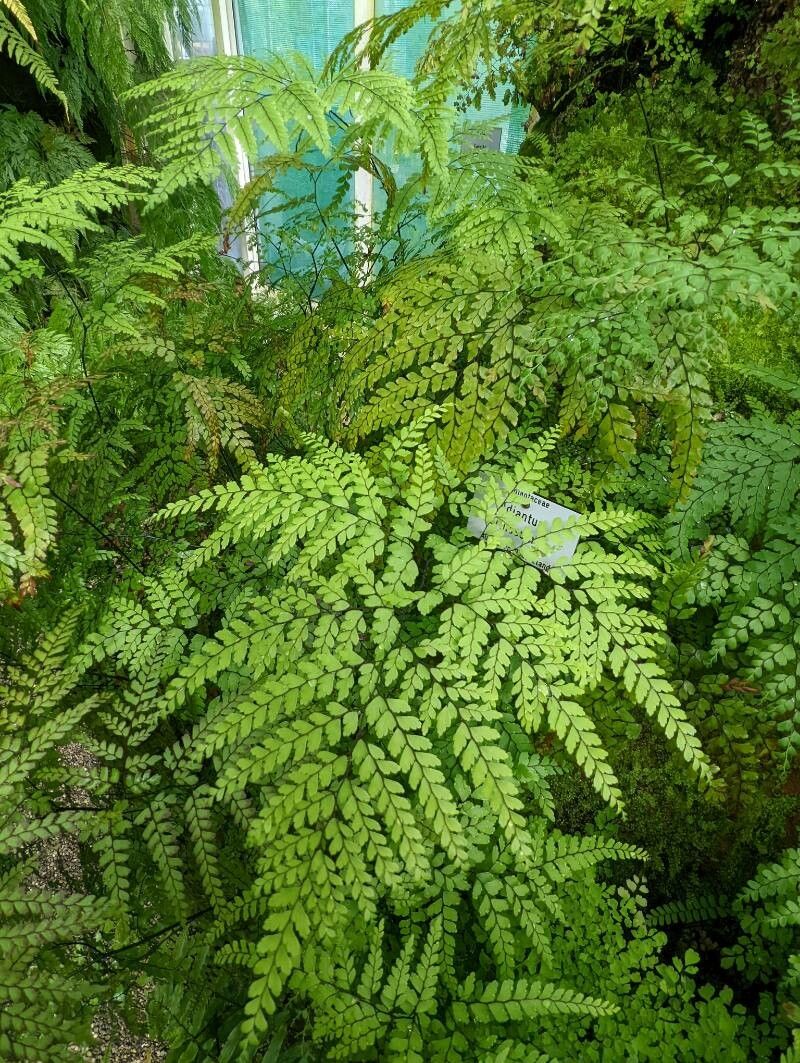
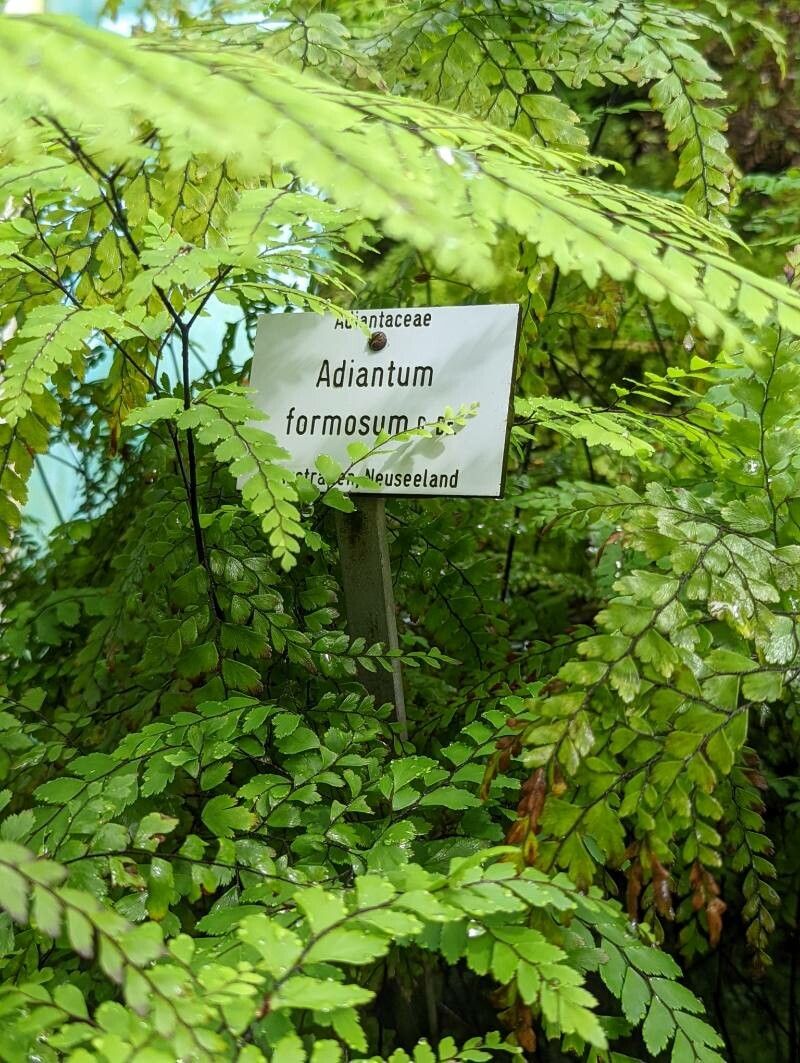
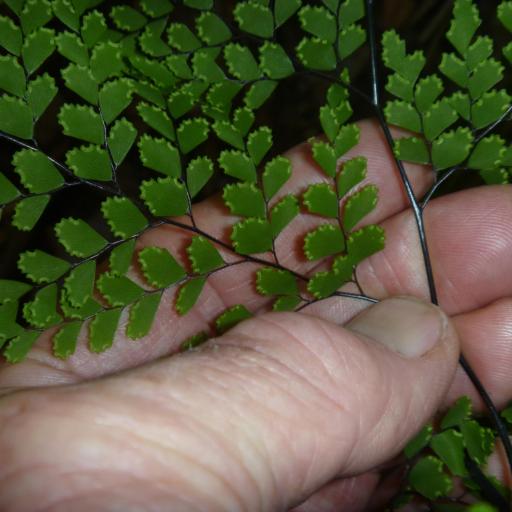
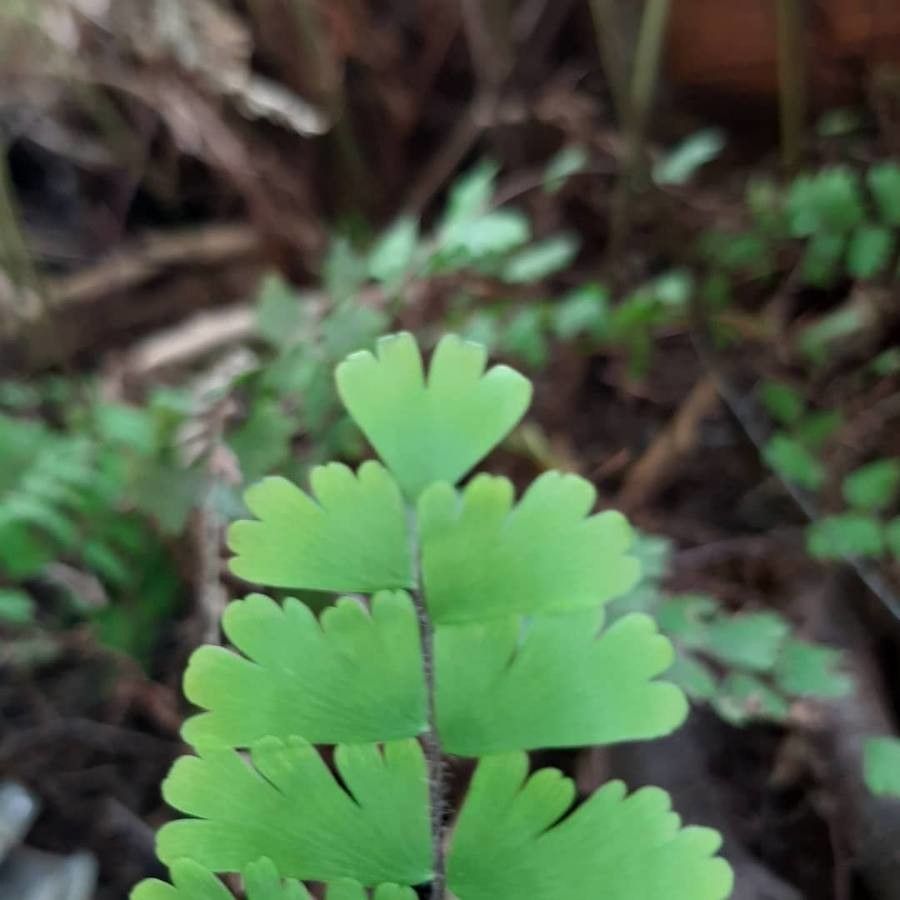
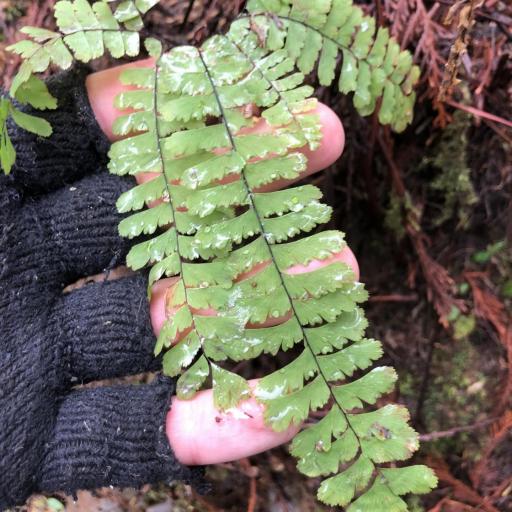
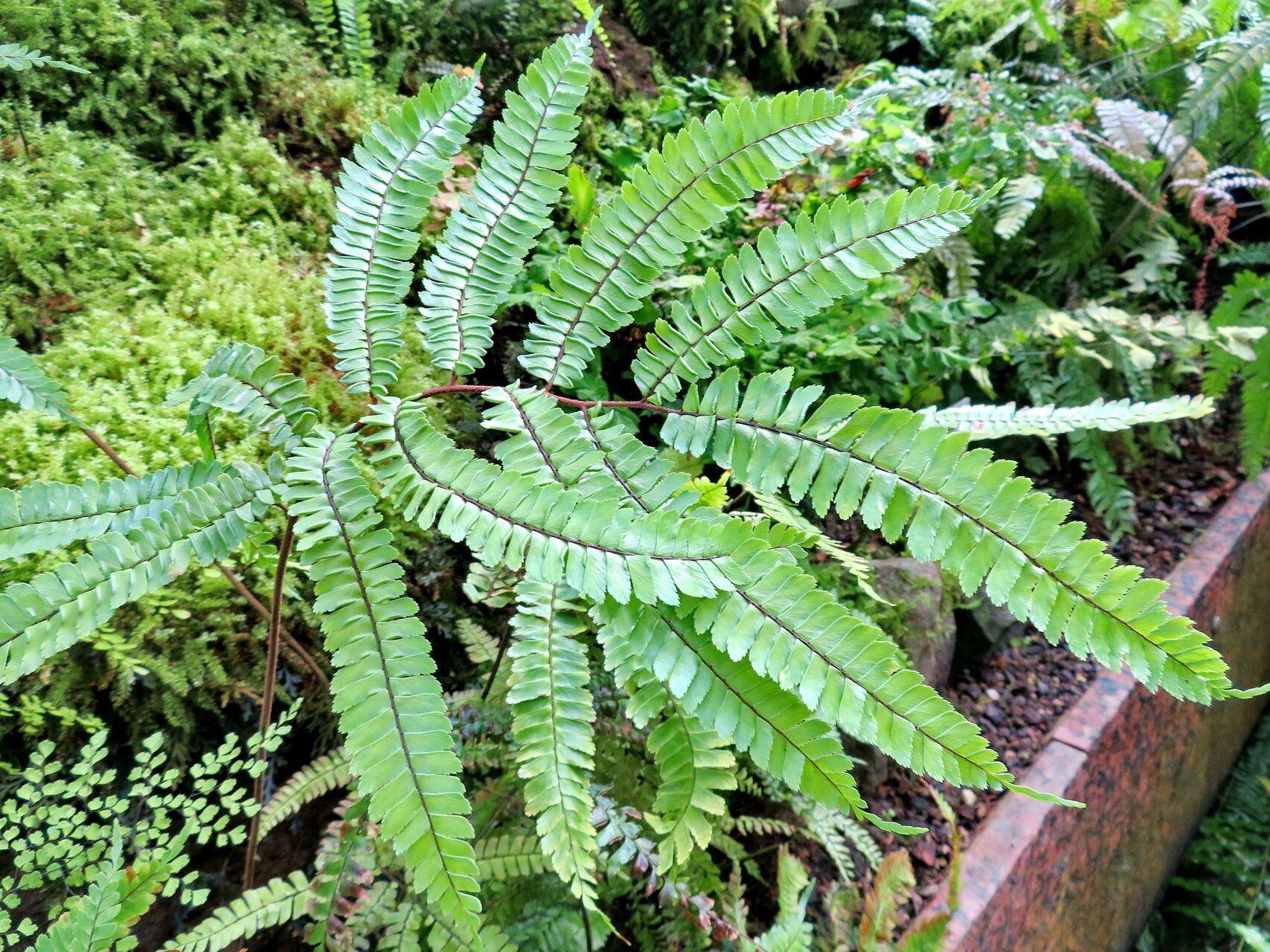
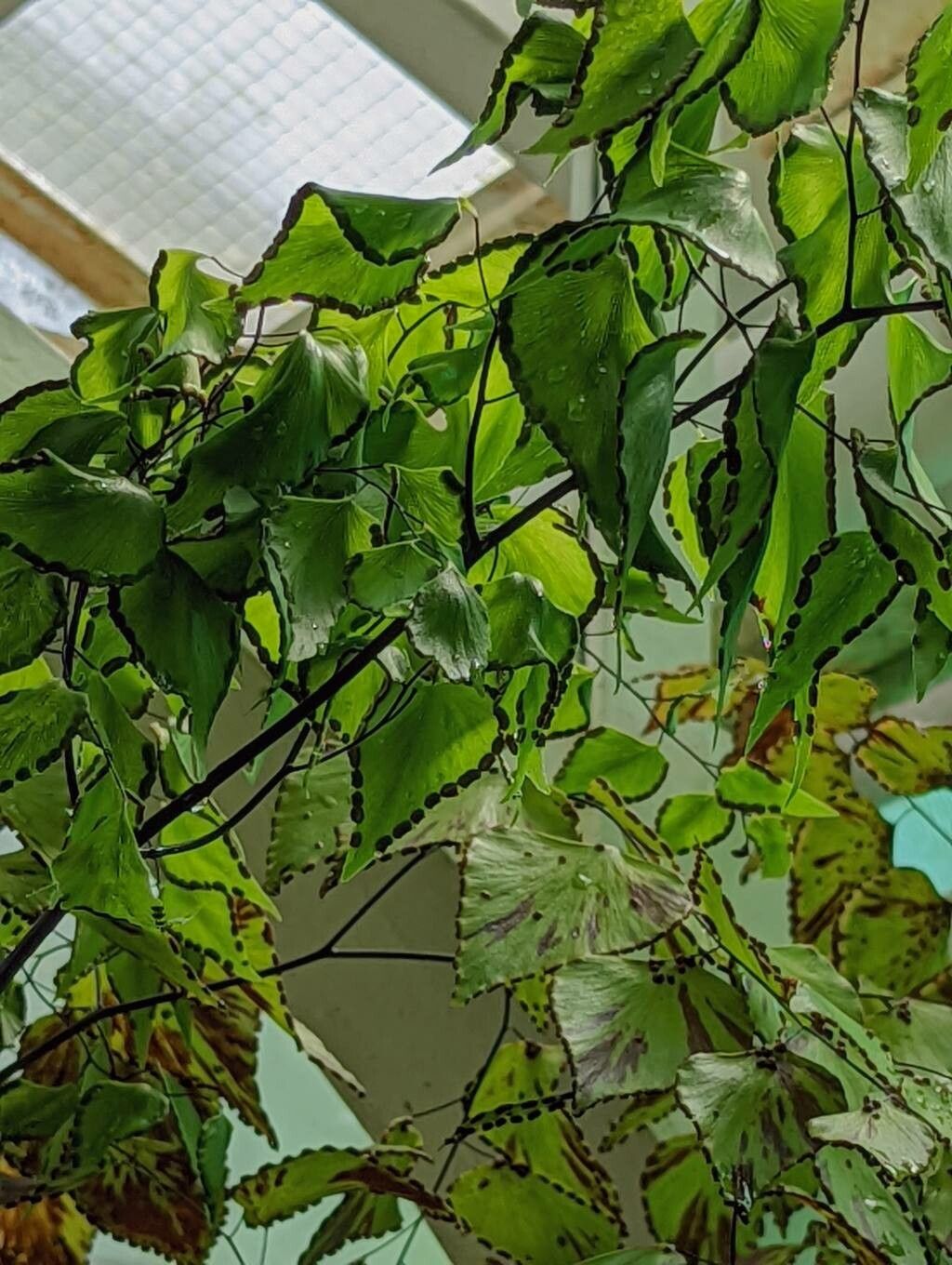
Adiantum formosum, known as the giant maidenhair or black stem maidenhair is a fern found in Australia and New Zealand. It was one of the many species authored by Scottish botanist Robert Brown, appearing in his 1810 work Prodromus Florae Novae Hollandiae et Insulae Van Diemen. Its species name is the Latin adjective formosus "handsome" or "beautiful". Adiantum formosum is an attractive plant, with fronds up to 120 cm (48 in) high. The rhizome of this species is unusually deep, up to 60 cm (24 in) below into the earth. The stems are black and can reach 90 cm (36 in) in length, while the fronds or blades are triangular with rectangular segments. The last segment of the frond is irregular and asymmetrical, on a short stem. This maidenhair fern can grow to 2 metres (7 ft) tall. The smallest segments of the fronds are the pinnules, which are wedge-shaped, rectangular or trapezoid. They have 1–10 sori along the margins underneath. Adiantum formosum is found in Queensland, and New South Wales, and into Victoria, where it is less common. It also occurs in New Zealand. It is often seen growing in moist areas or along streams usually on alluvial soils, Adiantum formosum is generally found in rainforest or in nearby open eucalyptus forest, where it may form a large colony. Easy to grow in cultivation, Adiantum formosum makes a good subject for container gardening. It appears to go dormant in cooler months and grow rapidly during the summer. A smaller, variegated form is commercially available and cultivated.
Southern maidenhair fern is generally resistant to disease and is affected by relatively few insect pests. Its care is considered difficult because it needs a consistently moist environment and frequent watering. Conversely, the roots can rot if the plant is overwatered or the surroundings lack good ventilation. The fern is better suited to growers with some experience: most people can keep it alive for a certain amount of time, but it may struggle to thrive and its leaves can dry out and become less healthy over time.
How to keep Adiantum Formosum.
Light
The southern maidenhair fern grows best with moderate sunlight, such as locations that get sun in the morning or late afternoon. It can also tolerate areas with lower light, for example under tree canopies. Both extremes of light — too little or too much — can potentially impede its growth or health.
Water
The giant maidenhair fern thrives in tropical environments where there is consistent moisture. To keep the plant healthy, it should be watered twice a week. Since it is sensitive to drought, careful attention must be paid to both its hydration and drainage needs. When grown indoors, this fern requires high humidity to simulate its natural habitat, particularly during the growing season, to promote lush foliage.
Temperature
The southern maidenhair fern grows naturally across a variety of temperatures but prefers 59 to 95℉ (15 to 35℃). In hot summers, provide partial shade or mist the foliage to prevent it from drying out. In cold winters, move the plant indoors or cover it to protect it from frost.
Pruning
The giant maidenhair fern features delicate, fan-shaped fronds and thrives in shaded, moist environments. Pruning in early spring removes damaged fronds, encourages growth, and improves air circulation. This practice not only enhances the fern's appearance but also supports its overall health by preventing overcrowding and disease.
Pot & Repot
When repotting Southern maidenhair fern, select a pot 1-2 inches (2.5–5.1 cm) larger with plenty of drainage. Use a well-draining potting mix. Repot in spring or fall, making sure the root ball sits slightly lower than the rim of the flower pot. Water thoroughly after repotting and place in a warm area with indirect sunlight.
Botanical profile.
- Plant Type
- Fern
- Life Cycle
- Perennial
- Genus
- Adiantum
- Family
- Pteridaceae
- Hardiness Zone
- 8-10
- Mature Height
- 15 cm to 30 cm
- Mature Spread
- 30 cm to 46 cm
- Leaf Color
- Green, Yellow, Gold
- Leaf Type
- Deciduous
- Planting Time
- Spring, Summer, Autumn
- Harvest Time
- Summer
- Native Area
- Sri Lanka, Libya, Belize, India, Turkey, United Arab Emirates, Mexico, Guatemala, Slovakia, Madagascar, Montenegro, Pakistan, Thailand, Nigeria, Slovenia, Croatia, Morocco, Uganda, Tanzania, Mozambique, Ethiopia, Portugal, Saudi Arabia, Malawi, Tunisia, Honduras, Peru, Philippines, Bulgaria, Bangladesh, Laos, Cyprus, Chad, China, Lebanon, Afghanistan, Syria, Kyrgyzstan, Kazakhstan, Italy, Japan, Eswatini, Iran, Azerbaijan, Congo (DRC), Djibouti, Somalia, Egypt, Angola, Lesotho, Malaysia, Namibia, Rwanda, Yemen, Kenya, Niger, Jamaica, Zimbabwe, Uzbekistan, Russia, Mali, Iraq, Cuba, Cambodia, Venezuela, Brazil, Oman, South Korea, Botswana, France, Nepal, Congo, Tajikistan, South Africa, Sudan, Mauritania, Armenia, Zambia, Greece, Bahamas, Spain, Switzerland, Vietnam, Bhutan, Albania, Ireland, United Kingdom, Algeria, Turkmenistan
Other names.