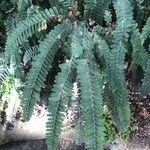
Adiantum hispidulum
Rough maidenhair fern · Rosy maidenhair fern · Five-fingered jack · Rough maidenhair
Description
Source: leafsnapAdiantum hispidulum, commonly known as the Rosy Maidenhair Fern, is a delicate and graceful fern species in the family Pteridaceae. Native to Australia and New Zealand, it thrives in moist, shady environments such as rainforests, gullies, and stream banks. The Rosy Maidenhair Fern is easily recognizable by its triangular fronds, which are finely divided into numerous leaflets. These fronds typically measure 20-40 cm in length and 10-20 cm in width. The leaflets are dark green on their upper surface and have a distinctive reddish-brown hue on the underside. Though this fern prefers moist soil, it can tolerate periods of drought once established. It thrives in partial shade or filtered sunlight but can also grow in full shade. The Rosy Maidenhair Fern is an excellent choice for both indoor and outdoor gardening due to its attractive appearance and low maintenance requirements. It can be grown in pots or hanging baskets indoors or planted directly in garden beds outdoors. Overall, Adiantum hispidulum is an elegant fern species that enhances any garden setting with its beauty while demanding minimal care from its owner.
Care Guide
💧 Water Every 7 days
The rough maidenhair fern is native to tropical rainforests, where it flourishes in environments with high humidity and consistent moisture. This plant is adept at retaining water and generally requires watering twice a week. Often cultivated indoors to help maintain humidity levels, the rough maidenhair fern is an evergreen that needs a steady water supply throughout the year to maintain its lush foliage.
What should I do if I give too much or too little water to my Rough maidenhair fern?
The Rough maidenhair fern can be overwatered if it is left in standing water or if the planter lacks drainage holes. This can lead to a lack of nutrients and moisture for the roots, as well as the development of fungal or bacterial diseases. Signs of overwatering include wilted and yellow leaves, drooping or soft stems, and mushiness. However, it's important to check for other causes of these symptoms, as it's difficult to give this plant too much water. On the other hand, the Rough maidenhair fern can also be underwatered if not monitored closely, unless using a self-watering planter. In dry conditions, the plant can quickly turn from green and lush to brown and crispy. In severe cases, it may appear completely dry with no living fronds. However, if some roots are still healthy, the plant can be saved. By cutting off dry and dead stems, thoroughly watering, and returning it to its usual location, the fern can recover and start producing new fronds. This process may take several months, but with proper care, the plant can regain its previous size.
How should I water my Rough maidenhair fern correctly?
To keep your Rough maidenhair fern healthy, it needs consistently moist soil that resembles its natural environment. This may require watering every one or two days. Make sure not to let the plant dry out - once the top layer of soil feels slightly dry, it's time to water again. When watering, it's important to thoroughly soak the soil until water drains out from the bottom of the pot. Afterwards, remember to discard any excess water so the pot doesn't sit in a puddle. This approach will prevent the soil from becoming too dry.
What do I need to think about when watering my Rough maidenhair fern?
The watering needs of your Rough maidenhair fern depend on the humidity level in the air. Higher humidity means less frequent watering because the evaporation is slower. To prevent drying out, avoid placing the plant near heating or cooling vents and choose a draft-free location. These ferns prefer dappled and indirect sunlight with temperatures between 55-80 degrees F (13-27 degrees C), so avoid placing them in a warm and sunny spot like a windowsill as it could cause dehydration. Rainwater or distilled water is best for this plant, although tap water usually works fine. Tap water may contain minerals and chemicals that can cause brown leaf tips, especially since the leaves are thin and delicate. Using small pots can lead to faster drying out, so it's better to give the fern more space in a larger pot. Consider using a self-watering planter for your Rough maidenhair fern. This type of pot has a wicking system that maintains a consistently moist soil by soaking up water from a reservoir. Not only does it save you from frequent watering, but it also benefits the roots by providing a steady water supply instead of fluctuations between dry and wet.
☀️ Light Full shade
Rough maidenhair fern does well with partial sunlight but can also cope in areas with less light. In its natural habitat it usually encounters varying light conditions, which gives it strong adaptability. Still, either too little or too much sunlight can negatively affect its growth and overall health.
What are the sunlight requirements for Rough maidenhair fern?
Rough maidenhair fern thrives under partial solar exposure, requiring about 3-6 hours of sunlight daily, but can also prosper in full shade, which is less than 3 hours of sunlight. Observing how sunlight moves through your garden will help you choose the perfect spots that offer a balance of light and shade, ensuring the happiness of your plants. It's vital to monitor the plant's light conditions closely, as both a lack of and too much sunlight can negatively affect its growth and overall health.
How can artificial lighting benefit indoor Rough maidenhair ferns?
Indoor Rough maidenhair ferns require adequate lighting for optimal growth, especially when natural sunlight is insufficient, like in winter or less sunny spaces. Artificial lights, such as LED lights, offer a valuable solution by providing the specific wavelengths of light needed by the plants. For full sun plants, 30-50W/sq ft of artificial light is needed; partial sun plants require 20-30W/sq ft, and full shade plants need 10-20W/sq ft. The light source should be placed 12-36 inches above the plant to mimic natural sunlight, and most plants need 8-12 hours of light per day to thrive.
What symptoms indicate insufficient light for Rough maidenhair fern?
Symptoms of light deficiency in Rough maidenhair fern include smaller new leaves, leggy or sparse growth, faster leaf drop, slower or no new growth, lighter-colored new leaves, and symptoms of excessive light exposure such as chlorosis, sunscald, leaf curling, wilting, and leaf scorching. These signs suggest that the plant is not receiving adequate light, impacting its ability to grow and stay healthy.
What solutions can mitigate light deficiency issues in Rough maidenhair fern?
To mitigate light deficiency issues in Rough maidenhair fern, for indoor plants, you can gradually shift them to sunnier spots each week until they receive 3-6 hours of direct sunlight daily or use artificial light if the plant is large or not easily movable. Keep a desk or ceiling lamp on for at least 8 hours daily or invest in professional plant grow lights. For outdoor plants, move your plants gradually to sunnier locations each week to avoid sunburn. Also, for plants in the ground, reduce obstructions by pruning branches and leaves that block sunlight or transplant smaller plants to a sunnier location during their dormant period, ensuring the chosen location has ample sunlight and good drainage.
🌡️ Temperature 15–35°C
Rough maidenhair fern is adapted to a native growth environment with temperatures ranging from 59 to 95 °F (15 to 35 °C). It prefers areas with moderate temperatures to thrive. Seasonal adjustments are seldom required.
What are the preferred temperature conditions for the Rough Maidenhair Fern?
The Rough Maidenhair Fern, scientifically known as Adiantum hispidulum, prospers in temperatures ranging from 59 to 95°F (15 to 35°C), favoring moderate climates. It displays some level of cold tolerance and does not typically require special care if temperatures stay above -5°C. However, protections such as wrapping in plastic film, fabric, or other materials should be implemented if temperatures are forecasted to drop below -5°C, to be removed once warmer temperatures resume.
How does the Rough Maidenhair Fern react to low temperatures?
The Rough Maidenhair Fern has a moderate tolerance to cold, thriving best above 15°C and needing protection below -5°C. When temperatures fall below -10°C, its leaves may droop; they can recover from mild exposure but will wilt and fall off in severe cases. To aid recovery or provide protection, frost-damaged parts should be pruned, and the plant should be wrapped with non-woven fabric or cloth, with a wind barrier added to shield against cold winds.
What should be done if the Rough Maidenhair Fern experiences high temperatures?
During the hotter months, it is crucial to keep the Rough Maidenhair Fern below 35°C to prevent it from overheating. Exceeding 41°C can cause the leaves to lighten in color, tips to dry and wither, leaves to curl, and increase susceptibility to sunburn. Should this occur, sunburned and dried parts of the plant should be removed. Relocating the fern to a shaded area or employing a shade cloth can protect it from intense sun, while watering in the morning and evening helps maintain soil moisture.
💨 Humidity high (>60%)
This plant needs special care because it loves high humidity levels of 60-80% or more. The best way to achieve this is by placing a humidifier near the plant. Daily misting is also essential! Make sure the room has good ventilation.
🪴 Soil 5-6
🌱 Fertilizer
To properly care for a rough maidenhair fern, follow these guidelines: 1. During the growing season, fertilize the fern monthly using a high-nitrogen fertilizer. In winter, use fertilizer sparingly. 2. To prevent root burn, apply the fertilizer at a quarter strength. 3. Always water the fern before fertilizing to improve nutrient absorption. 4. During dormant periods, adjust the frequency of fertilization to help maintain the fern's health and vigor.
Why should I put fertilizer on my Rough maidenhair fern?
Fertilizing Rough Maidenhair Fern is essential for several reasons. Firstly, it provides your plant with the necessary nutrients to promote healthy new growth. Additionally, these extra nutrients strengthen the health of the existing growth and aid in protecting your plant against diseases and pests.
When should I fertilize my Rough maidenhair fern?
The feeding schedule for Rough maidenhair fern depends on where it is growing. This plant doesn't need a lot of nutrients, but it does require some. For outdoor plants, fertilizing once in the spring is enough. However, for indoor plants, a monthly feeding starting in the spring and lasting through the summer is necessary.
When is it not a good idea to add fertilizer to my Rough maidenhair fern?
To ensure the proper growth of Rough maidenhair fern, it is important to consider the timing and conditions for fertilization. Avoid fertilizing after early autumn to prevent excessive growth before the winter season. Additionally, it is not recommended to fertilize during hot and dry periods as dry soil is not as effective in delivering fertilizer, and this can lead to increased growth that requires more water, which may not be available. It is advisable to apply fertilizer earlier in the season when temperatures are cooler. Lastly, be mindful that Rough maidenhair fern can absorb fertilizer from nearby plants or lawns, so be cautious to avoid inadvertently providing the ferns with an overdose of fertilizer.
What kind of fertilizer does my Rough maidenhair fern need?
When choosing a fertilizer for Rough maidenhair fern, there are a few options depending on whether the plant is growing indoors or in the garden. Outdoor plants will thrive with mulch or compost. For indoor plants, an ideal fertilizer will have an N-P-K ratio of 3-1-2. In some cases, a general-purpose fertilizer with even nutrient blend can also work well. However, when using a balanced fertilizer, the ratio number representing the volume of each nutrient should be 3 or lower.
How can I give nutrients to my Rough maidenhair fern?
Fertilizing Rough maidenhair fern is not complicated, but it depends on the location of the plant. Outdoor garden plants should have a layer of mulch or compost added to the soil, ensuring it is placed around the base of the plant. As for indoor plants, they usually do well with a diluted liquid fertilizer applied before watering. This can be done monthly in the spring and summer.
🪴 Pot & Repot 2-3 years
To ensure optimal growth, repot your rough maidenhair fern every 2-3 years during the spring. Select a medium-sized pot with good drainage to prevent root rot. After repotting, maintain high humidity and provide indirect sunlight to aid in the fern's recovery and encourage a lush appearance.
✂️ Pruning
The rough maidenhair fern benefits from light pruning in early spring, which helps remove damaged fronds and maintain a bushy appearance. Regular, careful trimming promotes new growth and prevents the plant from becoming too leggy. Be sure to use clean, sharp tools, and avoid over-pruning to keep the plant healthy and visually appealing.
🌿 Propagating
🐛 Diseases & pets
☠️ Toxicity
Characteristics
- Plant Type
- Fern
- Life Cycle
- Perennial
- Genus
- Adiantum
- Family
- Pteridaceae
- Hardiness Zone
- 8-10
- Mature Height
- 40 cm
- Mature Spread
- 30 cm to 91 cm
- Leaf Color
- Green, Bronze
- Leaf Type
- Evergreen, Semi-evergreen, Deciduous
- Planting Time
- Spring, Summer, Autumn
- Native Area
- Sri Lanka, India, Malaysia, Vanuatu, Madagascar, Australia, Kenya, Fiji, Tanzania, Zimbabwe, Indonesia, Mozambique, Ethiopia, Malawi, South Africa, Philippines, New Zealand, China, Solomon Islands, Singapore