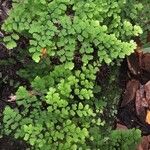
Adiantum raddianum
Delta Maidenhair · Delta maidenhair fern
Description
Source: leafsnapAdiantum raddianum, the Delta maidenhair fern, is one of the most popular ferns to grow indoors. It is native to South America and its common name comes from its shiny, dark leafstalks that resemble human hair. It typically grows about 17–19 in (43–48 cm) tall and up to 22 in (56 cm) wide. In the wild, it is found on forest floors, rock crevices, river banks, coastal cliffs, and basalt banks along trails and streams. The triangular fronds are semi-erect in the beginning then droop gracefully as they age and can be up to 12 inches (30 cm) long by 6 inches (15 cm) wide. The genus name Adiantum comes from the Greek word "adiantos", meaning "unwetted" (in reference to the leaves).This plant is hardy down to 5 °C (41 °F), so must be grown indoors in temperate regions. However it may be placed outside in a sheltered spot during the summer months. It requires high humidity, well-drained soil, bright indirect light, and a fairly constant temperature. It prefers neutral or slightly alkaline soil and is suitable for USDA hardiness zones 10 and 11. It can be susceptible to scale and mealybug. The cultivars ‘Brilliantelse’ and ‘Kensington Gem’ have won the Royal Horticultural Society's Award of Garden Merit.A. raddianum is sometimes considered invasive in Hawaii and French Polynesia.
💡 Adiantum raddianum, like many maidenhair ferns, thrives in a high-moisture environment. However, unlike most other species, the delta maidenhair fern has a unique root system that cannot tolerate dry conditions, even temporarily. To keep it healthy, make sure to mist the plant regularly and maintain high humidity levels. This plant can be demanding, so it might take some time to get accustomed to its care needs.
🎭 Hidden Tie of Love, Discretion
Care Guide
💧 Water Twice per week
The Delta maidenhair fern flourishes in environments with high humidity and consistently moist soil, necessitating watering twice a week. It is important to note that this fern is not drought-tolerant. As an evergreen plant, it is often grown indoors, where it benefits from regular misting to replicate its natural humid conditions.
What should I do if I give my Delta maidenhair fern too much water or too little water?
Delta maidenhair ferns can be overwatered if they are left sitting in water or placed in a planter without drainage holes. Too much moisture in the soil can lead to wilted and yellow leaves, as well as potential fungal or bacterial diseases. If you suspect overwatering, check for other causes as well. On the other hand, underwatering can cause the fern to dry up quickly, turning brown and crispy. In severe cases, the plant may appear to have no living fronds left. However, if the roots are still healthy, there is a chance to save the plant. Remove all dry and dead stems, water thoroughly, and return the plant to its usual location. It may take a few months, but with proper care, the fern can grow back to its original size.
How should I water my Delta maidenhair fern correctly?
To keep your Delta maidenhair fern happy, it's important to keep the soil consistently moist. This means watering it as often as every one or two days. It's crucial to not allow the plant to dry out, so once the top layer of soil starts to feel slightly dry, it's time to water again. When you do water, make sure to thoroughly soak the soil until water drains out from the bottom of the pot. After the excess water has drained, be sure to dump it out so the pot isn't left sitting in a puddle. This watering method is the best way to prevent the soil from becoming too dry.
What things do I need to think about when watering my Delta maidenhair fern?
The watering needs of your Delta maidenhair fern are influenced by the humidity levels in the air. Higher humidity means less frequent watering because evaporation is slower. Avoid placing the plant near heating or cooling vents, as it can dry out quickly. Find a location protected from drafts. These ferns prefer dappled and indirect sunlight with temperatures between 55-80 degrees F (13-27 degrees C). Placing them on a warm and sunny windowsill can cause dehydration. Rainwater or distilled water is best, but tap water is usually okay. Tap water can sometimes cause brown leaf tips due to minerals and chemicals. Delta maidenhair ferns can dry out fast in small pots, so it's best to give them more space. Consider using a self-watering planter to maintain consistent moisture levels in the soil. This eliminates the need for frequent watering and benefits the roots by providing a continuous water supply.
☀️ Light Full shade
For the delta maidenhair fern to grow healthily, a balanced amount of sun exposure is required. The plant does best with moderate sunlight but can also perform well in low-light conditions. Too much sunlight can harm its growth, while too little may slow its development.
What are the sun requirements for Delta maidenhair fern?
Delta maidenhair fern thrives under specific lighting conditions. It requires moderate levels of sunlight and can grow well in low light visibility. However, exposing the fern to partial sun for about 3-6 hours of sunlight daily is ideal. Full shade conditions, where the plant gets less than 3 hours of sunlight, can also support its growth. An important note to gardeners is to observe the movement of sunlight through their garden to find spots that offer a perfect balance of light and shade, ensuring the plant's health and happiness.
How should indoor Delta maidenhair ferns be lit?
Indoor Delta maidenhair ferns often require supplemental lighting to thrive, especially in conditions where natural sunlight is insufficient such as during winter or in spaces that don't get much light. Artificial lights can be a valuable solution, encouraging healthier growth. LED lights are recommended for their ability to be customized to specific plant needs, offering 30-50W/sq ft for full sun plants, 20-30W/sq ft for partial sun, and 10-20W/sq ft for full shade plants. The light source should be placed 12-36 inches above the plant, simulating natural sunlight as closely as possible for 8-12 hours daily.
What are the signs of inadequate lighting for Delta maidenhair fern?
When Delta maidenhair fern is not receiving enough light, several symptoms may arise, indicating stress in the plant. These include the growth of smaller leaves than usual, a leggy or sparse appearance due to elongated stems and reduced leaf density, premature leaf drop as the plant conserves resources, halted or significantly slowed growth, paler new leaves indicating insufficient chlorophyll, and conditions such as chlorosis and sunscald. Chlorosis leads to yellowing leaves, while sunscald presents as damaged patches on leaves due to excessive light exposure. Leaf curling, wilting, and scorched leaves are additional symptoms of light stress.
How can I optimize sunlight for my Delta maidenhair fern?
Optimizing sunlight for Delta maidenhair fern involves adapting the plant to its lighting environment gradually. If indoors and the plant is large or fixed, providing artificial light for at least 8 hours daily can supplement natural light. Moving plants towards increasingly sunny areas weekly until they receive the optimal 3-6 hours of sunlight can help. Outdoors, it's crucial to avoid sudden changes in sunlight exposure, moving plants to sunnier spots gradually to prevent sunburn. For plants on the ground that face obstructions to sunlight, reducing these obstructions or transplanting to a brighter location can be beneficial. Pruning or moving plants during their dormant season ensures they receive adequate light without the stress of immediate environmental changes.
🌡️ Temperature 20–37.8°C
Delta maidenhair fern originates from moderate climates and prefers temperatures from 68 to 100 °F (20 to 38 °C). In warmer seasons, provide cooler indoor conditions, and in colder seasons, maintain a warmer position to keep it within this comfort zone.
What is the optimal temperature range for Delta maidenhair fern?
The Delta maidenhair fern thrives in moderate climates, with an ideal temperature range between 68 to 100°F (20 to 38°C). It is important to maintain cooler indoor conditions during warmer seasons and provide a warmer environment during colder seasons to keep the fern within its comfort zone. The fern is very heat-loving, so cold temperatures can be harmful. It is recommended to bring outdoor-grown Delta maidenhair ferns indoors during the autumn and place them near a bright window, keeping them away from direct heat sources to ensure temperatures stay above 20°C during winter. Conversely, temperatures close to 5°C are detrimental to the plant's health.
How do I care for my Delta maidenhair fern in low temperatures?
Delta maidenhair fern performs best in warm conditions and doesn't tolerate low temperatures well. In winter, temperatures should be kept above 5°C, and ideally above 20°C. Exposure to temperatures below 1°C may lead to lighter leaf color, and following frost damage, leaves can turn brown or black, accompanied by wilting and drooping. To counteract low temperature damage, trim off the frost-damaged parts of the plant and move it to a warmer indoor environment immediately for cold protection. Position the plant near a south-facing window for sufficient sunlight and avoid placing it near heaters or air conditioning vents to prevent air dryness.
How should I care for my Delta maidenhair fern during high temperatures?
In summer, it is advisable to keep the Delta maidenhair fern's temperature below 38°C to avoid heat stress. Should temperatures rise above 43°C, the fern's leaves may become lighter in color and more prone to sunburn. To mitigate high temperature damage, trim the sunburned and dried-up parts of the plant. Relocate the fern to a shaded spot, particularly to protect it from the midday and afternoon sun. To maintain moisture, water the plant in the early morning and evening.
💨 Humidity high (>60%)
This plant needs special care because it loves high humidity levels of 60-80% or more. The best way to achieve this is by placing a humidifier near the plant. Daily misting is also essential! Make sure the room has good ventilation.
🪴 Soil 5-6
🌱 Fertilizer
To encourage good growth, use diluted fertilizer from spring to summer. Half-strength liquid fertilizer can also be used every month for a year. Make sure that the soil is not too dry before fertilizing. Spray some water first to make sure that the soil is moist. This will avoid plant burn.
Why is it important to put fertilizer on my Delta maidenhair fern?
Fertilizing Delta maidenhair fern is important for a few reasons. Firstly, it provides the necessary nutrients for healthy new growth. Additionally, the extra nutrients promote the wellbeing of existing growth and can even enhance the plant's ability to battle against diseases and pests.
What is the ideal time to fertilize my Delta maidenhair fern?
The growth location of the Delta maidenhair fern determines how often it should be fed. While it is not a demanding plant, it does need some extra nutrients. Outdoor plants should be fertilized once in the spring, while indoor ferns should be fed monthly from spring to summer.
When is the best time to not fertilize my Delta maidenhair fern?
To avoid excessive growth before winter, it is recommended not to fertilize the Delta maidenhair fern after early autumn. Additionally, refrain from fertilizing during hot and dry periods as dry soil is not as effective in delivering fertilizer. Fertilizing at this time can stimulate growth that may demand more water, which might not be available. Ideally, apply fertilizer earlier in the season when temperatures are cooler. Lastly, be cautious about applying fertilizer near other plants or lawns as the Delta maidenhair fern can absorb it, potentially resulting in an unintended double-dose.
What kind of fertilizer should I use for my Delta maidenhair fern?
When selecting a fertilizer for your Delta maidenhair fern, there are a few options to consider. The choice will depend on whether the plant is growing indoors or outdoors. For outdoor plants, mulch or compost can greatly enhance their growth. Indoor plants, on the other hand, thrive with an ideal fertilizer that has an N-P-K ratio of 3-1-2. In some cases, a general-purpose fertilizer with a balanced blend of nutrients can also work well. Just make sure that even with a balanced fertilizer, the ratio number for each nutrient should be 3 or lower.
How can I give my Delta maidenhair fern fertilizer?
Fertilizing Delta maidenhair fern is simple, but it depends on the plant's location. For outdoor garden plants, adding a layer of mulch or compost to the soil is ideal, making sure it's placed around the base of the plant. As for indoor plants, they usually do well with a diluted liquid fertilizer applied before watering, once a month during spring and summer.
🪴 Pot & Repot 2-3 years
When repotting Delta maidenhair fern, select a pot 1-2 inches (2.5–5.1 cm) larger with good drainage. Use a well-draining potting mix. Repot in spring or fall, ensuring the root ball sits slightly below the rim of the flower pot. Water thoroughly after repotting and place it in a warm spot with indirect sunlight.
✂️ Pruning
For optimal growth, prune your Delta maidenhair fern in early spring by removing any dead or damaged fronds at the base. This encourages healthy growth, enhances the plant's appearance, improves air circulation, and helps prevent fungal issues. Be careful not to over-prune, as preserving the fern's natural form is crucial for ensuring robust growth and a manageable size.
🌿 Propagating
🐛 Diseases & pets
☠️ Toxicity
This plant is not known to be poisonous if consumed by pets or humans. However, high-quantity consumption may result to vomiting, nausea, and loss of appetite.
Characteristics
- Plant Type
- Fern
- Life Cycle
- Perennial
- Genus
- Adiantum
- Family
- Pteridaceae
- Hardiness Zone
- 10-11
- Mature Height
- 30 cm to 61 cm
- Mature Spread
- 30 cm to 46 cm
- Leaf Color
- Green
- Leaf Type
- Evergreen
- Planting Time
- Spring, Autumn
- Native Area
- Mexico, Guatemala, Peru, Trinidad and Tobago, Jamaica, Uruguay, Colombia, Paraguay, Argentina, Bolivia, Venezuela, Brazil, El Salvador, Nicaragua, Ecuador, Costa Rica, Congo (DRC)