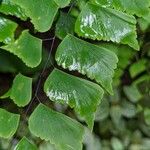
Adiantum trapeziforme
Giant maidenhair · Diamond maidenhair · Giant maidenhair fern
Description
Source: leafsnapAdiantum trapeziforme, the giant maidenhair or diamond maidenhair, is a species of fern in the genus Adiantum, native to the tropical rainforests of Central and South America.
Care Guide
💧 Water
The giant maidenhair fern, native to tropical rainforests, thrives in humid environments. It prefers consistent moisture, so it should be watered twice a week, but be careful not to let it become waterlogged. This fern is ideal for indoor growth and benefits from a pebble tray that provides extra humidity during its active growing season.
What should I do if I give too much water or too little water to my Giant maidenhair fern?
The Giant maidenhair fern can be overwatered if it sits in a pool of water or if the planter does not have drainage holes. This can lead to the roots not being able to take up nutrients and moisture, and it can also promote the development of fungal or bacterial diseases. Signs of overwatering include wilted and yellow leaves, drooping or falling stems, and soft and mushy texture. However, it's important to check for other causes as well since other issues can have similar symptoms. On the other hand, the Giant maidenhair fern can also become underwatered if not kept wet enough. In dry conditions, it can quickly change from lush and green to brown and crispy. Even if it appears completely dried up, the plant can potentially be saved if some of the roots are still healthy. In this case, it is recommended to remove all the dry and dead stems, thoroughly water the plant, and place it back in its usual location. With proper care, the plant can recover and start growing new fronds, although it may take several months to regain its original size.
How should I water my Giant maidenhair fern correctly?
To keep your Giant maidenhair fern happy, it needs consistently moist soil similar to its native environment. This means it may need watering every one or two days, as allowing it to dry out is not recommended. Once you feel the top layer of soil becoming even slightly dry, it's time to water again. However, it's important to thoroughly soak the soil until water drains from the bottom of the pot, instead of giving it just a few drops of water. After the excess water has drained, make sure to discard it so the pot doesn't sit in a puddle. By following this method, you can ensure that the soil never becomes too dry.
What do I need to think about when watering my Giant maidenhair fern?
The frequency of watering your Giant maidenhair fern depends on the humidity levels in the air. Higher humidity means you can water less often since evaporation is slower. To prevent the fern from drying out quickly, avoid placing it near heating or cooling vents and choose a location without drafts. These ferns prefer dappled and indirect sunlight and temperatures between 55-80 degrees F (13-27 degrees C). Placing them on a warm and sunny windowsill may lead to quick dehydration. If possible, use rainwater or distilled water for this plant. Tap water works fine in most areas, but certain minerals and chemicals in it can cause brown leaf tips, particularly because the fern has thin and delicate leaves. Avoid using small pots for Giant maidenhair fern as they hold less potting medium and can dry out faster. Give the fern more space in the pot compared to other houseplants. Consider using a self-watering planter for this fern. This type of pot allows the soil to continuously soak up water from a central reservoir, keeping the moisture level consistently moist. It reduces the need for frequent watering and provides a constant water supply for the roots, which is beneficial compared to fluctuating conditions.
☀️ Light Full shade
Maidenhair comes from habitats such as forest understories or rocky sites that provide natural shade. It prefers Full Shade but can tolerate Partial Sun.
What are the sunlight requirements for a Giant Maidenhair Fern?
The Giant Maidenhair Fern, or 'Adiantum trapeziforme', thrives best in full shade conditions, requiring less than 3 hours of sunlight per day. However, it can also tolerate partial sun. Observing how sunlight moves through your garden can help you find the perfect balance between light and shade, ensuring the plant's wellbeing. This species is naturally found in forest understories or rocky areas, which provide natural shade.
How can artificial lighting be used for indoor Giant Maidenhair Ferns?
Indoor Giant Maidenhair Ferns can benefit significantly from artificial lighting, especially when natural sunlight is insufficient. Artificial lights, like LED lights, are advisable as they can be tailored to provide specific wavelengths needed for optimal growth. The general guidelines include using 10-20W/sq ft for full shade plants, positioning the light source 12-36 inches above the plant, and mimicking natural daylight hours by keeping the lights on for 8-12 hours per day.
What are the symptoms of light deficiency in Giant Maidenhair Ferns?
Giant Maidenhair Ferns exhibiting light deficiency may show various symptoms, including smaller new leaves, leggy or sparse growth, faster leaf drop, and slower or halted new growth. Insufficient sunlight can also lead to lighter-colored new leaves or conditions such as chlorosis, where leaves lose their green color and turn yellow. Symptoms of excessive sunlight exposure include sunscald, leaf curling, wilting, and leaf scorching, indicating the plant's struggle with inappropriate light conditions.
What solutions can help Giant Maidenhair Ferns with insufficient or excessive sunlight?
For indoor Giant Maidenhair Ferns struggling with light conditions, moving them to a spot with ample filtered light or using artificial light for at least 8 hours daily is recommended. Outdoor plants should be gradually acclimated to sunnier spots to prevent sunburn. Reducing obstructions like overhanging branches can also improve sunlight exposure. Affected plants may not recover the damaged parts, but new growth should be healthy with better light conditions.
🌡️ Temperature 20–37.8°C
Maidenhair grows best in forest thickets. It is very sensitive to temperature and humidity; high temperatures, dry conditions, and strong sunlight all make Maidenhair uncomfortable. In summer it needs proper shading and a high-humidity environment. Generally, Maidenhair does not require special care in winter, but an extended winter drought can still be fatal to the plant.
What is the common name of Adiantum trapeziforme?
The common name of Adiantum trapeziforme is Giant maidenhair fern.
What are the essential care tips for Giant maidenhair fern?
Currently, there is no specific care information provided for the Giant maidenhair fern.
What symptoms should I look for in an unhealthy Giant maidenhair fern?
There are no specific symptoms listed for an unhealthy Giant maidenhair fern.
💨 Humidity
🪴 Soil 6-7
🌱 Fertilizer
🪴 Pot & Repot 2-3 years
Repot your giant maidenhair fern every 2 to 3 years in the spring. Use a pot that is one size larger than the current pot. Keep the soil consistently moist and place the plant in an area with indirect light, making sure to avoid direct sunlight. This will promote healthy growth and minimize disruptions, allowing the fern to thrive optimally.
✂️ Pruning
To maintain the health and vibrancy of the giant maidenhair fern, it is beneficial to prune it in early spring. This involves removing any dead or yellow fronds, which helps to improve air circulation and reduce the risk of disease. For the best results, consider consulting reputable gardening resources for additional care tips.
🌿 Propagating
🐛 Diseases & pets
☠️ Toxicity
Characteristics
- Plant Type
- Fern
- Life Cycle
- Perennial
- Genus
- Adiantum
- Family
- Pteridaceae
- Hardiness Zone
- 9-11
- Mature Height
- 30 cm
- Mature Spread
- 40 cm
- Leaf Color
- Light Green, Forest Green
- Leaf Type
- Evergreen
- Planting Time
- Spring, Summer, Autumn
- Native Area
- New Zealand