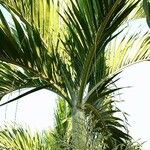
Adonidia merrillii
Christmas palm · Manila palm · Adonidia palm · Dwarf royal palm
Description
Source: leafsnapAdonidia merrillii, commonly known as the Christmas palm or Manila palm, is a tropical plant native to the Philippines. This small to medium-sized palm tree can reach up to 20 feet in height and spread up to 10 feet wide. Its slender trunks are typically straight, smooth, and have a grayish-brown color. The leaves of Adonidia merrillii are pinnate, featuring feather-like leaflets arranged on either side of the stem. The leaves measure approximately 3 to 6 feet in length and display a bright green hue. The Christmas palm produces small yellow flowers that grow in clusters on long stalks. These flowers eventually give way to bright red fruits that resemble miniature coconuts. Due to its attractive appearance and low maintenance requirements, Adonidia merrillii is often used as an ornamental plant in tropical landscapes. It flourishes in full sun or partial shade with well-draining soil and regular watering. In summary, Adonidia merrillii is an excellent choice for anyone seeking a visually appealing, easy-to-care-for tropical plant that offers beauty throughout the year.
🌳 Beyond its decorative value, the manila palm stands out as a symbol of tropical vibrancy in landscapes, improving the appearance of gardens and cityscapes. Interestingly, in tropical areas during the holidays it is commonly used as a living Christmas tree because of its conifer-like look, a tradition that adapts the plant’s natural beauty into holiday decoration. The palm is not harvested for spice, essential oil, or fiber; its main noteworthy use remains its striking visual contribution to the environment and cultural practices.
Care Guide
💧 Water Every 7 days
Native to the humid tropics, the Manila palm flourishes in moist environments that maintain consistent humidity. While it has a moderate tolerance for drought, it still requires regular watering. For indoor cultivation, water the plant every 1–2 weeks and mist it regularly to promote healthy foliage and support its growth cycles.
How should I water my Manila palm tree to make sure it stays healthy?
Your Manila palm is very flexible when it comes to watering. You can use any common watering tool, such as watering cans, hoses, or even cups, to keep the soil moist. It's important to water the plant directly in the soil and make sure all areas are evenly moistened, so that the entire root system gets the water it needs. Using filtered water is recommended to avoid harmful particles that can be present in tap water. It's also best to use water at or slightly above room temperature, as both cold and hot water can be a bit shocking to the Manila palm. However, overall, the Manila palm is typically resilient and can tolerate various types of water.
What should I do if I give my Manila palm too much water or not enough water?
Outdoor plants, especially newly planted ones or seedlings, are prone to lack of watering. It is important to water them adequately for the first few months, until the roots are established and they can rely on rain. However, when Manila palm is planted in pots, overwatering is more likely to happen. If you accidentally overwater your Manila palm, you should stop watering it immediately. Take the plant out of its pot and check for root rot. If there is no root rot, you can put the plant back in its container. If there is root rot, trim the affected roots and apply a fungicide. Repot the Manila palm in well-draining soil. On the other hand, if your Manila palm is underwatered, simply water it more frequently. The leaves will droop, dry out, and fall off when underwatered, but they will regain fullness after sufficient watering. Adjust your watering frequency as soon as you notice underwatering.
How often do I need to water my Manila palm?
Most outdoor plants can grow fine with natural rainfall. However, if your area lacks rainfall, you should water your plants adequately every 2 weeks in the spring and fall. In the summer, you will need to water more often, while in the winter, you can water less frequently since plants generally need less water during that time. In fact, during the winter, you may not need to water at all. If you have a young or newly planted Manila palm, you should water it more often to help it establish and grow into a more adaptable and drought-tolerant plant. For potted plants, there are two main ways to determine how often you should water your Manila palm. One way is to follow a set watering schedule, either once a week or once every other week. However, this approach may not always work because it doesn't consider the specific growing conditions for your plant. Another option is to base your watering frequency on the moisture of the soil. It's typically best to wait until the top two to four inches of soil have completely dried out before giving more water. This method allows you to adjust the watering frequency based on the season, especially during the summer when the plant's water needs are highest.
How much water does my Manila palm tree need?
When watering your Manila palm, it may be surprising to learn that it doesn't always require a lot of water. If only a few inches of soil have dried since the last watering, giving the palm around five to ten ounces of water will support healthy growth. You can determine how much water to give based on the moisture of the soil. Take note of how many inches of soil have dried out between waterings. To ensure the palm receives enough moisture, water the plant until all the dry soil layers have been moistened. If more than half of the soil has dried out, it's advisable to give more water. In such cases, continue adding water until you notice excess water draining from the pot's holes. If your Manila palm is planted in an area that receives sufficient rain, you may not need to water it additionally. When the palm is young or being established, it's important to provide 1-2 inches of rain per week. As the palm continues to grow, it can rely solely on rainwater unless there is a hot and rainless period lasting 2-3 weeks. In such cases, give the palm a thorough watering to prevent stress.
How do I know if I'm giving enough water to my Manila palm?
Overwatering is a common issue for the Manila palm. There are specific signs to watch out for when this happens. Typically, an overwatered Manila palm will have yellowing leaves and may even shed some leaves. Additionally, overwatering can lead to the overall structure of the plant shrinking and could encourage root rot. On the contrary, an underwatered Manila palm will also start to droop. Its leaves may turn brown or become fragile when touched. Whether you observe signs of overwatering or underwatering, it is important to take action to revive the health of your Manila palm.
☀️ Light Full sun
The Manila palm requires abundant sunlight and performs best in strong sun. It can also grow satisfactorily with moderate sunlight. The intensity of the sun is important for its health and affects how lush the fronds are. In its native environment it is accustomed to intense sunshine. Both too little and too much sunlight can damage it or hinder its growth.
What are the sunlight requirements for Manila Palm?
The Manila Palm (Adonidia merrillii) flourishes under full sun exposure, requiring over 6 hours of sunlight daily, but it can also grow well with about 3-6 hours of partial sun. The intensity of the sun significantly influences the health of the palm, impacting the vibrancy of its fronds. In its native habitat, it's accustomed to basking in a lot of sunlight. It's crucial to monitor how sunlight traverses your garden throughout the day to find spots that offer a delicate mix of light and shade, ensuring the well-being of your plants.
How can artificial lighting support indoor Manila Palm growth?
Indoor Manila Palms require adequate lighting for optimal growth, especially when natural sunlight is scarce, like in winter or less sunny spaces. Artificial lighting, particularly LED lights, can provide a crucial solution by offering the specific wavelengths needed for growth. For plants needing full sun, 30-50W/sq ft of artificial light is recommended, while partial sun plants require 20-30W/sq ft, and full shade plants need 10-20W/sq ft. Positioning the light source about 12-36 inches above the plant and ensuring it receives 8-12 hours of light per day mimics natural sunlight conditions, promoting healthier growth.
What are common symptoms of insufficient light in Manila Palm?
Manila Palms showing inadequate light exposure may exhibit symptoms like smaller new leaves, leggy or sparse growth, faster leaf drop, halted new growth, or lighter-colored new leaves. Additionally, too much sunlight can lead to chlorosis, sunscald, leaf curling, wilting, and leaf scorching. These symptoms highlight the plant's struggle with either too little or too much light, pointing towards the need for adjustments in lighting conditions to ensure the plant's health and growth.
What solutions can address Manila Palm's light-related issues?
To remedy light-related issues in Manila Palms, gradually moving them to sunnier spots can help meet their sunlight needs. For indoor plants, shifting them each week towards a south-facing window or supplementing with artificial light for at least 8 hours daily can ensure adequate light. Outdoors, a similar gradual relocation helps prevent sunburn. Pruning obstacles that block sunlight or transplanting to sunnier locations can also benefit outdoor plants. While parts of the plant suffering from past insufficient light might not recover, new growth following these adjustments should be healthy.
🌡️ Temperature 20–37.8°C
The Manila palm is native to warm climates and does best when temperatures range from 68 to 100 °F (20 to 38 ℃). Seasonal adjustments might be necessary to keep temperatures within this range to ensure the plant's optimal health.
What is the Manila palm and where is it native to?
The Manila palm, botanically known as Adonidia merrillii, is native to warm environments. It thrives best in temperatures ranging from 68 to 100°F (20 to 38°C), characteristic of its preference for tropical or subtropical climates. This palm is extremely heat-loving, illustrating its adaptation to warm habitats.
How should I care for Manila palm in changing seasons?
To care for a Manila palm throughout changing seasons, it is crucial to make seasonal adjustments to maintain the optimal temperature range between 68 to 100°F (20 to 38°C). During the cooler months, particularly in autumn, it's recommended to bring outdoor-grown Manila palms indoors to protect them from cold and place them near a bright window. They should be kept at a safe distance from heaters to avoid damage. Ensuring the temperature stays above 20°C during winter can foster better growth, while exposure to temperatures approaching 5°C or lower is harmful.
What symptoms indicate a Manila palm is experiencing low temperatures?
When exposed to low temperatures, a Manila palm may show symptoms such as a lightening of leaf color when temperatures drop below 1°C. Following frost damage, leaves can eventually turn brown or black, and the palm may exhibit signs of wilting and drooping. These symptoms are indicative of its intolerance to cold, as the palm thrives best in warmer conditions, above 20°C, and particularly suffers when temperatures fall below 5°C.
What should I do if my Manila palm suffers from low temperature damage?
If your Manila palm suffers from low temperature damage, the first step is to trim off the frost-damaged parts to prevent further decay. Then, move the palm indoors or to a warmer environment for protection against the cold. Placing the plant near a south-facing window can ensure it receives ample sunlight while keeping it away from direct heat sources like heaters or air conditioning vents to avoid overly dry air, which could exacerbate the problem.
How does high temperature affect Manila palm, and what are the solutions?
High temperatures above 38°C during summer can lead to symptoms such as lighter leaf color and increased susceptibility to sunburn in Manila palms. To mitigate the effects of high temperatures, affected palms should have their sunburned and dried-up parts trimmed away. Moving the plant to a shaded location during the midday and afternoon sun can protect it. Additionally, watering the plant during the cooler morning and evening hours helps keep the soil moist and supports the palm through extreme heat.
💨 Humidity normal (40-60%)
This plant will thrive in moderate humidity, which is probably the level in your home. However, misting it a few times a week can be very beneficial. Make sure the room has good ventilation.
🪴 Soil 6-7
🌱 Fertilizer
The best time to fertilize a Manila palm is in early spring, as it comes out of dormancy. This encourages overall growth and flower development. Fertilization improves the foliage, stems, and branches, while encouraging large, vibrant, and long-lasting flowers. It helps transport nutrients from the roots to the flowers and enhances the plant's health and resistance to disease.
Why should I use fertilizer on my Manila palm tree?
Manila palm requires regular fertilization primarily because its showy leaves demand a significant amount of energy for production and maintenance. The tree faces the challenge of allocating enough energy not only to maintain its leaves but also to support the growth of its stems, branches, roots, and other vital structures. Neglecting fertilization can lead to two likely outcomes. Firstly, the leaves of the Manila palm will start losing their natural color and texture, appearing unhealthy and greatly reducing its ornamental appeal. Secondly, the tree's overall growth will slow down, or it may produce weak growth that is prone to breakage.
When should I fertilize my Manila palm?
To ensure the best growth for your Manila palm, occasional feedings are recommended instead of a set feeding schedule when initially planting the plant. A simple approach is to apply fertilizer when watering the plant occasionally. Additionally, during the growing season, it is important to provide an ample amount of water. Feeding the plant every two to three weeks will suffice, and this feeding pattern should be maintained throughout the period of new growth.
When is it bad to put fertilizer on my Manila palm?
During the spring, summer, and early fall, it's okay to stick to a regular fertilization schedule for your Manila palm. However, during the winter, avoid using any fertilizer. This is because the plant enters a dormant phase in which it doesn't produce much new growth. Since the plant uses less energy during this period, there's no need for fertilization.
What kind of fertilizer does my Manila palm tree need?
To ensure the optimal growth of a Manila palm, it requires a fertilizer with a specific blend of nutrients that are present in low amounts. Ideally, the fertilizer should have a ratio of 3 parts nitrogen (N), 1 part phosphorus (P), and 2 parts potassium (K) – commonly represented as N-P-K ratio of 3-1-2. However, a general-purpose fertilizer with an even blend of nutrients can still be effective in some cases. Regardless of the type of fertilizer used, the volume of each nutrient should be kept at 3 or lower. There are two options for fertilizer: granular or liquid-based. When choosing a liquid-based fertilizer, it is recommended to dilute its strength by half for better results. While granular fertilizer does not have significant downsides, using liquid fertilizer, especially when watering the Manila palm, is usually the most practical approach.
How should I fertilize my Manila palm tree?
One of the easiest ways to fertilize a Manila palm is to feed it every time you water it. You'll need fertilizer and a watering can or container. Start by diluting the fertilizer in water. Then, pour the water-fertilizer mixture onto the soil and let it soak down to the roots. Another option is to use a granular fertilizer. Simply sprinkle the granular fertilizer on the soil where your Manila palm is planted. Granular fertilizers are slow-release, so you won't need to fertilize as often as with liquid fertilizer. Remember to water your Manila palm while you fertilize it, regardless of the method you choose.
🪴 Pot & Repot 1-2 years
Repot the Manila palm every 1-2 years into a pot that is slightly larger than its root ball, preferably during the warmer seasons. After repotting, ensure the soil remains evenly moist but not waterlogged. This balanced moisture is essential to support the palm's healthy recovery and steady growth, even though the Manila palm is quite forgiving.
✂️ Pruning
The Manila palm is a tropical tree known for its slender trunk and lush fronds. To maintain its health and appearance, prune it in early spring by removing dead fronds and any unwanted shoots, known as suckers. Be sure to use clean, sharp tools, and prune only as needed to help prevent pest problems and uphold the palm's aesthetic appeal.
🌿 Propagating
🐛 Diseases & pets
☠️ Toxicity
According to the ASPCA, the Christmas palm is non-toxic to dogs, cats, and horses.
Characteristics
- Plant Type
- Tree
- Life Cycle
- Perennial
- Genus
- Adonidia
- Family
- Arecaceae
- Hardiness Zone
- 10-11
- Mature Height
- 4.57 m to 7.62 m
- Mature Spread
- 1.83 m to 2.44 m
- Leaf Color
- Green
- Leaf Type
- Evergreen
- Flower Color
- White
- Flower Size
- 2.54 cm
- Bloom Time
- Early summer, Mid summer
- Planting Time
- Spring, Autumn
- Harvest Time
- Mid summer, Late summer, Fall
- Native Area
- Philippines, Malaysia