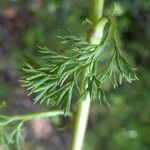
Adonis annua
Pheasant's-eye · Blooddrops · Autumn adonis · Bird's-eye · Pheasant-eye adonis
Description
Source: leafsnapAdonis annua (syn. Adonis autumnalis L., Adonis phoenicea Bercht. & J.Presl.), also known as pheasant's-eye, Adonis' flower, autumn Adonis, autumn pheasant's-eye, blooddrops, red chamomile, red Morocco, rose-a-ruby, soldiers-in-green, is an ornamental plant of the family Ranunculaceae. It is native to North Africa, Western Asia, the Mediterranean, and Europe. The name Bird's Eye is also associated with the bird's-eye primrose. Pheasant's eye is also an alternative name for poet's narcissus. Adonis annua grows to a height of 10 in (25 cm). The flowers are often scarlet in color with darker spots at the base. In the UK, Adonis annua is endangered and listed as a priority species under the UK Biodiversity Action Plan.The leaves and roots are poisonous to humans and livestock.
Care Guide
💧 Water
Originating from the Mediterranean region, pheasant's eye thrives in well-drained soil and can tolerate moderate drought conditions. It prefers to be watered regularly, about once a week. As an outdoor annual herb, its growth is closely linked to seasonal rainfall, allowing it to maximize water uptake before entering dormancy.
How should I water my Pheasant's eye plant?
To water Pheasant's eye, there are several options available. You can use a garden hose with a spray nozzle, a watering can, or any other common watering tool. Pheasant's eye is not too particular about the type of water it receives, as rainwater, tap water, or filtered water are all suitable. However, it is best to avoid watering this plant from overhead to prevent damage to the leaves and flowers, as well as the potential for disease. Instead, a drip irrigation system is often the most effective method for watering. These systems distribute water evenly and directly to the soil. If you have a Pheasant's eye in a container, a similar watering approach can be used with different tools. To water a container-grown plant, simply use a cup, watering can, or tap to apply water directly to the soil.
What should I do if I give my Pheasant's eye plant too much water or too little water?
The solution to underwatering Pheasant's eye is quite straightforward. When you notice that your plant is lacking moisture, all you have to do is start watering it more regularly. However, overwatering can be a more serious issue, especially if you don't catch it early. If your Pheasant's eye is overwatered, it may get sick and eventually die. To prevent this, it's important to choose a suitable location for the plant to grow. This means finding a spot that gets plenty of sunlight to help the soil dry out and has good drainage to prevent water from pooling. If you have overwatered a potted Pheasant's eye, you might need to transfer it to a new pot. The previous container may not have had proper drainage or enough holes. When repotting an overwatered Pheasant's eye, be sure to use loose soil and a pot that drains well.
How frequently should I water my Pheasant's eye plant?
To properly care for your Pheasant's eye, you should water it regularly throughout the growing season. In the spring, watering once per week is sufficient. However, as the season progresses and temperatures rise, you may need to water two to three times per week. Be careful not to exceed this rate, as it can harm the plant. Regardless of watering frequency, ensure that the soil remains moist but not wet. When watering a Pheasant's eye in a pot, you'll need to water more frequently compared to an in-ground plant. This is because the soil in a pot dries out faster. Generally, plan to water a container-grown Pheasant's eye a few times per week, rather than just once per week for an in-ground plant.
How much water does my Pheasant's eye plant need?
To determine how much water to give your Pheasant's eye plant, you have a few options. Some gardeners prefer to gauge the soil's moisture level by using their senses, watering until the top six inches feel moist. On the other hand, you can follow a general guideline of providing about two gallons of water per week, adjusting for hot weather and how quickly the soil dries out. However, it's important to note that sticking strictly to this guideline could result in overwatering if your plant needs less water. If you're growing Pheasant's eye in a container, you'll need to take a different approach. You should aim to moisten all layers of dry soil, which you can determine by feeling it with your finger. Another indicator is when you see a small amount of excess water draining from the bottom of the pot.
How do I know if I'm watering my Pheasant's eye plant enough?
Avoiding overwatering your Pheasant's eye can be a bit challenging. On one hand, these plants have deep roots that require weekly soil moistening. On the other hand, Pheasant's eye are highly susceptible to root rot, which can cause browning. Underwatering is not as common since these plants can tolerate some time without additional watering. However, if you wait too long, the plant may start wilting and leaves may become dry.
☀️ Light Full sun
Pheasant's eye does best with plentiful sunlight, which is essential for its healthy growth. Native to areas with extended daylight, it can show poor development if it receives insufficient sun. However, too much light exposure can also harm the plant.
What are the sunlight requirements for Pheasant's eye?
Pheasant's eye requires full sun, which means it needs above 6 hours of sunlight daily to thrive properly. Sunlight plays a crucial role in its development, and while it originates from environments with significant daylight exposure, too much or too little light can adversely affect its growth. An optimal balance of light and shade in your garden is important to ensure the plant's well-being. When indoor conditions or seasonal changes limit natural sunlight exposure, artificial lighting can serve as an effective alternative, ensuring the plant receives adequate light for optimal growth.
How should artificial lighting be used for indoor plants?
Indoor plants, including Pheasant's eye when grown inside, require adequate lighting to mimic the conditions of their natural habitat, especially when natural sunlight is insufficient. LED lights are recommended for their ability to provide specific wavelengths needed by plants. For full sun plants, 30-50W per square foot is advised; partial sun plants need 20-30W per square foot, and full shade plants should receive 10-20W per square foot of artificial light. The light source should be placed 12-36 inches above the plant and kept on for 8-12 hours per day to mimic natural daylight hours, ensuring healthier growth and development.
What are common symptoms of inadequate light in Pheasant's eye?
When Pheasant's eye doesn't receive sufficient light, several symptoms may appear, indicating light deficiency. These include smaller new leaves, leggy or sparse growth due to elongated spaces between leaves or stems, faster leaf drop as a resource conservation measure, slower or halted new growth as the plant enters survival mode, lighter-colored new leaves suggesting insufficient chlorophyll and essential nutrients, and various symptoms of overexposure such as chlorosis, sunscald, leaf curling, wilting, and leaf scorching, all of which indicate damage from excessive sunlight.
What solutions can support Pheasant's eye's growth in terms of lighting?
For optimal growth, gradually introducing Pheasant's eye to more sunlight or increasing artificial light can be beneficial. Indoors, moving the plant to a sunnier spot progressively or using grow lights for at least 8 hours a day can help. Outdoors, finding the best location with sufficient sunlight and avoiding sudden changes to prevent sunburn is key. For ground-planted varieties, reducing obstructions like pruning nearby trees or transplanting to a sunnier location during the dormant period can improve sunlight exposure. It's important to note that parts of the plant damaged by light deficiency may not recover, but new growth will be healthy with better light conditions.
🌡️ Temperature 5–35°C
Pheasant's eye is native to temperate environments and flourishes at temperatures between 68 and 95 °F (20 to 35 ℃). In colder seasons, using insulated ground coverings and growing it indoors is recommended.
What is the optimal temperature range for growing Pheasant's eye?
Pheasant's eye thrives in temperate environments, with an optimal temperature range between 68 to 95 °F (20 to 35 °C). It has strong cold resistance and generally does not require special frost protection measures during winter. However, care should be taken during colder seasons, and measures like insulated ground coverings and indoor cultivation are recommended.
How should Pheasant's eye be cared for during winters with temperatures below -25°C?
If winter temperatures are expected to drop below -25°C, it's important to provide cold protection for Pheasant's eye. This can be done by covering the plant with materials such as soil or straw. Before the first freeze in autumn, the plant should be watered abundantly, ensuring the soil remains moist and enters a frozen state. This helps prevent drought and water scarcity for the plant during winter and early spring.
What should be done if Pheasant's eye experiences temperatures below 0°C or above 35°C?
Pheasant's eye is cold-tolerant and should generally be kept above 0°C during winter. If temperatures fall below -25°C, there might be a decrease in sprouting or even no sprouting during spring, in which case any failed-to-sprout parts should be removed. During summer, the plant should be kept below 35°C. If temperatures exceed 38°C, leaves may become lighter, prone to curling, susceptible to sunburn, or the plant may wilt and dry out. Sunburned and dried-up parts should be trimmed away, the plant moved to a shaded location or covered with a shade cloth, and the soil should be kept moist by watering in the morning and evening.
💨 Humidity
🪴 Soil 6-7
🌱 Fertilizer
After most of Pheasant's eye flowers have opened to full size, resume fertilizing. When blooms are at their peak, apply fertilizer every three to four weeks, weather permitting. Once Pheasant's eye begins producing fewer new blooms, discontinue fertilizing; there's no reason to feed the plant when it can no longer form more flowers.
Why should I add fertilizer to my Pheasant's eye plant?
Plants, including the Pheasant's eye, require nutrients to survive. This is a well-known fact for most gardeners, regardless of their experience. Without proper nutrition, the Pheasant's eye will quickly perish after the first pollination. Therefore, it is crucial to provide the right kind and amount of nutrients to ensure its survival and promote the growth of large and beautiful flowers throughout the blooming season. Fertilizer is especially beneficial for the Pheasant's eye as it helps develop a strong and healthy root system. Given that this plant has a delicate and thin root system that is prone to damage, fertilizing during planting helps establish a sturdy foundation for the plant, ensuring both stability and an impressive flowering display. When the fertilization is timed correctly, it can significantly prolong the Pheasant's eye's flowering period.
When should I fertilize my Pheasant's eye flower?
Pheasant's eye experiences rapid growth early in the growing season, once the last frost is no longer a threat. It is best to fertilize Pheasant's eye during this period, specifically during planting. Whether you plant it in the ground or in planters, the fertilizer should be applied at the time of planting. This initial dose of fertilizer will be sufficient until later in the year when the blooms are fully developed. As the season progresses and Pheasant's eye reaches its peak bloom output, it is time to resume fertilizing. Ideally, fertilize every three to four weeks, depending on the weather. However, once Pheasant's eye starts producing fewer new blooms, stop fertilizing as there is no need to continue when the plant is no longer capable of blooming.
When is the best time to not use fertilizer on my Pheasant's eye plant?
Applying fertilizer to Pheasant's eye is important, but it can be detrimental if done at the wrong time. There are certain situations, often related to climate or controllable factors, where it is best to refrain from fertilizing. For example, if there are sudden severe changes in weather, such as a cold spell in the summer, it is advisable to wait until the weather warms up again before fertilizing. Similarly, if the soil is too dry or compacted, fertilizing may not be effective as the fertilizer may not be able to reach the plant's roots. In extremely hot temperatures, it is also best to avoid fertilizing as the heat can break down the fertilizer too quickly. Additionally, any pests or diseases should be addressed and resolved before applying fertilizer again.
What kind of fertilizer does my Pheasant's eye plant need?
Most types of Pheasant's eye require a specific balance of nutrients, which can be provided by a fertilizer designed for high-yield blooming plants. It is recommended to use a fertilizer with a higher level of phosphorus, indicated by a higher P number in its NPK ratio (e.g., 10-30-10). There are several fertilizer brands that offer suitable options for blooming plants like Pheasant's eye, making it convenient to provide the necessary nutrients. If you decide to use a pre-mixed fertilizer, it is important to carefully follow the instructions on the package to avoid over or under-fertilizing the Pheasant's eye, as both can negatively impact the plant's growth and may even cause it to wilt.
How can I give fertilizer to my Pheasant's eye plant?
When it comes to fertilizing Pheasant's eye, the instructions may vary depending on the type of fertilizer you have. However, there are some general tips that can be applied to most types of fertilizer. For the first application, which should be done when planting Pheasant's eye, you will need to mix the recommended amount of fertilizer into the soil and water it in with the plants. For subsequent fertilizing, the process may be slightly different. If you are using pellet fertilizers, you can simply mix them into the top inch of soil around the outer edge of the plant where the roots are. Make sure to water them in well initially and then water regularly after that. For other types of fertilizers, you can mix them into a watering can and apply them like regular watering. It's important to follow the instructions on the fertilizer packaging for consistency. However, if you prefer to have a regular schedule, aim to fertilize every three to four weeks.
🪴 Pot & Repot
✂️ Pruning
The Pheasant's eye plant is known for its vibrant red flowers and delicate, feathery foliage. For optimal care, it is best to perform light pruning from early to late spring. This helps remove dead stems and spent flowers, encouraging new growth and prolonged blooming. Be sure to use clean tools to prevent disease and enhance plant health by improving airflow and sunlight exposure.
🌿 Propagating
🐛 Diseases & pets
☠️ Toxicity
Characteristics
- Plant Type
- Herb
- Life Cycle
- Annual, Biennial
- Genus
- Adonis
- Family
- Ranunculaceae
- Hardiness Zone
- 5-9
- Mature Height
- 25 cm
- Mature Spread
- 30 cm
- Leaf Color
- Green
- Leaf Type
- Deciduous
- Flower Color
- Red
- Flower Size
- 2.54 cm
- Bloom Time
- Early spring, Mid spring
- Planting Time
- Spring
- Harvest Time
- Late spring, Early summer
- Native Area
- Turkey, Tunisia, Czech Republic, Slovakia, Montenegro, Cyprus, Bulgaria, Greece, Croatia, Slovenia, Morocco, Lebanon, Serbia, Iraq, Syria, Italy, Spain, Switzerland, France, Albania, Algeria, Portugal