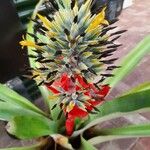
Aechmea chantinii
Amazon zebra plant
Description
Source: leafsnapAechmea chantinii is a bromeliad native to the Amazon Rainforest vegetation in Brazil, Venezuela, Colombia, Ecuador and Peru. Commonly known as Amazonian zebra plant, it is often used as an ornamental plant. The following subspecies are recognized : Aechmea chantinii var. chantinii (Carrière) Baker, 1889 - most of species range Aechmea chantinii var. fuchsii H.Luther (1987 publ. 1988). - EcuadorThere are numerous cultivars of A. chantinii.
💡 The Amazonian zebra plant is an epiphytic bromeliad, which means it requires a tree, rock, or other sturdy structure for support. Often found in plant stores or nurseries, these bromeliads are typically displayed growing on a piece of bark. They obtain their nutrients from sunlight and the air. To water the plant, allow water to collect in its central cup.
🌳 The amazonian zebra-plant has an unexpected role beyond its decorative value; it may serve as a biofilter for water purification. Its intricate root and leaf system can support microbial communities that detoxify water, removing harmful substances and supplying cleaner water in the environments where this plant grows. Studies are examining the efficacy of using various plant species in constructed wetlands, and the amazonian zebra-plant might eventually be recognized for those environmental services.
🎭 The same attributes as silver, including purity, strength, clarity, and focus.
Care Guide
💧 Water
The Amazonian zebra plant, native to tropical rainforests, thrives in high humidity and needs consistent moisture. Ideally, it should be watered weekly. Since it is sensitive to drought, regular misting, especially during its growth phase, helps maintain the ambient humidity necessary for its health.
What should I do if I give my Amazonian zebra-plant too much water or too little water?
Overwatering is a more common issue for Amazonian zebra-plants, but both overwatering and underwatering can occur. The plants can tolerate short droughts but prefer consistently moist soil. Underwatering may cause browning and curling of leaves, especially for container-grown plants. It is more likely to happen when relying on rainfall for watering, which may be insufficient. To fix underwatering, provide more water. Overwatering can cause wilting, yellowing of leaves, and rot in leaves and stem. It can also damage fruits and lead to mold and fungus. Overwatering can happen for in-ground plants even with sufficient rainfall. In container gardening, it is often due to heavy soils and lack of drainage holes. If an Amazonian zebra-plant is overwatered in a container, it's best to transfer it to a new container with looser soils and better drainage. Reduce watering schedule for both in-ground and potted plants if overwatered.
How often do I need to water my Amazonian zebra-plant?
To properly care for your Amazonian zebra-plant during the growing season, it's important to maintain a consistent soil moisture level without overwatering. If you have your plant in a container, watering it with around one inch of water per week is generally sufficient. However, if your plant is in the ground and it has received about one inch of rainfall in a week, additional watering might not be necessary. This means you can go for longer periods without watering an in-ground plant if it has been consistently raining. Keep in mind that the frequency of watering will vary depending on the season. In winter, less water is needed compared to the demands of spring, summer, and fall. Additionally, remember that different growth phases, such as flowering and fruiting, may require increased watering for your Amazonian zebra-plant.
How should I water my zebra plant from the Amazon if I grow it indoors?
To successfully grow your Amazonian zebra-plant indoors in a large container, keep in mind a few important factors. Firstly, if you live in a region with cold winters, indoor growing is necessary because this plant cannot withstand freezing temperatures. Secondly, note that your indoor zebra-plant won't have access to rainwater like outdoor plants, so you'll need to supply all the water it receives. Indoor locations are often drier, due to appliances like air conditioners, so you'll likely need to water your plant more frequently. Additionally, misting the leaves of your indoor zebra-plant is beneficial for creating a humid environment where it can thrive.
What do I need to think about when watering my Amazonian zebra-plant during different seasons and periods of growth?
To help your plants thrive throughout the seasons, it's important to adjust your watering approach accordingly. In the spring, start by watering your Amazonian zebra-plant with about one inch of water per week. As summer arrives and temperatures rise, you may need to water more frequently due to the heat causing the soil to dry out faster. During the fall, you can continue with the same watering rate as in the spring. In the winter, you can reduce watering slightly, but make sure to keep the soil slightly moist and prevent the top layer from drying out completely. Additionally, consider adjusting your watering routine based on the growth stage of your plant. When it's flowering or fruiting, it may require more water. Observe the soil regularly to find the right balance and avoid overwatering.
☀️ Light Full sun
The Amazonian zebra-plant thrives in full sun yet also tolerates moderate levels of sunlight. Native to regions with abundant light, such conditions greatly support their healthy growth. However, excessive exposure can cause leaf scorch, and insufficient light may result in reduced vigor.
What kind of sunlight does the Amazonian zebra-plant require?
Epiphytic Bromeliads, which are jungle plants, can be found in various locations in the rainforest. Some are closer to the forest floor and receive only dappled sunlight that filters through the tall canopies. Others grow as epiphytes higher up on trees and are exposed to direct sunlight. To determine the type of plant you have, it's important to consider these factors. Generally, epiphytic bromeliads that naturally receive more sun have thicker, stiffer leaves, while those growing in the shade tend to have more tender, thinner leaves. However, it's always wise to check the specific needs of each species. For the Amazonian zebra-plant, it's best to provide bright, indirect light, such as from an east-facing window. Direct sunlight for prolonged periods should be avoided, as it may cause sunburn to the plant. This advice applies to all members of the bromeliad family.
What happens if the Amazonian zebra-plant doesn't get enough sunlight?
Inadequate lighting can have two effects on Amazonian zebra-plants. If they receive too much direct sunlight and are accustomed to shady conditions, their leaves may initially appear bleached and paler than usual. Eventually, the leaves will almost certainly become scorched. On the other hand, if the plants receive too little sunlight, their foliage will lose color and darken. This is especially true for variegated plants, as they may lose their additional colors and become solid green. Overall, if Amazonian zebra-plants do not receive enough sunlight according to their species' needs, they will grow poorly.
Does the Amazonian zebra-plant need specific amounts of sunlight at different stages of its growth?
The Amazonian zebra-plant thrives in the consistent tropical conditions of its natural habitat, where the light remains constant throughout its life. However, if the plant is exposed to more light, it can be encouraged to bloom, which is a desired outcome. It is important to note that blooming also depends on other factors like temperature and humidity, which need to be appropriate for the plant.
Are there any warnings or advice for exposing Amazonian zebra-plants to sunlight?
If you recently purchased an Amazonian zebra-plant from a store that doesn't specialize in plants, it's likely been kept in low light. Even if it's supposed to prefer sunlight, you must slowly get it used to brighter, natural light. This process is called hardening. Start by placing your plant near a window where it gets indirect sunlight, gradually moving it closer each day. After a few days, you can expose it to direct morning light, but only for a short time.
What temperature does the Amazonian zebra plant need?
The Amazonian zebra-plant thrives in specific conditions including a greenhouse setup with temperatures between 70 and 80 °F (21 and 27 °C), bright indirect light, good air circulation, and high humidity. However, these plants are not overly sensitive and can be easily grown in average home conditions. A general rule is that if you feel comfortable in your room temperatures, they are likely suitable for your Amazonian zebra-plant too.
🌡️ Temperature 20–41.1°C
The Amazonian zebra plant does best in warm conditions. If temperatures drop too low, growth can stop and the plant may sustain frost damage. It tolerates high heat and humidity well and needs a steady level of moisture in its surroundings. However, very high temperatures and humidity can make it prone to fungal infections. In dry environments, frequent watering and misting are needed to keep the air humid enough. The plant is sensitive to abrupt temperature changes, so maintaining a fairly stable temperature is important.
What temperature does my Amazonian zebra-plant prefer?
The Amazonian zebra-plant thrives in warmer temperatures, similar to those found in tropical and subtropical regions. As an epiphytic plant, it relies on air humidity rather than groundwater for its water supply. Higher temperatures help maintain the desired humidity level, which is best achieved at temperatures over 75℉ (25℃). So, before cranking up the air conditioner, ensure that these plants are not exposed to chilly drafts. Ideally, temperatures ranging from 75℉ to 90℉ (25℃ to 32℃) provide the perfect environment, although they can tolerate cooler temperatures down to 50℉ (15℃).
What happens to my Amazon zebra plant when it is extremely hot or cold?
The Amazonian zebra-plant blooms and reproduces without needing a dormant or cold period. It prefers consistent temperatures year-round, so it's important to maintain ideal temperatures. However, if the plant experiences temperatures below 50℉(15℃) or above 95℉(35℃), it may be damaged. The extent of the damage depends on factors such as the duration of exposure to extreme temperatures, the plant's genetics, and its growth stage. Cold temperatures can cause frostbite, leading to black spots or entirely blackened leaves. This damage becomes visible over a few days as the leaves become droopy and discolored. While it's difficult to save the plant from frostbite, it may be able to regrow over several months. On the other hand, exposure to very high temperatures simply causes wilting. If the leaves become too dry, they may not recover. However, if the exposure was brief, the heat may have no lasting effect. Overall, the Amazonian zebra-plant can withstand high temperatures better than cold temperatures.
How do I make sure my Amazonian zebra-plant stays warm?
To easily keep the Amazonian zebra-plant warm, you don't necessarily need a heating pad or nearby heater, but it's not a problem if you have one. One effective way to maintain the right temperature is by planting the Amazonian zebra-plant in a terrarium. This enclosed space creates a small environment with higher humidity and temperature than the outside, and the glass itself holds onto the heat. If you live in a warm, dry region, you can place the plant near a warm window or an exterior wall. Just be cautious not to provide too much sunlight by moving it too close to a bright window; you can use sheer curtains to address this. On the other hand, if you live in a tropical or subtropical climate where temperatures stay between 55-90℉ (13-32℃), you can grow the Amazonian zebra-plant outside all year. If the temperature drops below this range, simply bring them indoors for the night or cover them with a thin cloth to protect them from the cold.
Tips for growing Amazonian zebra-plant inside your home.
Temperature fluctuations can sometimes surprise us in unexpected ways, such as through windows. If you place your Amazonian zebra-plant near a window, you should consider how the outside temperature can impact the temperature of the window itself and, subsequently, how much of that hot or cold air can reach your plant. Another common source of temperature changes in our homes is air conditioning and heaters. We might not often think about it, but a direct draft from an air conditioner can cool the Amazonian zebra-plant well below its preferred temperature range. On the other hand, heaters can quickly dry out the plant, causing the leaves to harden and eventually wither.
💨 Humidity
🪴 Soil 5-6
🌱 Fertilizer
Proper fertilization is essential for the Amazonian zebra-plant's health and appearance. Fertilize the Amazonian zebra-plant during summer, repeating the application monthly throughout the season. Nutrients support growth and preserve the plant's parts. Fertilization improves the Amazonian zebra-plant's floral display, helping it produce the best blooms.
Why should I put fertlizer on my Amazonian zebra-plant?
Fertilization is important for the Amazonian zebra-plant because it provides key nutrients for its growth both above and below ground. While the plant's overall fertilization needs are low, regular fertilization can greatly benefit it. Although the Amazonian zebra-plant can survive without fertilization, annual fertilization helps keep the plant alive and promotes the development of longer-lasting flowers. Therefore, those who want their Amazonian zebra-plant to thrive should remember to fertilize it annually.
When should I fertilize my Amazonian zebra-plant?
The best time to fertilize an Amazonian zebra-plant is the late winter to early spring when it is transitioning from a dormant phase to a phase of active growth. Fertilizing at this time promotes healthy growth and sets the plant up for a good season. Fertilizing in the early spring is most beneficial, but it is also okay to fertilize in the fall. However, it is not recommended to fertilize in the summer or winter seasons.
When is it not a good time to put fertilizer on my Amazonian zebra-plant?
To properly care for your Amazonian zebra-plant, only fertilize it in late winter and early spring. This plant doesn't need frequent feeding, so one annual fertilization is sufficient. Avoid fertilizing during spring, summer, and fall to prevent overfertilization and related complications. However, if you missed fertilizing in spring, you can still feed it in the fall. Remember not to fertilize during winter when the plant is dormant and not actively growing.
What kind of fertilizer does my Amazonian zebra-plant require?
When choosing fertilizer for an Amazonian zebra-plant, a general-purpose fertilizer with balanced nutrients will work well. However, using a specific nutrient blend with higher levels of phosphorus can be even more beneficial for stronger roots and better flowers. Both granular and liquid forms of fertilizer can be used as long as they contain plenty of nutrients. Additionally, organic methods such as compost and manure can also improve the soil for the plant's growth.
How can I make my Amazonian zebra-plant grow better?
To fertilize an Amazonian zebra-plant, the most common method is to use granular or pellet fertilizer. It's important to fertilize the plant as it transitions from its dormant growth phase to active growth. When spring arrives and the plant starts to send shoots through the soil, you can apply your fertilizer. Alternatively, some people prefer using a liquid fertilizer. If you choose this option, dilute the fertilizer with water before applying it. Regardless of the type of fertilizer you use, it's recommended to moisten the soil before, during, and after fertilization.
🪴 Pot & Repot 2-3 years
When repotting Amazonian zebra-plant, select a pot 1-2 inches (2.5–5.1 cm) larger with ample drainage. Use a well-draining potting mix. Repot in spring or fall, ensuring the root ball sits slightly lower than the rim of the flower pot. Water thoroughly after repotting and place in a warm spot with indirect sunlight.
✂️ Pruning
The Amazonian zebra plant flourishes when it is pruned correctly from early spring to late winter. To keep the plant healthy and attractive, remove any damaged leaves, but be careful to avoid cutting into the central stem. Pruning helps maintain the plant's shape and vitality and also deters pests. Always use sterilized tools to prevent disease and promote the plant's optimal health.
🌿 Propagating
🐛 Diseases & pets
☠️ Toxicity
The Amazonian Zebra Plant is not thought to be toxic to animals. To be safe, however, it is best to keep this plant out of the reach of young children and pets.
Characteristics
- Plant Type
- Herb
- Life Cycle
- Perennial
- Genus
- Aechmea
- Family
- Bromeliaceae
- Hardiness Zone
- 10-12
- Mature Height
- 61 cm to 76 cm
- Mature Spread
- 46 cm
- Leaf Color
- Green, Gray, Variegated, Silver
- Leaf Type
- Evergreen
- Flower Color
- Yellow, Red
- Flower Size
- 2.54 cm
- Bloom Time
- Late spring, Early summer, Mid summer
- Planting Time
- Spring, Autumn
- Harvest Time
- Mid summer
- Native Area
- Colombia, Venezuela, Peru, Brazil, Ecuador