Aechmea fasciata
گلدان نقره ای، · Urnplant · Silver vase · Living vase · Silver vase plant
Description
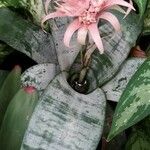
Source: leafsnapAechmea fasciata, commonly known as the silver vase plant, is a bromeliad species native to Brazil. It is a popular ornamental plant due to its striking appearance and ease of care. The plant features long, narrow leaves that form a rosette shape and are covered in small spines. These leaves are typically green with silver-gray banding, giving the plant its distinctive appearance. Aechmea fasciata produces a tall inflorescence with pink bracts and blue or purple flowers that bloom in the center of the rosette. The flowers last for several weeks before fading away. This bromeliad prefers bright but indirect light and can tolerate low light conditions as well. It requires well-draining soil or can be grown epiphytically on bark or other materials. Aechmea fasciata is relatively easy to care for, requiring moderate watering during the growing season but allowing it to dry out between waterings during the winter months when it goes dormant. Overall, Aechmea fasciata is an attractive and low-maintenance houseplant that adds an exotic touch to any indoor space with its unique appearance and stunning blooms.
🌳 Aside from its ornamental value, the silver vase plant acts as an unusual natural barometer, responding to changes in air pressure. When atmospheric pressure drops — often indicating an approaching storm — the plant’s bloom spike closes. A 2012 study at the University of KwaZulu-Natal confirmed this ability, making this bromeliad a wonder of the plant world.
🎭 Protection, a gift from the divine
Care Guide
💧 Water Every 7 days
The urn plant thrives in humid environments and prefers its soil to maintain balanced moisture. While it is moderately drought-tolerant, it benefits from being watered weekly. Often grown indoors for its ornamental appeal, this plant's tropical origins mean it flourishes with higher humidity. You can increase humidity by using a pebble tray filled with water, which in turn promotes vibrant flowering.
When Should I Water My Urn Plant?
To ensure the health and growth of your urn plant, water it judiciously. Observe the leaves for a glossy green; brown or dull leaves suggest dehydration. Check the soil's moisture; the plant prefers the top two inches dry before watering. Drooping or wilting leaves can indicate the need for water, but also be cautious of overwatering. Improper watering can lead to root rot or nutrient deficiencies, harming the urn plant significantly.
How Should I Water My Urn Plant?
Watering your urn plant correctly involves considering its specific needs. Bottom-watering, by placing the plant in a tray of water to absorb moisture from the bottom up, minimizes the risk of fungal diseases and ensures the roots are adequately moist without over-wetting the soil. Use a watering can with a narrow spout to direct water at the base, avoiding excessive moisture on the foliage which can harm the plant.
How Much Water Does Urn Plant Really Need?
Urn plants, native to South America, thrive on being evenly moist but not waterlogged. Factors such as pot size, root depth, and plant size influence watering needs. General guidelines suggest watering thoroughly until it drains out, then letting the top inch of soil dry out before the next watering. Average watering frequency is once every 1-2 weeks. Proper hydration signs include healthy green leaves and moist, not soggy, soil. Overwatering or underwatering can lead to serious health issues for the plant.
What Kind of Water is Best for Urn Plant?
Urn plant is moderately sensitive to water quality, showing a preference for rainwater due to its natural composition and lack of chemicals. Distilled or filtered water are good alternatives, while tap water should be used cautiously because of potential chlorine and fluoride content that may harm the plant. Letting tap water sit out for 24 hours can help evaporate chlorine. The plant prefers room temperature water around 68-72°F (20-22°C) to avoid shock.
How Do Urn Plant's Watering Needs Change with the Seasons?
Seasonal changes affect how you water your urn plant. In spring, aim for consistent humidity without overwatering to support new growth. Summer demands more attention due to increased evaporation, recommending to keep the urn filled with clean water for hydration. Autumn sees a reduction in the plant's watering needs as growth slows, and in winter, minimize watering, allowing both the urn and soil to dry out completely between waterings to avoid root diseases.
☀️ Light Partial sun
The silver vase plant can do well in locations that provide a combination of sun and shade, and it can also tolerate areas of full shade. In its native environment it grows beneath the canopy of taller plants, so it does not need intense sunlight. However, inadequate light can impede its growth and produce less vibrant foliage.
What are the sunlight requirements for an Urn plant?
Urn plants require specific amounts of sunlight to thrive, categorized into 'Partial sun' and 'Full shade'. Partial sun means the plant should receive about 3-6 hours of sunlight, while full shade indicates it gets less than 3 hours of sunlight per day. It's vital to observe the movement of sunlight through your garden to find the ideal spots that offer a balance of light and shade, ensuring the plant's well-being. In its natural habitat, the Urn plant grows under the canopies of larger plants, implying it doesn’t demand intense sun exposure. However, inadequate lighting might lead to less vibrant foliage.
How can artificial lighting benefit Urn plants indoors?
Artificial lighting can be crucial for Urn plants, especially in conditions where natural sunlight is insufficient, such as in winter or less sunny areas. Proper lighting promotes healthier and faster growth. LED lights are recommended due to their ability to provide specific light wavelengths needed by plants. For full sun plants, 30-50W/sq ft of artificial light is required; partial sun plants need 20-30W/sq ft, and full shade plants need 10-20W/sq ft. The light source should be placed 12-36 inches above the plant, mimicking natural sunlight, and it’s important to adjust the light duration according to the plant species, generally between 8-12 hours daily.
What are the signs of improper lighting in Urn plants?
Urn plants show various symptoms when they receive inadequate sunlight, which might not always be easily noticeable due to their adaptability. These include lighter-colored new leaves indicating insufficient sunlight, slower or stopped growth hinting at the plant entering survival mode, and potential impacts on flowering and fruiting. Excessive sunlight can cause issues like chlorosis, where leaves lose their green color, sunscald that damages plant tissue, leaf curling as a defense mechanism against excessive sunlight, wilting from increased water loss, and leaf scorching characterized by brown, dry edges on leaves.
What solutions are available for managing improper lighting conditions for Urn plants?
To manage improper lighting, optimizing plant growth requires gradual adaptation to sunlight conditions. For indoors, shifting plants to sunnier spots weekly until they receive 3-6 hours of sunlight or using artificial lighting like desk or professional grow lights for at least 8 hours daily can help. Outdoors, it's crucial to move plants gradually to sunnier spots to avoid sunburn, and indoors, using artificial lighting can supplement. Moreover, reducing obstructions such as pruning trees or transplanting to sunnier locations with good drainage can improve sunlight exposure. It's important to note that while parts of the plant affected by insufficient light may not recover, new growth should be healthy with improved lighting conditions.
🌡️ Temperature 20–41.1°C
The silver vase plant is native to tropical regions and thrives in temperatures from 68 to 105 ℉ (20 to 41 ℃). During the summer months it can tolerate higher heat, though adjustments should be made to avoid scorching. In winter, it’s best to keep the plant in a warm room with temperatures above 60 ℉ (15.5 ℃).
What are the essential care tips for an Urn Plant?
The Urn Plant, scientifically known as Aechmea fasciata, thrives in tropical environments and prefers temperatures between 68 to 105°F (20 to 41°C). It can handle higher temperatures, especially during summer, with precautions taken to avoid scorching. In winter, it's crucial to keep it in a warm room, ideally above 60°F (15.5°C), and if temperatures dip below 41°F (5°C), it should be moved indoors. A south-facing window is perfect for ensuring it receives enough sunlight without being near heaters or air conditioners that could dry it out. Indoor temperatures above 68°F (20°C) are ideal. When temperatures fall below this, watering should be reduced and only resumed when the soil's surface is dry to avoid root rot. For outdoor overwintering, ensure the plant is sheltered and possibly covered with plastic film or fabric to keep soil moist and protect from cold.
How do I protect my Urn Plant from low temperatures?
Urn Plants prefer warm climates and struggle with cold. They thrive best above 68°F (20°C) and should be kept above 41°F (5°C) during winter. When exposed to temperatures below 33.8°F (1°C), the plant's leaves may not show immediate damage but will start to wither and droop after a few days, and severe cold may kill the plant. To protect your Urn Plant from cold damage, trim any frostbitten areas and move it to a warm spot indoors, preferably near a south-facing window. This ensures it gets ample sunlight without being too close to heaters or air conditioning vents, which can cause dry air and further stress the plant.
What should I do if my Urn Plant is exposed to high temperatures?
Urn Plants need to be kept at temperatures below 105°F (41°C) during the summer. Exposure to temperatures above 113°F (45°C) can cause the leaves to dry, wither at the tips, halt growth, and increase the risk of root rot. Sunburn might also occur with too much direct sunlight. To alleviate heat stress, remove damaged plant parts and relocate your Urn Plant to a spot where it can receive shade during the intense midday and afternoon heat. Watering in the morning and evening helps keep the plant and its surrounding environment moist, reducing heat stress.
💨 Humidity normal (40-60%)
This plant will thrive in moderate humidity, which is probably the level in your home. However, misting it a few times a week can be very beneficial. Make sure the room has good ventilation.
🪴 Soil 5-6
🌱 Fertilizer
Appropriate fertilization is essential for the health and appearance of the Silver vase plant. Fertilize the Silver vase plant during summer, repeating the application monthly throughout the season. Nutrients supply the energy for growth and support the plant’s structures. Fertilization improves the Silver vase plant’s flowering display, ensuring the best blooms.
Why do I have to add plant food to my Urn plant?
Fertilizer and soil nutrients are like fuel for your Urn plant, helping it grow and stay healthy. Plants in general need these nutrients to develop new material and maintain their existing parts. For the Urn plant specifically, fertilization is particularly important in order to showcase its beautiful flowers. Since the flowers are the main attraction of this plant, most gardeners strive to ensure they look their best. Fertilization is a reliable method to help your Urn plant produce the most stunning blooms possible.
When should I fertilize my Urn plant for the best results?
The Urn plant has two main phases each year. First is the dormant phase during the winter, where minimal new growth occurs. The second is the active growth phase during spring and fall, when the plant requires the most fertilization. For best results, start fertilizing in spring and continue doing so once per month for the rest of spring and most of summer. As fall nears, reduce the fertilization rate.
When is the best time to not fertilize my Urn plant?
To support the growth of your Urn plant, it's important to be mindful of root burn. During the spring and summer when the plant is actively growing, additional nutrients are required. However, in the fall and winter when the plant goes into dormancy, it's best to withhold fertilization.
What kind of fertilizer does my Urn plant need?
The best fertilizer for a Urn plant is one that has a balanced mix of the three main plant nutrients, with slightly more phosphorus. Another option is to improve the soil by adding organic materials like compost, worm castings, and manure. Fertilizers for Urn plants come in various forms, but the most effective ones are usually liquid or powdered. Whether you choose liquid or powdered fertilizer, make sure to dilute it and apply it while watering your Urn plant.
How do I give my Urn plant the nutrients it needs to grow?
To apply fertilizer to your Urn plant, start by finding a suitable fertilizer and learning the ideal fertilization schedule. Once you have those details in place, the next step is to mix the liquid fertilizer with water. Different fertilizers may have their own specific instructions, so it's best to follow the guidance provided by the manufacturer. These instructions should include details on diluting the fertilizer correctly to avoid overfertilization. Mixing the fertilizer with water is a simple process, and once it's done, just pour the mixture into the soil where your Urn plant is located.
🪴 Pot & Repot 2-3 years
When repotting a Silver vase plant, select a pot 1-2 inches (2.5–5.1 cm) larger that has good drainage. Use a well-draining potting mix. Repot in spring or fall, making sure the root ball sits slightly below the rim of the flower pot. Water thoroughly after repotting and place it in a warm spot with indirect sunlight.
✂️ Pruning
The urn plant displays striking silver-banded leaves and vibrant pink flower bracts. To promote healthy growth and improve airflow, prune the plant in late winter or early spring. Remove any dead leaves and spent flower stalks using clean, sharp tools to prevent the spread of disease. Be careful not to over-prune, as maintaining sufficient foliage is important for photosynthesis.
🌿 Propagating
🐛 Diseases & pets
☠️ Toxicity
This plant is a pet safe houseplant that you can have around with dogs and cats without having to worry. This is safe for humans as well, except for rare allergic-related reactions.
Characteristics
- Plant Type
- Herb
- Life Cycle
- Perennial
- Genus
- Aechmea
- Family
- Bromeliaceae
- Hardiness Zone
- 10-13
- Mature Height
- 30 cm to 91 cm
- Mature Spread
- 61 cm
- Leaf Color
- Silver, Green, Gray
- Leaf Type
- Evergreen
- Flower Color
- Pink, Purple
- Flower Size
- 2.54 cm
- Bloom Time
- Late spring, Early summer, Mid summer
- Planting Time
- Spring, Summer, Autumn, Winter
- Harvest Time
- Mid summer
- Native Area
- Brazil