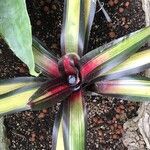
Aechmea gamosepala
Matchstick Bromeliad · Bromeliad
Description
Source: leafsnapAechmea gamosepala, commonly known as the Matchstick Bromeliad, is a tropical plant native to Brazil. It belongs to the Bromeliaceae family and is favored as an ornamental plant due to its striking appearance and low maintenance needs. The Matchstick Bromeliad features long, narrow green leaves with reddish-brown tips that grow in a rosette pattern. During the summer months, the plant produces bright pink or red flowers that grow on tall spikes above the foliage. These vibrant flowers are long-lasting and can remain on the plant for several months before fading. The Matchstick Bromeliad is an epiphytic species, meaning it grows on other plants or objects rather than in soil. It can be cultivated both indoors and outdoors but requires bright, indirect light for optimal growth. This species prefers well-draining soil and good air circulation around its roots. As an easy-to-care-for houseplant, the Matchstick Bromeliad requires minimal watering but benefits from regular misting to maintain humidity levels around its leaves. In addition to its decorative appeal, Aechmea gamosepala is valued in traditional medicine for its medicinal properties. Extracts from this species are used by practitioners for treating various ailments, including inflammation and pain relief. Overall, Aechmea gamosepala is a beautiful tropical houseplant that adds color and interest wherever it is grown, while also offering potential health benefits through traditional medicine practices.
💡 Most bromeliads will produce only one flower spike during their lifetime. However, this doesn't mean the enjoyment of having a matchstick plant has to end. Like all bromeliads, matchstick plants can be propagated from the offshoots that grow around the base of the mother plant. To increase your plant collection, simply remove these offshoots and transplant them into a new pot.
🌳 Matchstick plant is recognized for its decorative qualities and is commonly included in floral arrangements and garden plantings. Despite its ornamental role, its possible ecological applications remain mostly unexplored. The plant's bright inflorescences may attract pollinators in home garden contexts, thus helping local ecosystems. There is no documentation of its use in phytoextraction or as a soil metal-content indicator, though this might be a subject for future study.
Care Guide
💧 Water Every 7 days
The matchstick plant thrives in high humidity and requires balanced moisture conditions. It does best with a weekly watering routine. Since it's an evergreen, it retains its foliage all year, so it's important to maintain consistent moisture, especially when grown indoors.
What should I do if I give my Matchstick plant too much or too little water?
Overwatering is a common issue for Matchstick plants, but they can also suffer from underwatering. Matchstick plants prefer consistently moist soil, but they are somewhat resilient to short dry spells. If you underwater your plant, the leaves will turn brown and brittle at the tips and may curl. This is more likely to happen with in-ground plants that rely on rainfall, but don't receive enough. Container-grown plants tend to dry out faster, so underwatering is more common. To address underwatering, simply supply more water. Overwatering, on the other hand, causes wilting, yellowing leaves, and rot in both leaves and stems. It can also lead to mold and fungus. Overwatering can happen when you water in-ground plants despite sufficient rainfall or when container-grown plants are in heavy soils with poor drainage. For overwatered container-grown Matchstick plants, it's best to move them to a new container with looser soil and better drainage after cleaning and trimming the roots. Regardless of whether your plant is in the ground or in a pot, you should reduce your watering schedule if it's overwatered.
How frequently should I water my Matchstick plant?
To keep your Matchstick plant healthy and properly hydrated during the growing season, it is important to maintain consistent soil moisture without overwatering. If you have your Matchstick plant in a container, you will typically need to water it once a week with about one inch of water. However, if you have planted your Matchstick plant in the ground, you may not need to water it separately if it has received about one inch of rainfall during the week. This means you might be able to go for longer periods without watering an in-ground Matchstick plant, as long as there has been consistent rainfall. Remember to adjust your watering frequency based on the season. During winter, Matchstick plants require less water compared to spring, summer, and fall. Additionally, the watering needs can vary depending on the growth phase of your Matchstick plant. The flowering and fruiting phase often requires more water than usual.
What should I do to water my Matchstick plant differently if I grow it inside?
To successfully grow a Matchstick plant indoors, you need to take into account a few important factors. First, if you live in a region with cold winters, growing the plant indoors is necessary as it cannot survive freezing temperatures. Also, keep in mind that indoor plants do not have access to rainwater like outdoor plants do, so you will need to provide all the water for your Matchstick plant. Indoor environments tend to be drier, partly due to air conditioners and other appliances, so you'll likely need to water your plant more frequently than if it were growing outside. Additionally, misting the plant can help create a humid environment that is beneficial for its growth, so consider adding this step to your watering routine.
What do I need to think about when watering my Matchstick plant during different seasons and growth periods?
To help each plant survive through different seasons, different watering styles are required. In the spring, start watering the Matchstick plant once a week with about one inch of water. During the hot summer, the same watering frequency may work, but keep an eye on the soil as the heat can cause it to dry out faster. It may need to be watered multiple times per week to keep the moisture consistent. In the fall, stick with the same watering rate as the spring. In the winter, water the plant a little less, but don't stop watering completely. The goal is to keep a slight degree of moisture and prevent the top few centimeters of soil from drying out. Depending on the growth stage, such as flowering or fruiting, the Matchstick plant may need more water than usual. Observe the soil to determine if you need to adjust the watering rate to avoid soggy conditions while maintaining consistent moisture.
☀️ Light Partial sun
The matchstick plant does best in spots that receive a substantial amount of sunlight each day, though not overly intense rays that can scorch its leaves. This inclination stems from its native surroundings, where it gets moderate sun exposure. During its development periods, a generous supply of light is important: too little will impede growth, while too much can cause leaf burn.
What are the sunlight requirements for a Matchstick plant?
The Matchstick plant, or Aechmea gamosepala, flourishes in areas that receive a significant amount of sunlight daily but not exceedingly strong rays that could scorch its leaves. This preference stems from its natural habitat where it's accustomed to moderate sun exposure. For healthy growth, it requires about 3-6 hours of sunlight (partial sun) and can benefit from more than 6 hours of sunlight (full sun) depending on its environment. The plant's adaptability allows it to tolerate full sunlight in cooler weather. However, it's crucial to watch how sunlight moves through your garden to choose spots that provide the perfect balance of light and shade, ensuring the plant's happiness.
How can artificial lighting be used for Matchstick plants?
Indoor Matchstick plants require adequate lighting for optimal growth, especially when natural sunlight is insufficient, such as in winter or less sunny spaces. Artificial lights, like LED lights, offer a vital solution by providing specific wavelengths needed for the plants' growth. For full sun plants, 30-50W/sq ft of artificial light is needed, partial sun plants require 20-30W/sq ft, and full shade plants need 10-20W/sq ft. The light source should be placed 12-36 inches above the plant to mimic natural sunlight, and most plants need 8-12 hours of light per day to mimic the duration of natural daylight hours.
What are the symptoms of improper lighting for Matchstick plants?
Symptoms of light deficiency in Matchstick plants are often subtle due to its adaptability but include smaller new leaves, leggy or sparse growth, faster leaf drop, slower or no new growth, lighter-colored new leaves indicating a lack of chlorophyll and essential nutrients, chlorosis (yellowing leaves due to chlorophyll breakdown from excessive sunlight), sunscald, leaf curling as a defense mechanism against excessive sunlight, wilting from overexposure to sunlight causing increased water loss, and leaf scorching characterized by brown, dry, and crispy edges on leaves.
What solutions can be applied to improve Matchstick plant's exposure to light?
To optimize your Matchstick plant's exposure to light and encourage healthy growth, consider gradually shifting it to sunnier spots each week until it receives the desired 3-6 hours of direct sunlight daily for gradual adaptation. Use artificial light sources like desk or ceiling lamps for at least 8 hours daily or invest in professional plant grow lights if the plant is large or not easily movable. For outdoor plants, gradual relocation to sunnier locations minimizes sunburn risk. Ensure to reduce any obstructions like trees by pruning and consider transplanting smaller plants during their dormant period to spots with ample sunlight and good drainage. It's important to note that parts of the plant that have suffered from insufficient sunlight may not recover, but new growth post increased light exposure will be healthy.
🌡️ Temperature 20–35°C
The Matchstick plant comes from environments where temperatures typically fall between 68 to 95 °F (20 to 35 ℃). It prefers a warm climate and may require extra indoor heating during cooler seasons.
What is the origin and preferred climate for the Matchstick plant?
The Matchstick plant, scientifically known as Aechmea gamosepala, originates from climates where temperatures typically range from 68 to 95°F (20 to 35°C). It thrives in warm conditions and may require additional indoor heating during cooler seasons to maintain its ideal temperature range. Being a tropical plant, it prefers to be moved indoors if winter temperatures are expected to drop below 0°C, suggesting that it is best cultivated in environments that closely mimic its native tropical habitat.
How should I care for my Matchstick plant during winter?
During winter, if temperatures are expected to fall below 0°C, it's recommended to move the Matchstick plant indoors to protect it from the cold. Placing it near a south-facing window ensures it receives sufficient sunlight. However, it's important to avoid placing the plant near heaters or air conditioners to prevent the air around it from becoming excessively dry. Indoor temperatures should be maintained above 20°C for the plant's well-being. In cases where temperatures drop further, reduce watering and only water again once the soil surface has dried to prevent root rot. For plants that must remain outdoors, ensure they're in a sheltered, sunny spot, possibly utilizing a temporary greenhouse or wrapping materials for added warmth, and keep the soil slightly moist by reducing watering.
What are the signs of temperature stress in Matchstick plants and how can I mitigate them?
Matchstick plants show visible signs when experiencing temperature stress. For low temperature stress, where the plant is exposed to temperatures below its preferred range, symptoms such as wilting and drooping leaves may occur after three to five days, potentially leading to the plant drying up if the condition persists below -5°C. The solution involves trimming frostbitten areas and moving the plant to a warmer, well-lit indoor spot, ensuring it's not placed near dry heat sources. High temperature stress, evident when temperatures exceed 35°C, may cause dry, withered leaf tips, halted growth, and increased susceptibility to root rot. Leaves can also sustain sunburns from excessive sunlight. To assist, remove any withered parts and relocate the plant to a shaded area during peak sunlight hours, ensuring it's watered in the morning and evening to maintain moisture.
💨 Humidity
🪴 Soil 5-6
🌱 Fertilizer
The best time to feed a Matchstick plant is in early spring, when it is emerging from dormancy and starting active growth. Fertilizing supplies essential nutrients for healthy development. Although the Matchstick plant has fairly low fertilizer requirements, giving it fertilizer annually can improve its survival and encourage stronger, longer-lasting blooms.
Why is it necessary to add fertilizer to my Matchstick plant?
Fertilization is important for the Matchstick plant because it provides essential nutrients for growth. Although Matchstick plants have relatively low fertilization needs, annual fertilization can greatly benefit the plant. It can help maintain the plant's health, as well as promote longer-lasting and more vibrant flowers. Therefore, those who want their Matchstick plant to thrive should consider regular fertilization.
What is the ideal time to put fertilizer on my Matchstick plant?
The best time to fertilize a Matchstick plant is in late winter to early spring when it is coming out of dormancy and beginning active growth. This will give the plant a strong start for the season. While fertilizing in the fall is also an option, it is not recommended in summer and winter.
When is not a good time to add fertilizer to my Matchstick plant?
To provide optimal care for your Matchstick plant, only fertilize it during late winter and early spring. This plant has low fertilizer requirements, so one feeding per year is sufficient. Avoid fertilizing during spring, summer, and fall as it can easily lead to overfertilization and related issues. However, if you missed fertilizing in spring, you can fertilize in the fall. Additionally, refrain from fertilizing during winter when the plant is in a dormant phase and not actively growing.
What kind of fertilizer does my Matchstick plant need?
A general-purpose fertilizer with balanced nutrients is suitable for a Matchstick plant. However, some nutrient blends can be even more beneficial, such as those with higher phosphorus levels, which can promote stronger roots and better flowers. Granular or liquid fertilizers are both suitable as long as they contain plenty of nutrients. Besides manufactured fertilizers, organic methods like compost and manure can also greatly improve the soil for your Matchstick plant. These materials help create a healthy growing medium for your plant.
How should I feed my Matchstick plant?
To fertilize a Matchstick plant, the most common method is to use granular or pellet fertilizer. It is important to apply the fertilizer when the plant is transitioning from its winter dormant phase to active growth. Wait until early spring when shoots start appearing above the soil, and then apply the fertilizer. Alternatively, some people prefer using liquid fertilizer, which should be diluted with water before application. Regardless of the type of fertilizer used, it is recommended to moisten the soil before, during, and after fertilization.
🪴 Pot & Repot 2-3 years
When repotting a Matchstick plant, select a pot 1-2 inches (2.5–5.1 cm) larger that has ample drainage. Use a well-draining potting mix. Repot in spring or fall, making sure the root ball sits slightly lower than the rim of the pot. Water thoroughly after repotting and place it in a warm spot with indirect sunlight.
✂️ Pruning
The matchstick plant features bright flowers and vibrant foliage. To keep it healthy and attractive, prune it from late winter to early spring. This helps remove dead parts, encourages blooming, and maintains its shape. Use sterilized shears for clean cuts, which improve air circulation and help reduce pests. Be sure to adjust your pruning to meet the specific growth needs of your matchstick plant.
🌿 Propagating
🐛 Diseases & pets
☠️ Toxicity
Characteristics
- Plant Type
- Herb
- Life Cycle
- Perennial, Annual
- Genus
- Aechmea
- Family
- Bromeliaceae
- Hardiness Zone
- 9
- Mature Height
- 30 cm
- Mature Spread
- 49 cm
- Leaf Color
- Green, White, Bronze
- Leaf Type
- Evergreen
- Flower Color
- Pink, Purple
- Flower Size
- 2.54 cm
- Bloom Time
- Late spring, Early summer, Mid summer
- Planting Time
- Spring
- Harvest Time
- Spring
- Native Area
- Brazil