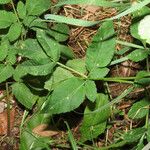
Aegopodium podagraria
Ground Elder · Goutweed · Bishop's goutweed · Snow-in-the-mountain · Queen anne's lace
Description
Source: leafsnapAegopodium podagraria, commonly known as ground elder or bishop's weed, is a perennial herbaceous plant belonging to the carrot family. Native to Europe and Asia, it has been introduced and naturalized in many other parts of the world. This plant can grow up to 1 meter tall and features triangular leaves divided into three leaflets with toothed edges. Its small flowers, which are white or pinkish, are arranged in umbels. Ground elder is a highly invasive species that spreads rapidly through underground rhizomes. It can quickly dominate gardens, lawns, and other areas by forming dense mats of foliage that overshadow other plants. Despite its invasive nature, ground elder has been used medicinally for centuries due to its anti-inflammatory properties. It also served as a valuable food source during times of famine, as it contains high levels of vitamin C. In modern times, ground elder is considered a weed due to its aggressive growth habit. Nevertheless, it can still be found growing wild in many areas around the world.
💡 Ground elder has been utilized as a leafy vegetable since the Middle Ages, with its use in human diets thought to have been introduced by the ancient Romans. Additionally, it has served as a medicinal plant in traditional medicine practices.
🌳 A less well-known trait of ground elder is its invasiveness, which enables it to take up heavy metals and therefore could be useful in bioremediation. Its rapid growth and thick foliage can be used to reclaim areas contaminated with certain pollutants.
🎭 Transformation, development, aggressiveness, bond with nature, recovery
Care Guide
💧 Water Every 7 days
Ground elder, which originates from shaded woodlands, thrives in moist soil and benefits from weekly watering for optimal growth. Although it has some drought tolerance, it grows best with consistent hydration. Applying a layer of mulch helps retain moisture and regulate temperature during its active growing season.
When should I water my ground elder?
Watering your ground elder is best determined by checking for soil dryness and observing the plant's leaves for signs of water need. To determine if your plant needs water, gently probe an inch or two into the topsoil with your finger. If the soil feels dry, it's time to water. Wilting or droopy leaves, especially if they are not perky during cooler parts of the day, or if the leaves have started to dull in color or turn yellow, are all indicators that your ground elder needs water. During winter, the plant requires less water, but be mindful of indoor heating or dry winds which can dry the soil faster. Avoid watering too early when the soil is still wet, to prevent waterlogging and root rot, and similarly, too late to avoid stressing the plant which can lead to stunted growth or death.
How should I water my ground elder?
Watering ground elder effectively involves a technique that ensures consistent and even watering without oversaturation. A watering can with a broad spout helps spread out the watering, reaching all parts of the plant evenly and without making the soil waterlogged. Ground elder benefits from watering directly at the base to avoid leaf dampness that can lead to fungal diseases. A moisture meter can be a helpful tool in managing water levels, ensuring you neither overwater nor underwater your plant. Additionally, mulching can retain moisture in the soil, proving beneficial for consistent hydration, especially in warmer seasons.
How much water does ground elder really need?
The ideal amount of water for a ground elder depends largely on its environment and size but generally, it prefers regular, light watering to keep the soil consistently moist. For a mature plant in a medium-sized pot, around 500 to 750 milliliters per watering session is a good starting point. Signs of adequate hydration include vibrant leaves and an upright stance, with soil that is moist but not waterlogged. Overwatering or underwatering can both lead to adverse effects such as rot, fungal diseases, stunted growth, or increased susceptibility to pests.
What kind of water is best for ground elder?
Ground elder plants thrive best with rainwater due to its natural composition and balanced pH. If rainwater is not accessible, distilled water or filtered water are suitable alternatives, with tap water being a last resort due to potential chlorine and fluoride content, which ground elder is sensitive to. Before using tap water, it's recommended to let it sit for at least 24 hours to allow chlorine to evaporate or to use a filtration system to remove contaminants. Water temperature is also crucial; ground elder prefers room temperature water to avoid shock.
How do ground elder's watering needs change with the seasons?
The watering needs of ground elder vary with the seasons. In spring, during its active growth phase, consistent soil moisture is key. Summer might call for reduced watering, allowing the soil to dry slightly between sessions. In autumn, decrease watering frequency as the plant enters dormancy, maintaining light soil moisture. Winter requires minimal watering, with the topsoil allowed to dry out between sessions, reflecting the plant's dormancy and lower moisture requirement.
☀️ Light Partial sun
Ground elder tolerates a wide range of sunlight, from direct sun to its complete absence. Coming from a habitat with a fluctuating canopy, it has become hardy to varied light situations. While some sun suits it best, it can endure both full sun and deep shade, continuing through its growth stages despite changes in light. Too little or too much light does not greatly affect it.
What are the sunlight requirements for ground elder?
Ground elder, or Aegopodium podagraria, is quite adaptable to different sunlight exposures, growing well in full sun, partial sun, and even full shade. 'Full sun' refers to over 6 hours of sunlight per day, while 'partial sun' means the plant receives about 3-6 hours of sunlight. The plant originates from environments with shifting canopies, making it resilient to diverse lighting conditions, although it thrives best with partial sun exposure. Despite this, it can manage in complete sunlight or total shade, moving through its growth stages without drastic effects from light variance.
How does inadequate or excessive light affect ground elder?
When ground elder is grown indoors or under conditions of inadequate light, it may exhibit signs such as smaller new leaves, leggy or sparse growth, faster leaf drop, delayed growth or cessation of new growth, pale or lighter-colored new leaves, and symptoms of chlorosis. Excessive sunlight can cause symptoms like sunscald, leaf curling, wilting, and leaf scorching, which are indicative of damage or stress. These symptoms hint at the plant struggling with its light environment, affecting its overall health and growth.
What are the recommendations for artificial lighting for ground elder?
For optimal growth of indoor plants like ground elder, especially when natural sunlight is lacking, artificial lights can be helpful. LED lights are a good choice because they can provide specific light wavelengths needed by the plants. Full sun plants may require 30-50W/sq ft of light, partial sun plants might need 20-30W/sq ft, and full shade plants could use 10-20W/sq ft. The light source should be placed 12-36 inches above the plant, and it's recommended to mimic natural daylight hours, usually meaning 8-12 hours of light per day for most plant species.
What are some solutions to light-related problems for ground elder?
To address light-related issues for ground elder, adjustments can be made depending on whether the plant is grown indoors or outdoors. Indoors, slowly transition the plant to sunnier spots, increasing exposure to direct sunlight by 3-6 hours daily for gradual adaptation. Artificial lighting, such as desk lamps or professional grow lights, can supplement sunlight, especially for larger or immovable plants; keeping these lights on for at least 8 hours daily is beneficial. Outdoors, progressively relocate your plants to brighter areas, avoiding abrupt changes to prevent sunburn. Reducing obstructions, like pruning trees that block sunlight, and transplanting smaller plants during their dormant period to sunnier locations with good drainage, can also enhance light exposure. Remember, parts of the plant already affected by insufficient light might not recover, but new growth following increased light exposure will be healthier.
🌡️ Temperature 0–35°C
Ground elder favors temperatures from 32 to 95 ℉ (0 to 35 ℃). Although its native habitat varies, it usually flourishes in cooler conditions with sufficient moisture. In winter it tolerates frost and snow, but may benefit from mulching.
What temperature range does ground elder prefer?
Ground elder prefers a temperature range of 32 to 95°F (0 to 35°C). This plant thrives in cooler temperatures with adequate moisture, showing strong cold resistance. Even during winter, it can withstand frost and snow, though mulching might be beneficial in preserving moisture and providing extra warmth. Special frost protection is generally not necessary, except when winter temperatures are expected to fall below -35°C; in such cases, protecting the plant with soil or straw is advised. To prep the plant for winter, it is recommended to water it abundantly before the first freeze in autumn, ensuring the soil stays moist and enters a frozen state to prevent drought and water scarcity.
How does ground elder react to low temperatures?
Ground elder is notably cold-tolerant, thriving best when temperatures remain above 0°C. During the winter, it's crucial to maintain temperatures above -30°C to avoid damaging the plant. If the temperature drops below -35°C, there may not be visible damage during winter, but the plant could show signs of decreased sprouting or fail to sprout at all in the spring. To manage this, any parts of the plant that have failed to sprout in the spring should be removed as a part of its care routine.
What should be done if ground elder is exposed to high temperatures?
Ground elder should ideally be kept below 35°C during summer. Exposure to temperatures above 38°C can cause its leaves to lighten in color, curl, and become susceptible to sunburn, potentially leading to the wilting and drying out of the entire plant in severe cases. To mitigate the effects of high temperatures, trim away the sunburned and dried-up parts of the plant. It's also beneficial to move the plant to a location with shade from the midday and afternoon sun or use a shade cloth. Additionally, watering the plant in the morning and evening will help keep the soil moist and protect the plant from heat stress.
💨 Humidity normal (40-60%)
This plant will thrive in moderate humidity, which is probably the level in your home. However, misting it a few times a week can be very beneficial. Make sure the room has good ventilation.
🪴 Soil 6-7
🌱 Fertilizer
Usually one fertilizer application in spring is enough for Ground elder, though repeated feedings will maximize growth. Apply fertilizer every month to a month and a half. Fertilizing improves the leaves' appearance and function, encouraging even color and a healthy texture. It also promotes root development and nutrient uptake, supporting long-term plant health.
Why is it necessary to apply fertilizer to my Ground elder?
Fertilization plays a crucial role in keeping the leaves of the Ground elder healthy and attractive. By fertilizing properly, you can ensure that the leaves maintain consistent color and a healthy texture. Fertilization also works beneath the soil, aiding the growth of new roots and sustaining existing ones in the root system. This not only promotes immediate plant health, but also enhances the plant's ability to absorb nutrients from the soil in the long run.
When is the right time to put fertilizer on my Ground elder?
If you grow Ground elder outdoors, you'll notice new growth in early spring. This is the signal to start fertilizing the plant. Typically, one application of fertilizer in spring is sufficient. However, if you want to maximize growth, you can fertilize multiple times during spring and early summer. In this case, feed the Ground elder around once every month to a month and a half.
When is the best time to not fertilize my Ground elder?
During late fall and winter, your Ground elder goes into a dormant phase and stops growing. So, it's best to avoid fertilizing it during this time. In spring and summer, if you choose to fertilize, start reducing the rate as summer comes, as the growth rate of the Ground elder also slows down. In general, it's not a good idea to fertilize the Ground elder in extremely hot weather or when the soil is very dry. Doing so can stress the plant and cause it to die early.
What kind of fertilizer should I use for my Ground elder plant?
Choosing the best fertilizer for a Ground elder is simple. Use a general-purpose garden fertilizer with equal amounts of nitrogen, phosphorus, and potassium (ratio of 10-10-10 or similar). Avoid fertilizers high in nitrogen. Granular, slow-release fertilizers are effective and easy to apply. You can also feed your Ground elder with organic soil amendments like compost.
How can I make my Ground elder grow better?
To ensure the healthy growth of your Ground elder, wait until its first leaves emerge in early spring. Once you notice this, use a granular slow-release fertilizer with a balanced formula. Apply the fertilizer to the soil around the base of the plant, not directly onto the plant. If needed, move some leaves to access the soil above the roots. It's a good idea to water the Ground elder before and after fertilizing. You can repeat this process later in the season if desired.
🪴 Pot & Repot 2-3 years
When repotting Ground elder, select a pot 1-2 inches (2.5–5.1 cm) larger with good drainage. Use a well-draining potting mix. Repot in spring or fall, making sure the root ball sits slightly lower than the rim of the flower pot. Water thoroughly after repotting and place in a warm spot with indirect sunlight.
✂️ Pruning
Ground elder flourishes with strategic pruning, which is best carried out from early to late spring. To promote growth and manage its spread, cut back any dead stems and thin out overcrowded areas. To prevent the plant from becoming invasive, remove flower heads before they can form seeds. This approach encourages overall vigor in garden settings.
🌿 Propagating
🐛 Diseases & pets
☠️ Toxicity
Characteristics
- Plant Type
- Herb
- Life Cycle
- Perennial
- Genus
- Aegopodium
- Family
- Apiaceae
- Hardiness Zone
- 3-9
- Mature Height
- 40 cm to 91 cm
- Mature Spread
- 46 cm
- Leaf Color
- Green, White, Variegated, Blue
- Leaf Type
- Deciduous
- Flower Color
- White
- Flower Size
- 6.35 cm to 11.43 cm
- Bloom Time
- Late spring, Early summer, Mid summer
- Planting Time
- Spring, Summer, Autumn, Winter
- Harvest Time
- Mid summer
- Native Area
- Turkey, Austria, Sweden, South Korea, Bulgaria, Poland, Greece, Belarus, Ukraine, Hungary, Germany, Italy, Kazakhstan, Switzerland, Denmark, Finland, Koppen, France, Albania, Romania, Belgium, Netherlands