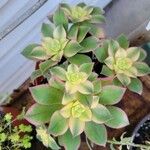
Aeonium haworthii
Pinwheel · Haworth's aeonium · Tri color · Bejequillo Tinerfeño · Hen and Chicks
Description
Source: leafsnapAeonium haworthii, also known as Haworth's aeonium or pinwheel, is a species of succulent flowering plant in the family Crassulaceae. It is grown as a houseplant in temperate regions. It has gained the Royal Horticultural Society's Award of Garden Merit, as has the cultivar 'Variegatum'.
💡 After the rosettes have bloomed, they die. However, not all rosettes flower simultaneously, so the entire plant doesn't perish at once. To prevent flowering, you can cut off the tips of the stems and plant them to grow new plants.
🌳 Haworth's aeonium is valued for its drought tolerance, making it an important choice for xeriscaping, a landscaping approach that lowers irrigation needs. Its rosettes add visual appeal to rock gardens, rooftop gardens, and function as a groundcover in climates where conserving water is essential.
🎭 Drawing in harmony, warding off negativity, lasting and unconditional love
Care Guide
💧 Water Every 3 weeks
Haworth's aeonium, a plant native to the Canary Islands, is well adapted to dry conditions and has a high tolerance for drought. To keep it healthy, water the plant every three weeks, making sure it is planted in well-draining soil and receives full sun exposure. This care routine mimics its natural habitat, helping to prevent root rot and maintain the plant's health and resilience.
When Should I Water My Haworth's Aeonium?
For the health and thriving of Haworth's aeonium, timing your watering correctly is essential. When the soil is dry about 1 to 2 inches deep, it's time to water the plant. You can check this by feeling the soil with your fingertip. Observing the leaves is another way to determine when to water; if they begin to lose their plumpness and become soft, wrinkled, or droopy, the plant is likely dehydrated. Discoloration of leaves to brown or yellow may indicate dehydration as well, although it could also point to overwatering. Alterations in the plant's growth, such as slowed growth or leaf dropping, are signs of watering issues. Both overwatering and underwatering pose risks, such as root rot or slowed growth, so accurately interpreting these signs is crucial for maintaining your Haworth's aeonium's health.
How Should I Water My Haworth's Aeonium?
Watering your Haworth's aeonium correctly involves several careful considerations due to its succulent nature. Bottom-watering is recommended as it allows the plant to absorb moisture through the drainage holes without over-saturating the surface. For those using a watering can, opt for one with a narrow spout to minimize water splash and ensure the water goes deep into the soil, which encourages healthier roots. A moisture meter can be a useful tool for determining when it's time to water by checking the moisture level in the soil. Focus on watering the soil around the plant while avoiding the foliage to prevent issues such as leaf rot. Avoid overwatering the base of the plant to prevent diseases. The best practice is to water deeply but infrequently, allowing the soil to dry out between waterings.
How Much Water Does Haworth's Aeonium Really Need?
Haworth's aeonium prefers dry conditions and should not be overwatered. The amount of water required varies with pot size; a smaller pot may need about 100-200 ml per watering session, while a larger pot might require 200-400 ml. The key is to allow the soil to dry out completely before watering again. Properly hydrated, the leaves will appear plump and firm, and the plant will display signs of growth. However, signs of overwatering include yellowing leaves, mushy stems, or root rot, while signs of underwatering are wilted, curled, or dry leaves. Using a well-draining soil mix and pot with drainage holes, and checking soil moisture before watering, help avoid over or underwatering.
What Kind of Water is Best for Haworth's Aeonium?
Haworth's aeonium shows moderate sensitivity to water type. Distilled water is the best choice due to its purity, while rainwater serves as a good alternative, especially in areas with low pollution. Tap water can be used but may contain chlorine, fluoride, and other chemicals that can affect the plant's health. Haworth's aeonium is particularly sensitive to chlorine, leading to leaf burn and stress. Moderate levels of fluoride are tolerable, but high concentrations can be detrimental. To reduce chlorine levels, let tap water sit for 24 hours before use. A filter can also remove harmful contaminants. The plant prefers water at room temperature, and it generally tolerates most minerals found in water, although excessive amounts can be harmful.
How Do Haworth's Aeonium's Watering Needs Change with the Seasons?
The watering needs of Haworth's aeonium vary with the seasons. In spring, as it begins active growth, ensure the soil is consistently moist but not waterlogged. During summer, the plant uses more water due to heat and longer days, requiring consistent soil moisture levels. In autumn, gradually reduce watering as the plant prepares for dormancy, keeping the soil slightly dry. In winter, reduce watering to a minimum, focusing on keeping the plant alive without causing root rot. Adjust your watering frequency based on the season, the plant's condition, and soil moisture to maintain its health throughout the year.
☀️ Light Full sun
Haworth's aeonium prefers ample sunlight to remain healthy, though it can tolerate moderately lower light levels. Native to open habitats, abundant sunlight is required for its optimal growth. Insufficient exposure can result in weak growth, while excessive light may scorch the leaves.
What are the sunlight requirements for Haworth's aeonium?
Haworth's aeonium thrives in conditions where it can receive generous amounts of sunlight. It requires full sun, defined as over 6 hours of sunlight a day, but it can also tolerate partial sun, meaning about 3-6 hours of sunlight. It's essential to observe how sunlight moves through your garden to ensure the spots you choose provide the right balance of light and shade. This balance is crucial for the plant's health, with insufficient light leading to weak growth and too much light causing leaf scorching.
How important is sunlight for the health of Haworth's aeonium?
Sunlight is crucial for the optimal growth of Haworth's aeonium, a plant that originates from open habitats. Abundant sunlight is necessary for it to thrive. While the plant can tolerate some shade, a lack of suitable sunlight exposure can result in feeble growth. Conversely, excessive sunlight exposure might cause issues like leaf scorching. The key is to provide the plant with enough light to foster healthy growth without causing damage.
Can artificial lighting be used for Haworth's aeonium and how?
Yes, artificial lighting can be used for Haworth's aeonium, especially when natural sunlight is insufficient. This is often the case indoors, particularly during winter or in spaces that don’t receive ample sunlight. LED lights are recommended for their ability to be customized to specific wavelengths needed by plants. Full sun plants require 30-50W/sq ft, partial sun plants 20-30W/sq ft, and full shade plants 10-20W/sq ft of artificial light. The light source should be placed 12-36 inches above the plant, mimicking natural sunlight as closely as possible, and provided for 8-12 hours per day.
What symptoms indicate that Haworth's aeonium is getting inadequate light?
When Haworth's aeonium is not receiving enough light, several symptoms may appear. These include leggy or sparse growth, where the spaces between leaves or stems elongate, resulting in a stretched-out, weak appearance. Leaves may develop lighter colors or pale, indicating insufficient chlorophyll and nutrients. The plant's growth might slow down or stop entirely, a sign it's entering survival mode due to poor lighting conditions. Additionally, excessive sunlight can cause chlorosis, sunscald, leaf curling, wilting, and leaf scorching, each affecting the plant’s health and aesthetics.
What are the solutions for light-related issues in Haworth's aeonium?
For indoor Haworth's aeonium facing insufficient light, gradually increase sunlight exposure to at least 6 hours daily by moving them closer to a south-facing window, keeping curtains open during the day. If moving the plant is not feasible, consider artificial lighting, keeping a lamp on for at least 8 hours daily or investing in professional grow lights. Outdoors, gradually acclimate the plant to sunnier spots to prevent sunburn. If sunlight is obstructed, prune obstructions or transplant smaller plants to sunnier locations during their dormant period for better growth.
🌡️ Temperature 20–37.8°C
The haworth's aeonium favors a moderate to warm temperature range of 68 to 100 ℉ (20 to 38 ℃) in its native growing environment. To ensure optimal growth, keep temperatures within this range year-round and avoid drastic temperature fluctuations.
What are the ideal temperature conditions for Haworth's aeonium?
Haworth's aeonium thrives in a moderate to warm temperature range, ideally between 68°F to 100°F (20°C to 38°C). These conditions should be maintained year-round to facilitate optimal growth, with special attention during its growing season in winter to keep temperatures above 20°C. When outdoor temperatures fall below 0°C, it's advisable to move the plant indoors to a well-lit area. It is important to adjust watering based on temperature fluctuations, increasing it in higher temperatures and reducing it as temperatures approach freezing. If the plant is kept outdoors during winter, it should be in a sheltered, sunny location, or under the protection of a temporary greenhouse to stay adequately moist.
How should you care for Haworth's aeonium in low temperatures?
Haworth's aeonium cannot tolerate extremely cold temperatures and performs best between 20°C and 38°C. In winter, ensure the temperature remains above 0°C. Exposure to temperatures below -5°C can cause leaves to suffer from water-soaked necrosis and wilting. If frost damage occurs, initially there might not be visible symptoms, but within a week, the leaves could wilt and fall off significantly. To mitigate frost damage, trim the affected areas and move the plant to a warmer indoor location or a makeshift greenhouse to guard against the cold. If indoors, placing the plant near a south-facing window ensures ample sunlight, while a makeshift greenhouse should have proper ventilation to prevent plant decay.
What steps should be taken if Haworth's aeonium is exposed to high temperatures?
During the summer months, it's important to keep Haworth's aeonium in temperatures below 38°C. If temperatures climb above 43°C, the plant may enter a dormant state and become susceptible to rot, particularly in high humidity. To care for the plant in such conditions, remove any dry or rotten parts and relocate the plant to an area with partial shade, especially to protect it from direct midday and afternoon sun. Additionally, watering should be stopped until the weather cools down to mitigate the risk of rot and support the plant's recovery from temperature stress.
💨 Humidity dry (<40%)
This plant prefers dry conditions, so don't mist it. However, watering it less often can also thrive in higher humidity.
🪴 Soil 6-7
🌱 Fertilizer
For Haworth's aeonium, light fertilizing once or twice a year during the growing season is enough. Do not fertilize in winter or in summer when the plant is dormant. Cut back on fertilizer for plants that have been repotted and wait a couple of months after repotting before you start feeding them. Fertilizing helps maintain healthy growth and promotes blooming.
Why should I add fertilizer to my Haworth's aeonium plant?
Fertilizing Haworth's aeonium helps provide nutrients to the growing medium, supporting healthy growth. Although it already stores water and nutrients, applying plant food during the growing season can further enhance its growth and encourage mature specimens to produce blooms.
When should I put fertilizer on my Haworth's aeonium?
Haworth's aeonium plants require a light dose of fertilizer during the growing season. It is recommended to fertilize them 1-2 times a year, specifically in the spring and autumn. It's important to avoid fertilizing during the winter and summer when the plant is dormant. If you have recently repotted the plant, be cautious and reduce the amount of fertilizer. It's best to wait a few months after repotting before applying any fertilizers.
When is the best time to not fertilize my Haworth's aeonium?
Haworth's aeonium, like other plants, goes through a dormancy period. This is the time when you should avoid applying fertilizer. During the summer and winter, the plant stops growing, so it's also best to refrain from fertilizing during these seasons. Additionally, after repotting in the spring, it's a good idea to wait a couple of months before resuming fertilizer application.
What kind of fertilizer should I use for my aeonium plant?
When fertilizing Haworth's aeonium, it is recommended to use a liquid plant food specifically made for succulents and cacti. Dilute the fertilizer with water to a half-strength solution to prevent it from accumulating in the soil. Apply the diluted fertilizer to the base of the plant, making sure to water thoroughly. Make sure any extra moisture drains from the container or is absorbed by the ground.
How should I add fertilizer to my Haworth's aeonium plant?
When fertilizing Haworth's aeonium, it is easier to use liquid plant food, although granules are also an option. When using liquid fertilizers, be sure to dilute them to half-strength following the instructions on the packaging. Regardless of whether you choose granules or liquid plant food, always apply it to the soil. After applying granules, cover them with a thin layer of soil and water.
🪴 Pot & Repot Every 2 years
When repotting Haworth's aeonium, choose a pot slightly larger than the current one that provides good drainage. Use a gritty, well-draining succulent or cactus mix. Gently remove the plant from its old pot, brush off excess soil, and replant it at the same depth. Wait several days before watering so any root damage can heal. Repot in spring or fall and place the plant in a brightly lit spot.
✂️ Pruning
To keep large succulent plants, such as Haworth's aeonium, well-shaped, prune any excess or densely packed branches in the spring and fall using a knife or scissors. After pruning, apply sulfur powder to the cuts to protect them. For propagation, cut a sturdy stem with 5-6 leaves, treat the cut with sulfur powder, and allow it to heal before planting.
🌿 Propagating
🐛 Diseases & pets
☠️ Toxicity
Pinwheels are not toxic to both humans and animals. But still, just like most succulents, its sap is acidic. Irritation might happen if it contacts your skin or your mouth. Rinse the contact with water immediately.
Characteristics
- Plant Type
- Succulent, Herb
- Life Cycle
- Perennial
- Genus
- Aeonium
- Family
- Crassulaceae
- Hardiness Zone
- 9-11
- Mature Height
- 61 cm to 91 cm
- Mature Spread
- 61 cm to 91 cm
- Leaf Color
- Green, Gray, Red, Silver, Yellow
- Leaf Type
- Evergreen
- Flower Color
- White, Yellow
- Flower Size
- 6.35 cm to 15.24 cm
- Bloom Time
- Mid spring, Late spring, Early summer
- Planting Time
- Spring, Autumn, Winter
- Harvest Time
- Mid summer
- Native Area
- 9-12