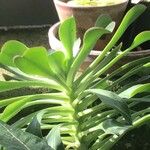
Aeonium urbicum
Description
Source: leafsnapAeonium urbicum is a succulent species of flowering plant in the family Crassulaceae. It is endemic to Tenerife, one of the Canary Islands, where it grows on the north of the island from Teno point to the Anaga peninsula.: 174 Until 1999, it was also considered a resident of La Gomera, another Canary Island, but that year the populations on that island were considered a new species and named Aeonium appendiculatum.Aeonium urbicum was also divided into varieties, var. urbicum and var. meridionale.
Care Guide
💧 Water Every 3 weeks
The Saucer plant thrives in arid environments due to its drought tolerance, needing water only every three weeks. As an evergreen, it adapts well to different climate zones and requires less water during its summer dormancy.
What should I do if I give my Saucer plant too much water or too little water?
Saucer plants are typically resilient and can survive without water for extended periods. However, if you forget to water your plant for a month or more, you may notice signs of thirst or damage. An underwatered Saucer plant will appear lackluster and wrinkled, with some leaves drying up, turning brown, or falling off. The soil will be completely dried out. To remedy this, ensure the plant gets plenty of water by submerging the pot in water for 5-10 minutes until the soil feels moist on the surface. On the other hand, overwatering can be harmful and even fatal to Saucer plants if not addressed. Too much moisture can lead to root rot, where fungi and bacteria thrive and damage the roots, hindering the absorption of nutrients and water. Symptoms of overwatering include yellow, swollen, and translucent leaves that may burst due to excess water. If not treated, the plant may turn brown or black and shed leaves easily. Check the soil to confirm overwatering as the cause, as other issues can cause similar symptoms. Overcoming overwatering requires changing the growing conditions, providing better air ventilation, and adjusting the watering frequency. It's important to catch this issue early before significant damage occurs. If the roots have become rotten, it may be difficult to save the plant. In such cases, it's best to remove any healthy stems and propagate a new Saucer plant. However, if only some of the roots are affected, there is a chance of saving the plant. To salvage a plant with root rot, remove any unhealthy-looking roots using sterilized tools. Rinse the roots in room-temperature water to eliminate fungi and assess their health. If root rot is present, the roots will appear dark brown or black, soft, mushy, or slimy. If a majority of the roots are affected, it may not be possible to save the plant. However, if some healthy roots remain, dip them in a fungicide and repot the Saucer plant in fresh, well-draining soil. While not guaranteed, the plant will likely recover and produce new growth in the next growing season.
How often do I need to water my Saucer plant?
Determining how often to water a Saucer plant doesn't have a specific rule. The best way is to check the soil and only water when it's completely dry. To check the soil, you can use your finger or a moisture meter. If the plant is in a deep pot, you can use a stick or chopstick to check the soil. If it feels slightly moist, wait a few days and check again. In general, most people will need to water the Saucer plant every two weeks in summer and once a month in winter. However, there are other factors to consider that can affect the watering frequency. The section below provides some considerations to help determine how often to water.
What do I need to think about when watering my Saucer plant?
To water your Saucer plant properly, you need to consider several environmental factors such as the container size, soil type, temperature, and humidity. The container and soil you use will determine how often and how much water you should give to your plant. Make sure the container has drainage holes at the bottom so excess water can escape. A smaller container will hold less moisture, requiring more frequent watering, while a larger pot will need less frequent watering as it retains moisture longer. Avoid using an oversized pot as it can cause overwatering. When repotting, only move to a size slightly larger than the current container, and choose a shallow container as Saucer plants have shallow root systems. In terms of the seasons, Saucer plants require less watering during the winter when their growth slows down, and the soil retains moisture longer due to less evaporation. The frequency of watering also depends on your local climate. Humid and rainy areas will require less frequent watering compared to dry and arid regions. Keep in mind that even in the same location, conditions can vary with the season and the use of indoor heating and air conditioning. If you have Saucer plants planted in the ground, they generally don't need extra watering once their root system is established, relying on natural precipitation and dew. However, during extended dry periods, occasional watering may be necessary. For areas where Saucer plants can only be grown in containers, you can move them outside during the suitable spring and summer temperatures and bring them indoors when the weather starts to cool. It's important to note that potted Saucer plants kept outside typically need more watering compared to indoor plants due to increased sun exposure, even if they are placed in shaded areas or on a porch.
How do you water a Saucer plant?
To water your Saucer plant effectively, thoroughly soak it and then allow it to dry out before watering again. This type of plant can tolerate some drought, so it's best to let it get quite dry between waterings. When watering, make sure the soil is evenly soaked throughout the entire pot. Instead of pouring water in just one spot, try to go around the entire rim of the planter to ensure all sides of the plant get wet. The amount of water needed will depend on the size of your container and how much the soil absorbs. Water your Saucer plant enough that it drains out from the drainage holes, and then leave the drained water in the saucer for about 20-30 minutes to allow it to be absorbed into dry pockets of soil. Afterward, discard any excess water in the saucer to prevent waterlogging the soil. Bottom-watering is also a great method for watering your Saucer plant, as it ensures the soil gets thoroughly moistened. Simply place the pot in a saucer of water and let the soil absorb moisture through the drainage holes. You'll know the soil has absorbed enough water when the top layer is moist. This method may take a bit longer than top-watering, but it guarantees an even distribution of water throughout the pot. The natural habitat of the Saucer plant is relatively dry with infrequent rain, but when it does rain, the soil becomes thoroughly moistened. You can replicate this by bottom-watering your plant when the soil is completely dry. It's better to give your Saucer plant a deep soak rather than frequent light watering.
☀️ Light Full sun
The saucer plant grows best in full, unobstructed sunlight, though it can tolerate light shade. Native to areas with abundant sunshine, the saucer plant needs plenty of light to remain healthy. Excessive shade slows its growth, while too much exposure can cause its foliage to become scorched.
How much sunlight does the Saucer plant require to grow?
The Saucer plant needs a minimum of 6 hours of sun daily, although more is preferred. The specific number of hours can differ based on sunlight intensity and other factors, but it is unlikely that the Saucer plant will receive excessive sunlight. In fact, they can tolerate up to 14 hours of sun per day without any issues.
What kind of sunlight does the Saucer plant need?
The saucer plant requires plenty of bright sunlight. These plants thrive in full sun and can do well with direct light or bright indirect sun. While certain types of saucer plants may tolerate partial sun, they typically prefer more sunlight as it is generally beneficial for their growth.
Should I keep the Saucer plant away from sunlight?
The saucer plant thrives in hot and sunny environments, making it resilient to the sun's rays. However, if you are planning to move it to a location with intense sunlight and the plant is not accustomed to it, caution should be exercised. Allowing the plant time to adjust is important, so begin by gradually introducing it to a few hours of sunlight daily, and then gradually increase the duration of exposure. Once the saucer plant has adapted, it should be able to tolerate full sun without any need for protection.
What will happen if the Saucer plant doesn't get enough sunlight?
The Saucer plant needs enough sunlight to thrive and grow. If it doesn't get enough sunlight, it will have pale coloring, wilting leaves, and may drop its leaves. It might also become leggy or sparse-looking as it tries to reach for more light, resulting in weak stems.
What happens if the Saucer plant gets too much sunlight?
The Saucer plant changes colors to protect itself from excess sunlight. To achieve this color change, some people like to give the plants mild sun stress in the summer. This is not harmful, and the plants will return to their normal coloring when the amount of sunlight decreases in the autumn and spring. However, be careful not to move the Saucer plant too quickly into direct sunlight as it can get sunburned. Sunburn appears as white or brown spots on the uppermost leaves that were exposed to the most sun. If this happens, you should move the plant to a shadier spot and water it if necessary. Any sun-damaged leaves can be removed, and new growth will replace them over time.
🌡️ Temperature 20–37.8°C
The saucer plant naturally thrives in temperate climates and is adapted to temperatures between 68 and 100°F (20 to 38°C). To maintain optimal health, provide warmth in winter and slightly cooler conditions during summer.
What temperature does your Saucer plant like best?
To keep the Saucer plant thriving, it is best to maintain it within a specific range of conditions. Ideally, temperatures between 75-90℉ (25-32℃) work well for this plant. In the early winter season, it is important to avoid temperatures dropping below 75℉ (25℃). If extreme weather conditions are anticipated, moving the plant indoors is advised as it provides better protection. While the Saucer plant can withstand some extreme temperatures, it is not ideal. Occasionally, it can handle lower temperatures like 50℉ (15℃), however, it is still recommended to bring it indoors during winter.
How do I change the temperature for my Saucer plant as it grows?
The saucer plant goes through different phases of growth. Initially, the dormant seed sprouts and becomes a seedling. For the dormant seeds to grow, they require specific conditions in their surroundings, such as a temperature of 75-90℉ (25-32℃) for germination. To ensure vigorous growth, it is best to nurture the plant during the summer when temperatures around 85℉(30℃) are most favorable. During the hot summer months, you can move your saucer plant from indoors to a spot with ample sunlight.
How can I make sure my Saucer plant stays warm during the cold seasons?
To protect your Saucer plant from winter conditions, it's a good idea to bring it indoors. Some people choose to buy grow lights to provide sunlight, but if your home is not very dark, you may not need them. Simply place your plants where they will receive the most sunlight possible. This should be enough to keep the Saucer plant thriving during winter. If you have multiple Saucer plants, rotate them so they all get adequate sunlight. If you live in a northern area with very cold weather, avoid placing your Saucer plant too close to the window, as the extreme cold could cause damage.
What happens to my Saucer plant when it gets too hot or too cold?
During the summer, Saucer plants thrive in warm temperatures around 90℉(32℃). However, it is important to protect them from temperature extremes in hot climates. In contrast, during the winter, it is best to keep the plant dry. Saucer plants generally do well in temperate climates, with temperatures between 75-90℉ (25-32℃). However, exposing the plant to extreme temperatures can cause stress. While temperatures ranging between 90℉ and 95℉(32-35℃) can enhance the plant's colors, caution must be exercised when experimenting with these conditions. Throughout the hot summer season, high temperatures can potentially harm the plant by burning the stem and root system. To prevent this, consider relocating the plant to a shaded area or using a shade cloth during the hottest time of the day.
How do I change the temperature for my Saucer plant in different seasons?
During the summer, the high temperatures cause the Saucer plant to grow slowly in order to survive the intense heat. However, as the weather cools down and the rainfall increases, the Saucer plant begins to grow again. If you live in an area with hot summers and mild winters with plenty of rain, you don't need to make any changes to care for your Saucer plant. However, if you live in a place with cold winters, it's important to allow your Saucer plant to grow more during the summer and rest during the winter. This is because there isn't enough sunlight for the plant to thrive in the winter. To help your Saucer plant enter a dormant state in cold temperatures, you can lower the temperature to a range of 50℉ to 75℉ (15℃ to 25℃).
💨 Humidity
🪴 Soil 5-7
🌱 Fertilizer
For Saucer plant, light applications of fertilizer one to two times a year during the growing season are sufficient. Do not fertilize in winter or in summer when the plant is dormant. Reduce the amount of fertilizer for plants that have been repotted and wait a couple of months after repotting before you begin fertilizing. Fertilizing helps maintain healthy growth and encourages blooms.
Why is it necessary to fertilize my Saucer plant?
When it comes to the Saucer plant, fertilizing is important for providing nutrients and encouraging healthy growth. While the plant does store water and nutrients, applying plant food during the growing season can further support its well-being. Additionally, fertilizing can also stimulate blooming for mature plants during the growing season.
When should I fertilize my Saucer plant for the best results?
Saucer plants only require a small amount of fertilizer during the growing season, around 1-2 times a year. To ensure the best results, it is recommended to fertilize them in the spring and autumn, avoiding the winter and summer when they are dormant. When repotting saucer plants, be cautious about the amount of fertilizer used, as it should be reduced. It is also advisable to wait a few months after repotting before beginning to apply fertilizer.
When is it not a good idea to give fertilizer to my Saucer plant?
The Saucer plant, like other plants, goes through a dormancy period. During this time, it is best to avoid using fertilizer. The plant stops growing in the summer and winter, so it is important to halt fertilizer application during these seasons. Additionally, it is advisable to wait a couple of months after repotting in the spring before resuming fertilizer use.
What kind of fertilizer does my Saucer plant need?
When fertilizing Saucer plant, it's recommended to use a liquid plant food specifically made for succulents and cacti. To prevent the fertilizer from accumulating in the soil, dilute it with water to half-strength. Apply the fertilizer at the base of the plant and water it well, making sure that any extra moisture drains away.
How should I give nutrients to my Saucer plant?
When fertilizing Saucer plant, it is easier to use liquid plant food, but you can also use granules if you prefer. Just remember to follow the directions on the packaging and dilute liquid fertilizers to half-strength. In either case, always apply the plant food to the soil. If using granules, cover them with a thin layer of soil and water the plant.
🪴 Pot & Repot Every 2 years
To promote optimal growth and maintain healthy roots, repot the saucer plant every two years during the spring. Use a well-draining pot to ensure proper drainage and place the plant in a spot with bright, indirect light after repotting. Water the plant sparingly to prevent overwatering, which can cause problems. Make sure the pot is suitable for the plant’s shallow root system.
✂️ Pruning
To keep your saucer plant well-shaped, prune any excess or overly dense branches in both spring and fall. If you want to propagate the plant, cut a sturdy stem with 5-6 leaves, apply sulfur powder to the cut to help it heal, and then plant it in slightly moist soil once the wound has healed.
🌿 Propagating
🐛 Diseases & pets
☠️ Toxicity
Characteristics
- Plant Type
- Succulent
- Life Cycle
- Perennial
- Genus
- Aeonium
- Family
- Crassulaceae
- Hardiness Zone
- 9-11
- Mature Height
- 2.13 m
- Mature Spread
- 91 cm
- Leaf Color
- Green, Dark Green
- Leaf Type
- Semi-evergreen
- Flower Color
- Yellow
- Flower Size
- 1.02 cm to 2.03 cm
- Bloom Time
- Mid spring, Late spring, Early summer
- Planting Time
- Spring, Summer, Autumn
- Harvest Time
- Mid summer