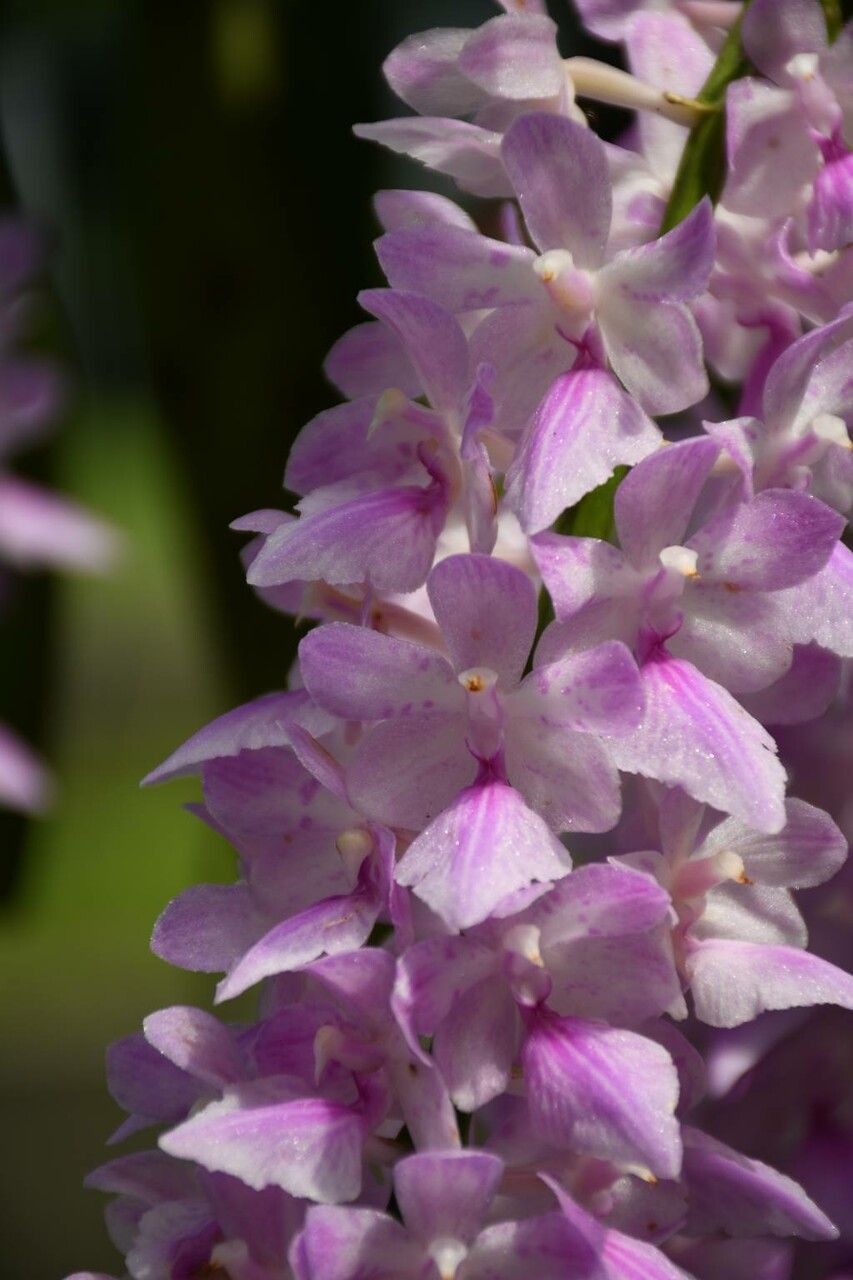
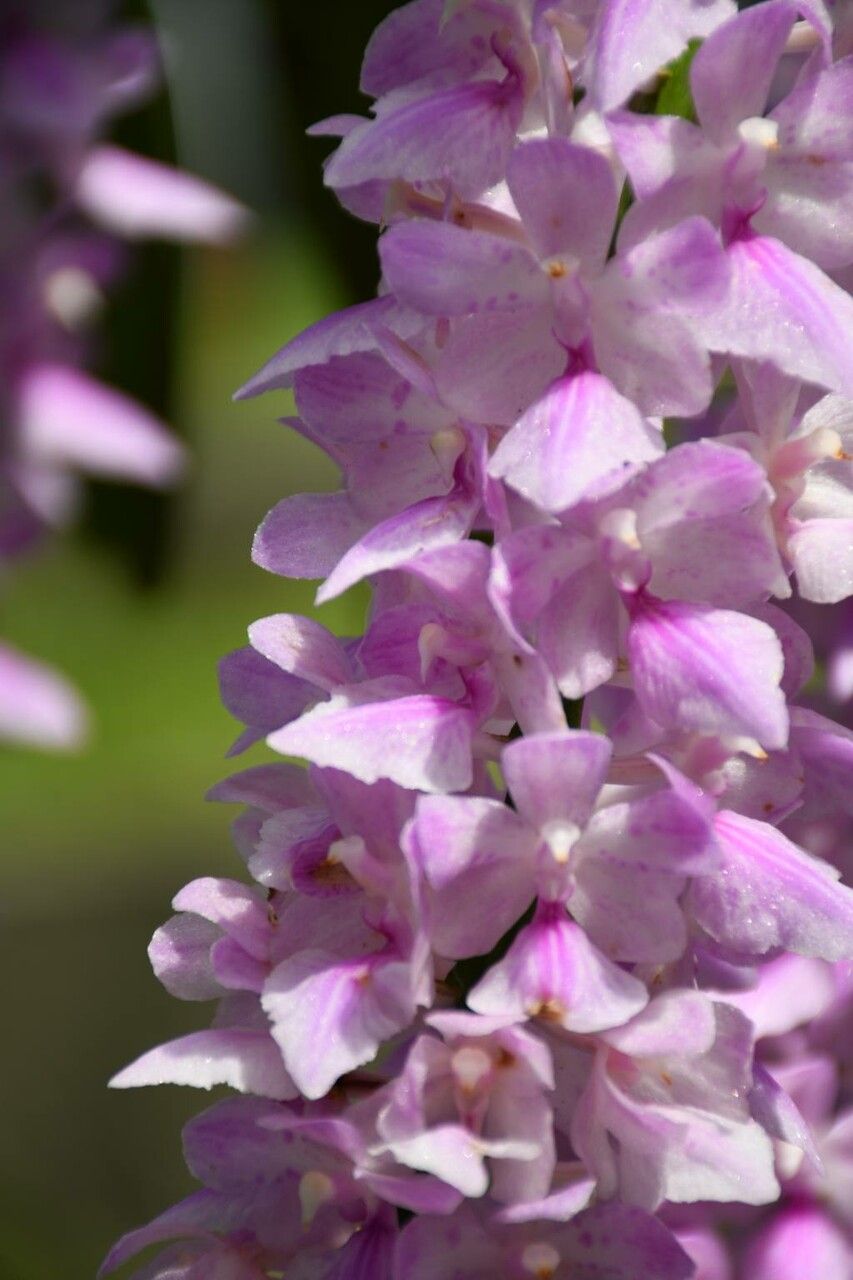
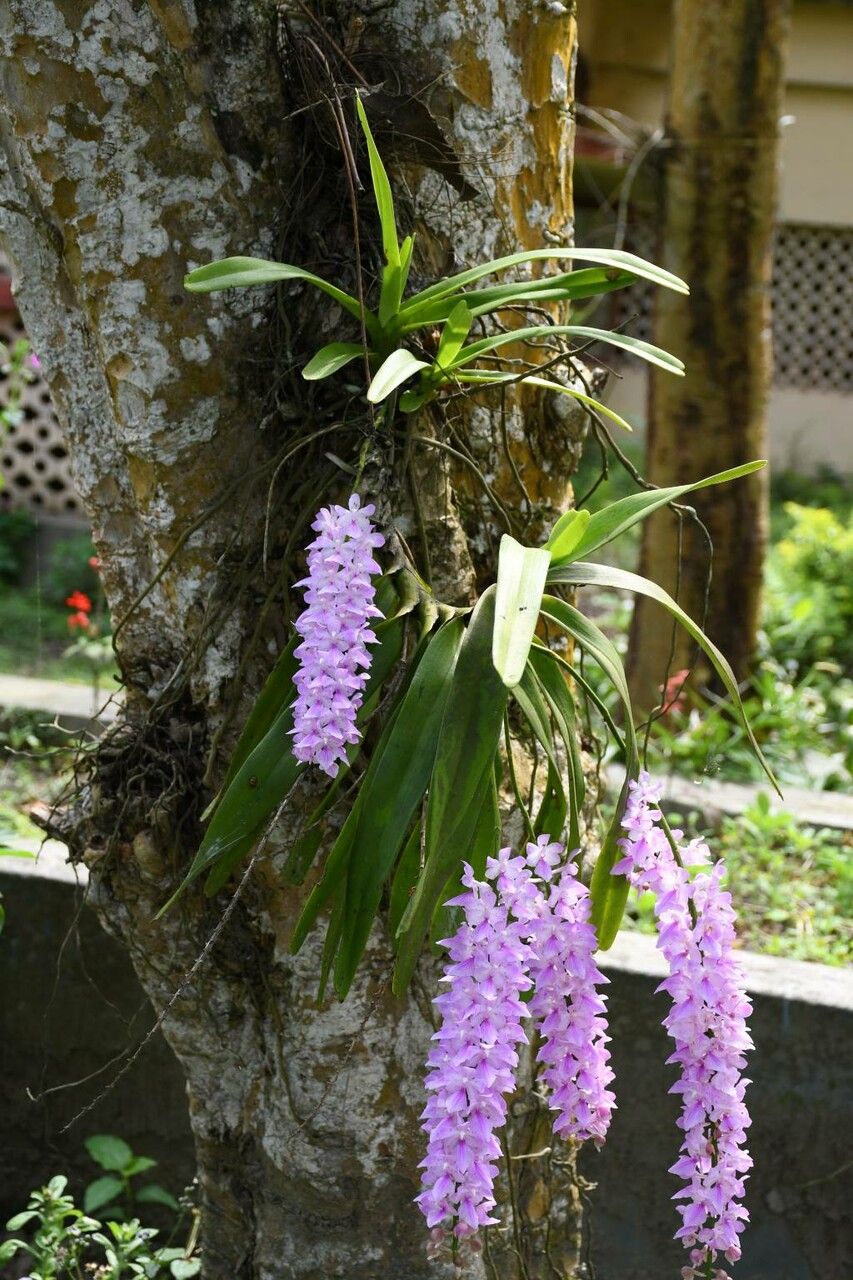
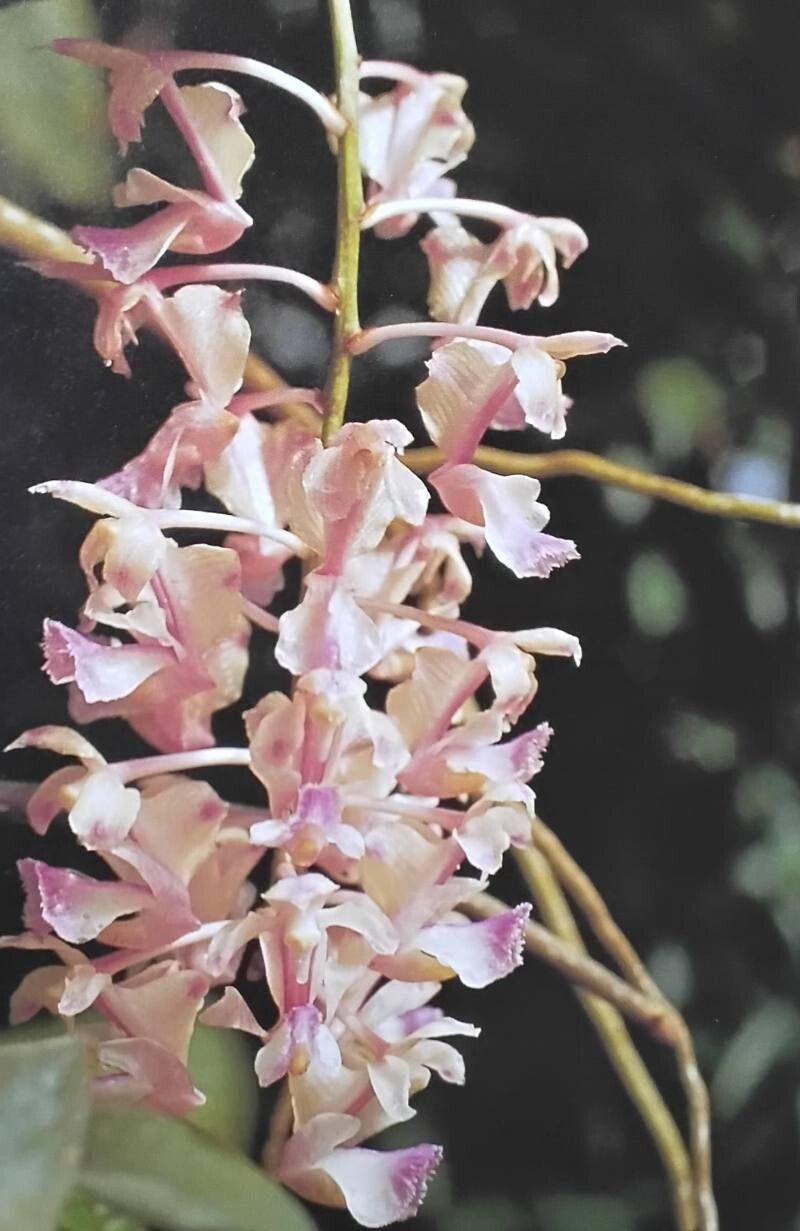
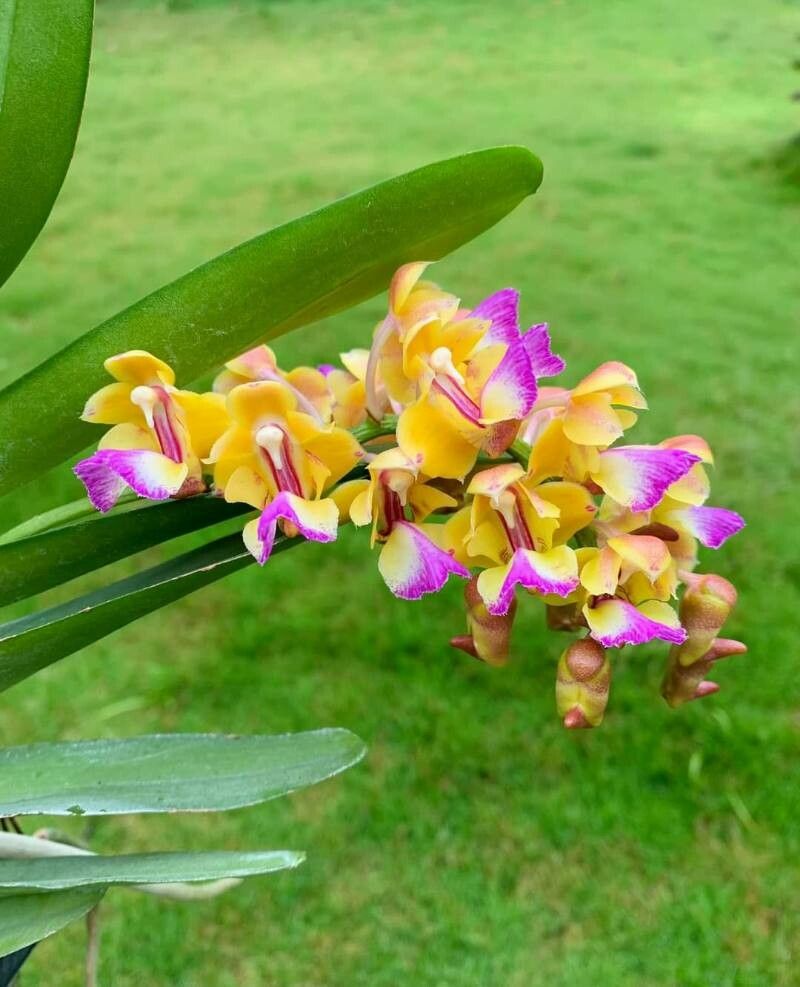
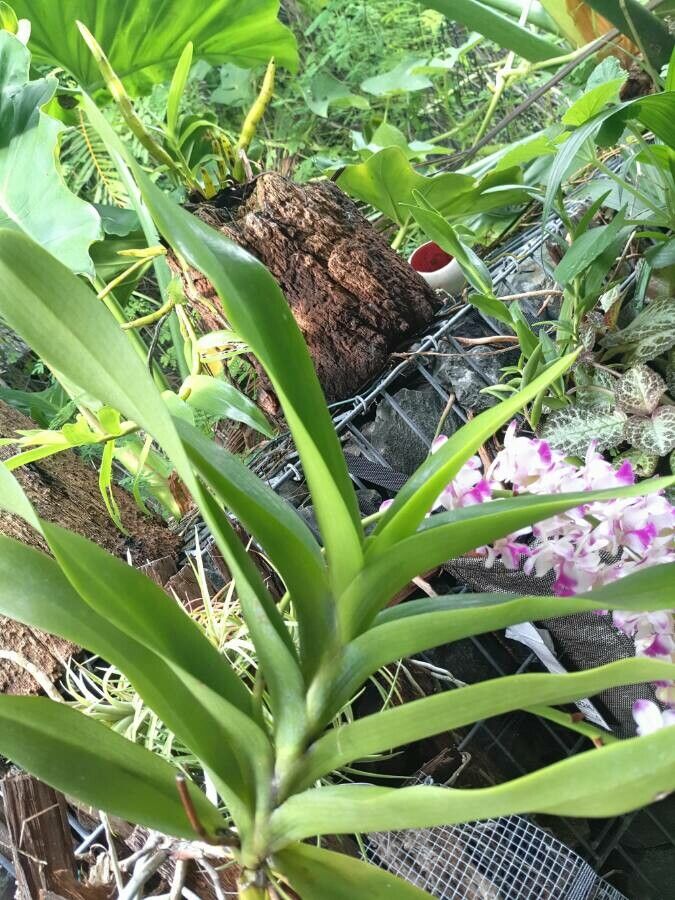
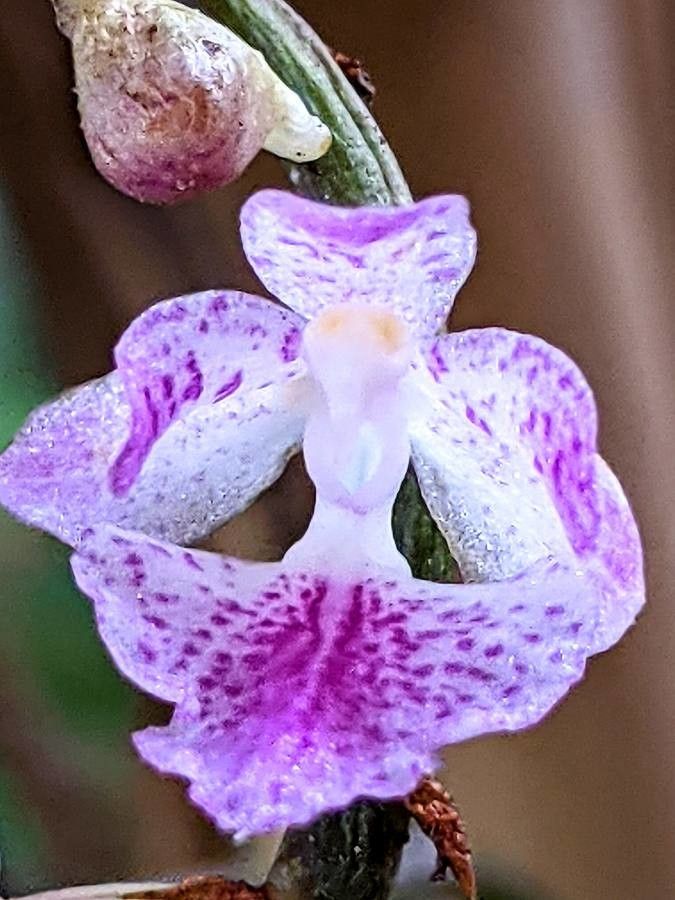
Aerides rosea is a species of epiphytic orchid. It is native to China (Guangxi, Guizhou, Yunnan), Assam, Bhutan, Cambodia, India, Laos, Myanmar, Thailand and Vietnam.
The rose colored aerides typically exhibits good disease resistance and suffers from relatively few insect pests. Its care is considered difficult because it needs high humidity yet good ventilation and minimal presence of harmful pathogens. Too much watering can cause root rot. Although growing the rose colored aerides is suitable for anyone, keeping it healthy and getting it to flower again requires more growing experience.
How to keep Aerides Rosea.
Light
The rose colored aerides originates from the understory of tropical forests or from among rocks, both of which provide natural shade. It prefers partial sun but can also tolerate full sun, adapting well to varying light conditions.
Water
The rose-colored aerides thrives in the high humidity typical of tropical rainforests and needs to be watered weekly to replicate these natural conditions. As an epiphyte, it grows best in a well-draining medium that prevents waterlogging, making it ideal for indoor cultivation where environmental control is crucial.
Temperature
The rose-colored Aerides is native to regions with average temperatures between 68 to 100 °F (20 to 38 ℃). It favors warmer conditions for optimal growth. Adjust its environment seasonally to ensure it stays within this preferred range.
Fertilizer
Proper fertilization is essential for The rose colored aerides's health and appearance. Fertilize The rose colored aerides during summer, repeating the treatment monthly throughout the season. Nutrients supply the energy for growth and preserve the plant's components. Fertilizing boosts The rose colored aerides's floral display, ensuring the best blooms.
Pruning
The rose-colored Aerides boasts fragrant flowers and evergreen foliage. To promote optimal growth, prune it in early spring or late winter. This helps remove dead stems and improves air circulation, shaping the plant, encouraging flowering, and reducing pest problems.
Pot & Repot
When repotting the rose colored aerides, select a pot that is only slightly larger with good drainage, preferably a clear orchid pot. Use an orchid-specific, well-draining mix that includes bark or moss. Gently clean the roots and remove any that are dead or rotting. Repot after flowering, typically in spring or fall, water thoroughly, and place in bright, indirect light. Once repotted, avoid disturbing the roots.
Botanical profile.
- Plant Type
- Herb
- Life Cycle
- Perennial
- Genus
- Aerides
- Family
- Orchidaceae
- Hardiness Zone
- 9-11
- Mature Height
- 20 cm
- Mature Spread
- 20 cm to 40 cm
- Leaf Color
- Green
- Leaf Type
- Evergreen
- Flower Color
- Pink
- Flower Size
- 25.40 cm
- Bloom Time
- Late spring, Summer
- Planting Time
- Spring, Summer
- Harvest Time
- Fall, Early winter
- Native Area
- India, Vietnam, Myanmar, Bhutan, Laos, Thailand, China
Reader questions.
How should I water my pink aerides orchid?
The watering routine for your rose colored aerides plant depends on its growth phase. During active growth, water the soil and occasionally mist the leaves if it's warm. In winter or cool, wet weather, stick to watering the soil directly. Signs that your plant needs more water include thin and dry roots and leaves, or discoloration. Overwatering will make the plant mushy and limp. Use a well-draining potting mix and ensure the pot has good drainage when growing your plant. Water it multiple times a week during the growing season, allowing each watering to drain quickly. Adjust the amount of water based on the pot size, larger pots needing less frequent watering. Rainwater or distilled water is best, ideally matching the air temperature.
What is the best temperature for the rose-colored aerides?
The rose colored aerides and The rose colored aerides have different maintenance needs, but both thrive in the same temperature range. They grow best between 75-90℉ (25-32℃). While The rose colored aerides can tolerate slightly higher or lower temperatures, it is recommended to keep the growing environment within a few degrees of these limits. The rose colored aerides can withstand temperatures between 50℉ (15℃) and 95℉(35℃). However, it is important to avoid temperatures below 70℉ (25℃) as it will slow down growth, and temperatures below 50℉ (15℃) can cause damage or even kill the plants.
What should I do if I give too much or too little water to my rose colored aerides?
One of the most common ways to kill a rose colored aerides plant is by allowing it to sit in overly moist soil for too long. Although these plants require frequent watering during active growth, they also need a well-draining growing medium. If the plant is overwatered, it will become mushy and develop root rot. In such cases, you should use sterile pruning shears to remove any roots showing signs of rot. Afterward, repot the plant in a container with good drainage and fill it with a fast-draining potting mix. However, the rose colored aerides plant does not respond well to excessive repotting, so it is important to find the right watering balance. If the plant becomes underwatered, it will shrivel and feel dry to the touch. In this situation, it is likely that the soil is drying out faster than expected, indicating the need to increase the watering frequency.
Does the rose colored aerides need different temperatures at different stages of growth?
To ensure that the rose colored aerides can bloom and flower to its full potential, it is important to maintain a consistent temperature range. Temperature fluctuations, regardless of the growth phase, can be detrimental. Avoid temperatures below 70℉ (25℃) and above 90℉ (32℃), as they can slow down growth. Prolonged periods below 50℉ (15℃) can prevent flowering altogether. Since the rose colored aerides is not resilient, it requires a well-regulated environment for proper growth. Therefore, it is crucial to have control over temperature. Additionally, the rose colored aerides must go through a cool period, which is discussed further below.
How frequently should I water my rose colored aerides?
During the active growth stage in spring and summer, water your rose colored aerides once or twice a week. Increase the frequency to three times a week or more during hot and dry weather. In winter, you still need to water them, but not as much. Watering two to three times a month should suffice during the coldest months. If you keep them indoors, be aware that indoor locations may cause the soil to dry more quickly. You may need to water them more frequently. In fall, gradually reduce watering from the summer rate to your winter schedule.
Here are three tips for keeping the temperature of the rose colored aerides in check.
Here are some tips to keep in mind when growing the rose colored aerides: Tip #1: Cooling Period after Blooming - Whether grown indoors or outdoors, the rose colored aerides requires a cooling period after blooming. - When grown outside, this cooling period happens during the winter season. - When grown indoors or in a greenhouse, the cooling period can occur during any season. - By providing the necessary cooling period, your rose colored aerides can bloom multiple times a year. - Maintain a temperature of 75-90℉ (25-32℃) during this cooling period for optimal results. Tip #2: Nighttime Temperature Preference - When growing the rose colored aerides, it's best to keep them within the optimal temperature range and provide sufficient light. - However, the rose colored aerides prefers colder temperatures at night when grown outdoors. - The nighttime temperature range should ideally be between 50~75℉(15-25℃). - It may be difficult to control the temperature range when growing outdoors without climate control. Tip #3: Monitoring for Cold Damage - The rose colored aerides is not as resilient as winter plants and prefers higher temperatures. - Therefore, it is particularly susceptible to cold damage. - Monitor the temperature of your growing space closely to prevent harm. - Temperatures below 50℉ (15℃) can start causing damage, and prolonged exposure to cold can be fatal. - Signs of cold damage include discoloration on the foliage and stems, indicating that the plant is getting too cold. - If large sections of the plant are drying and turning brown, it means that the tissue is dying. - Immediately move the rose colored aerides to a warmer environment; recovery is possible in some cases.
What things do I need to think about when watering my pink aerides orchid during different seasons and stages of growth?
When planning the watering schedule for your rose-colored aerides, there are two important growth phases to consider. The first phase is the active growth period, which occurs in spring and summer. During this time, it is necessary to water the plant multiple times per week. The second phase is the rest period, which should last about two to three months in winter. During this period, the plant requires significantly less water and fertilization. It is recommended to water the plant about once or twice per month. In the fall, it is advised to gradually reduce the frequency of watering from multiple times per week to once or twice per month, which is appropriate for the winter season.
Does the pink aerides orchid require varying temperatures depending on the season?
If you don't plan on growing the rose colored aerides outside, you don't have to worry about seasonal temperature variations. However, if you have no choice but to use an outdoor space, make sure to grow them during the summer and ensure the temperatures range between 75-90℉ (25-32℃). Controlling outdoor weather conditions can be difficult, so it's usually better to use an indoor space or a greenhouse. The rose colored aerides thrives in abundant sunlight, so select an area with ample natural light. A greenhouse is the better option as it allows the rose colored aerides to receive maximum direct sunlight while maintaining the necessary high temperatures.
How do I water my indoor rose colored aerides differently?
The rose colored aerides thrives in a humid environment, which is often lacking in most indoor growing locations. As a result, the plant and its soil tend to dry out faster than when grown outdoors. To counteract this, it's recommended to use a humidifier in the growing room and water the plant more frequently. However, it's important to balance the humidity with adequate air circulation to prevent excessive moisture and potential diseases. Including a fan in the room can help maintain proper air circulation for the plant's well-being.
How should I keep the right temperature for the rose colored aerides?
To maintain the ideal temperature for the rose colored aerides, it is best to keep them in a climate-controlled environment. If you have air conditioning or fans, you can designate a room in your home for them. This will ensure that the temperature stays within the optimal range. However, if you live in a colder region, you will need a reliable heating system to keep the room warm. The rose colored aerides thrives in hot environments, so it is important to be able to heat the room to temperatures as high as 75℉ (25℃). If heating a room to those temperatures is not feasible in your home, you can consider placing them in a greenhouse instead. A greenhouse is a cost-effective option as it naturally heats up when sunlight passes through its clear or opaque glass panels. This provides the perfect temperature for the rose colored aerides, ensuring it grows in the best possible environment.