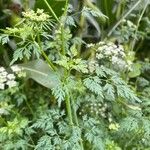
Aethusa cynapium
Fool's parsley · Fools parsley · Dog poison · Suņpētersīlis (LVL) · Mérges ádáz
Description
Source: leafsnapAethusa cynapium, commonly known as Fool's Parsley, is a highly toxic plant belonging to the Apiaceae family. This annual herb can grow up to 1 meter in height and features finely divided leaves. The plant produces small white flowers arranged in umbels and has a distinctive unpleasant odor. Native to Europe, Fool's Parsley can also be found in other parts of the world. It typically grows in waste areas, along roadsides, and on disturbed ground. The entire Aethusa cynapium plant contains toxic alkaloids that can cause severe poisoning if ingested by humans or animals. Symptoms of poisoning include nausea, vomiting, abdominal pain, convulsions, and even death. Despite its toxicity, Fool's Parsley has been used for medicinal purposes for centuries due to its sedative properties. However, it should only be used under the supervision of a qualified healthcare professional. In conclusion, Aethusa cynapium should be avoided due to its highly toxic nature and the significant health risks associated with ingestion or contact.
Care Guide
💧 Water Every 3 days
Fool's parsley thrives in moderately moist conditions and prefers soil that stays consistently hydrated without becoming waterlogged. Watering it once a week is enough to keep it healthy. It is usually grown outdoors, where natural rainfall during its active growing season helps support vigorous growth.
How should I water my Fool's parsley?
To water Fool's parsley, you have several options. You can use a garden hose with a spray nozzle, a watering can, or any other common watering tool. Fool's parsley isn't too picky about its water source and can thrive with rainwater, tap water, or filtered water. However, it's best to avoid watering this plant from above as it could harm the leaves and flowers and potentially cause disease. A drip irrigation system is often the most effective way to water Fool's parsley because it distributes water evenly and directly to the soil. If you have Fool's parsley growing in a container, you can use a similar watering method but with different tools. For container-grown Fool's parsley, you can use a cup, watering can, or simply pour water directly onto the soil.
What do I need to do if I give my Fool's parsley too much water or not enough water?
Dealing with underwatering Fool's parsley is fairly straightforward. If you notice that your plant is lacking moisture, simply increase the frequency of watering. On the other hand, overwatering can be a more serious issue that may go unnoticed. When Fool's parsley is overwatered, it can develop diseases that result in its decline and death. To prevent this, it is important to choose a suitable growing location that gets sufficient sunlight to dry the soil and has good drainage to prevent water from pooling. If you have overwatered Fool's parsley in a pot, you may need to consider transferring it to a new pot. The old pot may have had poor soil drainage or inadequate drainage holes. When repotting the overwatered plant, be sure to use well-draining soil and a pot that allows excess water to drain effectively.
How frequently should I give water to my Fool's parsley plant?
To keep your Fool's parsley healthy, you need to water it regularly. During the growing season, start by watering it once a week in spring. But as the season progresses and it gets warmer, you may need to increase watering to two or three times a week. However, be careful not to exceed this rate as it can harm the plant. It's important to note that you should keep the soil consistently moist but not wet, regardless of how often you water. When it comes to Fool's parsley in a pot, you'll need to water more frequently. Potted plants dry out faster, so aim for a few times per week instead of just once for plants in the ground.
How much water does my Fool's parsley plant need?
Determining how much water to give your Fool's parsley can be done in a few different ways. Some gardeners rely on their intuition and check the soil for moisture. They suggest watering until the first six inches of soil feel damp. Another approach is using a specific measurement. For Fool's parsley, about two gallons of water per week is typically recommended, depending on temperature and soil dryness. However, sticking rigidly to these guidelines might result in overwatering if your plant requires less water. When growing Fool's parsley in a container, a different method is needed. You should moisten all the dry layers of soil by either checking with your finger or allowing excess water to trickle out of the drainage holes.
How do I know if I'm watering my Fool's parsley enough?
Avoiding overwatering your Fool's parsley can be somewhat difficult because of the conflicting needs of the plant. On one hand, these plants have deep roots that require weekly soil moistening. On the other hand, Fool's parsley is highly susceptible to root rot, which can cause browning of the plant. Underwatering is less likely to occur for these plants as they can survive without supplemental watering for a while. However, if you go too long without watering, the plant will likely start to wilt and develop dry leaves.
☀️ Light Full sun
Fool's parsley grows best with plenty of sunlight but can tolerate periods of lower light. Coming from habitats where light is abundant, it performs well in those conditions. Some stages of growth may need more light. Too much exposure can cause harm; conversely, too little light can restrict growth and reduce vigor.
How many hours of sunlight does Fool's parsley need daily to grow well?
In order to keep these plants healthy and thriving, it is important to ensure they receive a minimum of 6 to 8 hours of sunlight every day. During the summer, it is especially beneficial to prioritize morning light exposure. The Fool's parsley, in particular, requires full sun and thrives with as much sunlight as possible. The more light these species receive, the better they can produce food, display stunning blooms, and ultimately survive.
What kind of sunlight does Fool's parsley require?
The Fool's parsley thrives in full sunlight and it's important to give each plant enough space so they can all receive an even amount of sun. To prevent the leaves from being deprived of sunlight, make sure to plant them in pots and place them in windows that get direct sun throughout the year. Avoid placing them in areas with partial or filtered light as this can result in weak stems and unhealthy flowers. For the best results, always ensure that the Fool's parsley is exposed to sunlight.
Can sunlight harm plants? How can Fool's parsley be protected from damage caused by sunlight and heat?
When the temperature rises above 90℉(32℃), the Fool's parsley can be damaged by extreme heat, especially if it is exposed to a lot of sun for many hours. It's always a good idea to provide some shade in the afternoon during the summer months. Remember, the sunlight is stronger and lasts longer in the summer than in the winter. If the Fool's parsley is stressed from too much sun, make sure to keep it well-watered. Water the plant when the top 2 inches of soil are dry, and consider bringing potted plants indoors if it's very hot outside. It's normal for the plant leaves to wilt during the day and recover at night, but if the Fool's parsley is still drooping, it means it's losing water quickly and needs to be watered.
Do I need to shield Fool's parsley from the sun?
The Fool's parsley thrives in sunlight and can even be classified as heliotropic. To maximize their sun exposure, it is advisable to plant them in south-facing gardens where they can receive morning to afternoon sun. While the sun is beneficial, some species may be susceptible to sunburn. To protect them during the afternoon and midday, consider offering shade with a tree or wall. Growing the Fool's parsley in shady areas is not feasible as it requires ample energy to produce its larger flowers. For optimal growth, always provide full sun conditions when setting them in a location.
What will happen if Fool's parsley doesn't get enough sunlight?
When the Fool's parsley does not receive enough sunlight or is not placed in a location with full sun, several things can occur. Firstly, the photosynthetic process will slow down. Additionally, a lack of sunlight causes the stems to become thin and long, as they try to seek out more sunlight. This can result in the plants becoming leggy and not blooming or producing seeds in shady conditions. Lack of sunlight also leads to older leaves dying, new leaves being lighter in color than the old foliage, and new growth being smaller than previous growth. Despite their love for the sun, Fool's parsley can wilt when exposed to excessive heat and ultraviolet light during the extreme summer months. To prevent the leaves and flowers from scorching, consider covering them with a net that has a green shade, especially in the summer. Indoors, reduce heat with the help of a fan.
🌡️ Temperature 10–25°C
In its native temperate habitat, Fool's parsley grows best at temperatures of 68 to 95 °F (20 to 35 ℃). Across different seasons, its temperature needs may need careful adjustment to keep it within this optimal range.
What is the optimal growth temperature for Fool's parsley?
Fool's parsley, or Aethusa cynapium, thrives best in its native temperate environment with optimal growth temperatures ranging between 68 to 95 °F (20 to 35 °C). To ensure the plant's health and vigorous growth, maintaining this temperature range across varying seasons is crucial.
Does Fool's parsley need frost protection in winter?
Fool's parsley is highly cold-tolerant and does not require additional frost protection during the winter months. However, to prepare it for winter, it's recommended to water the plant generously before the first freeze of autumn. This practice helps the soil remain moist and enter a frozen state, preventing drought and water scarcity for the plant during winter and early spring.
How does Fool's parsley react to low temperatures?
Fool's parsley is extremely cold-tolerant and can withstand winter temperatures above -25°C without any noticeable changes during the cold months. However, if temperatures drop below this threshold, the plant might experience a decrease in sprouting or might not sprout at all come springtime. To address this issue, any parts of the plant that have failed to sprout by spring should be removed.
What should be done if Fool's parsley is exposed to high temperatures?
Fool's parsley is sensitive to high temperatures, and its growth will halt if temperatures exceed 35°C, making it more susceptible to rot. In such cases, sunburned and dried-up portions of the plant should be trimmed away. Moving the plant to a shaded location or employing a shade cloth can protect it from harsh midday and afternoon sun. Additionally, watering the plant during the cooler hours of morning and evening will help keep the soil moist and support the plant's health.
💨 Humidity
🪴 Soil 6-7
🌱 Fertilizer
Fool's parsley does well with regular, light applications of fertilizer to encourage healthy foliage growth. It should be fed about once a month throughout the summer. Nitrogen is essential for leaf development, and providing nitrogen-rich sources helps Fool's parsley thrive.
🪴 Pot & Repot
✂️ Pruning
🌿 Propagating
🐛 Diseases & pets
☠️ Toxicity
Characteristics
- Plant Type
- Herb
- Life Cycle
- Annual
- Genus
- Aethusa
- Family
- Apiaceae
- Hardiness Zone
- 6
- Mature Height
- 76 cm
- Mature Spread
- 46 cm to 61 cm
- Leaf Color
- Dark Green
- Leaf Type
- Deciduous
- Flower Color
- White
- Flower Size
- 0.25 cm
- Bloom Time
- Early summer, Mid summer
- Planting Time
- Spring
- Harvest Time
- Mid summer