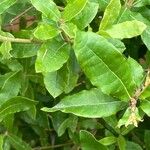
Aextoxicon punctatum
Olivillo
Description
Source: leafsnapAextoxicon punctatum, the sole species of genus Aextoxicon and family Aextoxicaceae, is a dioecious tree native to southern Chile and Argentina. Commonly known as the olivillo or aceitunillo, it is a large evergreen tree native to the forests of the Valdivian temperate rain forests and Magellanic subpolar forests of southern Chile's Pacific coast, where it forms is a canopy tree in the broadleaf forests. It can reach 15 m tall. The APG system (1998) and the APG II system (2003) left the family Aextoxicaceae unplaced in the core eudicots. It has since been included in the order Berberidopsidales. The genus was formerly often included in the family Euphorbiaceae.
Care Guide
💧 Water
The olivillo plant is adapted to withstand dry spells and has a moderate tolerance for drought, flourishing best in well-drained, moist conditions. To prevent waterlogging, water the plant every 2 to 3 weeks. Being an evergreen, it requires consistent soil moisture throughout the year, especially during prolonged dry periods or in warmer climates.
How should I water my Olivillo plant?
Your Olivillo doesn't have specific preferences when it comes to how you water it. You can use any common watering tool like a watering can, hose, or even a cup. It's important to water the plant by directly applying the water to the soil. Make sure to evenly moisten all areas of the soil to provide water to all parts of the root system. Using filtered water is a good idea, as tap water may contain harmful particles. It's also beneficial to use water that is at or slightly above room temperature, as very cold or hot water can shock the Olivillo. However, the plant generally responds well to any type of water you provide.
What do I need to do if I give too much or too little water to my Olivillo?
Outdoor plants, especially newly planted ones or seedlings, are prone to lack of watering. It's important to water them consistently for the first few months, even if they're small or just planted. Once the roots are established, Olivillo plants can mostly rely on rain. When Olivillo plants are in pots, overwatering is more likely. If you accidentally overwater your plant, take immediate steps to fix the situation. Stop watering it right away to minimize the impact of overwatering. Then, remove the plant from its pot to check its roots. If none of the roots have developed root rot, you can put the plant back in the container. However, if you find root rot, trim the affected roots and consider applying a fungicide to prevent further damage. Finally, repot the Olivillo in well-draining soil. In the case of underwatering, simply water the plant more frequently. It's usually an easy fix, as the leaves will droop, dry out, and fall off when underwatered. Once sufficient watering is provided, the leaves will quickly become full again. Make sure to adjust your watering frequency as soon as you notice underwatering.
How often should I give water to my Olivillo?
Most plants can grow naturally with rainfall, but if your area lacks rain, you should water them every 2 weeks in the spring and fall, and more often in the summer. In the winter, when growth is slower, water less frequently or not at all. If your Olivillo is young or newly planted, water it more often to help it establish and become drought tolerant. For potted plants, there are two main ways to determine the watering frequency for your Olivillo. The first is to set a schedule, watering about once a week or every other week. However, this may not always work because it doesn't consider the specific growing conditions. Watering frequency can also change with the seasons. During the summer, when the plant needs more water, a predetermined schedule may not be enough. An alternative approach is to check the soil moisture. Before watering, wait until the top two to four inches of soil have dried out completely.
How much water does my Olivillo plant need?
To properly water your Olivillo, you don't always need to use a lot of water. If only a few inches of soil have dried since the last watering, giving it about five to ten ounces of water will promote healthy growth. You can also determine the amount of water based on the moisture of the soil. Keep track of how many inches of soil have dried out between waterings. To ensure your Olivillo receives enough moisture, water it enough to moisten all the soil layers that have dried out since the last watering. If more than half of the soil has become dry, consider giving it more water than usual. In those cases, continue adding water until you see excess water draining from the pot's drainage holes. If your Olivillo is planted outdoors in an area that receives plenty of rain, it may not need extra watering. When the Olivillo is young or still establishing itself, make sure it receives 1-2 inches of rain per week. As it continues to grow and establish, it can rely solely on rainwater. Only in hot weather with no rainfall for 2-3 weeks should you consider giving it a thorough watering to prevent stress.
How do I know if I am giving my Olivillo plant enough water?
Overwatering is a common issue for the Olivillo, and there are signs to watch for. An overwatered Olivillo will have yellowing leaves and may lose some. Excessive water can also make the plant structure shrivel and cause root rot. Conversely, an underwatered Olivillo will start to wilt and may have brown or brittle leaves. If you notice signs of either overwatering or underwatering, take action to restore your Olivillo's health.
☀️ Light Partial sun
Olivillo naturally occurs in habitats like forest understories or rocky sites, where it grows under natural shade. It favors partial sun but can adjust to either full sun or full shade, showing its versatile, hardy character.
🌡️ Temperature 20–37.8°C
Olivillo is highly adaptable to a variety of climate conditions, from scorching summers to chilly winters. Still, it has an ideal temperature range for growth. If temperatures become excessively high, the plant is vulnerable to heat and humidity stress, which can lead to its death. In areas where temperatures approach the lower limit of its cold tolerance, it is important to use insulation measures to protect the plant.
💨 Humidity
🪴 Soil 5-6
🌱 Fertilizer
Fertilize your Olivillo in early spring to encourage healthy growth. Regular feeding improves overall health, producing vigorous growth, increased resilience to challenging conditions, and enhanced resistance to pests and diseases. Adhere to a consistent fertilization schedule for your Olivillo to achieve lush, richly colored, vibrant foliage.
Why is it necessary to fertilize my Olivillo plant?
If you have an Olivillo plant, it doesn't matter which type you have because regular fertilization will benefit its overall health. Giving your Olivillo the right nutrients will help it grow stronger and be able to handle tough growing conditions. It will also be more resistant to diseases and pests. The foliage of your Olivillo is one of its most attractive features, so it's important to keep it healthy. To do this, you should create and stick to a regular fertilization schedule that is specific to your Olivillo. By doing this, your Olivillo will develop vibrant, colorful leaves and have an overall lush appearance.
What is the best time to add fertilizer to my Olivillo?
To ensure healthy growth for your Olivillo, the first fertilization should be done in late winter or early spring. This provides all the necessary nutrients for the plant to thrive once the weather warms up. Additionally, if you live in a warm climate, it's beneficial to give your Olivillo an extra fertilizer feeding in early fall. This not only adds nutrients for the following growing season but also helps the plant withstand winter cold and avoid foliage damage. Fertilizing earlier will give the new branches enough time to grow and be resilient against the cold winter.
When is it best not to add plant food to my Olivillo plant?
There are a few specific times when you should avoid fertilizing your Olivillo plant. The first is during the early and mid-winter months when the plant is dormant and does not require any feeding. Additionally, it is unadvisable to fertilize the plant in late spring and throughout the summer. This is because the weather during this time is usually hotter and drier, which can have a negative impact on the plant if it is fertilized. To avoid any potential issues, it is best to stick to a fertilization schedule that involves feeding the plant only in early spring and early fall.
What kind of fertilizer does my Olivillo plant need?
The most important nutrient for an Olivillo is usually nitrogen, but phosphorus and potassium are still important. Your Olivillo needs all three main nutrients in decent amounts, so a balanced fertilizer like 10-10-10 can be effective. However, a more nuanced nutrient ratio often leads to optimal growth. Fertilizers with slightly higher nitrogen content, like 10-6-4, tend to work well. You can choose between granular or liquid-based fertilizers when fertilizing.
How can I fertilize my Olivillo plant?
To fertilize your Olivillo, you have two options
🪴 Pot & Repot
✂️ Pruning
The Olivillo is an evergreen tree characterized by its glossy leaves and dense canopy. To promote growth, enhance its appearance, and improve air circulation, it is best to prune dead branches from early to late winter. Be sure to use clean, sharp tools to prevent the spread of disease. For further guidance, consult reputable horticultural sources.
🌿 Propagating
🐛 Diseases & pets
☠️ Toxicity
Characteristics
- Plant Type
- Tree
- Life Cycle
- Perennial
- Genus
- Aextoxicon
- Family
- Aextoxicaceae
- Hardiness Zone
- 9-11
- Mature Height
- 14.94 m to 24.99 m
- Mature Spread
- 6.1 m to 10.06 m
- Leaf Color
- Dark Green
- Leaf Type
- Evergreen
- Flower Color
- White
- Flower Size
- 0.25 cm to 0.51 cm
- Bloom Time
- Mid fall, Late fall, Early winter
- Planting Time
- Spring, Summer, Autumn
- Harvest Time
- Late winter, Early spring, Mid spring
- Native Area
- Argentina, Chile