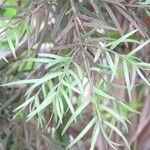
Afrocarpus falcatus
Common yellowwood · Conifer · Bastard yellowwood · Outeniqua yellowwood · Yellowwood
Description
Source: leafsnapAfrocarpus falcatus (syn. Podocarpus falcatus) is a species of tree in the family Podocarpaceae. It is native to the montane forests of southern Africa, where it is distributed in Malawi, Mozambique, South Africa, and Eswatini. Common names include common yellowwood, bastard yellowwood, outeniqua yellowwood, African pine tree, weeping yew, Afrikaans: outeniekwageelhout, kalander, Sotho: mogôbagôba, Xhosa: umkhoba and Zulu: umsonti. It is widespread, in some areas abundant, and not considered threatened, but it is a protected tree in South Africa. It is grown as an ornamental tree, especially in South Africa, and occasionally abroad.
💡 Common yellowwood is a highly sought-after material for construction and shipbuilding. It is often turned into plywood and used to create furniture, musical instruments, fences, and even houses. With its attractive grain and natural pest resistance, common yellowwood is an excellent choice for wooden floor planks, parquet blocks, countertops, and flooring.
Care Guide
💧 Water Every 7 days
The common yellowwood thrives with moderate hydration, requiring watering every 2-3 weeks. It can tolerate occasional dry spells, striking a balance between drought resistance and a preference for moisture. Typically grown outdoors, the common yellowwood benefits from natural rainfall during its active growing season, which mimics the moisture levels of its native environment.
How should I water my Common yellowwood tree?
Your Common yellowwood does not have specific preferences for how you water it. You can use various watering tools such as watering cans, hoses, or cups to water this plant. It is important to water the soil directly, making sure to evenly moisten all areas to provide sufficient water to the entire root system. If possible, use filtered water instead of tap water to avoid harmful particles. Additionally, it is beneficial to use water that is close to room temperature, as very cold or hot water may shock the Common yellowwood. Nonetheless, this plant usually adapts well to any type of water you choose to use.
What should I do if I give too much or too little water to my Common yellowwood tree?
Outdoor plants, especially newly planted ones or seedlings, are susceptible to not being watered enough. It is important to consistently water them for a few months while they are small or recently planted. Once the roots are established, the Common yellowwood tree can rely on rain for most of its water needs. When your Common yellowwood is planted in pots, it is more likely to be overwatered. If you accidentally overwater your Common yellowwood, there are steps you can take to fix the situation. First, stop watering the plant immediately to minimize the impact of overwatering. Then, remove the plant from its pot to inspect the roots. If you find that none of the roots have developed root rot, you can put the plant back in its container. However, if you see signs of root rot, trim away the affected roots and consider applying a fungicide to prevent further damage. Lastly, repot the Common yellowwood in well-draining soil. On the other hand, if you notice that your Common yellowwood is underwatered, simply water it more frequently. Underwatering is often an easy problem to fix. When a plant is underwatered, its leaves may droop, dry out, and fall off. However, after receiving sufficient watering, the leaves will quickly recover and become full again. It is important to adjust your watering frequency as soon as you notice underwatering.
How often do I need to water my Common yellowwood plant?
Most outdoor plants can grow naturally with rainfall. However, if your area lacks rainfall, you should water your plants adequately every 2 weeks during the spring and fall. In the summer, you will need to water more frequently. In winter, when growth is slower and plants need less water, water sparingly or not at all. If you have a young or newly planted Common yellowwood, it's important to water more often to help it establish and grow successfully. Mature and drought-tolerant plants will need less frequent watering. For potted plants, there are two main ways to determine how often to water your Common yellowwood. One approach is to set a predetermined watering schedule, such as once a week or once every other week. However, this may not always be accurate for your specific growing conditions. Another approach is to monitor the soil moisture. Wait until the top two to four inches of soil (about ⅓ to ½ depth of the pot) have completely dried out before watering again. This method considers the unique needs of your Common yellowwood and can be adjusted depending on the season. During summer, when water needs are highest, you may need to water more frequently.
How much water does my Common yellowwood tree need?
To water your Common yellowwood effectively, you don't always need to give it a lot of water. Instead, if only a few inches of soil have dried since the last watering, providing it with about five to ten ounces of water will promote healthy growth. You can gauge the amount of water needed based on the moisture level of the soil. Keep track of how many inches of soil have dried out between waterings. To ensure your Common yellowwood receives sufficient moisture, water enough to moisten all the layers of dry soil since the last watering. If more than half of the soil has dried out, consider giving it more water and continue until you observe excess water draining from the pot's drainage holes. If your Common yellowwood is planted in an area with abundant outdoor rain, it may not require additional watering. When the Common yellowwood is young or establishing itself, ensure it gets 1-2 inches of rain per week. As it grows and becomes established, it can rely solely on rainwater. Only in hot weather with no rainfall for 2-3 weeks should you give it a thorough watering to prevent stress.
How can I know if I'm giving enough water to my Common yellowwood tree?
The Common yellowwood is often overwatered, and there are clear signs to watch for. An overwatered plant will have yellowing leaves and may lose some leaves. Overwatering can also shrink the plant's structure and lead to root rot. On the other hand, an underwatered plant will start to droop and may have brown or brittle leaves. Whether you spot signs of overwatering or underwatering, it's important to take action to revive your Common yellowwood's health.
☀️ Light Full sun
Common yellowwood does best in plentiful light, reflecting the conditions of its native habitats, and prefers sites that receive ample sunlight during the day. Although it favors bright conditions, it can tolerate locations with less sun. Excessive exposure may stress the plant and reduce its vigor, while too little light can slow its growth.
What kind of sunlight does the Common yellowwood require?
The Common yellowwood thrives in conditions that mirror its native environment, which is abundant sunlight. It requires full sun, meaning it should receive above 6 hours of sunlight daily, but it can also grow in partial sun (about 3-6 hours of sunlight). However, both overexposure and underexposure to sunlight can stress the plant, affecting its vigor and growth. It's essential to observe the movement of sunlight through your garden and find spots that offer the right balance of light and shade to ensure the plants' health and happiness.
How can artificial lighting benefit indoor Common yellowwoods?
Indoor Common yellowwood plants require adequate lighting for optimal growth, especially in situations where natural sunlight is scarce, such as during winter or in less sunny spaces. Artificial lighting is a great alternative, contributing to faster and healthier growth. It's advised to choose the right type of artificial light, like LED lights, which can be customized for the specific needs of the plant. Full sun, partial sun, and full shade plants require different intensities of artificial light, ranging from 10-50W/sq ft. The artificial light source should be placed 12-36 inches above the plants for 8-12 hours per day, mimicking natural sunlight duration as closely as possible.
What are the signs of light deficiency in Common yellowwoods?
Common yellowwoods exhibit several symptoms when faced with insufficient light, including smaller new leaves, leggy or sparse growth, faster leaf drop, slower or no new growth, lighter-colored new leaves or irregular color patterns indicating a lack of chlorophyll, chlorosis (leaves turning yellow), sunscald, leaf curling, wilting due to increased water loss, and leaf scorching. These symptoms signify the plant's struggle with inadequate sunlight, affecting its ability to photosynthesize and maintain overall health.
What solutions are there for Common yellowwoods receiving inadequate sunlight?
To address inadequate sunlight conditions for Common yellowwoods, indoors, gradually move the plant to receive at least 6 hours of direct sunlight daily or use artificial plant grow lights for additional light exposure. Outdoors, relocate the plant to sunnier spots gradually to prevent sunburn. If sunlight is obstructed by elements like trees, consider pruning to allow more light through. For smaller plants, transplanting during the dormant period to a location with ample sunlight and good drainage is beneficial. It's key to remember that while increasing light exposure can promote new healthy growth, parts of the plant already adversely affected may not recover.
🌡️ Temperature 20–37.8°C
Common yellowwood is fairly adaptable to temperature, able to withstand higher heat and larger temperature fluctuations. In hot weather, attention should be paid to watering and providing suitable shade to prevent sunburn. However, Common yellowwood is less tolerant of low temperatures; although it can endure some cold, excessively low temperatures can cause frost damage.
💨 Humidity
🪴 Soil 6-7
🌱 Fertilizer
The common yellowwood has distinctive nutrient needs and does not require heavy fertilization. Fertilizing in spring is best for achieving optimal growth. Supplying nutrients enhances its health, increases its resistance to pests and diseases, and helps maintain its long lifespan.
Why is it necessary to give my Common yellowwood fertilizer?
To ensure the healthy growth of Common yellowwood, it is beneficial to fertilize it in the spring. It is important to keep in mind that this plant has a long lifespan and requires support. Adding nutrients to the soil not only enhances the plant's health, but also helps it resist common pests and diseases that might hinder its growth or lifespan.
When should I fertilize my Common yellowwood tree?
Common yellowwood is not like other garden plants, as it doesn't need a lot of extra nutrients to grow healthily. The growing medium may not provide enough nutrients on its own. To optimize fertilization for Common yellowwood, it's best to do it in the spring before new growth starts.
When is the best time to not put fertilizer on my Common yellowwood?
Common yellowwood is a plant that doesn't need frequent fertilization like some other plants do. In fact, it doesn't require a lot of extra nutrients at all. Giving it too much fertilizer can actually harm it and cause it to die back. The best time to apply fertilizer is in the spring, so there's no need to do it during the summer, fall, or winter. During those seasons, it's best to avoid adding fertilizer or organic matter to the soil.
What kind of plant food should I give my Common yellowwood?
Consider the age of your plant when choosing fertilizer. However, keep in mind that Common yellowwood does not need excessive nutrients. Opt for a balanced plant food that promotes strong root growth and overall health. Avoid fertilizers high in nitrogen.
How can I help my Common yellowwood grow better?
To effectively fertilize Common yellowwood, remember that both the timing and method are crucial. Apply the fertilizer once in the spring, specifically around the plant's base. Be careful not to get any fertilizer on the trunk. If you opt for granulated fertilizer, make sure to cover the pellets with a thin layer of soil. This step assists in ensuring that the fertilizer gets properly absorbed into the soil.
🪴 Pot & Repot
✂️ Pruning
The Common Yellowwood is characterized by its evergreen foliage and conical shape. To maintain its health, pruning should be done from early to late winter while the tree is dormant. Focus on removing dead branches, improving air circulation, and maintaining a good structure. Avoid heavy pruning to minimize stress on the tree. Additionally, always use sterilized tools to prevent disease, which will help promote the tree's health and vigorous growth.
🌿 Propagating
🐛 Diseases & pets
☠️ Toxicity
Characteristics
- Plant Type
- Tree
- Life Cycle
- Perennial
- Genus
- Afrocarpus
- Family
- Podocarpaceae
- Hardiness Zone
- 9-11
- Mature Height
- 45.11 m to 60.05 m
- Mature Spread
- 7.62 m to 10.36 m
- Leaf Color
- Green
- Leaf Type
- Evergreen
- Flower Color
- White, Pink, Green, Purple
- Flower Size
- 2.54 cm
- Bloom Time
- Mid spring, Late spring
- Planting Time
- Spring, Summer, Autumn
- Harvest Time
- Late summer, Early fall, Mid fall
- Native Area
- Malawi, Eswatini, South Africa, Mozambique